As the world races to secure copper for electric vehicles, power grids and data centres, an Indian conglomerate is turning to an unconventional source: the electronic waste piling up in Indian homes and offices.
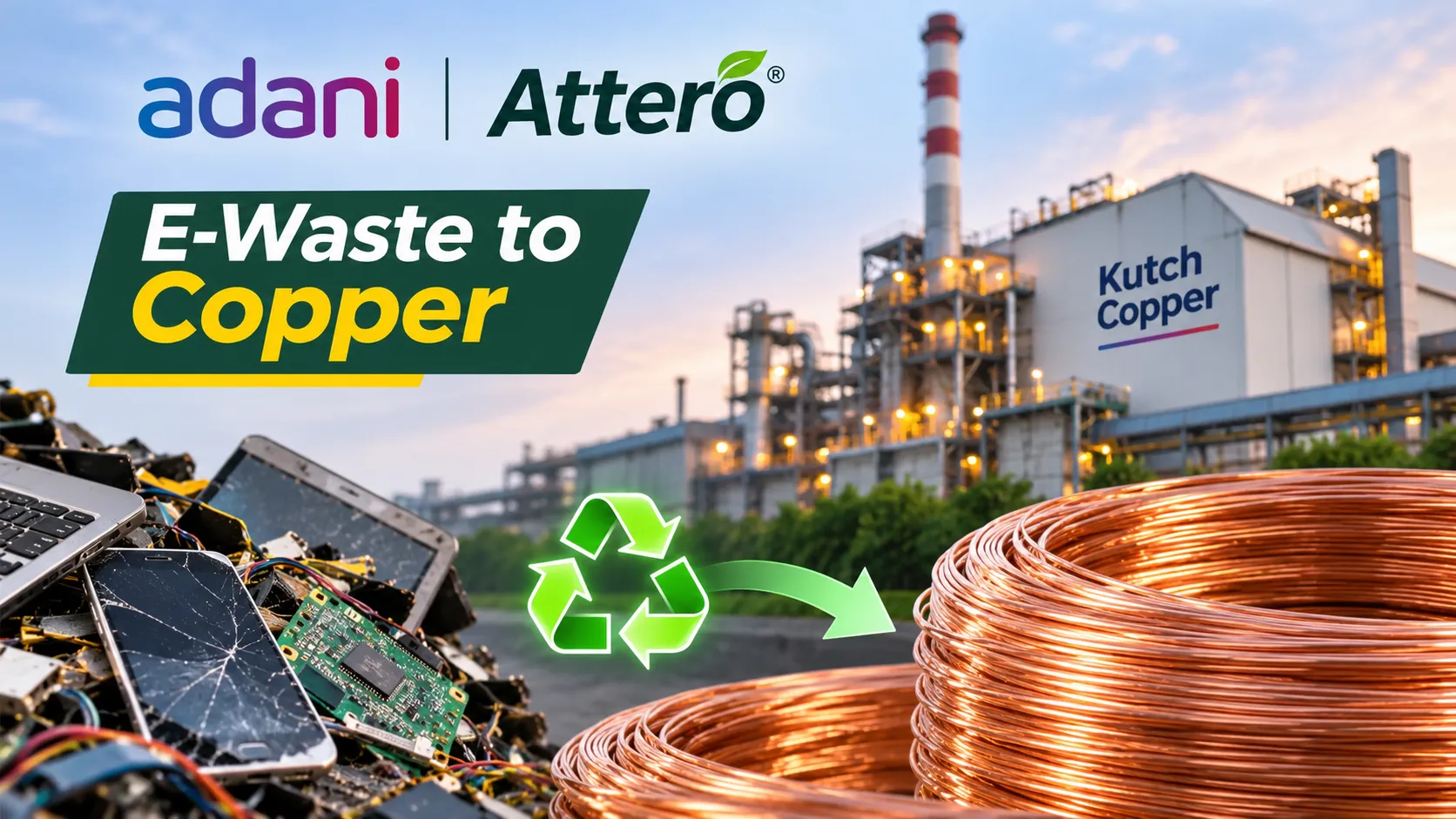
Adani Group's Kutch Copper has signed an agreement with Attero, a Noida-based company that recovers critical minerals from electronic waste and used batteries, to buy recycled copper anode, Reuters reported, according to Business Today on Tuesday, November 24.
Under the three-year agreement, Attero will supply 2,000 metric tonnes of copper anode a month, or about 24,000 tonnes a year. At prevailing market prices, the deal is worth about $1 billion, according to sources cited in the report.
The agreement was signed around three months ago but had not previously been disclosed, the report said. Adani did not respond to Reuters' request for comment.
Reducing import dependence
The recycled copper supply could reduce Kutch Copper's dependence on imports by about 5%, according to the report. Like most copper smelters in India, Kutch Copper relies heavily on imported copper concentrate, the partially processed ore from which copper is extracted.
India imported 859,509 tonnes of copper in the 2026 financial year, down 0.2% from the previous year, according to data from BigMint cited in the report. The country has refining capacity of nearly 1.3 million tonnes per year and produced about 704,000 tonnes of refined copper in FY26, up from 573,000 tonnes the previous year.
The world's largest single-location smelter
Kutch Copper's facility at Mundra in Gujarat began production last year with a capacity of 500,000 tonnes per year. Adani plans to double capacity to one million tonnes a year, which would make it the world's largest single-location copper smelter, according to the report.
The Adani Group has also been seeking to secure upstream supplies. Earlier this month, it signed an agreement with Chile's state-run copper company Codelco to develop the Kaburkaala copper exploration project, according to Business Today.
What Attero does
Attero collects and processes electronic waste, including discarded phones, computers and other devices, as well as end-of-life lithium-ion batteries. Using its own technologies, it extracts valuable metals such as copper, gold, silver, lithium, cobalt and nickel, which can be returned to manufacturing supply chains.
The company is one of India's leading players in what is often called "urban mining," the recovery of raw materials from waste products rather than from the ground.
Why copper matters
Copper is one of the most important metals for the energy transition. It is used in electrical wiring, power transmission and distribution networks, electric motors, solar panels, wind turbines, batteries and charging infrastructure. An electric vehicle typically contains several times more copper than a conventional car.
The rapid build-out of data centres for artificial intelligence has added further demand, as these facilities require large amounts of copper for power and cooling systems.
Analysts have warned that global copper supply may struggle to keep pace with demand, as new mines take many years to develop and existing mines face declining ore grades. Securing supply has become a strategic priority for many countries.
India's growing appetite
India's copper demand is rising quickly, driven by infrastructure construction, power sector investment, electrification, renewable energy and manufacturing growth under programmes such as Make in India. The government has identified copper as a critical mineral and is seeking to strengthen domestic supply chains.