
Less than 2 percent of global venture capital funding continues to flow to female founders, and the gap is even more pronounced across Africa, where less than 1 percent of total venture funding raised in 2025 went to women-led startups, according to data discussed at a recent industry panel focused on fundraising strategy for female entrepreneurs on the continent.
The discussion, part of an Insider Series event, brought together founders and industry practitioners to examine how the broader funding environment for African startups has shifted in recent years, with venture capital investors growing markedly more selective and demanding across the board, a tightening that has disproportionately affected already underfunded female founders.
The broader funding environment discussion at the event also touched on how venture investors across Africa have grown markedly more demanding in their due diligence expectations over the past two years, requiring founders to demonstrate considerably more mature evidence of product-market fit, customer retention and disciplined capital management before committing equity capital than was typical during the region's earlier, more exuberant funding cycles.
Fundraising strategy professionals across African startup hubs note that founders who successfully sequence grant funding ahead of equity fundraising often enter equity negotiations with meaningfully stronger leverage, since demonstrated traction funded through non-dilutive capital allows founders to negotiate valuation and terms from a position of established credibility rather than pure early-stage promise, a sequencing strategy increasingly taught within African accelerator and incubator programmes specifically targeting women entrepreneurs.
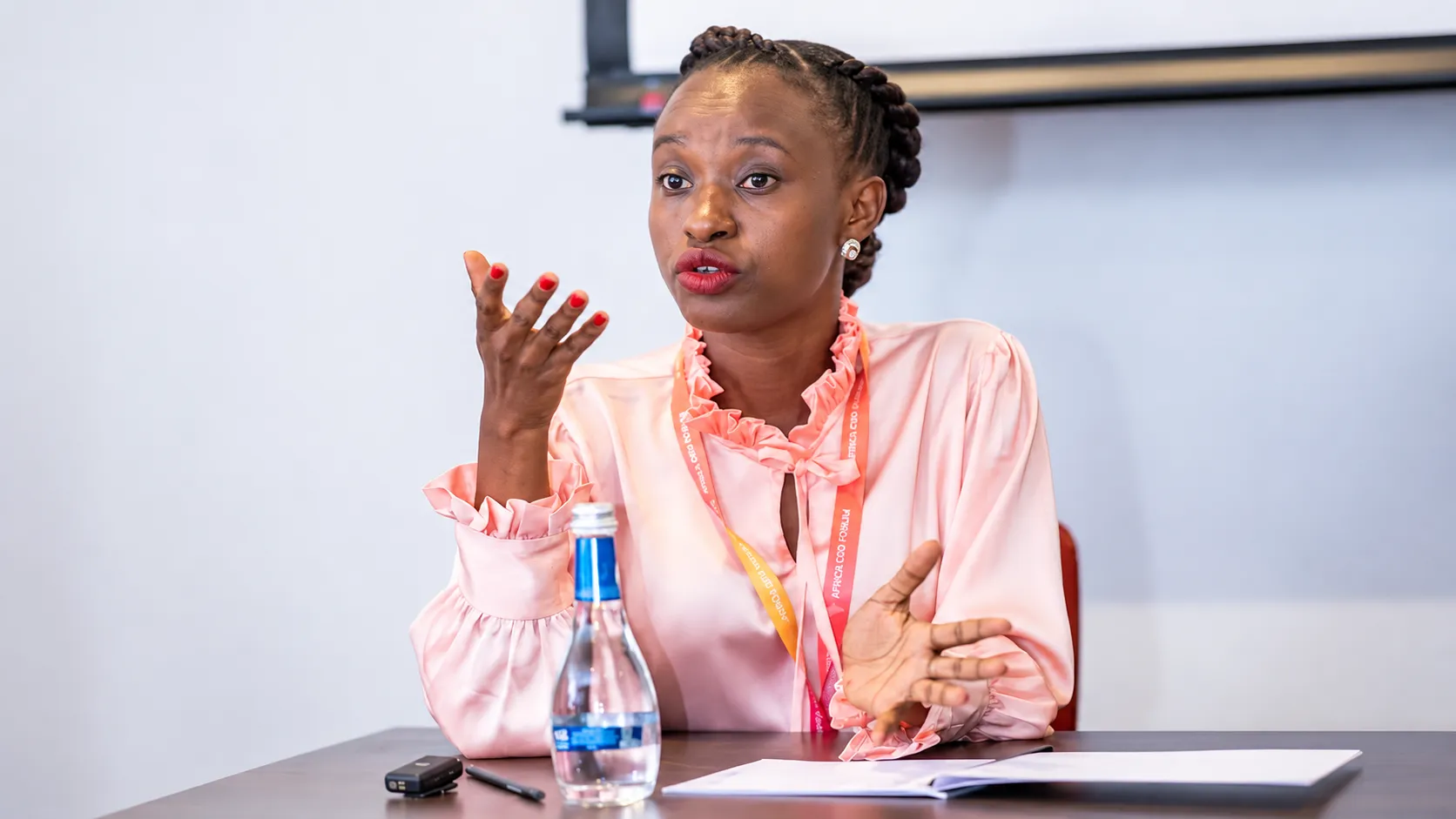
Speaking at the event, one fintech co-founder highlighted a specific and less commonly discussed advantage available to women entrepreneurs: data showing that women are roughly three times more likely than men to successfully raise grant funding, positioning grants as a particularly important, if underused, capital source for female founders still working to establish the traction typically required to attract equity investment.
That distinction matters considerably for early-stage founders navigating a funding environment where venture investors increasingly demand more concrete proof points before committing capital, including demonstrated customer traction, credible go-to-market execution and disciplined capital management, benchmarks that can be difficult for very early-stage companies to meet without some initial non-dilutive funding to build toward them.
Grant-making organisations focused on African entrepreneurship have themselves evolved considerably in recent years, moving beyond simple one-time award models toward more structured programmes that combine funding with mentorship, investor introductions and technical assistance, recognising that capital alone is often insufficient to help early-stage women-led ventures build the kind of traction that later attracts equity investment.
Comparative regional data shows funding gaps for women founders persisting across virtually every major startup ecosystem globally, though the scale of the gap in Africa, at under 1 percent of total venture capital according to the figures discussed at the event, stands out as particularly severe even relative to similarly wide gaps documented in other emerging and developed venture markets.
Grant funding carries a distinct strategic advantage for early-stage founders beyond simply being more accessible: because grants do not require founders to give up equity, they allow entrepreneurs to preserve ownership stakes and negotiating leverage for later funding rounds, potentially resulting in less dilution over a company's full fundraising lifecycle compared with founders who rely exclusively on early equity rounds to fund initial growth.
For African female founders specifically, the persistent equity funding gap has prompted growing interest in blended fundraising strategies that combine grants for early-stage validation and product development with equity fundraising reserved for growth-stage scaling, once a company has established the kind of traction metrics that make for a considerably stronger equity fundraising position.
Industry data on gender bias in venture capital decision-making, including research showing investors frequently ask women founders different categories of questions than their male counterparts, questions weighted more toward risk mitigation and less toward growth potential, continues to inform advocacy efforts pushing mainstream venture firms across Africa to examine and address unconscious bias within their own investment evaluation processes.
For diaspora-linked impact investors and philanthropic foundations focused on African entrepreneurship, the persistent equity funding gap for women founders highlighted at the event underscores a continued need for dedicated capital vehicles and grant programmes specifically targeting African women entrepreneurs, an area where diaspora capital, often more patient and mission-aligned than purely commercial venture funds, could play a particularly meaningful role.
The broader structural challenge, however, remains unresolved by grant funding alone: grants, by their nature, tend to be smaller and less suited to funding the kind of rapid scaling that competitive markets increasingly demand, meaning the persistent equity funding gap for African women founders continues to constrain how quickly women-led companies can grow relative to their male-led counterparts, even when grant funding helps address earlier-stage capital needs.
As African venture ecosystems continue to mature, closing this gap will likely require action on multiple fronts simultaneously, including more dedicated female-founder equity funds, continued expansion of grant programmes targeted specifically at women entrepreneurs, and sustained pressure on mainstream venture capital firms to address the structural and often unconscious biases that industry research has repeatedly documented in how investors evaluate women-led ventures.
As African startup ecosystems continue maturing across multiple regional hubs, from Lagos to Nairobi to Cairo, the persistence of such a stark funding gap for women founders suggests that closing it will require sustained, coordinated effort across grant-making bodies, dedicated female-founder investment vehicles and mainstream venture capital firms alike, rather than any single intervention proving sufficient on its own to meaningfully shift the continent's overall capital allocation patterns.
Policymakers across African markets focused on entrepreneurship development will likely continue examining regulatory and institutional levers, including public co-investment funds and targeted tax incentives, that could help mobilise additional equity capital specifically toward women-led ventures, complementing the grant-funding pathways that have so far provided the more accessible, if ultimately insufficient on their own, capital source for the continent's women entrepreneurs.
The bottom line for TIGI's readers: with less than 1 percent of African venture capital reaching women founders, grants have become a strategic bridge to equity rather than a consolation prize.
Fundraising advisors working with African founders increasingly recommend that women entrepreneurs map out a blended, multi-stage capital strategy from the outset, sequencing specific grant programmes against anticipated equity fundraising milestones rather than pursuing each capital source reactively as needs arise.