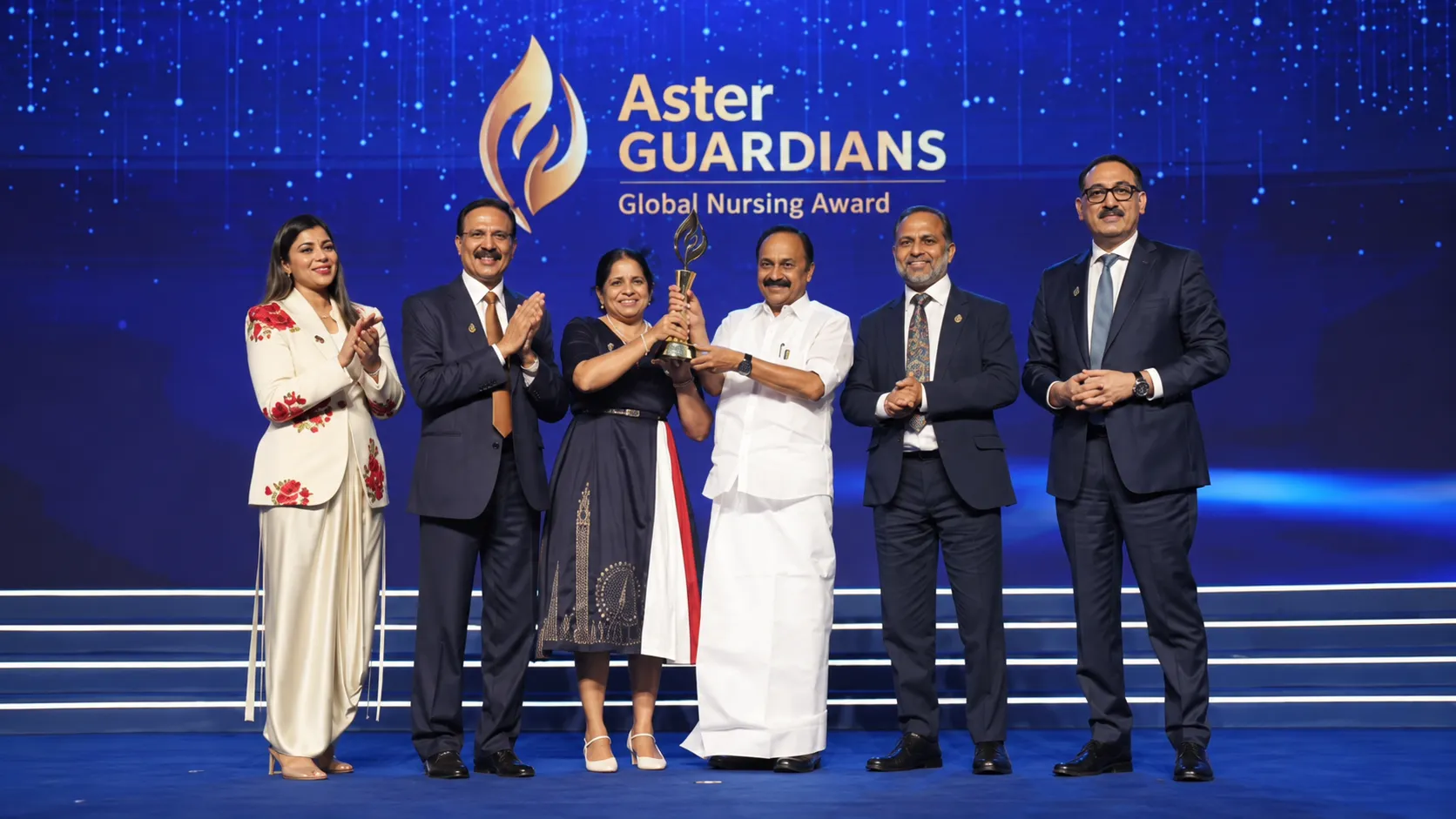
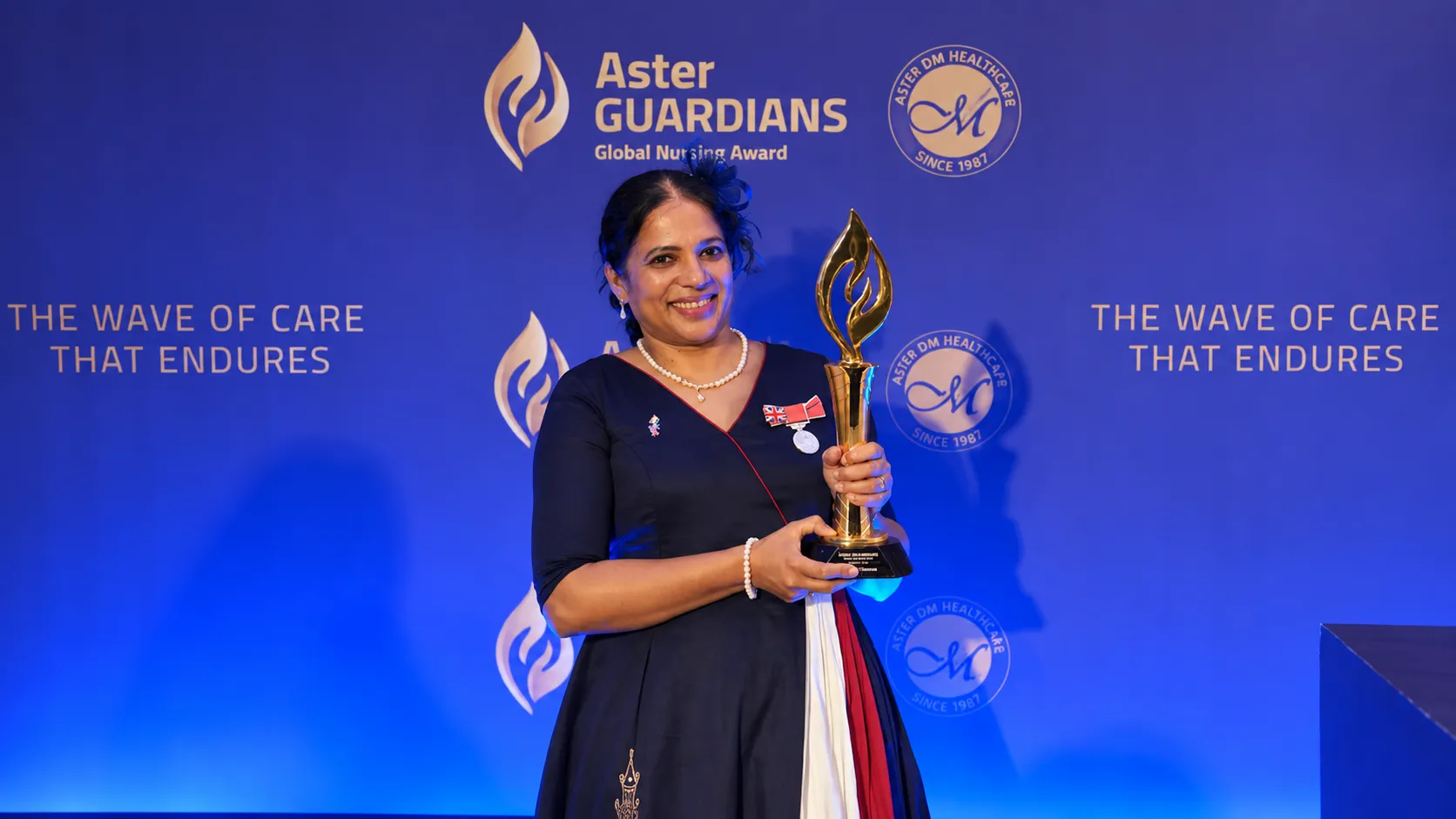
Agimol Pradeep, an Indian-origin nurse based in the United Kingdom, has won the $250,000 Aster Guardians Global Nursing Award 2026, recognising her pioneering work in organ transplantation care and stem-cell donation advocacy, the award's organisers confirmed September 16, 2026. Pradeep, a Senior Transplant Coordinator at King's College Hospital and Honorary Senior Lecturer at the University of Salford, has spent more than two decades working at the intersection of clinical transplant care and community-level advocacy, addressing a persistent and often overlooked challenge within organ and stem-cell donation systems worldwide: the chronic shortage of donors from Asian communities.
Pradeep began her career as a transplant nurse in Manchester in 2001, building clinical expertise in a field that demands both technical precision and considerable emotional resilience, given that transplant coordination work involves supporting patients and families through some of the most difficult and time-critical moments in medical care. Over more than twenty years in the field, she has built a reputation not only for her clinical contributions but for recognising and addressing a structural gap in donor recruitment that disproportionately affects patients from Asian and other minority ethnic backgrounds, who often face longer waiting times for compatible organ and stem-cell matches due to persistent underrepresentation of these communities within donor registries.
In 2014, Pradeep founded Upahaar, an organisation dedicated to promoting organ and stem-cell donation specifically within South Asian and other underrepresented communities in the United Kingdom, addressing donor shortages through community and faith-based outreach that has proven more effective at building trust and participation than conventional, one-size-fits-all public health campaigns. Under her leadership, Upahaar has grown into a UK-wide network supported by roughly 100 volunteers, registering approximately 10,000 potential donors over the course of the organisation's operation — a meaningful contribution to narrowing the persistent gap between donor availability and patient need within communities that have historically been underserved by mainstream donor-recruitment efforts.
The donor shortage Pradeep has dedicated much of her career to addressing reflects a well-documented and persistent challenge within transplant medicine globally: compatibility for organ and stem-cell transplantation is influenced by genetic and tissue-type factors that vary meaningfully across ethnic populations, meaning patients from underrepresented communities often face substantially longer waits for compatible donors when those communities are themselves underrepresented within national donor registries. Addressing that gap requires not just clinical infrastructure but sustained, culturally attuned community engagement — precisely the kind of work Pradeep has built her advocacy career around, combining her direct clinical experience as a transplant coordinator with a deep understanding of the cultural and religious considerations that can influence donation decisions within South Asian communities specifically.
The Aster Guardians Global Nursing Award, now in its recent editions, has emerged as one of the more significant international recognitions specifically honouring nurses whose work extends beyond direct clinical care into broader systemic impact, whether through research, advocacy, education or community health leadership. The $250,000 award carries both symbolic and practical significance, providing meaningful recognition to a profession that has historically received less public and institutional recognition relative to its central importance within healthcare systems worldwide, while also providing tangible resources that recipients like Pradeep can direct toward scaling the kind of community-level advocacy work that formal healthcare systems often lack the infrastructure to support directly.
Pradeep's recognition also carries particular resonance within the broader story of the Indian and South Asian diaspora's contributions to healthcare systems in countries around the world, a contribution that has often gone under-recognised relative to its scale, given how heavily countries including the United Kingdom, the United States and several Gulf states have relied on Indian-trained and Indian-origin healthcare professionals to staff their nursing and broader clinical workforces for decades. Her award adds to a growing body of international recognition for diaspora healthcare professionals whose work spans both frontline clinical excellence and the kind of community-level systemic advocacy that can meaningfully shift health outcomes for underserved populations over the long term.
Colleagues and healthcare policy observers have pointed to Pradeep's career as a model for how frontline clinical expertise can be translated into systemic public-health impact when paired with sustained, community-rooted advocacy work, a combination that remains comparatively rare within healthcare systems that often struggle to create institutional space and support for clinicians seeking to address structural gaps beyond their immediate clinical duties. Her ability to sustain Upahaar's community outreach work for over a decade alongside a demanding full-time clinical role at one of London's major teaching hospitals has itself become a case study cited within UK nursing leadership circles on how frontline practitioners can build lasting parallel institutions addressing gaps that formal healthcare systems have been slower to close.
The recognition also arrives at a moment when donor-registry diversity has drawn renewed policy attention across multiple countries, as health systems increasingly recognise that achieving equitable transplant and stem-cell matching outcomes requires donor registries that genuinely reflect the ethnic diversity of the patient populations they serve, rather than registries skewed disproportionately toward majority populations. Award organisers noted Pradeep's work as a clear demonstration of how targeted, culturally informed community engagement can measurably shift donor-registration outcomes in ways that broader, less targeted public health campaigns have historically struggled to achieve among the specific communities facing the most acute compatibility shortages.
For the broader Indian diaspora nursing community across the United Kingdom, the United States and the Gulf, Pradeep's award serves as a reminder of the outsized, if often quietly rendered, contribution diaspora healthcare workers continue to make well beyond their immediate clinical duties, frequently building the kind of community health infrastructure that formal systems have been slow to develop on their own.
Her story, organisers noted, is precisely the kind the award was created to honour: clinical excellence paired with a career-long commitment to closing gaps the system itself had long overlooked.