ImpactSustainability6 MIN READ

Alliance to End Plastic Waste Reports 138,000 Tonnes of Waste Reduced and $641 Million Catalysed in 2025

The Alliance to End Plastic Waste says its programmes reduced 138,162 tonnes of unmanaged plastic waste and valorised a further 165,317 tonnes in 2025, while catalysing $641 million in third-party and impact-investor funding commitments.

By Nisha Omkumar · Author10 September 2026New
Alliance to End Plastic Waste Reports 138,000 Tonnes of Waste Reduced and $641 Million Catalysed in 2025

The Alliance to End Plastic Waste, a global coalition working across the plastics value chain, reported that its programmes reduced 138,162 tonnes of unmanaged plastic waste and valorised a further 165,317 tonnes during 2025, according to figures disclosed in reporting published around September 9. Since the alliance's founding in 2019, cumulative reductions have reached 378,147 tonnes, alongside 418,529 tonnes of plastic waste valorised through recycling and recovery processes across its network of projects.

Beyond the direct waste-reduction figures, the alliance said it has catalysed $641 million in third-party and impact-investor funding commitments since inception, a figure that highlights the organisation's role not just as a direct implementer of waste-management projects but as a catalyst mobilising broader capital markets toward plastic circularity solutions. This capital-mobilisation function has become an increasingly important part of how large corporate-backed sustainability coalitions measure their impact, recognising that direct programme spending alone cannot address the full scale of the global plastic waste challenge.

Global plastic waste generation has continued to grow steadily even as awareness of its environmental consequences, from ocean pollution to microplastic contamination, has become increasingly mainstream across both public consciousness and regulatory agendas. Coalitions like the Alliance to End Plastic Waste, which bring together major consumer goods companies, petrochemical producers and waste-management firms, have positioned themselves as a mechanism for coordinated, cross-industry action on a problem that individual companies acting alone have struggled to meaningfully address given the scale and complexity of global waste-management infrastructure gaps.

The organisation's leadership described 2025 as a year of continued progress while emphasising the need to build sustained momentum for the years ahead, reflecting an acknowledgement within the sustainability sector that plastic waste reduction requires multi-year, infrastructure-intensive interventions rather than quick fixes, particularly across developing economies where formal waste-collection and recycling infrastructure often remains limited or absent entirely.
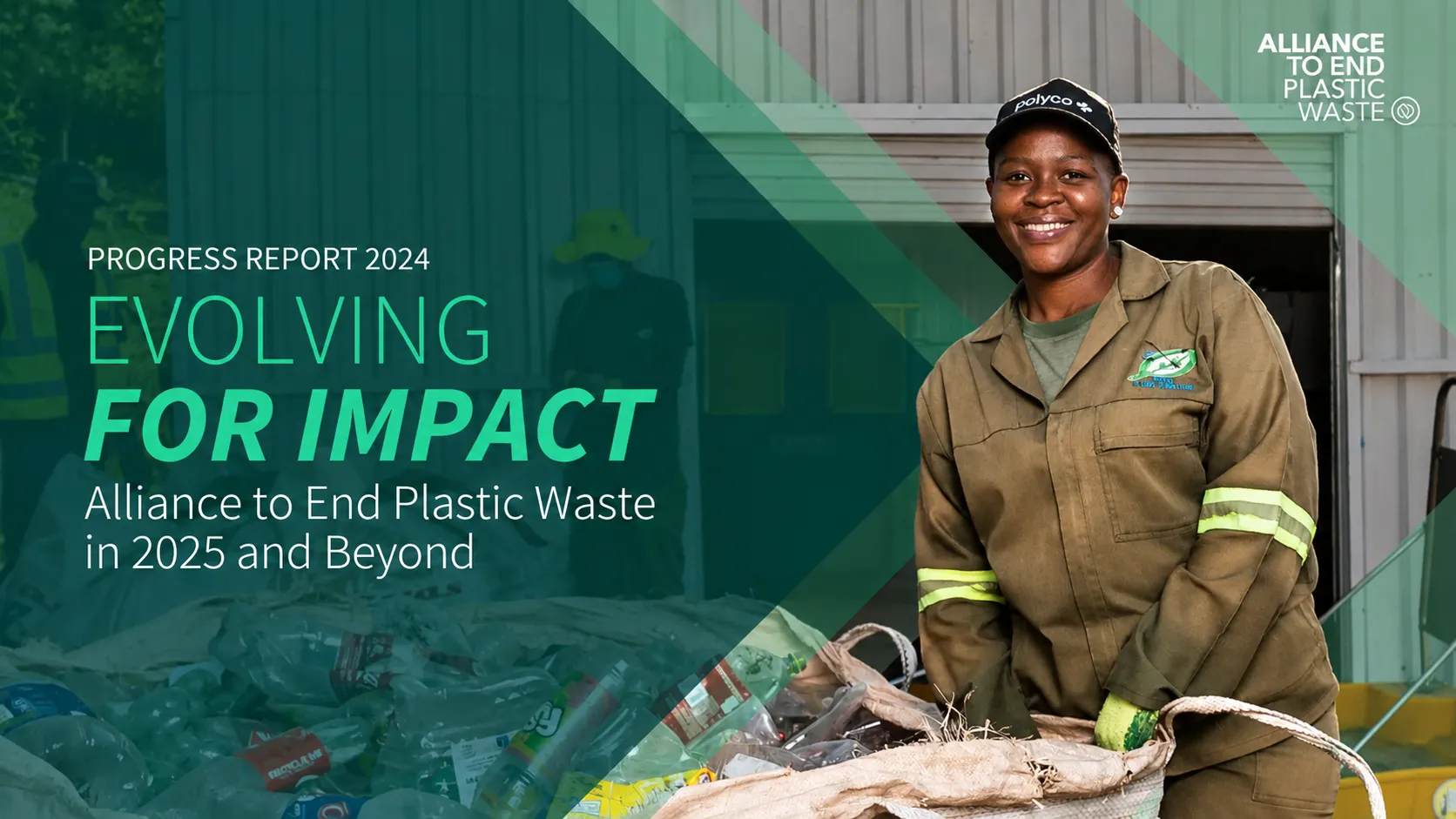

The alliance has catalysed $641 million in third-party and impact-investor funding commitments since inception, highlighting its role in mobilising broader capital toward plastic circularity.
Alliance to End Plastic Waste, 2025 impact data

image.png

Much of the alliance's project work has concentrated on building waste-collection and recycling infrastructure in regions with the greatest gaps in formal waste management, often in South and Southeast Asian and African markets, where informal waste-picker economies play an outsized role in actual plastic recovery rates but frequently operate without the capital, technology or market access needed to scale their impact meaningfully.

As global plastic production continues to rise and regulatory pressure intensifies across multiple jurisdictions, from extended producer responsibility mandates to outright restrictions on single-use plastics, the alliance's reported progress offers one data point in a much larger global effort to bend the trajectory of plastic waste generation, even as sustainability advocates continue to debate whether voluntary industry-led coalitions can achieve impact at the scale the crisis ultimately demands.

The alliance's continued emphasis on building physical waste-collection infrastructure, rather than solely funding awareness campaigns or policy advocacy, reflects a broader recognition within the sustainability sector that plastic waste reduction ultimately depends on tangible, operationally intensive infrastructure investment in regions currently underserved by formal waste-management systems.

India, home to several of the alliance's active project geographies, continues to grapple with its own significant plastic waste management challenges even as the country has introduced increasingly stringent extended producer responsibility regulations, making international coalition efforts of this kind particularly relevant to domestic policymakers and waste-management entrepreneurs working within the same broad problem space.

The Alliance to End Plastic Waste has indicated it expects to expand its project pipeline further in 2026, with additional geographic focus areas under evaluation, though specific new commitments had not been formally announced alongside the release of the 2025 impact figures at the time of this report.

TagsPlastic WasteCircular EconomySustainabilityImpact InvestingGlobal

Reader reviews

Sign in to rate and review this article.
Loading reviews…