ImpactTechnology5 MIN READ

Berlin's Amara Raises €3.7 Million to Bring Older Adults Into the Family Group Chat by Voice

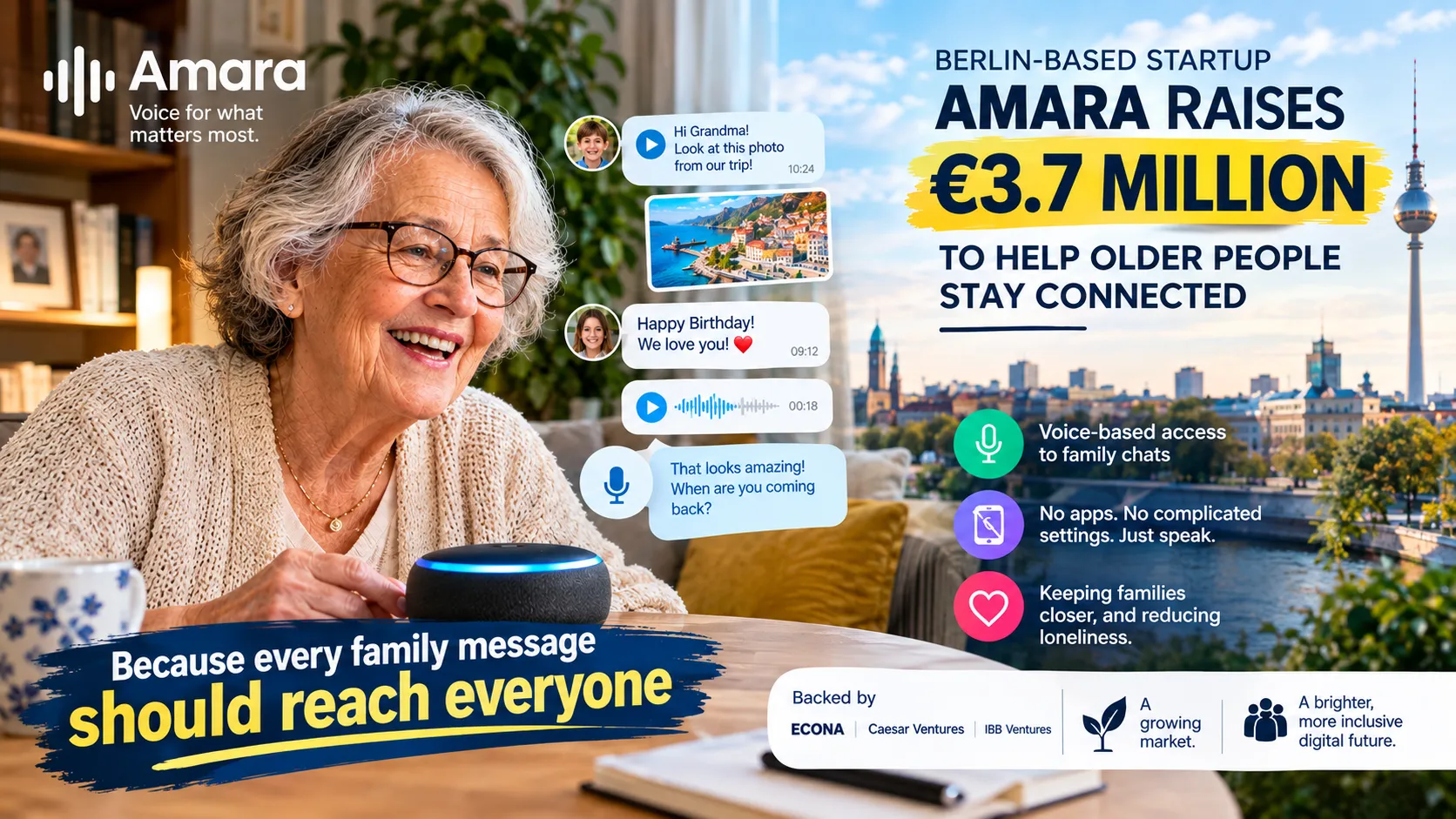
Berlin startup Amara has closed a €3.7 million pre-seed round from ECONA, Caesar Ventures and IBB Ventures to build a voice-based service that lets older people hear, answer and join their families' digital conversations without using an app.

3 October 2026New
Berlin's Amara Raises €3.7 Million to Bring Older Adults Into the Family Group Chat by Voice

For many families, the group chat has become the place where life is shared: photos of grandchildren, travel plans, birthday greetings, news big and small. For many older people, it remains out of reach. Small screens, unfamiliar apps and constant updates can make messaging platforms frustrating or impossible to use, leaving grandparents on the edge of conversations they would most like to join.

Amara, a Berlin-based startup, has raised €3.7 million to tackle that problem. The company closed a pre-seed funding round with participation from ECONA, Caesar Ventures and IBB Ventures, the venture capital arm of Berlin's state development bank, according to German startup platform Startbase, which reported the deal on 2 October.

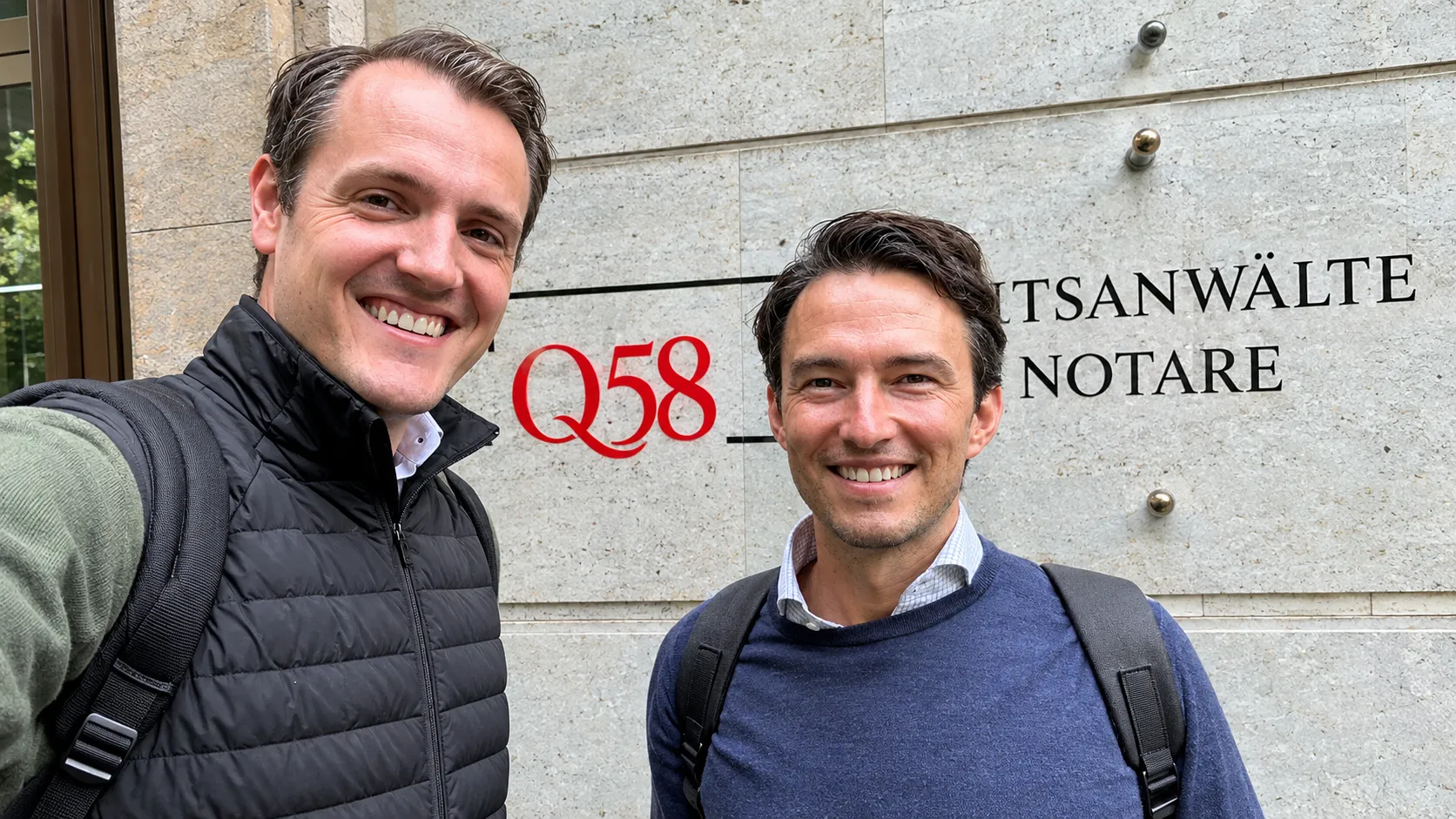
Co-founded by Philipp Hartz, Amara is developing a voice-based solution that allows older adults to access their families' chat messages by voice. Users can listen to messages, reply and ask questions without navigating an app or adjusting technical settings. The company describes its mission as making digital communication "more accessible to people in the second half of their lives".

For a pre-seed round, €3.7 million is a substantial sum, reflecting investor interest in a market that is growing as populations age across Europe and much of the world.

Designing for the people technology forgot

Consumer technology has often been designed by and for younger users. Interfaces assume good eyesight, fine motor control and familiarity with conventions such as swiping, long-pressing or navigating nested menus. For many older adults, especially those with declining vision, arthritis or cognitive changes, these assumptions create barriers.

Voice offers a way around them. Speaking and listening are natural forms of communication that do not require learning new interfaces. Smart speakers and voice assistants have shown that older users will adopt voice technology when it is simple and useful. Amara's approach applies that principle specifically to family communication, rather than offering a general-purpose assistant.

The key design challenge is to bridge two worlds. Younger family members will continue to use their preferred messaging platforms, sending text, photos and voice notes. Amara's role is to translate those messages into a format older users can access by voice and to carry their spoken replies back into the conversation. Done well, neither side has to change how they communicate.
Amara_ Voice Connecting Families.png

A demographic imperative

The market opportunity is driven by demographics. Germany has one of the oldest populations in Europe, with more than a fifth of residents aged 65 or over. Across the European Union, the share of older people is rising steadily as birth rates fall and life expectancy increases. Similar trends are under way in Japan, South Korea, China and, more gradually, in India.

An ageing population creates demand for products and services that help older people live independently, stay healthy and remain socially connected. This sector, often called "agetech" or the longevity economy, spans health monitoring, home safety, mobility, financial services and communication. Investors have shown growing interest as the spending power of older consumers has become clearer.

Loneliness as a health issue

Amara's focus on communication touches on a serious public health concern. Loneliness and social isolation among older adults have been linked by researchers to a range of poor health outcomes, including higher risks of depression, cognitive decline and cardiovascular disease. The World Health Organization has identified social isolation and loneliness as a significant global health priority.


“To make digital communication more accessible to people in the second half of their lives.”
— Amara, on its mission

Families separated by distance often rely on digital channels to stay in touch. When an older relative cannot use those channels, they may miss everyday interactions that sustain relationships. Tools that lower the barrier to participation could have benefits that go beyond convenience, though the impact of any specific product will need to be demonstrated in practice.

There are also important design questions around privacy and trust. Voice systems that read messages aloud and transcribe replies handle personal family information. Older users can be targets for scams, and any communication product aimed at them must be designed to protect against fraud and misuse. How Amara addresses those risks will be an important part of its credibility with families.

Europe's early-stage funding week

Amara's round was one of several early-stage deals in Germany reported in the same week. IBB Ventures also took a stake in OYL Foods, a Berlin-area consumer brand founded by Julius Rüßmann and Nicolas Linsenmaier that sells single-variety extra virgin olive oil. Venture firm Headline launched a €400 million fund for European startups, and Generation Tech Partners closed a fund of more than €60 million focused on owner-managed German service companies.

Public bodies were active too. Germany's environment ministry and the Federal Agency for Disruptive Innovation, SPRIND, announced a €30 million challenge for artificial intelligence applications in the circular economy, with applications due in November. Investors' interest in the sector also reflects a shift in how technology companies think about their users. For years, products were optimised for engagement among younger audiences, whose habits drove growth metrics. As those markets saturate and populations age, companies are recognising that older adults represent a large, underserved and often financially secure customer base. Designing for them requires different priorities: clarity over novelty, reliability over constant feature updates, and trust over growth hacking. Startups that internalise those priorities early may find themselves well placed as the market matures.

What comes next

With its pre-seed funding in hand, Amara's immediate task will be to build and refine its product with real users. Agetech companies often find that adoption depends as much on younger family members as on the older people who use the product, since children and grandchildren frequently research, buy and set up devices or services for their parents. Marketing to both generations, and designing onboarding that requires minimal effort, will be critical.

The company will also need to decide how it makes money. Options in the sector include subscriptions paid by families, partnerships with care providers or insurers, and integration with existing devices. Each brings different trade-offs between reach and revenue.

For the global Indian diaspora, the problem Amara is solving will feel familiar. Millions of families have parents and grandparents in India while children work and live abroad, and keeping older relatives connected across continents is a daily concern. Voice-first tools designed with multiple languages in mind could have particular relevance in such settings.

The broader lesson is that technology's next frontier is not only about building more powerful products, but about including people who have been left out. Amara's bet is that a simple voice, carrying a family's messages, can close one of the quietest gaps of the digital age.

TagsAmaraAgeTechElder CareAgeing PopulationVoice TechnologyDigital InclusionGermanyBerlinPre-seedIBB VenturesCaesar VenturesECONALonelinessImpact TechnologyEuropean Startups

Reader reviews

Sign in to rate and review this article.
Loading reviews…