ImpactStories5 MIN READ

Amazon India Adds 50 Ashray Rest Centres as Heat, Long Shifts Push Delivery Worker Welfare Up the Agenda

Amazon India is opening 50 more Ashray rest centres for delivery drivers, taking the network to 200 and extending air-conditioned mobile rest vans to Bengaluru, as scrutiny of gig-worker conditions intensifies.

By Prathista Lazar · Author7 October 2026New
Amazon India Adds 50 Ashray Rest Centres as Heat, Long Shifts Push Delivery Worker Welfare Up the Agenda

Amazon India is setting up 50 new Ashray rest centres for delivery drivers, taking its network to 200 locations and keeping it on course to reach 250 by the end of 2026, the company said on 6 October.

It is also extending its air-conditioned mobile Ashray vans to Bengaluru, the fourth city to receive them after Delhi NCR, Mumbai and Hyderabad. The vans are stationed along delivery routes, where fixed centres are harder to place.

The expansion comes as the conditions of India's last-mile workforce, the riders and drivers who carry parcels and meals through crowded cities in extreme heat and monsoon rains, attract growing attention from policymakers, labour groups and consumers.

What an Ashray centre offers

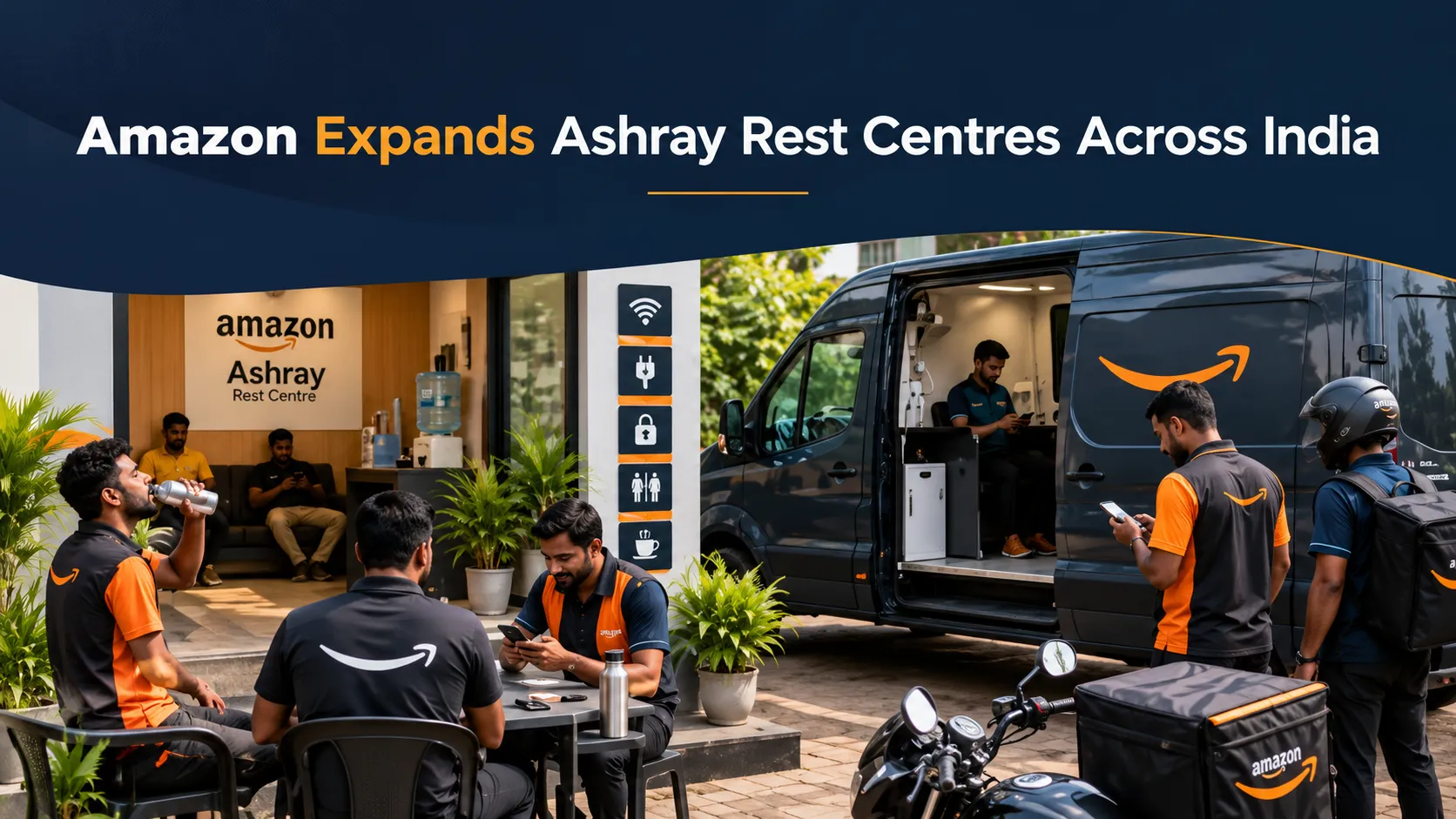
Launched in Delhi NCR in 2024, Ashray is a delivery-driver welfare initiative built around a simple premise: people who spend most of their working day on the road need somewhere to pause. Each centre has air-conditioned seating, drinking water, charging points for mobile phones, clean washrooms, first-aid kits and a place to rest.

Centres accommodate 10 to 15 people at a time and offer free access for up to 30 minutes per visit, with parking for two-wheelers. They operate year-round from 9 a.m. to 7 p.m. and are located at high-footfall points such as petrol pumps and commercial complexes, chosen to sit close to the routes drivers already use.

Importantly, the centres are open to all delivery drivers, not only those working on Amazon's network. That choice turns what could have been a narrow employee benefit into a piece of shared urban infrastructure, used by riders working for food-delivery apps, quick-commerce platforms and logistics firms alongside Amazon's own partners.

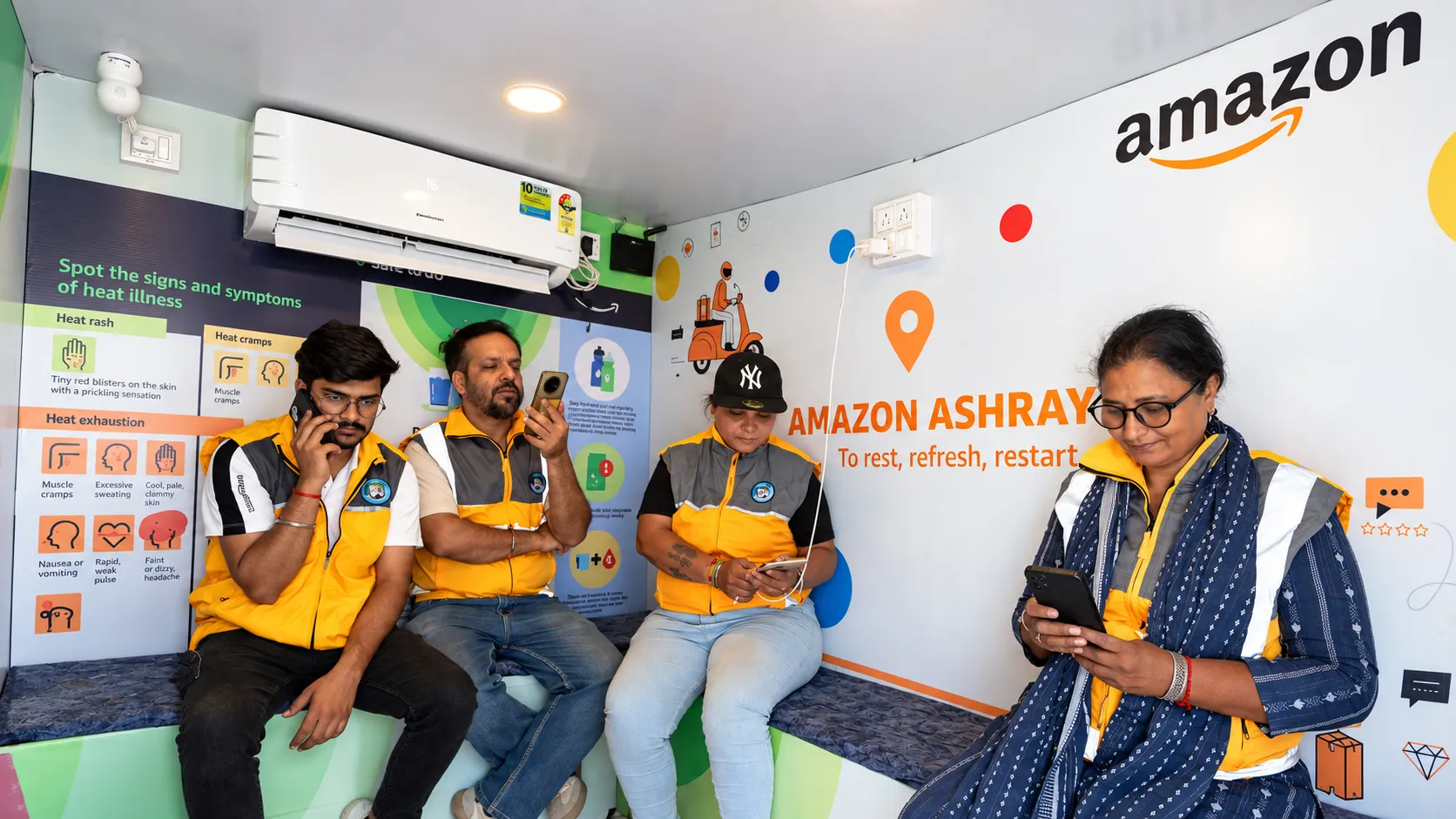
The mobile vans follow the same logic on wheels. They are fully air-conditioned and equipped with seating, drinking water, Wi-Fi and charging points, and can be positioned where drivers congregate, including in dense commercial districts where finding space for a permanent centre is difficult.

"Ashray was built on a simple idea — that every delivery driver deserves a clean, cool place to rest," said Salim R. Memon, director of operations at Amazon India.

From pilot to national network

The programme has scaled quickly. After a 2024 pilot across Delhi NCR, Bengaluru and Mumbai, Amazon expanded Ashray to 100 centres in 2025. In May 2026 it reached 150 centres and introduced mobile vans in Delhi NCR, and by September the network had grown to 200 centres across 16 cities, with vans running in four cities.

The initiative sits within a broader commitment. Amazon India has said it will spend more than ₹2,800 crore, about $300 million, in 2026 on the safety, health and financial wellbeing of associates across its operations, a figure that covers programmes ranging from insurance and health check-ups to safety training.

Rest infrastructure has become a more pressing issue as Indian summers grow hotter. Heatwaves in recent years have pushed daytime temperatures in northern and central Indian cities well above 45 degrees Celsius, and public-health experts have warned that outdoor workers face elevated risks of heat stress, dehydration and exhaustion. Delivery riders, who may spend 10 hours or more outdoors, are among the most exposed.

Heat is not only a summer problem. Monsoon downpours, flooding and humidity create their own hazards for riders, who may have nowhere to shelter while waiting for the next order. A network of covered, cooled spaces gives them a place to wait out the worst conditions rather than idle on the roadside, which can also reduce the temptation to ride through dangerous weather to protect earnings.

“Ashray was built on a simple idea — that every delivery driver deserves a clean, cool place to rest.”
— Salim R. Memon, Director of Operations, Amazon India

The choice of petrol pumps as host locations is deliberate. Riders already stop there to refuel, they are spread across cities in a dense grid, and operators have space and basic utilities. Partnering with fuel retailers and commercial property owners allows Amazon to expand the network without building standalone facilities, which helps explain how the programme has grown so quickly.

Access to toilets is a quieter but persistent concern, particularly for women in the delivery workforce, whose numbers platforms have been trying to increase. Clean, safe washrooms along routes can make the difference between a job that is viable and one that is not.

648fef35-68bf-472d-bf63-a043bd63c269.png

A wider reckoning with gig work

Amazon's expansion comes against a backdrop of rising regulatory and public scrutiny of platform work in India. Rajasthan and Karnataka have passed laws aimed at the welfare of platform-based gig workers, and national labour codes that bring gig and platform workers within the scope of social security provisions have created new expectations of the companies that rely on them.

Worker groups have campaigned on issues ranging from payouts and algorithmic penalties to accident insurance and the pressure created by ever-shorter delivery promises. Rest centres do not address all of those concerns, and critics argue that the most important determinants of a rider's welfare are earnings, working hours and job security. But physical infrastructure is visible, measurable and immediately useful, which helps explain why companies have increasingly invested in it.

For e-commerce companies, driver welfare is also a business question. Delivery networks depend on a large, stable pool of riders, and turnover is costly: every departing driver has to be recruited, onboarded and trained, and new riders are typically slower and less familiar with routes. Facilities that make the job more bearable can help retention, particularly during festive seasons when parcel volumes surge and competition for riders intensifies across platforms.

Amazon is not alone. Food-delivery and quick-commerce companies have experimented with rest points, heat-relief measures and insurance products for their partners, and industry bodies have discussed shared facilities. Amazon's decision to keep Ashray open to all delivery workers could encourage further collaboration in an industry where riders frequently switch between platforms.

Measuring the impact of such programmes remains difficult. Usage figures, rider feedback and data on heat-related incidents would help show whether the centres change outcomes or simply provide comfort. Publishing that evidence would strengthen the case for wider adoption and help cities and companies decide where shared rest infrastructure is most needed.

The target of 250 centres by the end of the year is modest relative to the size of India's delivery workforce, which numbers in the millions. But the programme's rapid growth, from a pilot to 200 locations in roughly two years, shows how quickly a practical welfare idea can scale when a large company commits to it. The next question is whether such facilities become standard across the industry, or remain the initiative of a handful of firms.

TagsAmazon IndiaAshrayDelivery WorkersGig EconomyWorker WelfareHeatwaveLast-Mile DeliveryLabourSocial ImpactE-commerceIndia

Reader reviews

Sign in to rate and review this article.
Loading reviews…