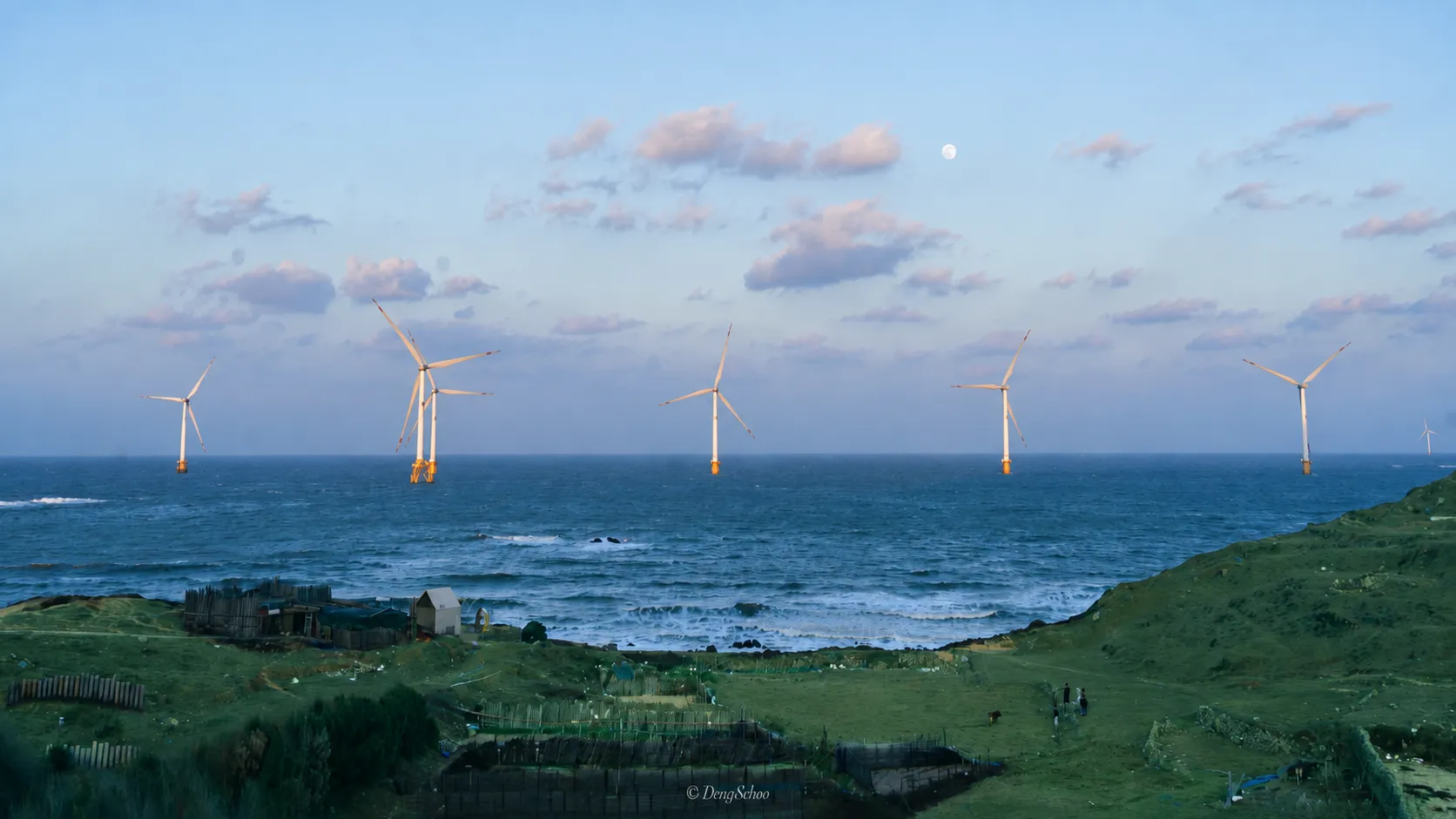
Amazon has signed a new power purchase agreement (PPA) with Norwegian energy company Statkraft for electricity from the Mossy Hill wind farm, a planned onshore project on the outskirts of Lerwick in the Shetland Islands, Scotland. The deal, announced on 30 September 2026, is the latest addition to Amazon's growing portfolio of carbon-free energy projects in the United Kingdom.
Under the agreement, Amazon will take 36 megawatts (MW) of renewable electricity from the wind farm. The company says that is enough to power the equivalent of more than 57,000 homes a year. Mossy Hill is expected to become operational in November 2030, with its turbines due to be delivered in 2029. The project will consist of eight onshore turbines.
The deal takes Amazon's UK carbon-free energy portfolio to more than 50 projects, representing more than 1 gigawatt of capacity. Of those, 41 are solar installations on the rooftops of Amazon's logistics buildings, while the rest are a combination of off-site wind and solar projects.
An anchor customer for a remote project
For Statkraft, the agreement provides the commercial certainty needed to proceed with construction. Long-term PPAs with creditworthy buyers allow developers to secure financing, because lenders can see a predictable stream of revenue for the life of the contract.
"We're pleased to have agreed a partnership with Amazon for our Mossy Hill Wind Farm in Shetland, which gives us the certainty to move the project forward," said Kevin O'Donovan, Statkraft's UK and Ireland country manager. "Shetland has a proud history of energy production, and as the country shifts towards more homegrown renewable power, we're proud to be playing our part in that transition."
Statkraft, which is owned by the Norwegian state and is one of Europe's largest renewable energy generators, acquired the consented Mossy Hill and Beaw Field projects in Shetland from Peel Group in 2023, and has since expanded its presence in the islands.
Amazon's UK clean energy strategy
"Our latest project in the Shetland Islands builds on years of investment in renewable energy across the UK," said John Boumphrey, Amazon's UK and Ireland country manager. "From the Shetland Islands to the coasts of England, our renewable energy investments are creating real jobs and powering local communities. Last year we announced our plan to invest £40 billion ($53bn) in the UK by 2027, and the transition to a lower-carbon economy is a part of how we're putting that commitment to work."
The company has invested more than £3 billion in low-carbon technologies in the UK. In June, it signed a 90 MW PPA for the Chirmorie wind farm in South Ayrshire, Scotland. Its other UK and Irish deals include agreements with ERG in Northern Ireland, Iberdrola in East Anglia and Ocean Winds in Scotland.
Why technology companies are buying wind and solar
Large technology companies have become the world's biggest corporate buyers of renewable energy. Their data centres, which power cloud computing and increasingly artificial intelligence, consume vast amounts of electricity, and their climate commitments require them to match that consumption with clean power.
Amazon, which runs Amazon Web Services, the world's largest cloud computing provider, has said it aims to reach net-zero carbon emissions across its operations by 2040. Signing long-term PPAs for new wind and solar projects allows it to add new clean energy to the grid, rather than simply buying certificates from existing plants, which is generally seen as a more credible approach to decarbonisation.
The rapid growth of AI has intensified the pressure. Data centre power demand is rising sharply in many countries, and technology companies are signing deals for wind, solar, battery storage, nuclear and other low-carbon sources at a record pace. Venture investment in climate technology rose 55% to $26.1 billion in the first half of 2026, according to market intelligence firm Currence, with data centre-related energy technologies accounting for about a third of the total.
The Scottish islands' energy potential
Shetland has some of the strongest and most consistent wind resources in Europe, making it an attractive location for wind power. For years, however, its remoteness limited development, because the islands were not connected to the mainland electricity grid.
That changed with the construction of a high-voltage subsea transmission link connecting Shetland to the Scottish mainland, which allows large-scale renewable generation in the islands to supply the wider UK grid. The link has opened the door to a new generation of wind projects, including the large Viking wind farm.
Scotland has a target of significantly expanding its onshore wind capacity by 2030, and projects in the islands are an important part of that plan. However, they have also faced local opposition from residents and campaign groups concerned about the impact on landscapes, peatland and wildlife. Developers have sought to address those concerns through community benefit funds and environmental mitigation measures.
Local economic impact
Wind projects in remote areas can provide meaningful economic benefits through construction jobs, long-term maintenance work, payments to landowners and community funds. Statkraft has said its investment in Shetland will bring significant spending to the islands, and it has opened a local presence as part of a wider commitment to the area.
For Amazon, supporting projects across different parts of the UK also helps strengthen its relationships with governments and communities in regions where it operates warehouses, data centres and offices.
What it means for the corporate clean energy market
Amazon's deal illustrates a broader trend: corporate buyers increasingly sign agreements for projects that will not deliver power for several years, effectively financing new capacity. Mossy Hill will not generate electricity until 2030, but the PPA allows it to be built.
That forward commitment is critical for the energy transition. Without long-term buyers, many renewable projects struggle to secure financing, particularly in markets where government support schemes are limited or oversubscribed.
As AI-driven electricity demand grows, competition among technology companies for clean power is likely to intensify. Deals like Mossy Hill show how the world's largest companies are reaching into even the most remote corners of the energy map to secure the supply they need, and how that demand is helping to build the renewable infrastructure of the next decade.