Some of the world's most extraordinary journeys are made by creatures that weigh less than a smartphone.
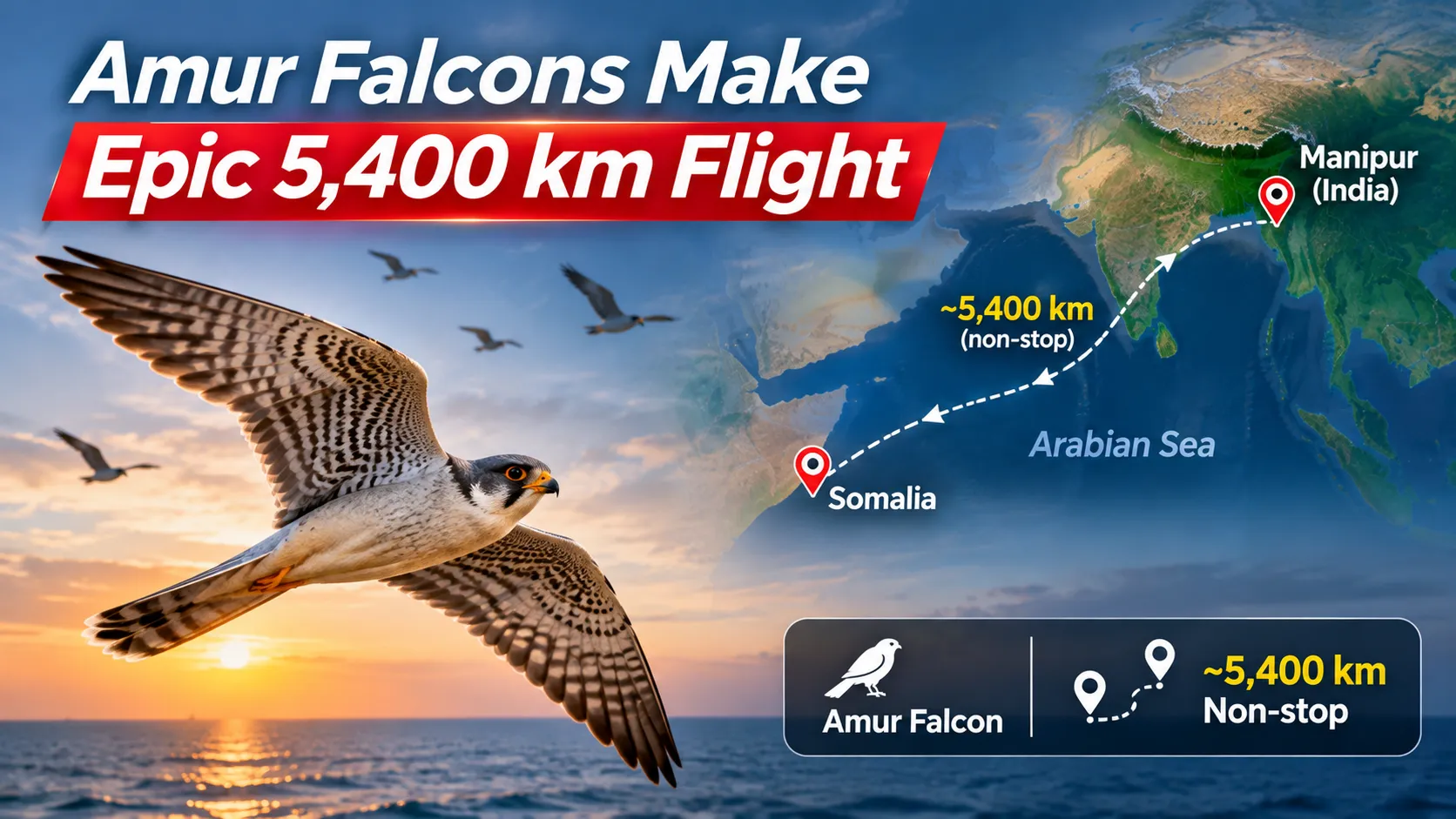
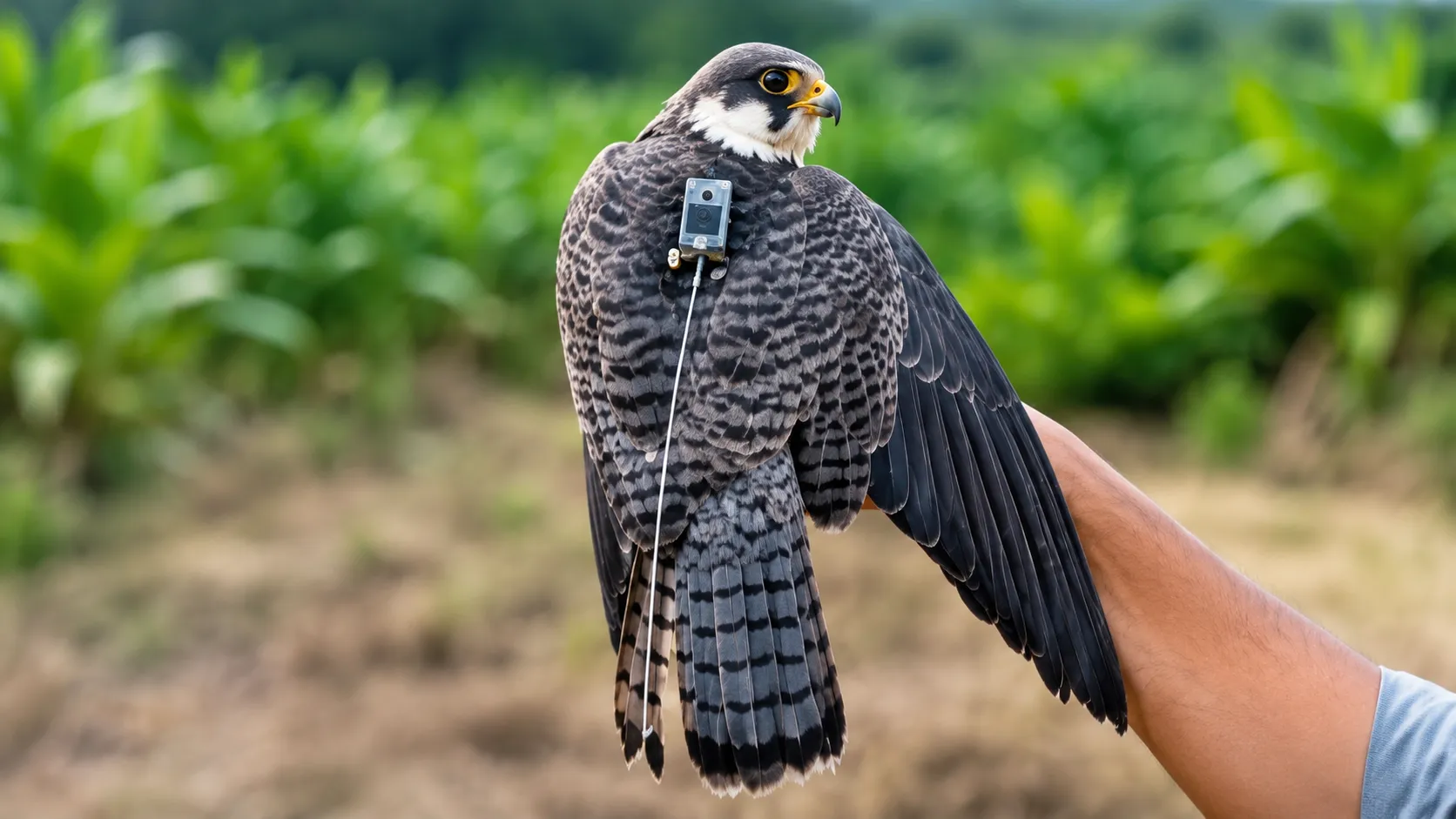
An adult male Amur falcon named Apapang, fitted with a satellite tag in Manipur, has flown about 5,400 km non-stop across the Arabian Sea to reach Somalia by Monday, November 23. A young female named Alang reached Somalia on November 21 after flying about 5,700 km, according to current affairs reports tracking the birds.
Both falcons were tagged in November 2025 by the Wildlife Institute of India and the Manipur forest department as part of a long-running study of the species' migration.
An astonishing journey
Amur falcons are small birds of prey, weighing roughly 150 to 200 grams. Each year, they undertake one of the longest migrations of any raptor, travelling from their breeding grounds in south-eastern Siberia, northern China and Mongolia to their wintering grounds in southern Africa, a round trip of more than 20,000 km.
On the way, they stop in North-East India, particularly in Manipur and Nagaland, where huge flocks gather in October and November to rest and feed on insects before continuing their journey.
The most remarkable part of the migration is the crossing of the Arabian Sea. Leaving India's west coast, the falcons fly across the open ocean to the Horn of Africa without stopping, a journey of several thousand kilometres over water with nowhere to land. Scientists believe they take advantage of favourable winds and may feed on dragonflies that make similar migrations.
What satellite tracking reveals
Satellite tagging has transformed scientists' understanding of the Amur falcon's journey. Small, lightweight transmitters attached to the birds send location data, allowing researchers to follow their routes, speeds and stopover points in near real time.
The data from birds such as Apapang and Alang show the precise paths taken across the ocean and the time required. Previous tagging studies in Manipur and Nagaland have tracked falcons over multiple years, revealing that individual birds often return to the same roosting sites in India year after year.
The birds are often named after local villages or landmarks, helping build a connection between communities and the falcons.
From hunting to protection
The Amur falcon story is also one of the most celebrated conservation turnarounds in India. In 2012, investigations revealed that thousands of falcons were being trapped and killed for food at roosting sites in Nagaland's Wokha district during the migration season.
The revelations prompted an intensive conservation effort involving the state government, conservation organisations, scientists and, crucially, local communities. Villages that had hunted the birds agreed to protect them, community members became guardians of roosting sites and awareness campaigns were run in schools and churches.
Within a few years, the killing had largely stopped, and Nagaland began promoting itself as the "Falcon Capital of the World." The Pangti village area in Wokha now hosts huge gatherings of falcons that attract birdwatchers and researchers.
Manipur's role
In Manipur, the Tamenglong district has become an important site for Amur falcon conservation. Local communities and the state forest department have worked to protect roosting sites, and the district hosts an annual festival celebrating the birds.
The satellite-tagging programme in Manipur has provided valuable data and helped raise awareness about the importance of protecting migratory species.