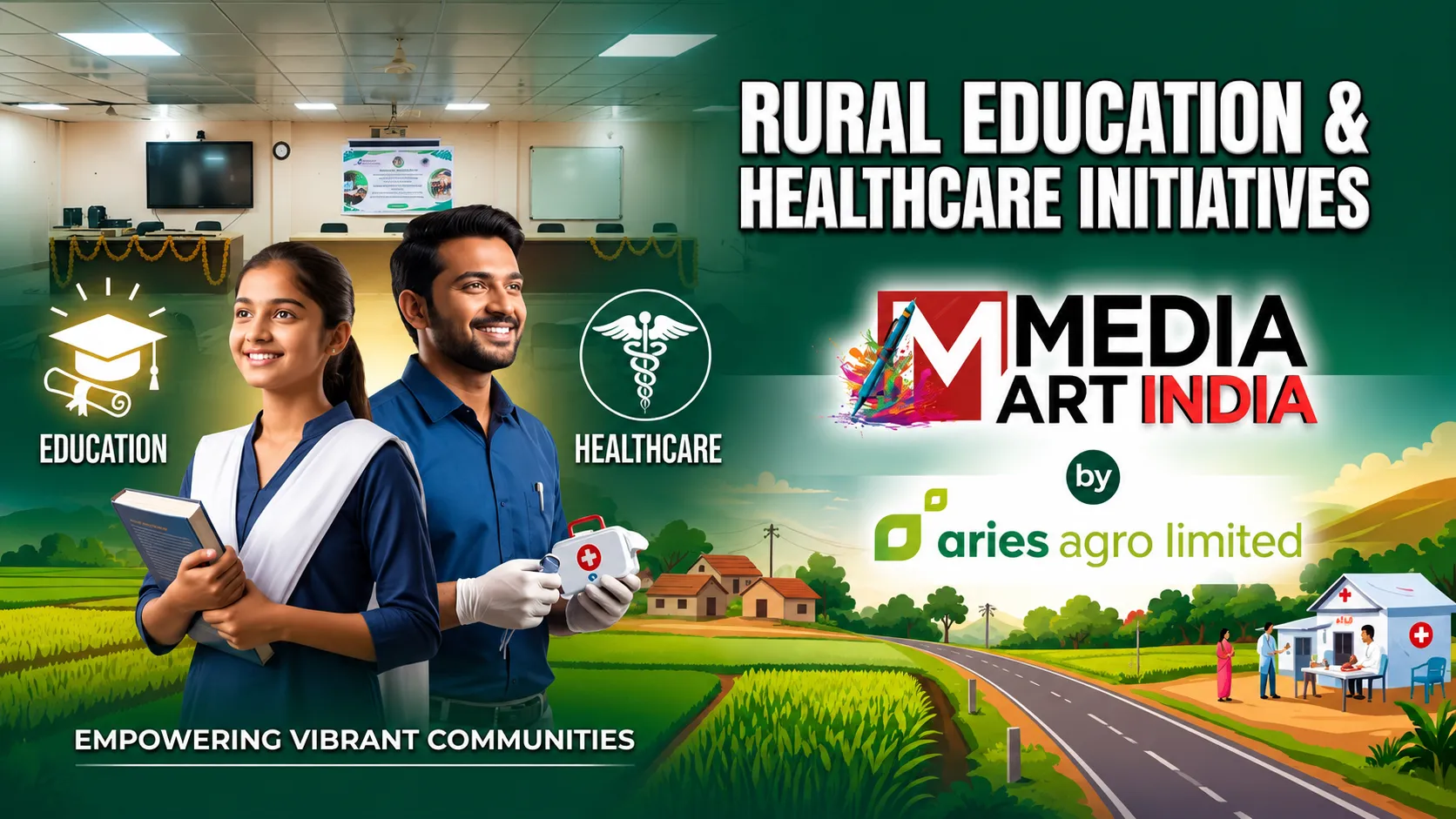
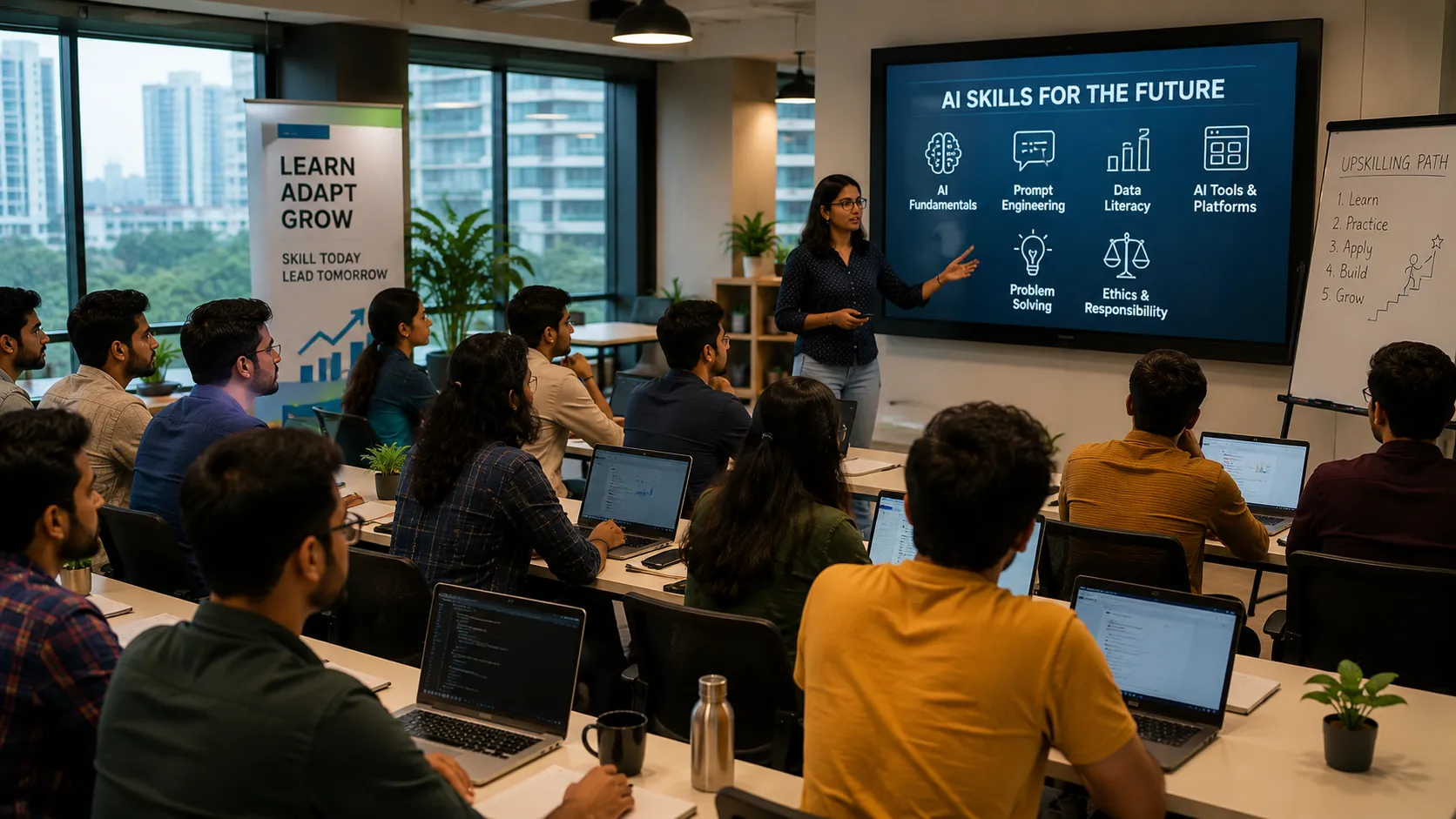
Aries Agro Limited has announced two new technology-led corporate social responsibility initiatives focused on rural education and assistive healthcare, expanding a CSR portfolio that has increasingly leaned toward measurable, technology-enabled interventions rather than one-off donation drives. The announcement adds the agrochemical and animal nutrition company to a growing list of Indian corporates that have shifted their community investment strategies toward outcome-driven programme design over the past several years.
The dual focus on education and healthcare reflects a pattern seen across much of India's CSR landscape in 2026, as companies increasingly recognise that rural communities, particularly those connected to agricultural supply chains, often face compounding gaps across both learning infrastructure and access to basic health services.
The initiative also reflects a broader shift within India's regulatory framework for corporate social responsibility spending, where amendments to reporting requirements over recent years have pushed companies toward more detailed outcome disclosure, encouraging a shift away from simple expenditure reporting toward genuine impact measurement across the specific communities and beneficiary groups that CSR programmes are designed to serve.
CSR practitioners note that agricultural-sector companies occupy a distinctive position when designing rural community initiatives, since their field staff and distribution partners typically maintain year-round, relationship-based engagement with farming communities that extends well beyond the transactional interactions more common in other industries, giving companies like Aries Agro deeper contextual insight into specific local needs than externally designed, one-off CSR interventions can typically achieve.
For a company with deep roots in India's agricultural input sector, extending CSR investment into rural education carries a natural strategic logic: the same communities that form Aries Agro's customer and distribution base are frequently the ones facing the most acute gaps in schooling infrastructure, digital literacy and vocational skill-building. Rural education initiatives launched by agricultural-sector companies often focus specifically on bridging digital access gaps, providing schools with basic technology infrastructure that urban institutions have long taken for granted.
The assistive healthcare component of the initiative similarly reflects a broader shift within India's CSR ecosystem toward interventions aimed at underserved populations with specific accessibility needs, a category that has historically received comparatively less corporate attention than headline areas such as general healthcare access or basic education infrastructure.
Agricultural input companies in particular occupy a distinctive position within India's CSR landscape, since their core business relationships already extend deep into rural farming communities through distribution networks, extension services and farmer engagement programmes, giving them a natural advantage in designing and delivering CSR interventions that can leverage existing community trust and logistical infrastructure rather than building entirely new outreach channels from scratch.
Industry benchmarking of Indian agricultural sector CSR spending shows education and healthcare consistently ranking among the top intervention categories chosen by companies with rural distribution footprints, reflecting both genuine community need and the practical logistical advantage such companies hold in delivering programmes through networks they have already built for entirely separate commercial purposes.
India's CSR spending has crossed INR 40,000 crore annually according to recent industry estimates, with corporate leaders increasingly calling for the sector to move beyond compliance-driven, checkbox philanthropy toward interventions designed for measurable, scalable impact. That shift has been a recurring theme at major industry gatherings this year, where executives have pushed for CSR money to fund partnerships that build lasting community capacity rather than one-time assistance that leaves no durable institutional legacy.
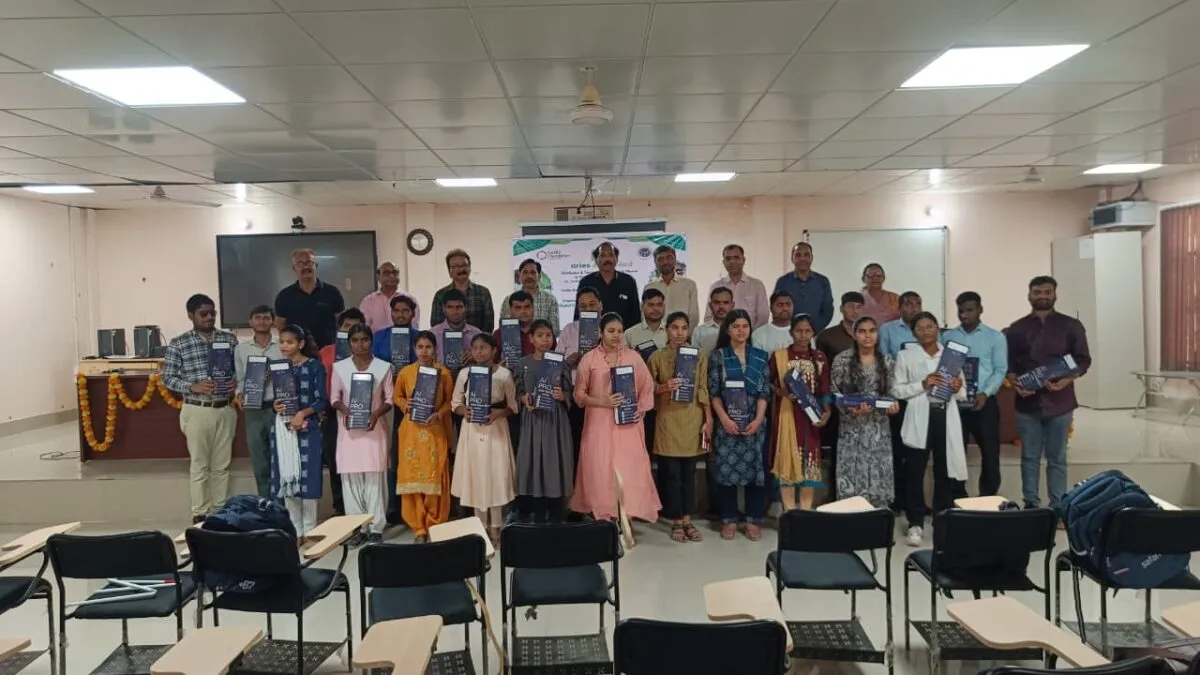
Aries Agro's approach, combining education and assistive healthcare within a single technology-led initiative, appears designed with that durability principle in mind, aiming to build repeatable programme infrastructure that can scale across additional rural communities over time rather than remaining confined to a single pilot location.
Technology-led delivery models for rural CSR programmes have also gained traction as companies increasingly recognise that digital tools can help extend the reach and improve the tracking of interventions across geographically dispersed rural communities, allowing a single CSR budget to achieve broader coverage and more reliable outcome measurement than traditional, purely in-person delivery models typically permit.
For India's diaspora philanthropic community, increasingly active in supporting rural development initiatives back home, corporate CSR programmes structured around existing agricultural sector distribution networks offer a potentially efficient co-funding or partnership avenue, since aligning diaspora philanthropic capital with established corporate delivery infrastructure can reduce the overhead and logistical complexity that independent diaspora-led initiatives often face when working directly in unfamiliar rural geographies.
The initiative also arrives amid growing recognition within India's corporate sector that rural CSR investment increasingly needs to be evaluated using the same rigour applied to core business investment decisions, with clear metrics for reach, outcome improvement and long-term sustainability built into programme design from the outset rather than added retrospectively.
As more companies embed technology directly into their CSR delivery models, initiatives like Aries Agro's dual education and healthcare programme offer an early test case for whether agricultural-sector corporates, in particular, can translate their deep rural distribution networks into genuinely effective, scalable social impact rather than symbolic community engagement disconnected from their core operations.
As India's overall corporate social responsibility spending continues its steady annual growth, initiatives that combine sector-relevant community access with genuine technology-enabled delivery and outcome tracking, as Aries Agro's programme aims to do, are increasingly being held up by industry bodies as templates for how companies across the agricultural and rural-facing sectors can move beyond compliance-driven philanthropy toward interventions with lasting, measurable community impact.
Policymakers focused on strengthening India's CSR ecosystem more broadly will likely continue pushing for expanded outcome disclosure requirements, using initiatives like Aries Agro's dual education and healthcare programme as a reference point for the kind of specific, measurable community impact that regulatory reforms have increasingly sought to encourage across the country's overall corporate social responsibility spending.
The bottom line for TIGI's readers: Aries Agro's initiative reflects a broader shift in Indian CSR toward outcome-driven, technology-enabled programmes built on companies' existing rural distribution strength rather than generic, one-off philanthropy.
Industry bodies tracking corporate social responsibility performance will likely use initiatives of this kind as reference cases when advocating for more standardised, sector-specific CSR impact reporting across India's broader agricultural and rural-facing corporate landscape.