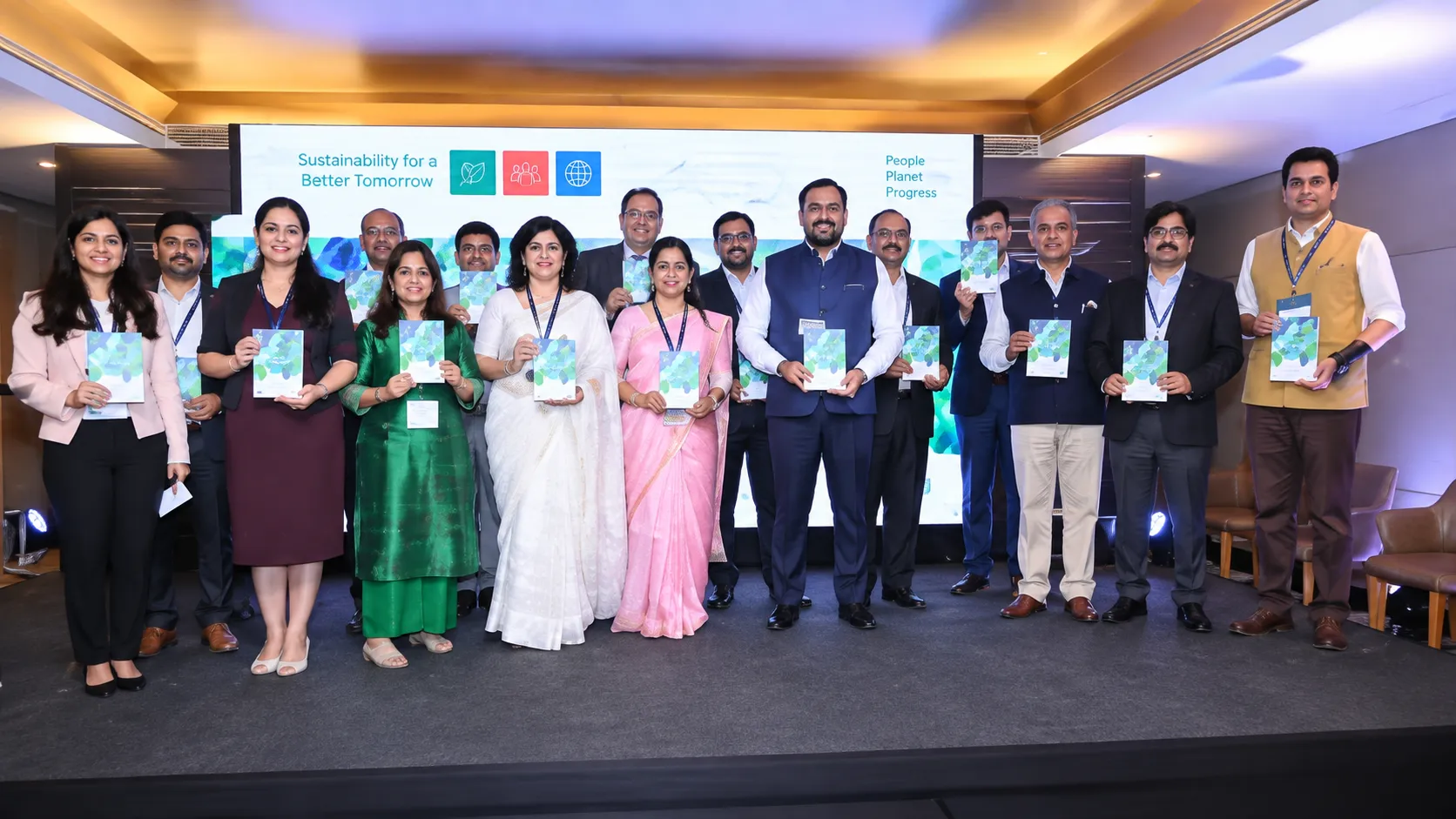
Aspire Circle and Aspire Impact have launched a dedicated environmental, social and governance performance framework tailored specifically for the fast-moving consumer goods sector, addressing a long-standing gap in how one of India's largest and most consumer-facing industries measures and reports its sustainability performance. Titled a comprehensive ESG performance framework for the FMCG sector, the initiative aims to give companies a standardised methodology rather than the fragmented, self-defined metrics that have characterised much of corporate sustainability reporting in India to date.
The FMCG sector, spanning everything from packaged food and beverages to personal care and household products, carries an outsized environmental footprint relative to many other industries, given its heavy reliance on plastic packaging, extensive distribution logistics and agricultural supply chains that stretch across multiple states and, in many cases, international borders.
The framework's launch also arrives amid growing global attention to sector-specific sustainability standards more broadly, as international standard-setting bodies and investor coalitions increasingly recognise that generic, one-size-fits-all ESG metrics often fail to capture the specific environmental and social risks that differ substantially between industries such as heavy manufacturing, financial services and fast-moving consumer goods.
Sustainability professionals note that FMCG companies operating across multiple product categories often face inconsistent internal sustainability measurement practices even within a single organisation, as different product lines may have historically developed separate, uncoordinated approaches to tracking packaging waste, water usage and supply chain labour standards, a fragmentation that a unified sector framework could help resolve by establishing common measurement definitions applicable consistently across a company's full product portfolio.
Sector-specific ESG frameworks have gained traction globally as companies and investors increasingly recognise that generic sustainability metrics often fail to capture the material risks and opportunities specific to a given industry. For FMCG companies, material ESG issues typically include packaging waste and circularity, water usage in manufacturing, supply chain labour practices across often complex agricultural sourcing networks, and product-level environmental impact disclosures that consumers are increasingly demanding as purchasing criteria.
The involvement of two organisations working jointly on the framework suggests an attempt to combine technical ESG measurement expertise with practical implementation guidance, addressing a common criticism of sustainability frameworks that they are often designed by policy experts without sufficient input from companies that must actually operationalise the reporting requirements within existing business processes.
Packaging waste in particular represents one of the most visible and closely scrutinised ESG challenges facing India's FMCG sector, given the sheer volume of single-use plastic packaging the industry generates annually, and any credible sector-specific framework will need to address circularity and packaging reduction metrics as a central pillar rather than a peripheral consideration within its broader measurement approach.
India's capital markets regulator has progressively expanded mandatory sustainability reporting requirements for the country's largest listed companies over recent reporting cycles, a regulatory trajectory that sector-specific voluntary frameworks like this one are generally designed to complement, offering more detailed, practically implementable guidance ahead of any future formal regulatory expansion into more granular, sector-specific disclosure mandates.
For India's FMCG companies, many of which operate complex, multi-tier supply chains reaching into rural agricultural communities and informal distribution networks, standardised ESG measurement carries particular complexity. Verifying sustainability claims and labour practices across such extended and often informal supply chain layers has historically been one of the more difficult aspects of ESG reporting for the sector, compared with industries that operate more consolidated, directly controlled manufacturing and distribution footprints.

A standardised framework, if adopted broadly across the sector, could also make it considerably easier for investors, regulators and consumers to compare sustainability performance across competing FMCG companies, addressing a persistent criticism that self-reported ESG metrics often lack the comparability needed to meaningfully differentiate genuine sustainability leaders from companies engaged in more superficial reporting practices.
Supply chain labour practices present an equally significant measurement challenge for FMCG companies sourcing raw agricultural inputs through complex, multi-tier networks that often extend into informal farming communities where formal labour documentation and monitoring systems remain limited, making verification of ethical sourcing claims considerably more difficult than in industries with more consolidated, directly controlled supply chains.
For institutional investors and business leaders evaluating India's listed FMCG sector, a credible, sector-specific ESG framework could meaningfully improve the quality and comparability of sustainability disclosures used in investment decision-making, addressing a longstanding frustration among ESG-focused investors that existing corporate sustainability reporting in the sector has often lacked the granularity needed for genuinely rigorous comparative analysis.
The framework's launch arrives amid growing regulatory attention to ESG disclosure standards in India, as the country's capital markets regulator has progressively tightened sustainability reporting requirements for large listed companies over the past several years. Sector-specific frameworks developed by industry-focused organisations can play a useful complementary role to formal regulatory requirements, offering more granular, practically applicable guidance than broad, cross-sector disclosure mandates typically provide.
Whether the framework achieves meaningful adoption across India's FMCG sector will depend significantly on how well it balances rigour with practicality, since overly complex reporting requirements risk being adopted only by the largest, most resourced companies, while a more streamlined approach could encourage broader uptake across the mid-sized and smaller FMCG players that collectively account for a significant share of the sector's overall environmental footprint.
Investor and consumer demand for credible, comparable sustainability data continues to grow across India's capital markets, and a well-designed, practically implementable sector framework could meaningfully accelerate that transparency, provided industry bodies can secure sufficiently broad adoption across both large listed FMCG companies and the smaller, less-resourced players that collectively represent a significant share of the sector's overall environmental footprint.
Policymakers focused on strengthening India's broader ESG disclosure architecture will likely watch the framework's adoption closely, since successful sector-specific frameworks developed through industry collaboration could inform how regulators approach future disclosure requirement updates across other environmentally significant sectors beyond FMCG, including textiles, chemicals and broader manufacturing industries facing similar supply chain transparency challenges.
The bottom line for TIGI's readers: a credible, sector-specific ESG framework for FMCG could meaningfully improve how investors and consumers compare sustainability performance across India's most consumer-facing, and most environmentally scrutinised, industry.