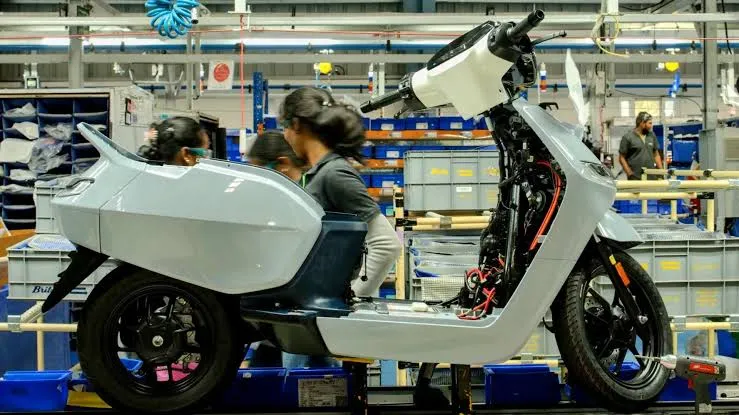
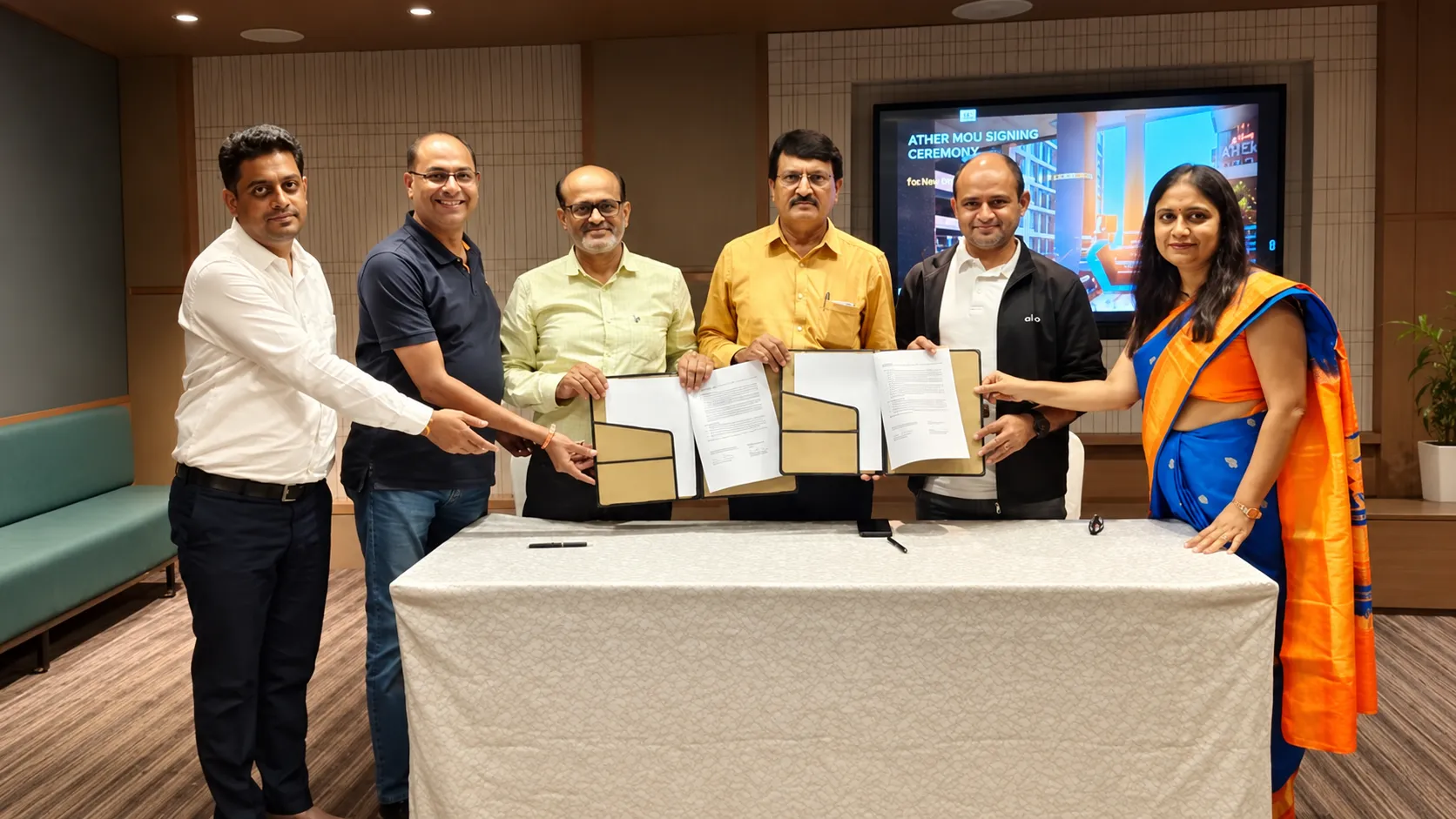
Ather Energy, the Bengaluru-headquartered electric two-wheeler manufacturer, has signed memoranda of understanding with four educational and skill-development institutions in Chhatrapati Sambhajinagar, Maharashtra, according to a disclosure reported on September 21, 2026, as the company works to build a dedicated talent pipeline supporting its expanding manufacturing footprint at the Aurangabad Industrial City, known as AURIC.
The four partner institutions — ICEEM, ISIEINDIA, Yashodeep Knowledge Hub and Jijamata ITI in Shevgaon — will collaborate with Ather on curriculum development specific to electric-vehicle technologies, faculty training, and structured technical exposure designed to prepare students and existing faculty for roles directly relevant to Ather's manufacturing operations.
The initiative reflects a challenge that has become increasingly prominent across India's rapidly scaling electric-vehicle manufacturing sector: the availability of technically skilled workforce has not always kept pace with the speed of capacity expansion. As EV manufacturers including Ather have moved from initial pilot-scale production toward large-volume manufacturing, the gap between conventional automotive and general engineering curricula and the specific skill sets required for battery systems, power electronics and EV-specific assembly processes has become a genuine operational bottleneck.
Under the partnership, students and faculty from the four institutions will engage directly with Ather's technical and manufacturing teams, gaining exposure to EV-specific technologies, manufacturing processes, and the safety and quality practices required in high-precision electric-vehicle assembly. The arrangement is designed to function as a sustained pipeline rather than a one-off training exercise, with faculty development components intended to ensure that the institutions themselves build lasting internal capacity to teach EV-relevant skills, beyond the immediate scope of the Ather partnership.
The partnership model Ather has adopted also reflects broader best practice increasingly recommended by India's skill-development policymakers, who have long identified the disconnect between vocational-training curricula and actual industry requirements as one of the more persistent structural weaknesses in the country's technical-education ecosystem. By embedding its own technical teams directly into faculty-training and curriculum-development processes, rather than simply offering standalone student internships, Ather's approach aims to create a more durable, self-sustaining training capacity within the partner institutions themselves.
Ather's approach mirrors a broader pattern emerging across India's advanced manufacturing sector, where companies scaling rapidly in specialised categories — electric vehicles, semiconductors, defence manufacturing and precision engineering among them — have increasingly found it necessary to invest directly in building the regional talent pools they will eventually draw from, rather than relying solely on national-level engineering education systems to produce sufficiently specialised graduates.
For Chhatrapati Sambhajinagar specifically, the partnership represents a meaningful economic-development opportunity. The region, historically known for its textile and general engineering industries, has increasingly positioned itself as an emerging hub for automotive and EV component manufacturing, and a structured talent pipeline anchored by a recognised EV manufacturer such as Ather could help attract further investment from suppliers and adjacent manufacturers seeking access to a similarly skilled local workforce.
For Maharashtra specifically, where the state government has pursued an active industrial-policy strategy aimed at attracting advanced manufacturing investment to newer industrial zones such as AURIC, partnerships of this kind serve a dual purpose: supporting the immediate talent needs of anchor investors like Ather, while also building broader regional human-capital capacity that could help attract further manufacturing investment from suppliers and adjacent industries over time.
As Ather Energy continues scaling its manufacturing operations at AURIC to meet growing demand for electric two-wheelers across India, the company's investment in building local technical talent illustrates a broader recognition among India's EV manufacturers: sustainable manufacturing scale-up requires not just capital and factory floor space, but a deliberate, sustained commitment to developing the specialised workforce capable of operating that capacity reliably over the long term.