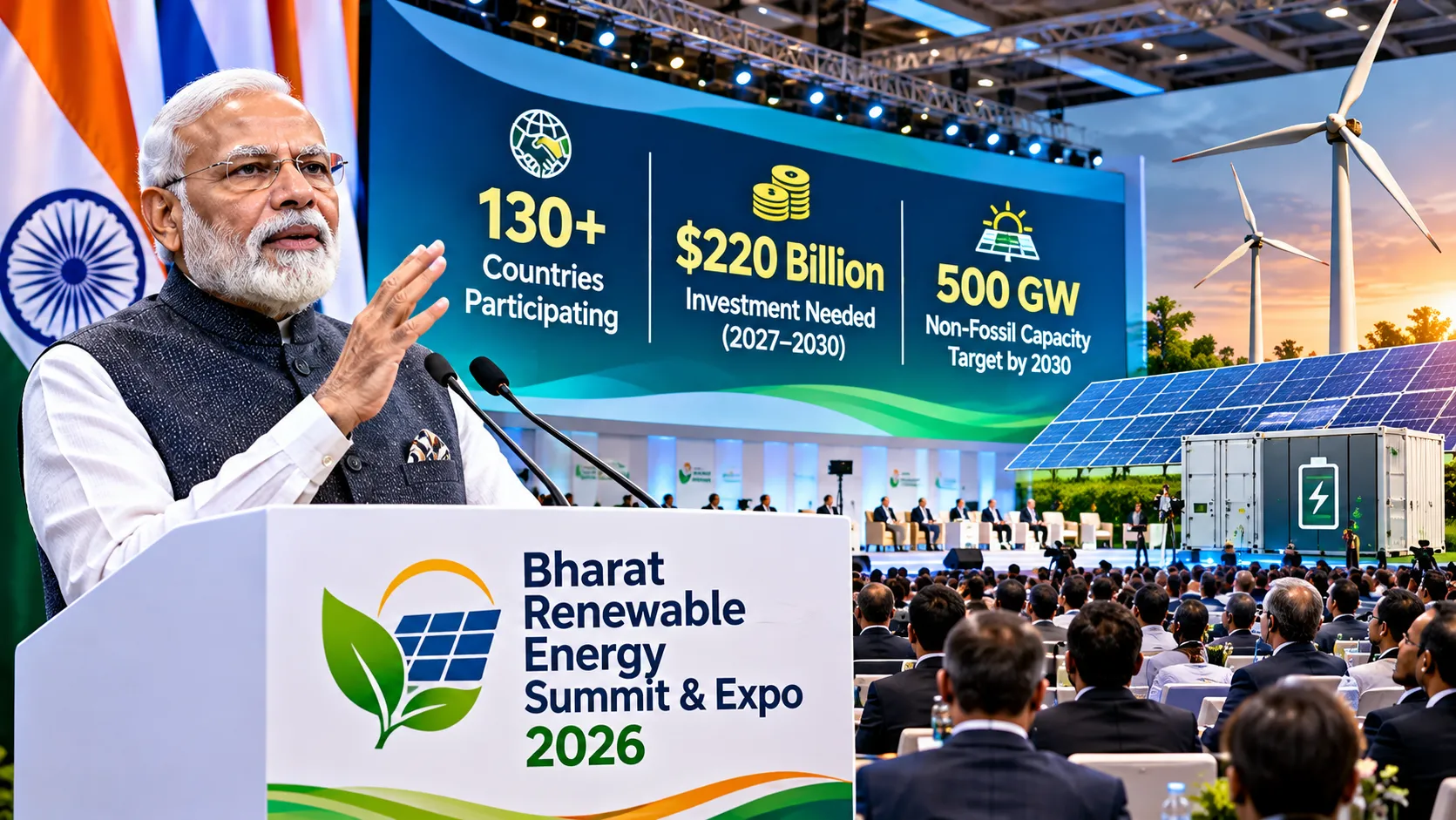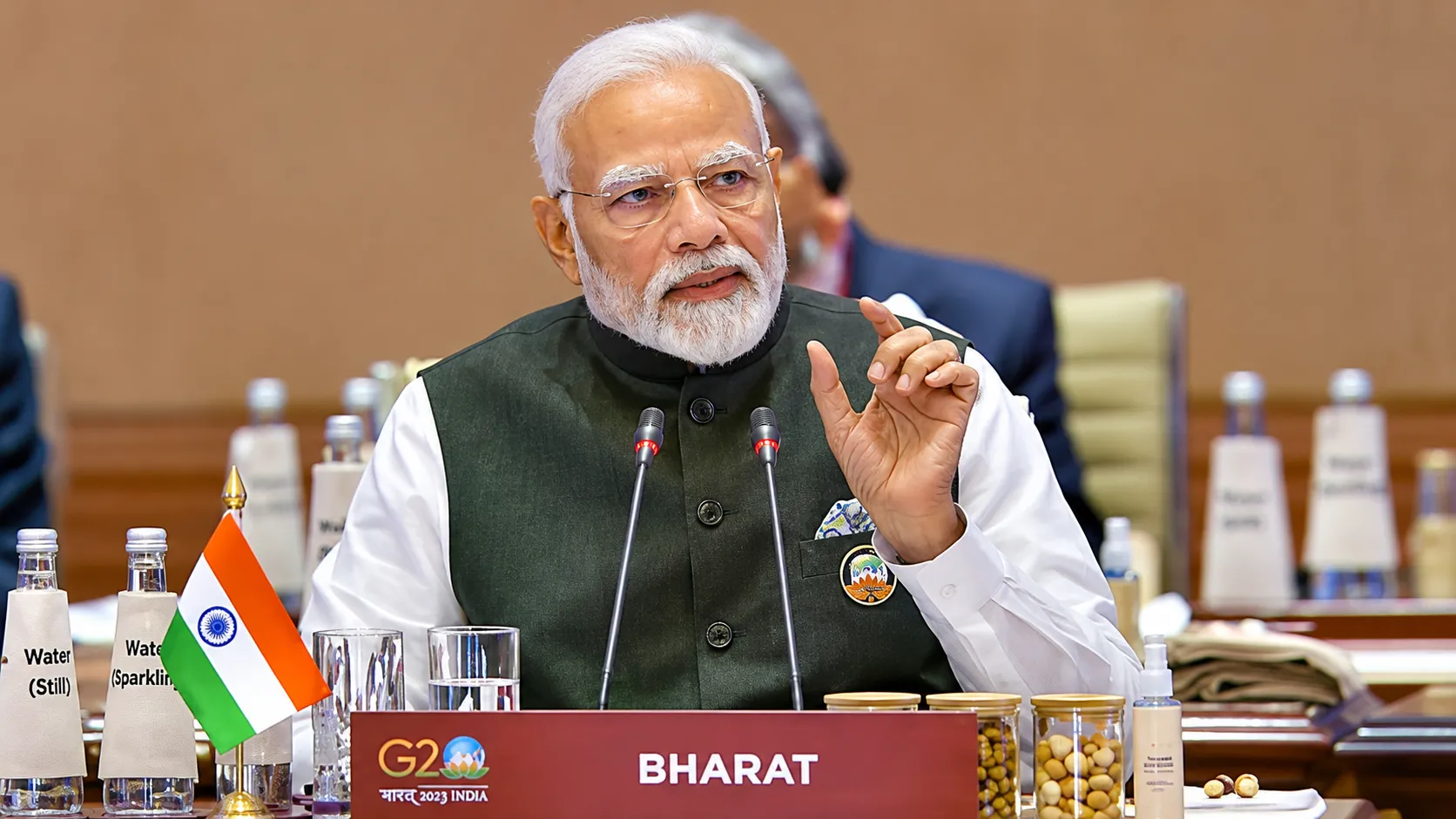
India has opened its doors to the world's clean energy investors, as Prime Minister Narendra Modi inaugurated a four-day summit intended to mobilise the capital and partnerships needed for one of the largest renewable energy build-outs on the planet.
The Bharat Renewable Energy Summit and Expo 2026 opened in New Delhi on Monday, November 2, and runs until November 5, with participation from more than 130 countries, according to the Prime Minister's Office and reports by The Statesman. The event brings together government officials, investors, developers, manufacturers and technology providers from across the clean energy sector.
The investment challenge
The summit comes as India seeks to accelerate investment in renewable energy. The Ministry of New and Renewable Energy has said India needs about $220 billion of clean energy investment between 2027 and 2030 to stay on track for its target of 500 gigawatts (GW) of non-fossil fuel capacity by 2030.
India's installed non-fossil capacity, including solar, wind, hydro and nuclear, has grown rapidly but remains below the 500 GW target, requiring a significant acceleration in capacity additions over the next few years. Financing that expansion requires mobilising both domestic and international capital at scale.
Energy security in focus
The summit takes place against the backdrop of a global energy shock. Conflict in the Middle East has disrupted oil and gas supplies, pushed Brent crude above $110 a barrel and raised the cost of imported energy for India, which imports more than 85% of its crude oil and a large share of its LPG. On November 1, commercial LPG and jet fuel prices were raised again.
The shock has strengthened the case for renewable energy as a matter of energy security as well as climate policy. Domestically generated solar and wind power reduce dependence on imported fuels and insulate the economy from volatile international prices.
What the summit covers
The summit's programme spans solar, wind, energy storage, green hydrogen, transmission, manufacturing and financing. Sessions are expected to address the challenges of integrating large amounts of variable renewable power into the grid, the need for battery and pumped storage, the expansion of domestic manufacturing of solar modules and batteries, and the mobilisation of finance from development banks, sovereign funds and private investors.
The accompanying expo showcases technologies and products from companies across the clean energy value chain, offering opportunities for partnerships and deals.
Global participation
The participation of more than 130 countries reflects India's growing role in global clean energy markets. India is one of the world's largest and fastest-growing renewable energy markets, attracting interest from equipment suppliers, developers and investors worldwide. Partner countries are expected to use the summit to explore cooperation in technology, manufacturing and finance.
India has also positioned itself as a leader among developing countries on energy transition, through initiatives such as the International Solar Alliance, which it co-founded with France.
The financing gap
Mobilising $220 billion in four years is a substantial challenge. The cost of capital in India is higher than in developed economies, reflecting currency risk and the financial health of state electricity distribution companies, which purchase most renewable power. Lowering the cost of finance through blended finance, guarantees, green bonds and currency hedging is a key focus for policymakers.
Global climate finance flows to developing countries remain below the levels needed, and India has called for developed countries to provide more support. The summit offers an opportunity to showcase investment opportunities and policy reforms intended to attract capital.