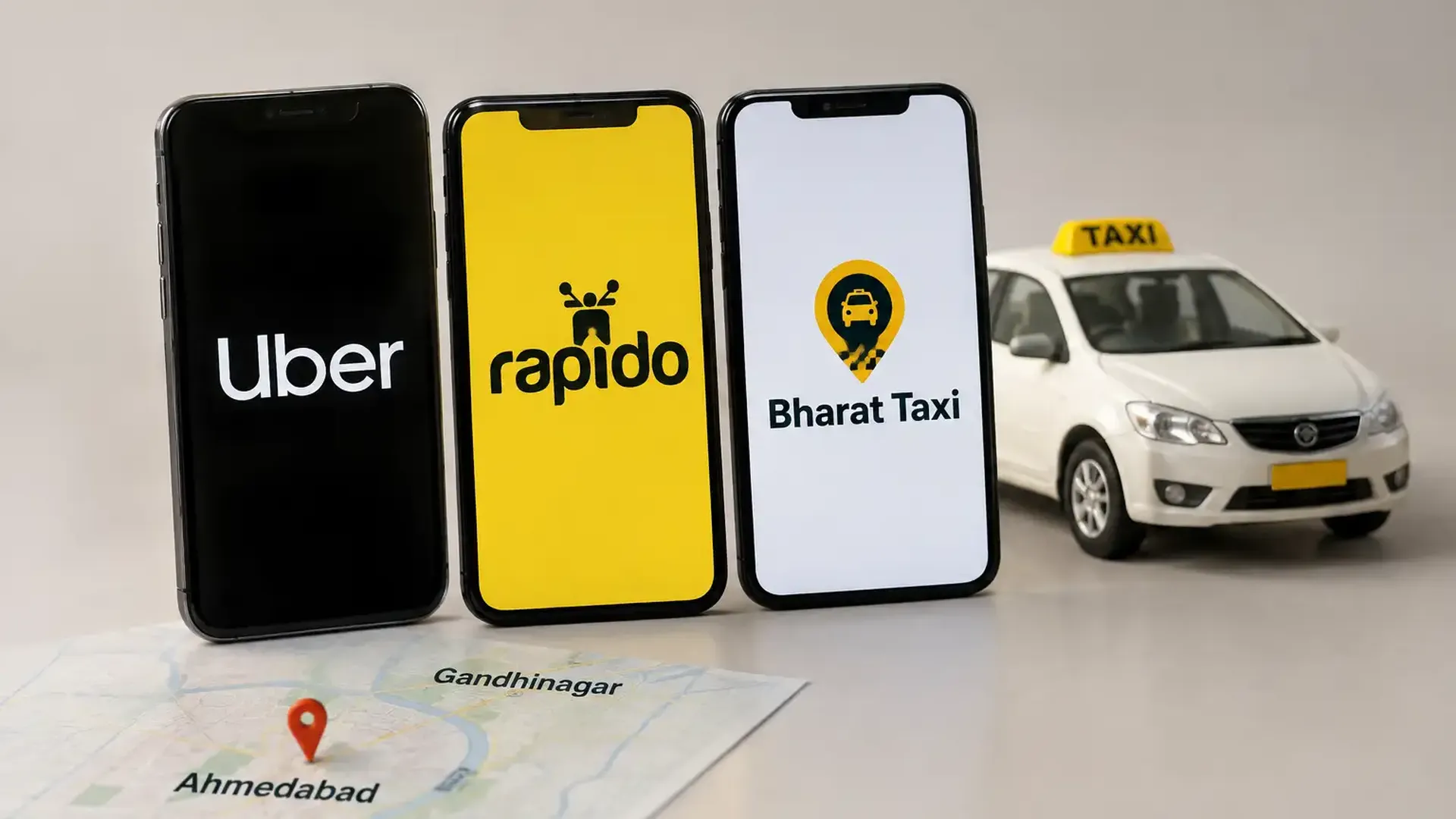
India's first government-backed ride-hailing cooperative was launched on a promise of fairness: no commission on fares, a share in ownership for drivers, and the freedom to keep working on rival apps. In Gujarat, some drivers and passengers now say that promise is being undermined on the street.
Passengers and drivers in Ahmedabad and Gandhinagar told Inc42, in a report published on Saturday, that groups of people have been stopping rides booked through Uber and Rapido and pressuring those on board to switch to Bharat Taxi. The accounts describe drivers being told to delete competing apps, passengers being asked to cancel their bookings, and threats of violence against those who refuse. The claims have not been independently verified, and Bharat Taxi did not respond to questions sent by the publication.
The allegations raise difficult questions for a model that the government has championed as a cooperative alternative to commission-based platforms. If substantiated, they would point to a gap between the stated freedom of drivers to choose their platforms and what some are experiencing in practice.
What passengers and drivers describe
One passenger, who had arrived in Ahmedabad from Pune, described being stopped near the airport around midnight by a group of 10 to 15 people. According to the account, the group took the driver's phone and demanded that the Uber and Rapido apps be deleted, and the passenger was asked to cancel the ride.
Drivers interviewed by Inc42 said they were being pressured to stop accepting bookings on Uber and Rapido, even though, in their experience, the volume of bookings on Bharat Taxi was not enough to sustain their earnings. "The problem has gone on for the past 15 days. I don't know how I will pay EMI for my car," one Uber driver said. Others alleged threats of violence from unidentified groups, and some said money and valuables had been taken after the groups threatened to damage their vehicles.
Some drivers also described what they called honeypot schemes, in which people allegedly booked rides through Uber or Rapido only to confront and threaten the driver on arrival. Several said they were reluctant to file police complaints, fearing retaliation.
The picture is complicated by a separate development. According to a Financial Express report, a section of drivers began boycotting Uber and Rapido from September 22 over fares and platform charges. That boycott is a legitimate form of protest, and it is not clear how much of what passengers are experiencing is organised pressure and how much is spillover from the dispute over fares.
Videos add to the confusion
Videos circulating on social media have added to the uncertainty. In one, a person wearing a police uniform is seen encouraging drivers to download Bharat Taxi and urging customers to book through the platform, while highlighting its features: zero commission, insurance cover of ₹5 lakh, the option to buy shares in the cooperative, and Gujarati-language support.
After allegations of harassment spread online, another video surfaced, purportedly filmed in Ahmedabad, showing a person in police uniform warning drivers that action would be taken against anyone who coerces other drivers or forcibly stops rides that are under way. Inc42 said it had sent detailed questions to Anupam Singh Gahlaut, Commissioner of Ahmedabad Police, and Ravi Teja Vasamshetty, District Superintendent of Police, Gandhinagar, but had not received replies at the time of publication.
The cooperative model at the centre of the dispute
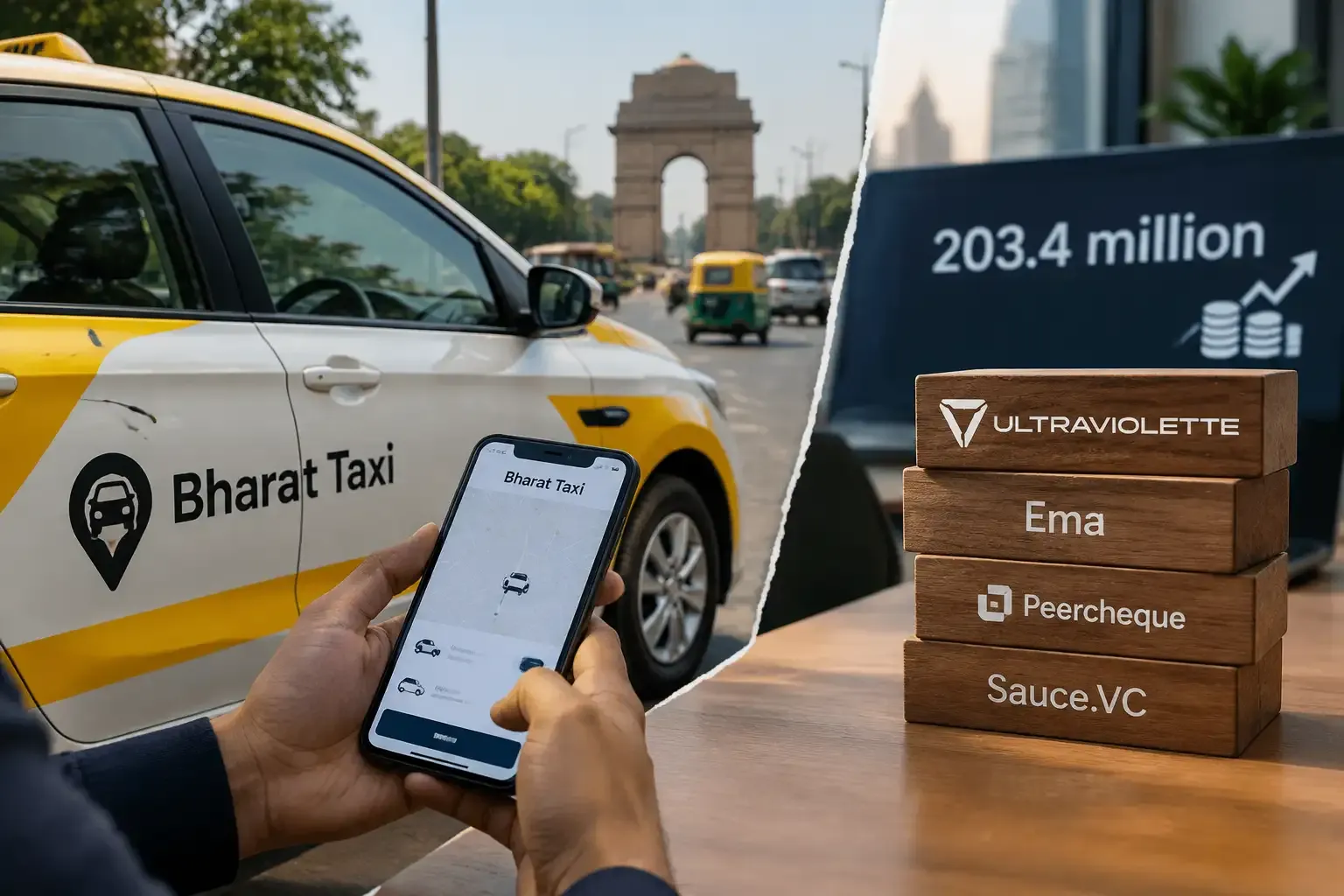
Bharat Taxi is operated by Sahkar Taxi Cooperative Limited and is backed by the Ministry of Cooperation. Driver onboarding began in November 2025 in regions including the National Capital Region and Gujarat, and a customer app was soft-launched on December 1, 2025. Media reports at the time said about 56,000 drivers had registered during the early phase.
The model is built around ownership. Drivers, referred to as sarathis, are members of the cooperative rather than independent contractors. They buy a minimum of five shares at ₹500 each and are promised dividends, health insurance and pension benefits, alongside a zero-commission fare structure. The platform's chief executive, Vivek Pandya, has described it as the world's first mobility cooperative.
At the Gujarat launch earlier this year, Union Home and Cooperation Minister Amit Shah said the platform was conceived to end what he described as exploitation of drivers and passengers by app-based companies, citing arbitrary deductions, delayed payments and suspensions without a hearing. He compared the initiative to cooperatives such as Amul and IFFCO. A central part of the pitch was that drivers would not be locked in: they could continue to work on other platforms if they chose.
Rapido, responding to Inc42's questions, pointed directly to that principle. "Every captain has the right to choose the platform they work with," the company said. "Any form of intimidation or coercion undermines that choice."
Why this matters beyond Gujarat
The dispute touches several fault lines in India's platform economy. Ride-hailing drivers have long complained about commissions, incentive structures and account deactivations on private platforms. Governments at the state and central level have responded with a mix of regulation and alternatives, and a cooperative app with public backing is one of the more ambitious experiments.
But competition in ride-hailing depends on two sides of a market working together. Drivers need enough bookings to earn a living, and passengers need reliable, safe rides. If drivers feel forced onto a platform that does not yet generate enough demand, their incomes suffer. If passengers feel unsafe or face cancelled rides, demand for all platforms can fall. Neither outcome serves the cooperative's own long-term interest.
There are also questions of governance. A cooperative that aims to be driver-owned depends on trust, and allegations of coercion, even by people not formally connected to the organisation, can damage that trust quickly. Clear public statements from the cooperative and from local police about the freedom of drivers to choose would help separate the platform from those acting in its name.
What happens next
Several developments could clarify the situation in the coming days. Police in Ahmedabad and Gandhinagar may issue statements, register complaints or take action against individuals identified in videos. Bharat Taxi could respond publicly and distance itself from any coercive conduct. Uber and Rapido are likely to gather evidence from affected drivers and trips, and may adjust incentives or safety features in the affected areas. Driver unions, whose members are on both sides of the fare dispute, will also play a role.
For passengers, the immediate concern is safety. For drivers, it is income and the freedom to decide where to work. For policymakers, the episode is a test of whether a public-backed cooperative can compete on its merits in a market dominated by private platforms. The cooperative idea has genuine appeal for many drivers. Its credibility will depend on showing that drivers join because they want to, not because they are told to.