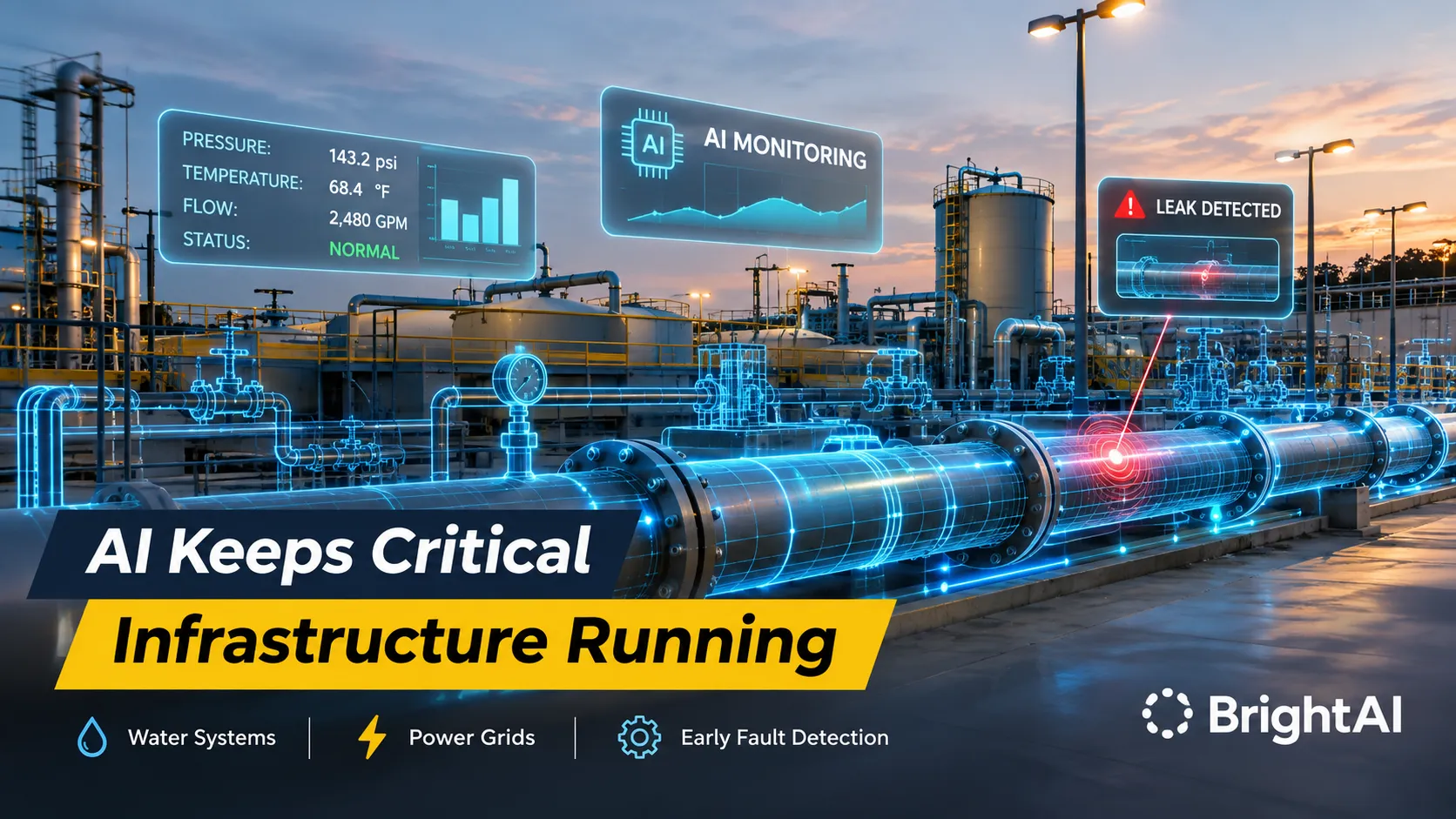
Much of the world's essential infrastructure, from water pipes to power lines, is ageing, under strain and monitored largely by people with clipboards. A Silicon Valley company is betting that AI can keep watch instead.
BrightAI, a Palo Alto-based company that describes itself as "a physical AI platform for essential services" such as water and power, has raised $97 million, according to AI Funding Tracker, citing FinSMEs, in a report published on Wednesday, November 18.
The round was led by Smith Point Capital, with participation from Cobalt Capital, Marlinspike Partners, Zero Infinity Partners and GE Vernova, the energy equipment company spun off from General Electric. Existing investors Khosla Ventures, Inspired Capital and Upfront Ventures also took part. The raise brings BrightAI's total funding to $184 million, and the company plans to open offices in Asia and Europe.
A familiar founder
BrightAI was founded in 2019 by Alex Hawkinson, who previously co-founded and led SmartThings, the connected home devices company acquired by Samsung, according to TechCrunch. His co-founders include Nathan Hanks, Douglas Burman and Robert Parker.
When BrightAI emerged from stealth in November 2024, it had already reached $80 million in revenue without outside capital, an unusual achievement for a technology startup, TechCrunch reported at the time. It then raised a $15 million seed round led by Upfront Ventures, followed by further funding.
How it works
BrightAI's platform uses sensors to monitor physical assets and AI algorithms to analyse the data, detecting and predicting problems before they cause failures, according to TechCrunch. By 2024, the company had deployed more than 250,000 sensors.
"It's leaving your inspector there all the time, even when there's not humans around," Hawkinson told TechCrunch in 2024. Its customers have spanned sectors including heating and cooling, waste management and power.
Why infrastructure needs AI
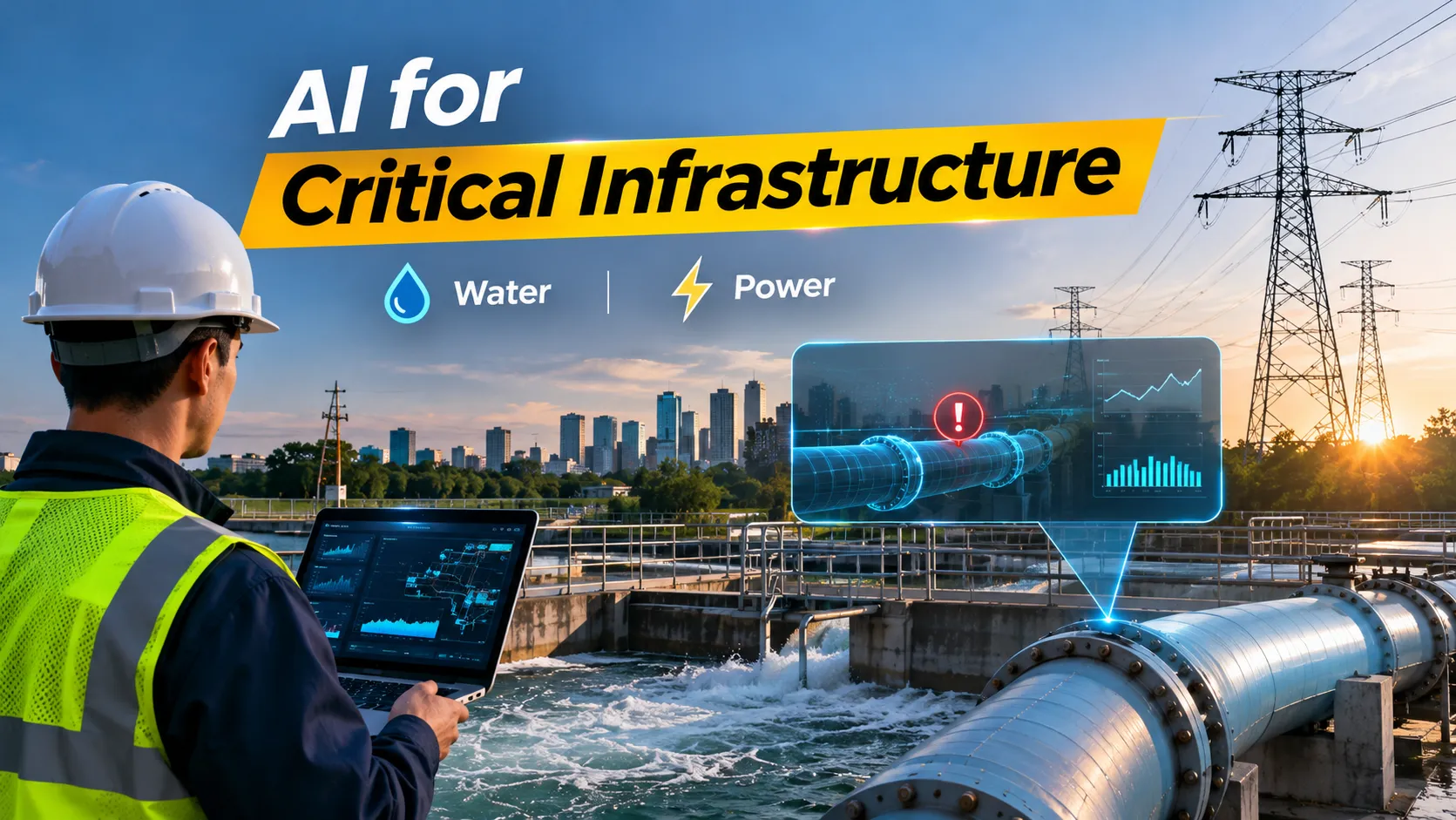
Infrastructure in many countries is ageing and underfunded. Water systems lose large amounts of treated water through leaks, power grids face growing demand from electric vehicles and data centres, and extreme weather linked to climate change is placing new stresses on networks.
Traditional maintenance relies on periodic inspections and responding to failures after they occur. Continuous monitoring with sensors and AI can identify problems early, reduce downtime, extend asset life and lower costs. It can also help utilities prioritise limited budgets by focusing on the assets most at risk.
The GE Vernova connection
GE Vernova's participation is notable. The company makes gas turbines, wind turbines and grid equipment and has been one of the biggest beneficiaries of rising electricity demand, driven in part by AI data centres. Its investment suggests interest in AI tools that can help manage and maintain power infrastructure more efficiently.
Strategic investors like GE Vernova can also offer distribution channels, technical expertise and access to customers.
Physical AI goes mainstream
BrightAI is part of a broader wave of investment in physical AI, which applies AI to the physical world rather than purely digital tasks. This week alone, robotics company Genesis AI raised $500 million and Bengaluru's Humyn Labs raised $47 million to supply training data for robots. BrightAI focuses on a different but equally important area: monitoring and maintaining the infrastructure that societies depend on.
The impact dimension
Better monitoring of water and power systems has significant social and environmental benefits. Reducing water leaks conserves a scarce resource, particularly in drought-prone regions. Preventing power outages protects hospitals, businesses and homes. Early detection of equipment failures can also improve safety for workers and the public.
As climate change increases the frequency of extreme weather, resilient infrastructure becomes more critical. AI-enabled monitoring can help utilities respond faster to storm damage and prepare for heatwaves and floods.
Expanding to Asia and Europe
BrightAI's plans to open offices in Asia and Europe signal its ambition to serve infrastructure operators worldwide. Asia, with rapid urbanisation and large infrastructure investments, offers significant opportunities, as does Europe, where ageing networks and climate goals are driving modernisation.
What it means for India
India faces major infrastructure challenges, including water losses in urban distribution networks, strain on power grids and the need to integrate large amounts of renewable energy. Indian utilities and city governments have begun adopting smart meters, sensors and digital monitoring through programmes such as the Smart Cities Mission and the smart metering scheme.
Companies like BrightAI could find opportunities in India, either directly or through partnerships, while Indian startups are developing similar solutions for local conditions.
Utilities' digital transformation
Utilities have historically been cautious adopters of new technology, given their focus on reliability and regulatory oversight. But pressures from ageing assets, workforce retirements and climate risks are pushing them to embrace digital tools. Sensors, drones, satellite imagery and AI are increasingly used to inspect networks and predict failures.
Regulators in some jurisdictions have begun encouraging utilities to invest in such technologies by allowing them to recover the costs through tariffs.
Bootstrapping to scale
BrightAI's history of reaching significant revenue before raising outside capital is rare in venture-backed technology. It suggests the company found paying customers early and built a business with real demand. That track record likely helped it attract investors for larger rounds as it expands internationally.
Analysts say infrastructure monitoring is a market where customers value reliability and long-term relationships, which can make it difficult for new entrants to displace established providers once their systems are installed. Companies that build large installed bases of sensors early can therefore gain a durable advantage.
BrightAI's expansion into new regions will test whether its model can be adapted to different regulatory environments and infrastructure standards. Utilities in Asia and Europe operate under varied ownership structures, from state-owned monopolies to private companies, which can affect how quickly they adopt new technology.
Analysts also note that the energy transition is creating new monitoring needs, as utilities connect large numbers of solar farms, wind turbines and batteries to their grids and must manage more variable flows of electricity. AI-driven monitoring can help operators maintain reliability as their systems become more complex.
Smith Point Capital's lead role adds an investor with experience in enterprise technology to the company's backers.
What comes next
BrightAI will use the funding to expand its platform, grow its customer base and establish international offices. Its progress will be watched as a test of how quickly AI can be deployed to improve the reliability and resilience of essential infrastructure.