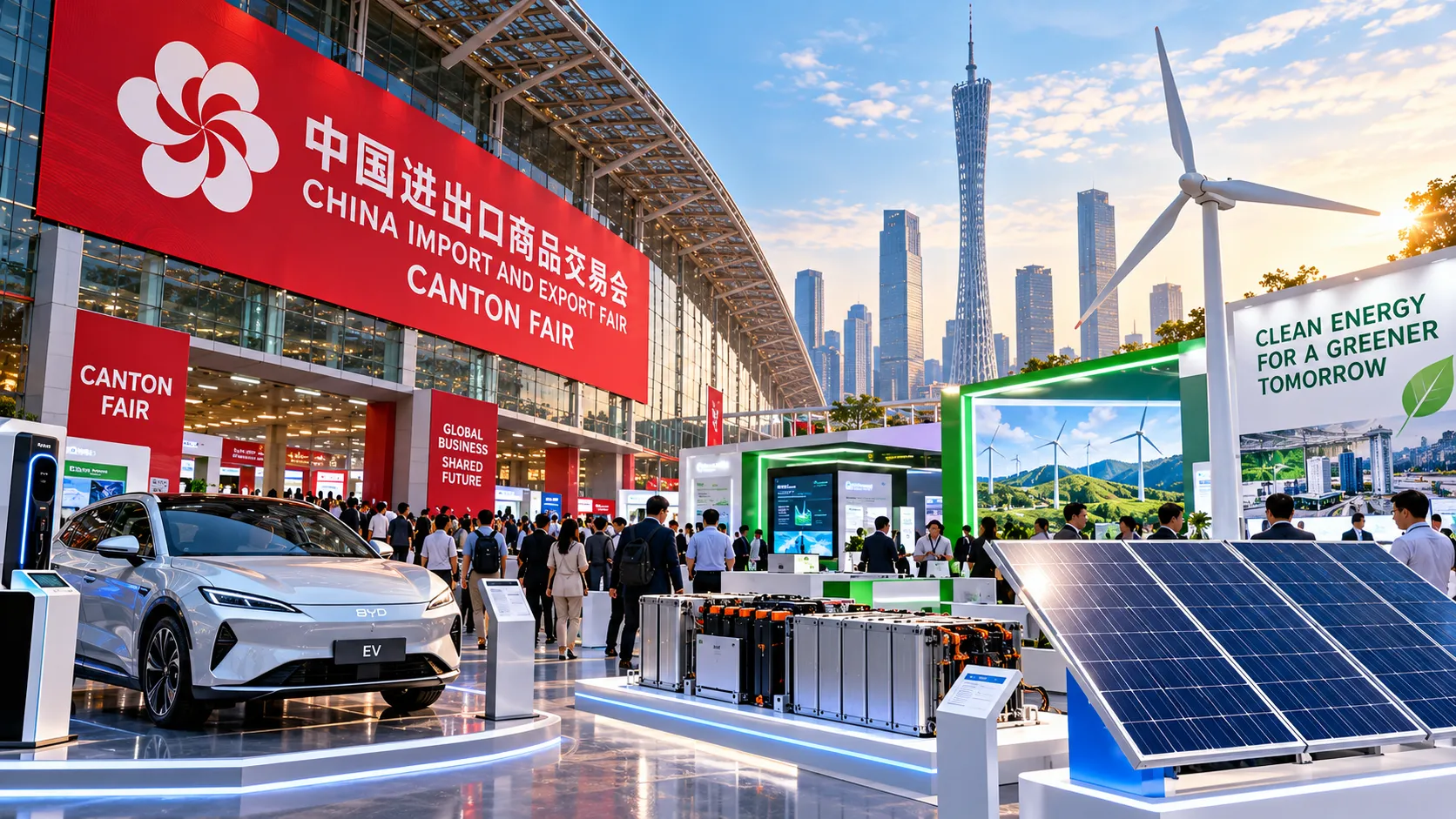
China's largest trade fair is showcasing the country's growing dominance in clean energy technology. Green and low-carbon products account for a record 26% of exhibits at the 140th China Import and Export Fair, commonly known as the Canton Fair, being held in the southern city of Guangzhou, according to organisers.
The milestone reflects a surge in Chinese exports of clean technology. In the first nine months of 2026, China's exports of electric vehicles rose 72.3% from a year earlier, while exports of lithium batteries increased 36.4% and wind turbines 22.4%, according to official data cited at the fair.
The figures underline China's position as the world's dominant supplier of the hardware needed for the global energy transition, even as trade tensions with the United States and the European Union intensify.
The Canton Fair's green shift
The Canton Fair, held twice a year since 1957, is China's oldest and largest trade exhibition. It has long served as a barometer of Chinese export trends and of global demand for Chinese goods.
The rising share of green products at the fair mirrors a structural shift in China's economy. Beijing has made electric vehicles, batteries and renewable energy equipment, sometimes called the "new three," a pillar of its industrial strategy, investing heavily in manufacturing capacity and supply chains. Chinese companies now dominate global production of solar panels, batteries and many components for wind turbines and electric vehicles.
Exhibitors at the fair include manufacturers of electric cars, e-bikes, solar panels, energy storage systems, heat pumps and energy-efficient appliances, seeking buyers from around the world.
Export boom amid trade barriers
China's clean technology exports have surged despite growing trade barriers in major markets. The United States has imposed steep tariffs on Chinese electric vehicles, batteries and solar products. The European Union has imposed tariffs on Chinese EVs and opened investigations into subsidies for Chinese clean technology, including wind turbines.
Chinese exporters have responded by expanding sales to other markets, including Southeast Asia, Latin America, the Middle East and Africa. A Reuters analysis published this week found that countries in the Global South have spent more than $235 billion on Chinese-made clean energy technology since 2024. Chinese automakers have also built factories abroad, in countries such as Thailand, Brazil, Hungary and Turkey, to serve local markets and circumvent tariffs.
The 72.3% jump in EV exports highlights how quickly Chinese automakers are expanding internationally. Companies such as BYD have become major players in global car markets, offering electric vehicles at prices that many Western and Japanese rivals struggle to match.
Overcapacity concerns
China's export surge has fuelled accusations from trading partners that Chinese industrial policy has created overcapacity, with subsidised production exceeding domestic demand and flooding global markets with cheap goods. Critics say this threatens manufacturing industries in other countries.
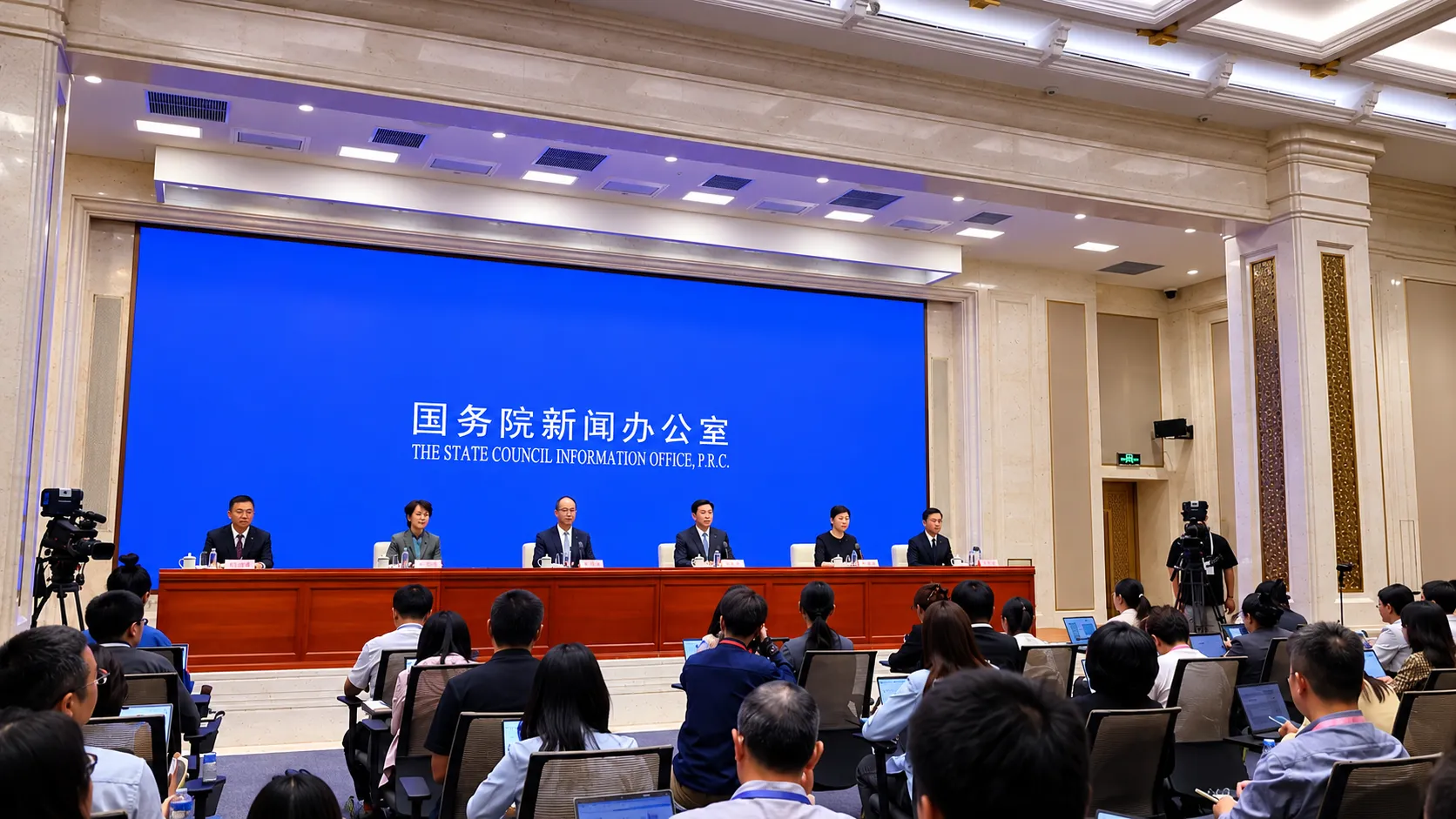
China rejects the accusation, arguing that its industries are competitive because of scale, innovation and efficient supply chains, and that cheap clean technology benefits the world by accelerating the energy transition. At a press conference this week, a senior Chinese environment official said China wants the COP31 climate summit to address "unilateralism and protectionism" in clean technology trade.
Benefits for the energy transition
Cheap Chinese clean technology has transformed the economics of the energy transition. The cost of solar panels and batteries has fallen dramatically over the past decade, driven largely by Chinese manufacturing scale. This has made renewable energy the cheapest source of new electricity in much of the world and made electric vehicles increasingly affordable.
For developing countries in particular, affordable Chinese technology has enabled rapid deployment of solar power and storage, expanding electricity access and reducing dependence on imported fossil fuels. The UN's latest Emissions Gap Report, released on October 21, stressed the need for faster emissions cuts, which depend heavily on the availability of affordable clean technology.
What it means for India
India is both a major buyer of Chinese clean technology and a competitor seeking to build its own manufacturing industries. India relies heavily on Chinese imports for solar cells, modules and battery components, even as it uses production-linked incentive schemes, import duties and other measures to develop domestic manufacturing.
India's electric vehicle market is growing rapidly, and Chinese automakers have sought a larger presence there. However, restrictions on Chinese investment introduced in 2020 have limited their expansion, and India has favoured domestic manufacturers and partnerships that bring local production.
The surge in Chinese exports presents India with a dilemma: cheap Chinese technology can accelerate the country's energy transition and help meet its target of 500 GW of non-fossil power capacity by 2030, but dependence on Chinese supply chains raises strategic and economic concerns.
Beyond the "new three"
China's green export push extends beyond electric vehicles, batteries and solar panels. Chinese manufacturers have expanded exports of heat pumps, electric buses, two- and three-wheelers, energy storage systems, transformers and grid equipment. As countries invest in electricity networks to integrate renewable energy and meet rising demand, Chinese grid equipment makers have won a growing share of contracts.
Chinese companies are also moving up the value chain, investing in research and development, building global brands and establishing after-sales service networks abroad. That shift is designed to make Chinese clean technology more competitive not just on price but on quality and technology, and to reduce vulnerability to accusations of dumping.
Price pressure at home
Intense competition within China has driven prices down sharply in sectors such as solar and electric vehicles, squeezing manufacturers' margins and prompting consolidation. Beijing has urged companies to avoid "involution," or destructive price competition, and has taken steps to curb overcapacity in some industries. Exports offer an outlet for excess production, which partly explains the surge in shipments abroad.
What comes next
The Canton Fair continues in phases through early November. Its results will offer insights into global demand for Chinese goods amid trade tensions and slowing growth in some markets.
For the global clean technology industry, China's export boom is likely to remain a defining force, shaping prices, competition and trade policy. How other countries balance the benefits of cheap technology against the desire to build their own industries will be one of the central questions of the energy transition. That debate is likely to feature prominently at COP31 in Turkey next month.