In a laboratory in New York whose location it keeps confidential for security reasons, a startup called Origin Genomics is working on one of the most consequential and controversial ideas in modern science: correcting disease-causing genetic mutations in human embryos before a child is born.
The company is led by founder and chief executive Cathy Tie, an entrepreneur who has built a reputation for ambitious ventures in biotechnology. Her pitch, set out in an NPR report published on 29 September 2026, is that precision gene editing could one day spare families from passing on devastating inherited diseases, and that proving the technology is safe is both a scientific and a moral imperative.
"If you have a technology that can be proven to be safe, and it can help hundreds of millions of people that suffer from these diseases, it is unethical to not pursue this research," Tie said.
Many leading scientists and bioethicists strongly disagree, warning that Origin is moving too fast in a field where mistakes could affect not only individual children but future generations.
What Origin is testing
Origin is not editing embryos for pregnancy. Doing so is illegal in the United States: a long-standing provision passed by Congress prevents the Food and Drug Administration from even considering applications for clinical trials involving heritable genetic modification of human embryos. Tie hopes that Origin will eventually produce enough evidence to persuade Congress to lift that restriction.
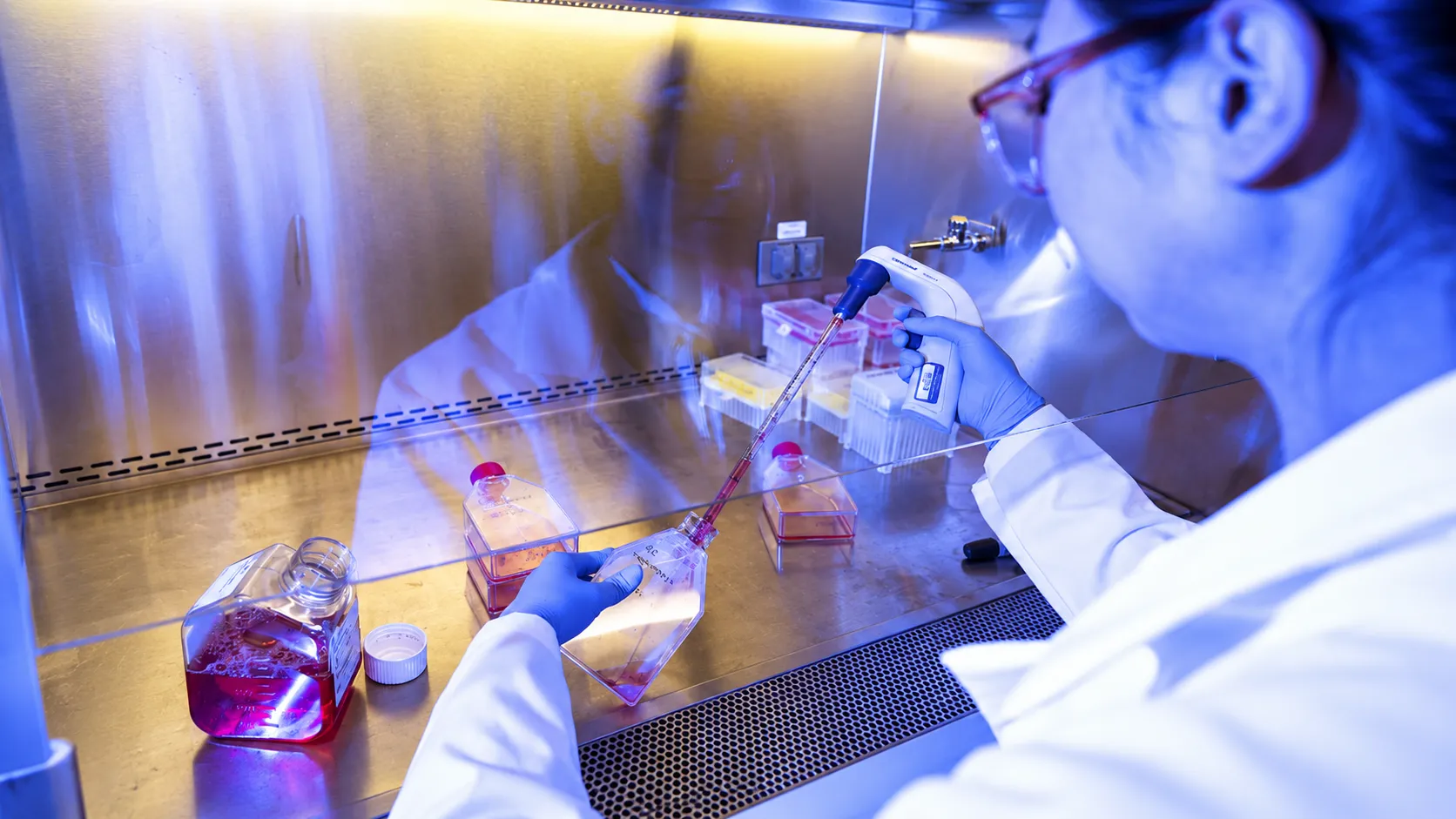
For now, the company's work is focused on laboratory research. It is testing experimental gene editors, some designed with the help of artificial intelligence, on cells that carry mutations linked to serious diseases. These include induced pluripotent stem cells, created in the laboratory from adult skin or blood cells, and fibroblasts and other cell types carrying genetic defects. The target conditions include hereditary breast and colorectal cancers, cystic fibrosis, Huntington's disease and Tay-Sachs disease.
The company also extracts stem cells from donated embryos stored in liquid nitrogen, using them to study which molecular tools might correct genetic defects safely. Advanced imaging allows researchers to watch gene editors enter cells, visible as fluorescent green markers.
Origin has not announced any timeline for human reproduction trials and says it is proceeding slowly and methodically. "This is a very powerful technology," Tie said. "Safety must come first."
The families behind the research
The NPR report describes Nicole and Asaf Ezra, a couple affected by familial adenomatous polyposis, a rare inherited condition that causes the growth of precancerous polyps in the colon. Nicole underwent surgery to remove her colon at the age of 13 and lives with the fear of colorectal cancer. The couple invested in Origin and donated three embryos carrying the mutation for research.
"I've always wanted physically my blood and flesh children," Nicole Ezra said, expressing the hope that one day families like hers could have biological children free of the disease.
Today, couples who carry serious genetic mutations and use in vitro fertilisation can often use preimplantation genetic testing to select embryos that do not carry the mutation, discarding those that do. Editing, in theory, could offer an alternative for families where few or no unaffected embryos are available.
The shadow of 2018
The field of human embryo editing still lives in the shadow of a scandal. In 2018, Chinese scientist He Jiankui announced that he had created the world's first gene-edited babies, twin girls whose embryos he had modified using CRISPR in an attempt to make them resistant to HIV. The announcement provoked worldwide condemnation. His work was widely criticised as unsafe, unnecessary and unethical, and he was sentenced to three years in prison in China.
Tie had a personal connection with He after his release, a history that has added to scrutiny of her company. She has said that he has no current connection to Origin.
The He Jiankui affair prompted international scientific bodies to call for a strict framework governing heritable genome editing, emphasising that it should not proceed without broad societal consensus, rigorous safety evidence and strong regulatory oversight.
A sharply divided scientific community
Critics quoted by NPR were blunt. Robin Lovell-Badge of the Francis Crick Institute in London warned that Origin was "giving people false hope" and "rushing ahead too fast", risking mistakes that could damage the entire field. Fyodor Urnov, a leading gene-editing researcher at the University of California, Berkeley, questioned the company's stated intentions, saying: "They're really in the business of embryo — and thus ultimately baby — improvement."
Katie Hasson of the Center for Genetics and Society expressed concern about Silicon Valley investors' vision of "mass-produced, genetically engineered humans". R. Alta Charo, a bioethicist at the University of Wisconsin-Madison, raised the risk of "genome-editing tourism", in which people travel to countries with weak regulation to obtain procedures banned at home.
The concerns go beyond safety in individual cases. Edits to embryos are heritable, meaning any unintended changes would be passed down to future generations. There are also fears that technology developed to prevent disease could be used for enhancement, selecting or engineering traits such as height or intelligence. Some companies already offer embryo screening that claims to predict such traits, a practice many scientists regard as scientifically dubious and ethically troubling.
At least one other US startup, San Francisco-based Preventive, is pursuing similar research, suggesting that commercial interest in the field is growing.
Better tools, same questions
Supporters of research in this area point to rapid improvements in gene-editing technology. Newer techniques such as base editing and prime editing can make precise changes to DNA without cutting both strands, reducing the risk of unintended damage compared with early CRISPR methods. Some bioethicists have suggested that, as accuracy improves, limited applications for rare and serious diseases could eventually become ethically acceptable, provided they are subject to strict oversight.
Most scientists, however, still consider heritable embryo editing premature. Questions remain about how to detect every unintended edit, how to ensure that all cells in an embryo are edited correctly, and how to monitor long-term health effects in children and their descendants.
Cathy Tie's Origin Genomics sits at the centre of that debate. For some, she represents the kind of bold, mission-driven founder who pushes science forward. For others, she embodies the dangers of commercial pressure in a field that demands extraordinary caution. What is clear is that the questions her company raises, about safety, consent, equity and the limits of human intervention in heredity, are not only for scientists and investors. They are questions for society as a whole, and they will need to be answered openly before any gene-edited child is born.