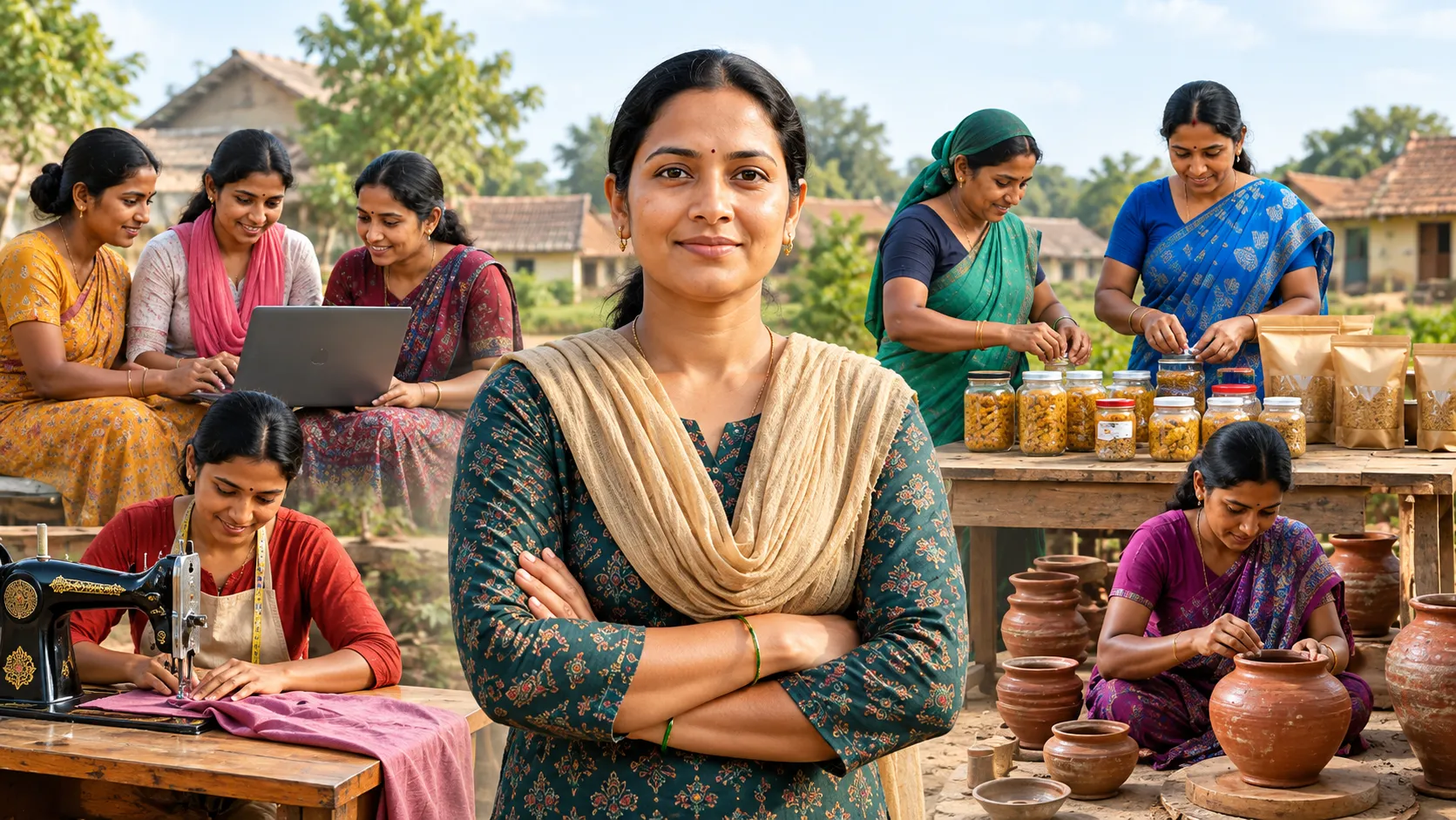
India's Ministry of Rural Development has launched the second phase of its National Campaign on Entrepreneurship under the Deendayal Antyodaya Yojana–National Rural Livelihoods Mission, a three-month initiative running from August 21 to November 21, 2026, with a specific focus on accelerating entrepreneurship among rural women and expanding both farm and non-farm enterprises across the country.
The campaign, launched to coincide with World Entrepreneurs Day on August 21, places particular emphasis on enterprise development, intensive handholding support, formalisation of existing informal businesses, and improved market access for products and services operated by members of self-help groups, the community-based savings and credit structures that have become the backbone of rural women's economic participation in India over the past two decades.
A central feature of the campaign is its effort to give greater visibility and recognition to the community-level cadres who provide on-the-ground support to rural women entrepreneurs — trained individuals embedded within local communities who assist with business planning, enterprise development, and market linkages. By formally elevating the role of these cadres, the government appears to be acknowledging that the success of rural entrepreneurship programmes depends heavily on sustained, localised support rather than one-off training sessions or capital disbursements alone.
The campaign's stated objectives span eight distinct areas, including promoting women-led farm and non-farm enterprises, strengthening community enterprise promotion cadres, supporting the formalisation of rural enterprises, expanding digital and e-commerce adoption among rural producers, strengthening producer groups and producer enterprises, improving access to buyers and markets, and supporting business planning and financial literacy training for participating women.
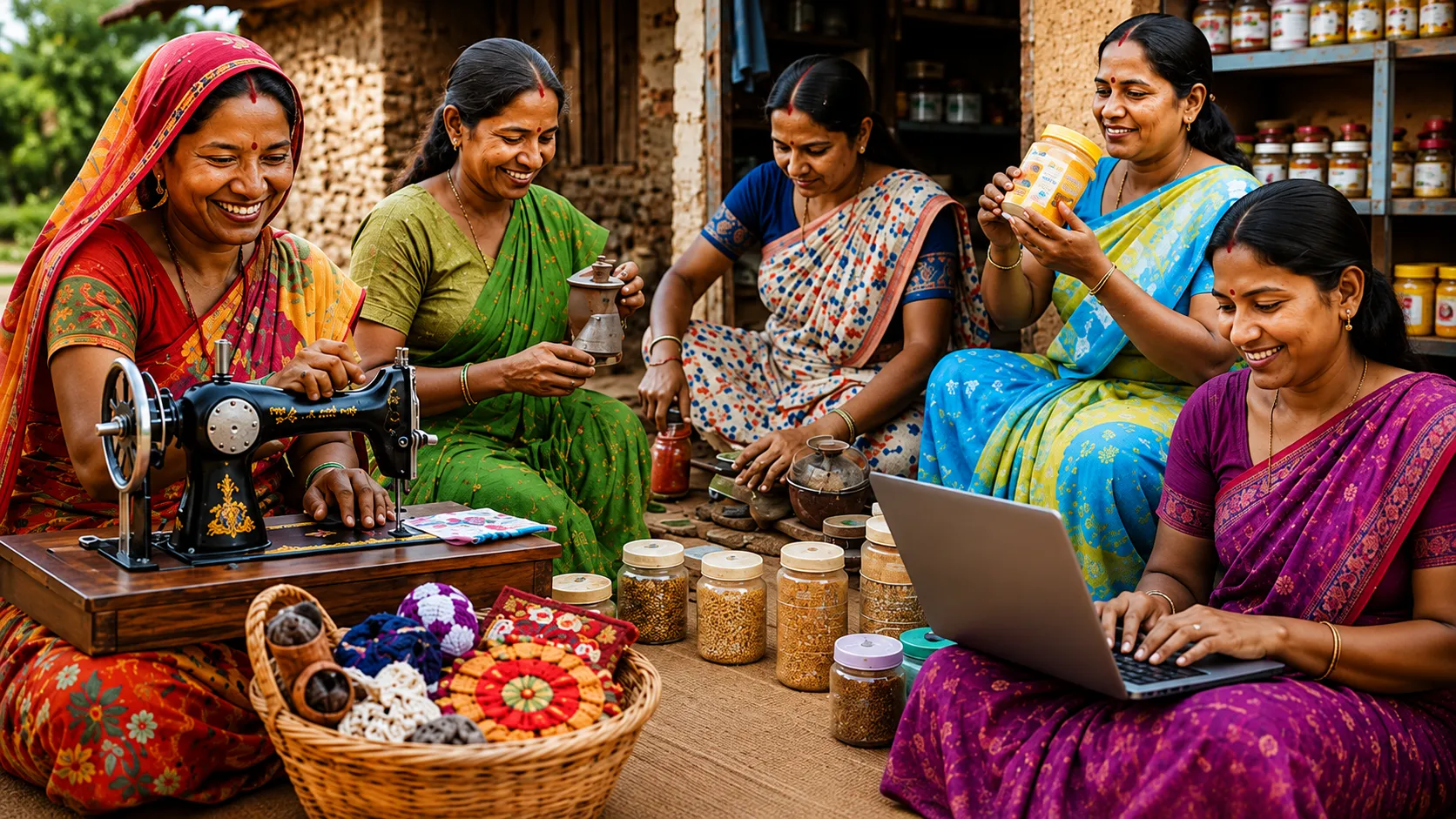
The initiative builds on more than a decade of self-help group-based rural livelihood programming in India, through which millions of rural women have been organised into savings and credit groups that have progressively evolved into vehicles for broader economic activity, including small manufacturing, agricultural processing, and retail. Government officials have framed the current campaign as a natural next step in this evolution — shifting the focus from group formation and basic livelihood activities toward more structured, scalable entrepreneurship that can generate sustained income growth for participating households.
Digital and e-commerce adoption features prominently among the campaign's priorities, reflecting a broader recognition within Indian rural development policy that market access — historically one of the most significant constraints facing rural producers — can be substantially improved through better integration with online sales channels, even in areas where physical market infrastructure remains limited.
For India's broader women's entrepreneurship ecosystem, the campaign represents the rural, grassroots counterpart to more urban-centric initiatives such as the Goldman Sachs 10,000 Women programme and various city-based women entrepreneur exhibitions, together forming a spectrum of support that spans from village-level self-help group members building small farm enterprises to established urban founders scaling venture-backed businesses — a breadth that reflects the scale and diversity of India's roughly 700 million-strong rural population and the outsized role women continue to play within it.