Some of the most important energy technologies of the coming decades are likely to begin as experiments in university laboratories and student workshops. A new partnership between Chevron and the Indian Institute of Technology Madras is designed to help more of those ideas survive the difficult journey from prototype to product.
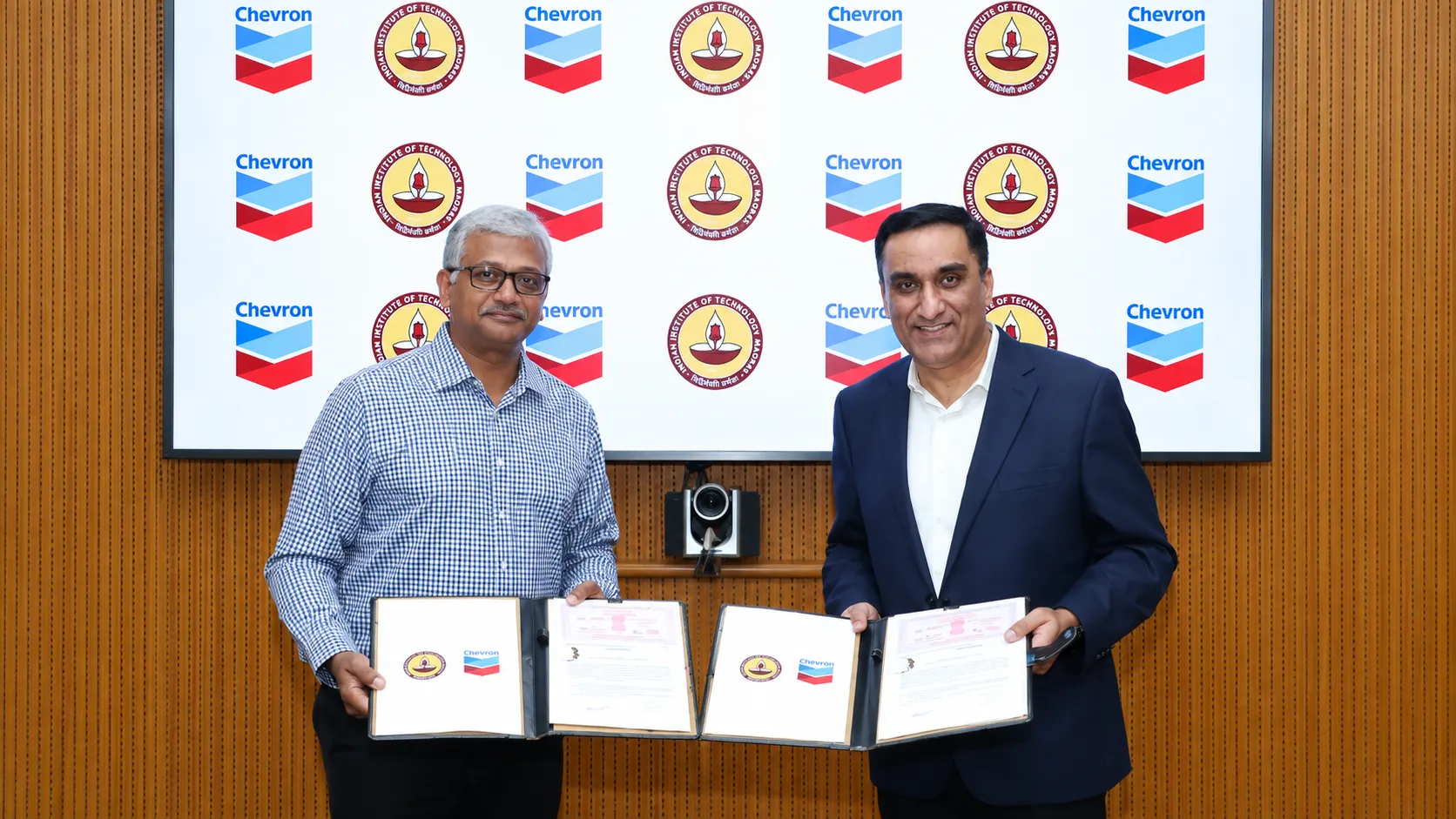
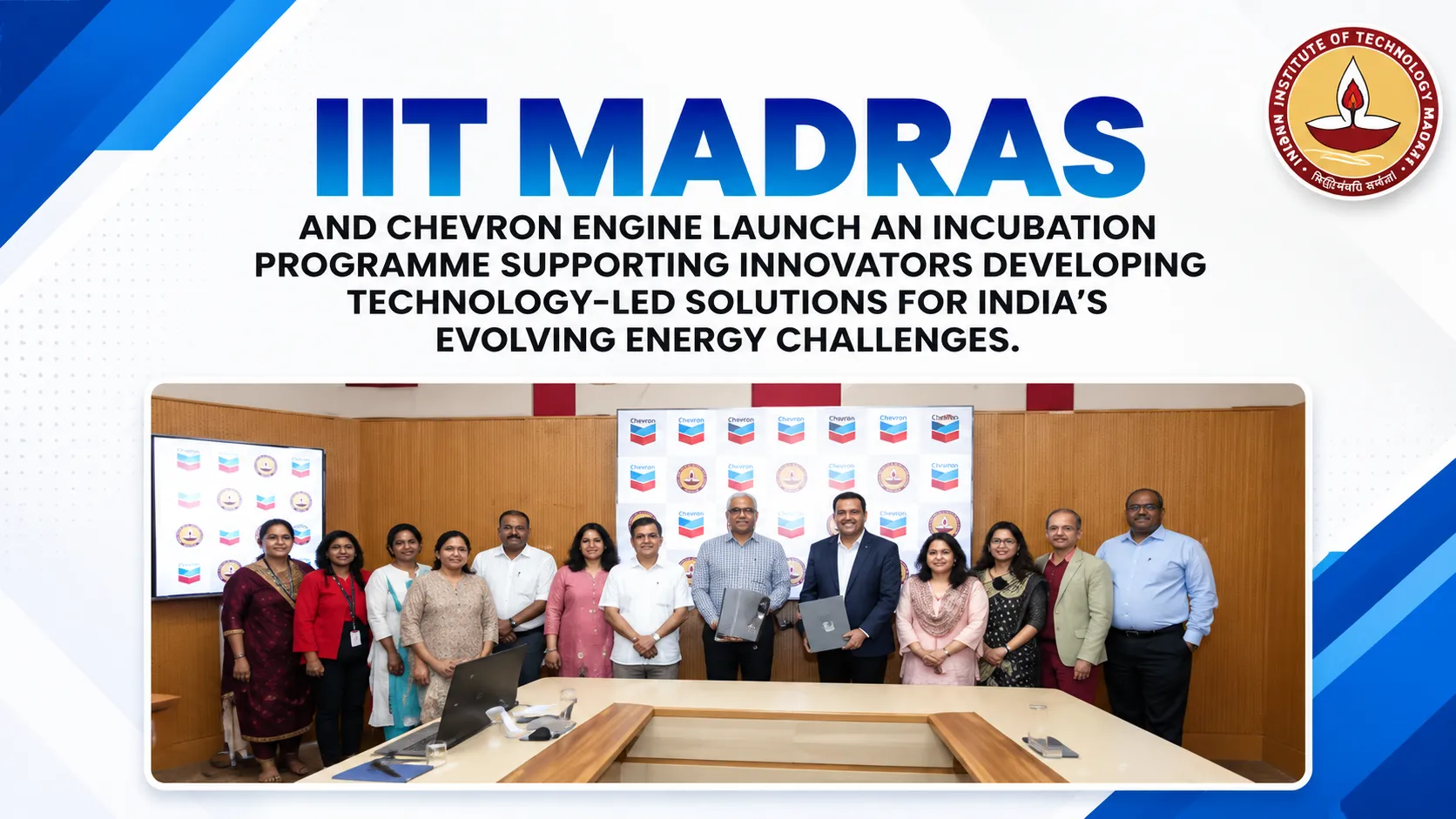
Chevron Engineering and Innovation Excellence Center (ENGINE) and IIT Madras launched the Chevron-IITM Energy Technology Incubation Program on September 25 at the institute's campus in Chennai. The programme will support early-stage innovators, researchers, student teams, social entrepreneurs and individuals working on solutions to energy challenges.
Its focus areas are technology-led energy solutions, energy infrastructure, carbon utilisation, the circular economy and resource efficiency in the energy sector.
What participants will receive
Selected teams will receive tailored support that spans the early stages of building a venture. According to the partners, this includes pre-incubation support, prototype validation and prototype funding, help with business model development, incubation services, grants, mentorship and preparation for market readiness.
The two organisations are dividing responsibilities according to their strengths. Chevron ENGINE will contribute industry expertise, technical mentorship, employee volunteering and opportunities for innovators to engage with the company. IIT Madras will provide access to its research, innovation and incubation infrastructure, giving entrepreneurs an environment in which to develop, test and scale their technologies.
"This new initiative is a key part of Chevron UDAAN, our community partnership portfolio, set with the intent to help opportunities take flight," said Dr Akshay Sahni, country head of Chevron India.
Prof Ashwin Mahalingam, dean of alumni and corporate relations at IIT Madras, described the programme's aim as collaborative. "Through the Chevron-IITM Energy Technology Incubation program, we hope to collaboratively provide innovators with access to mentorship, technical expertise and a strong innovation ecosystem," he said.
Why incubation is the bottleneck
India does not lack ideas in clean energy and climate technology. Its engineering institutions produce thousands of graduates each year, and research groups across the country are working on batteries, hydrogen, carbon capture, materials science and energy efficiency.
The harder problem is translation: turning research into products that customers will buy. Energy technologies are capital-intensive and take longer to reach market than software. They often require physical prototypes, pilot plants, safety testing and certification before any revenue is generated. Many promising ideas stall in the gap between a successful laboratory experiment and a commercially viable product, a stage that investors sometimes call the "valley of death".
Incubation programmes that combine technical mentorship with early funding are designed to narrow that gap. Industry participation is especially valuable in energy, because large companies understand the operational constraints of real infrastructure, from refineries to power grids, and can help innovators design solutions that will actually work in the field.
IIT Madras as a deep-tech launchpad
IIT Madras has built one of India's strongest ecosystems for technology start-ups. Its research park and incubation cell have supported hundreds of companies, including several that have become significant businesses in areas such as electric mobility, space technology and advanced manufacturing.
The institute's model links academic research, faculty expertise and industry partners. For an energy-focused programme, that means participants can draw on research groups and laboratories that would be difficult and expensive for an early-stage team to access independently.
The new programme also builds on an existing relationship. Chevron has been a founding member of The Energy Consortium at IIT Madras, a platform that brings together industry and academia to work on energy challenges. The incubation programme extends that collaboration from research into entrepreneurship.
Carbon utilisation and circularity in focus
The programme's emphasis on carbon utilisation and the circular economy is notable. Carbon utilisation refers to technologies that capture carbon dioxide and convert it into useful products, such as fuels, chemicals or building materials. While many approaches remain at an early stage, the field has attracted growing interest as industries look for ways to reduce emissions that are difficult to eliminate.
Circular economy solutions aim to keep materials in use for longer and reduce waste. In the energy sector, that can include recovering materials from end-of-life batteries and solar panels, reusing industrial by-products and designing equipment for repair and recycling. India's rapid growth in electric vehicles and solar installations means these challenges will become more pressing over the next decade.
Resource efficiency, the third theme, covers technologies that reduce the energy, water or raw materials required for industrial processes. For a country with fast-growing energy demand, efficiency improvements are often the cheapest and quickest way to cut emissions and costs at the same time.
Why energy companies are investing in start-up ecosystems
Chevron's involvement reflects a broader trend among major energy companies to engage with start-ups and universities. As the energy system evolves, these companies need access to new technologies, whether to reduce emissions from their own operations, improve efficiency or explore new lines of business.
Supporting incubation programmes offers several benefits. It gives companies early visibility of emerging technologies. It helps build a pipeline of talent. And it allows them to contribute to local innovation ecosystems in countries where they operate, strengthening relationships with governments and communities.
For Chevron, the programme sits within its UDAAN community partnership portfolio in India.
A boost for social entrepreneurs
The inclusion of social entrepreneurs among eligible participants is worth highlighting. Many energy challenges in India are closely tied to livelihoods, from access to clean cooking fuel to reliable power for small businesses and farms. Solutions that improve energy access or reduce costs for low-income households may not attract conventional venture capital at an early stage, but they can have significant social impact.
By opening the programme to social entrepreneurs, the partners are signalling that they value impact as well as commercial potential.
Looking ahead
The success of the Chevron-IITM programme will be measured by the ventures it produces. The most useful indicators will be the number of teams that move from prototype to pilot, the partnerships they form with industry and the follow-on funding they attract.
India's energy transition will require innovation at every level, from grid-scale infrastructure to small efficiency improvements in factories and homes. Programmes that connect the country's research talent with industry expertise and early capital are an important part of that effort. With IIT Madras providing the ecosystem and Chevron ENGINE contributing industry know-how, the new incubator gives early-stage energy innovators a more structured path from idea to impact.