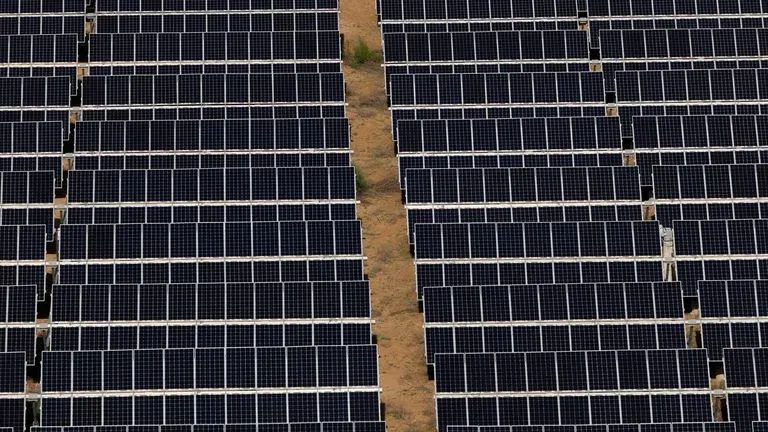
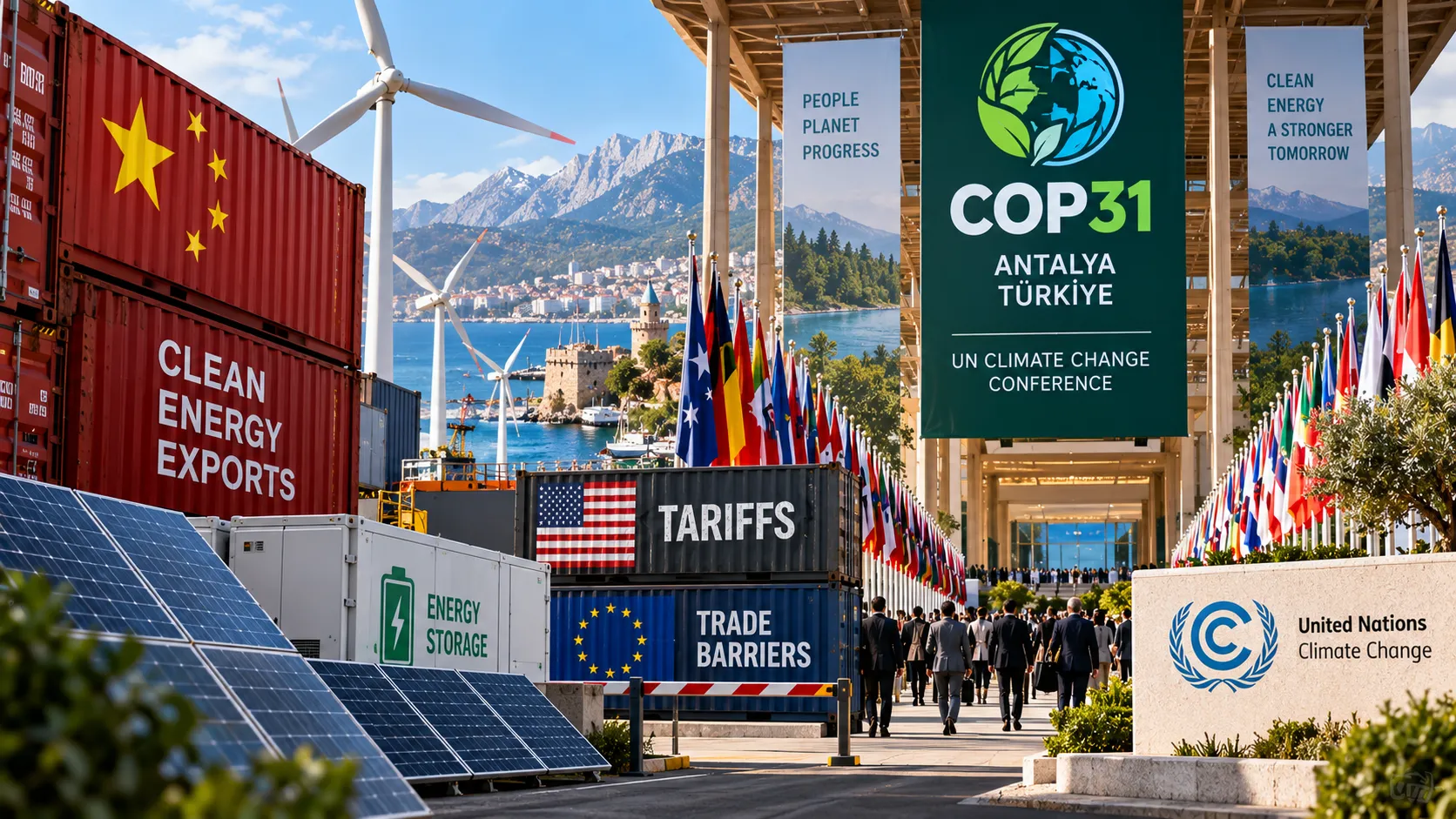
The world's largest producer of clean energy technology wants the next global climate summit to confront the trade barriers that are increasingly shaping the energy transition. China signalled on Wednesday, October 21, that it will push for the COP31 climate talks in Antalya, Turkey, to focus on tariffs against its clean technology exports, Reuters reported.
Speaking at a press conference, Li Gao, vice minister of China's Ministry of Ecology and Environment, criticised what he described as "the new problem of unilateralism and protectionism." He said the conference should discuss the free flow of green technology at a time of "intensifying" geopolitical conflicts, and that China would give a "firm response" to any smears or attacks against it.
The comments set the stage for a potential clash at COP31, which begins next month, between climate goals and trade policy.
China's dominance in clean technology
China is by far the world's largest producer of solar panels, wind turbines, batteries and electric vehicles. Its manufacturers dominate global supply chains for these technologies, from raw material processing to final assembly, and massive scale has driven costs down dramatically, making clean energy cheaper around the world.
That dominance has also triggered a backlash. The United States has imposed steep tariffs on Chinese solar products and electric vehicles, arguing that Chinese government subsidies have created unfair competition and overcapacity. The European Union has imposed tariffs on Chinese electric vehicles, restricted some solar components and opened an investigation into a major Chinese wind turbine company over alleged unfair trade practices.
China argues that such measures slow the global energy transition by making clean technology more expensive, and that they amount to protectionism disguised as concern about fair competition.
Climate finance and the electrification push
Beyond tariffs, China said that a 2024 pledge to mobilise $300 billion a year in climate finance for developing countries is a priority, and that it wants a roadmap for delivering it. The pledge, agreed at COP29 in Baku, has been criticised by developing countries as insufficient, and progress on mobilising the money has been slow.
China stopped short of explicitly supporting Turkey's push for a global agreement on electrification, although it said the goal aligns with Chinese policy. Li also said the COP31 presidency should "continue to listen fully to views from all sides."
A clash of priorities
The question of whether trade measures belong on the agenda of UN climate talks is contentious. Many developed countries argue that tariffs and trade investigations are matters for trade bodies such as the World Trade Organization, not climate negotiations. Developing countries, including China and India, have previously raised concerns about unilateral trade measures linked to climate policy, particularly the European Union's Carbon Border Adjustment Mechanism, which will impose charges on carbon-intensive imports.
The tension reflects a deeper debate about the energy transition. Western governments want to reduce dependence on Chinese supply chains for strategic and economic reasons, building domestic industries in solar, batteries and electric vehicles. China, meanwhile, sees its clean technology exports as both an economic opportunity and a contribution to global climate goals.
The Global South perspective
For developing countries, the debate has practical consequences. A Reuters analysis published this week found that countries in the Global South have spent more than $235 billion on Chinese-made clean energy technology since 2024, accounting for more than half of global spending on Chinese transformers, switchgear and solar arrays. Cheap Chinese technology has allowed many countries to expand electricity access and renewable energy quickly.
At the same time, some developing countries want to build their own clean energy industries and have imposed their own measures to protect domestic manufacturers. China's exports of green products have surged, with green and low-carbon products making up a record 26% of exhibits at the latest Canton Fair, and electric vehicle exports rising more than 72% in the first three quarters of 2026.
What it means for India
India occupies a complex position. It is a major buyer of Chinese solar components, relying on China for more than half of its solar cells and modules, even as it imposes duties and other measures to build a domestic solar manufacturing industry. India has also opposed the EU's carbon border tax, arguing that it unfairly penalises developing countries.
At COP31, India is likely to emphasise climate finance, technology transfer and the principle that developed countries should take the lead in cutting emissions. Its interests partly align with China's on opposing unilateral trade measures, but diverge on industrial policy, as India seeks to reduce dependence on Chinese supply chains.
The backdrop of rising warming
China's comments came on the same day that the UN Environment Programme reported that projected global warming has risen, with even the best-case scenario reaching 1.7°C to 1.8°C by mid-century. That stark outlook adds urgency to the negotiations, as the world needs faster deployment of clean energy, which depends heavily on affordable technology.
What is COP31
COP31 is the 31st Conference of the Parties to the United Nations Framework Convention on Climate Change, the annual gathering at which nearly 200 countries negotiate on climate action. Turkey will host the summit in Antalya, with Australia playing a leading role in the negotiations under an agreement between the two countries, which had both bid to host.
Key issues on the agenda include how to respond to the shortfall in national climate plans, the delivery of climate finance, adaptation to climate impacts and the transition away from fossil fuels. The host country typically seeks to promote signature initiatives; Turkey has championed a push on electrification.
Trade and climate: a growing overlap
The overlap between trade and climate policy has grown as countries use industrial policies and trade measures to support domestic clean technology industries. Subsidies, local content requirements, tariffs and carbon border charges are all now part of the landscape, raising questions about how to reconcile them with open trade.
What comes next
COP31 will bring together governments from around the world in Antalya next month. How trade, finance and emissions targets are balanced will determine whether the summit makes progress or becomes mired in disputes.
For businesses in clean energy, from manufacturers to developers and investors, the outcome matters. Trade barriers shape costs, supply chains and investment decisions, and the debate over clean technology tariffs is likely to remain one of the defining issues of the energy transition.