Three of the world's largest food and beverage companies have agreed to change how they describe the environmental credentials of their plastic bottles, in a significant victory for European consumer groups campaigning against misleading green claims.
Coca-Cola, Nestlé and Danone agreed to revise recycling claims on their bottles following dialogue with the European Commission and the Consumer Protection Cooperation network, which brings together national consumer authorities across the European Union, ESG Today reported on Thursday, October 22. The dialogues concluded for Coca-Cola in June 2025, for Nestlé in February 2026 and for Danone in October 2026.
What will change
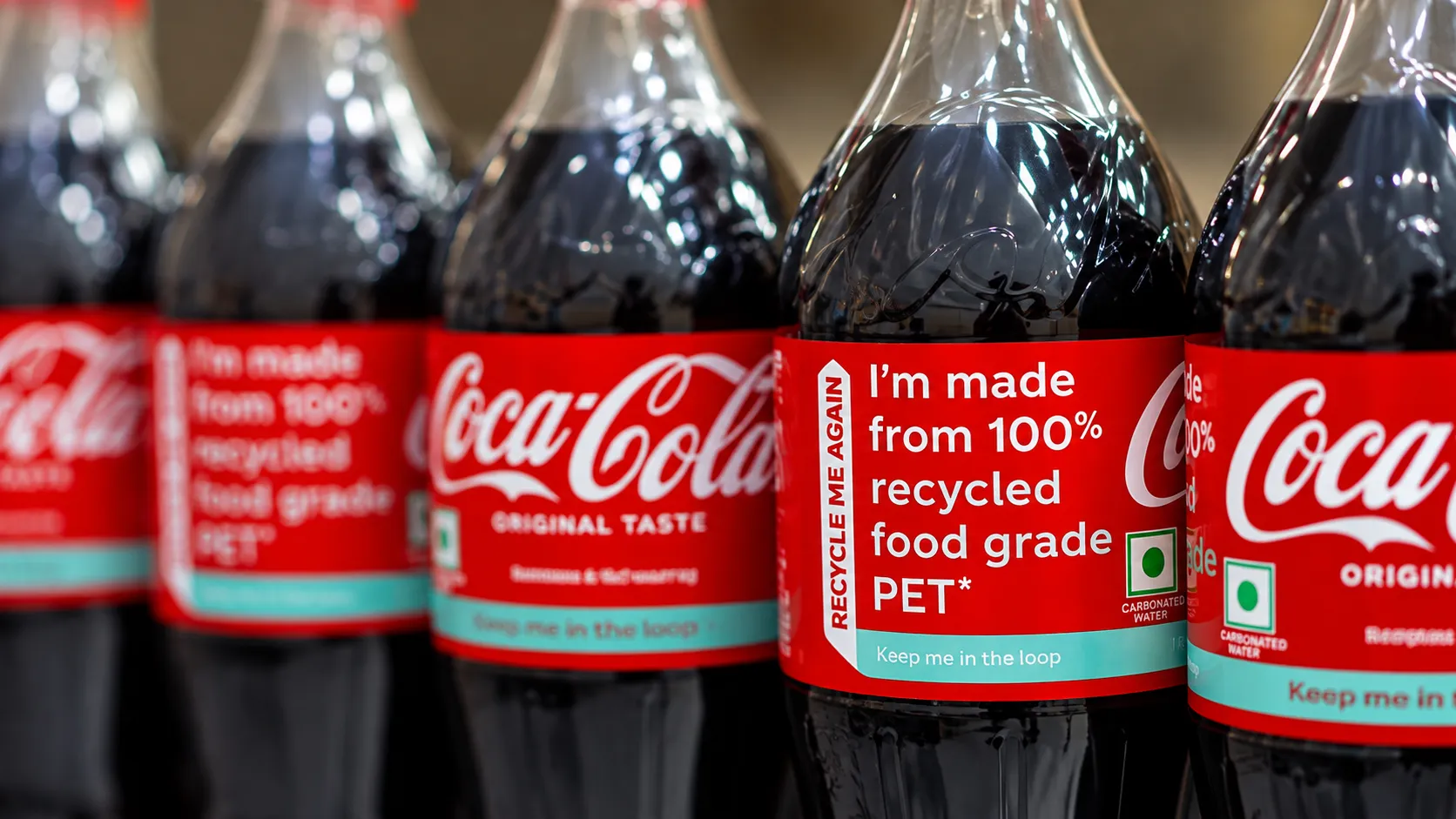
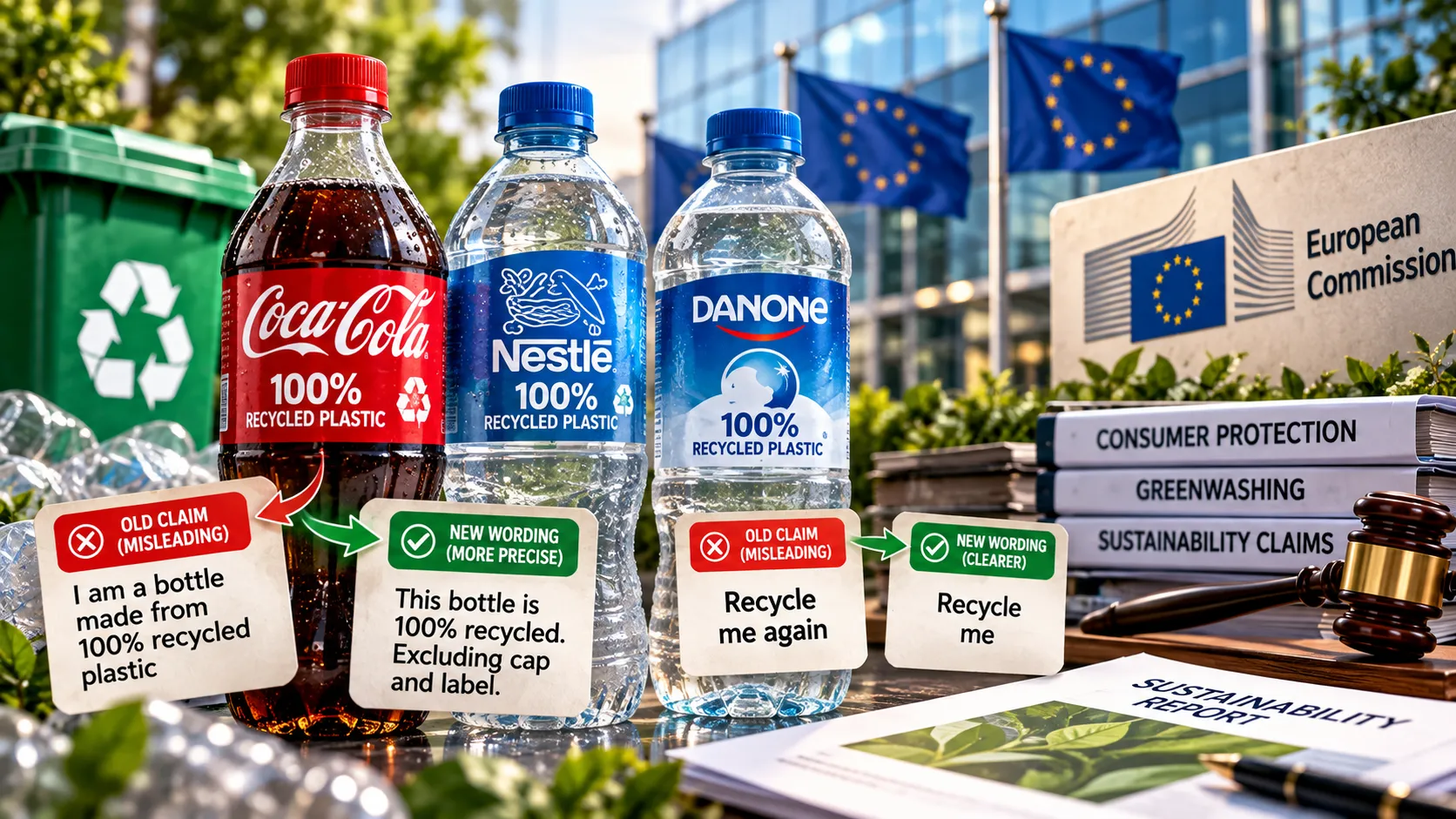
Under the commitments, claims that consumer groups considered misleading will be replaced with more precise language. A claim such as "I am a bottle made from 100% recycled plastic" will become "This bottle is 100% recycled. Excluding cap and label."
The phrase "Recycle me again" will be changed to "Recycle me," to avoid giving consumers the impression that the bottle had already been recycled before purchase.
The companies also pledged that their overall labelling and marketing would not mislead consumers about the inherent environmental benefits of plastic bottles, and that their websites and social media campaigns would reflect the new commitments. National consumer protection authorities will monitor implementation and could take enforcement action if the companies do not comply.
The complaint
The changes stem from a greenwashing alert issued in November 2023 by the European Consumer Organisation, known by its French acronym BEUC, together with member organisations from 13 countries.
BEUC challenged claims such as "100% recyclable," arguing that whether a bottle is actually recycled depends on collection infrastructure, sorting and recycling processes, not just its material. It also challenged "100% recycled" claims, noting that caps and most labels are not made from recycled material and that virgin plastic is often added. The group also raised concerns about green imagery that might suggest environmental benefits.
"Consumers need to be able to trust companies' environmental claims," said Agustín Reyna, BEUC's director general.
Michael McGrath, the EU commissioner for democracy, justice, the rule of law and consumer protection, said: "European consumers deserve accurate information about the environmental practices of all companies."
Europe's crackdown on greenwashing
The agreements are part of a broader European effort to curb misleading environmental claims. The EU has adopted rules banning generic environmental claims such as "eco-friendly" or "climate neutral" unless they can be substantiated, and restricting claims based on carbon offsetting. The directive on empowering consumers for the green transition is due to apply from 2026.
Companies across sectors, from airlines to fashion brands and energy firms, have faced challenges over environmental claims in recent years. Regulators in the United Kingdom and other countries have also stepped up scrutiny.
For consumer goods companies, the stakes are high. Sustainability claims have become important marketing tools, as consumers increasingly consider environmental factors in their purchasing decisions. But misleading claims can result in regulatory action, legal challenges and reputational damage.
The plastic problem
Plastic bottles are among the most visible symbols of the global plastic waste problem. Beverage companies have committed to increasing recycled content and improving recyclability, but progress has been uneven, and campaigners argue that companies should focus more on reducing plastic use and expanding reusable packaging.
Recycling rates for plastic bottles vary widely across countries, depending on collection systems. Deposit return schemes, under which consumers pay a small deposit refunded when they return bottles, have achieved high collection rates in countries such as Germany and Norway, and the EU's new packaging rules will expand such schemes.
What it means for India
India is one of the world's largest markets for bottled beverages, and Coca-Cola, Nestlé and Danone all have significant businesses in the country. India has introduced Extended Producer Responsibility rules for plastic packaging, requiring brand owners to collect and process plastic waste and to use increasing amounts of recycled content.
Indian regulators have also begun scrutinising environmental claims. The Central Consumer Protection Authority issued guidelines in 2024 on the prevention and regulation of greenwashing and misleading environmental claims, requiring companies to substantiate such claims with evidence.
The European agreements could serve as a reference point for regulators and consumer groups in India and other countries assessing how companies communicate about packaging.
Why precise wording matters
The distinction between "recyclable" and "recycled" is central to the debate. A bottle may be technically recyclable, meaning it can be processed in recycling facilities, but whether it actually gets recycled depends on whether consumers dispose of it correctly, whether local systems collect it and whether facilities exist to process it. In many places, a large share of plastic bottles end up in landfills, incinerators or the environment.
Similarly, a bottle described as "100% recycled" may contain recycled plastic in its body, but the cap, label and other components may be made from virgin materials. Consumer groups argue that unqualified claims overstate environmental benefits and can lead consumers to believe that buying plastic bottles has little environmental cost.
Industry response
Beverage companies argue that they have made significant investments in recycled content and recycling infrastructure, and that clear communication can encourage consumers to recycle. Several have set targets to increase recycled content in packaging and support collection systems in markets around the world.
Critics counter that recycling alone cannot solve the plastic problem, pointing to the need to reduce single-use packaging and expand refillable and reusable options. The EU's packaging regulation includes targets for reuse in certain sectors.
What comes next
National authorities will monitor how the three companies implement their commitments across EU markets. Other beverage and consumer goods companies may face pressure to review their own claims in light of the agreements.
For consumers, the changes mean clearer information about what is and is not recycled. For companies, the message is that environmental claims must be precise and verifiable, or they risk regulatory action. For multinational brands operating in markets such as India, the European agreements may also influence how they frame packaging claims globally, as companies increasingly seek consistent messaging across regions and regulators share information about best practices in policing environmental marketing. The episode adds momentum to a global push for more honest communication about packaging.