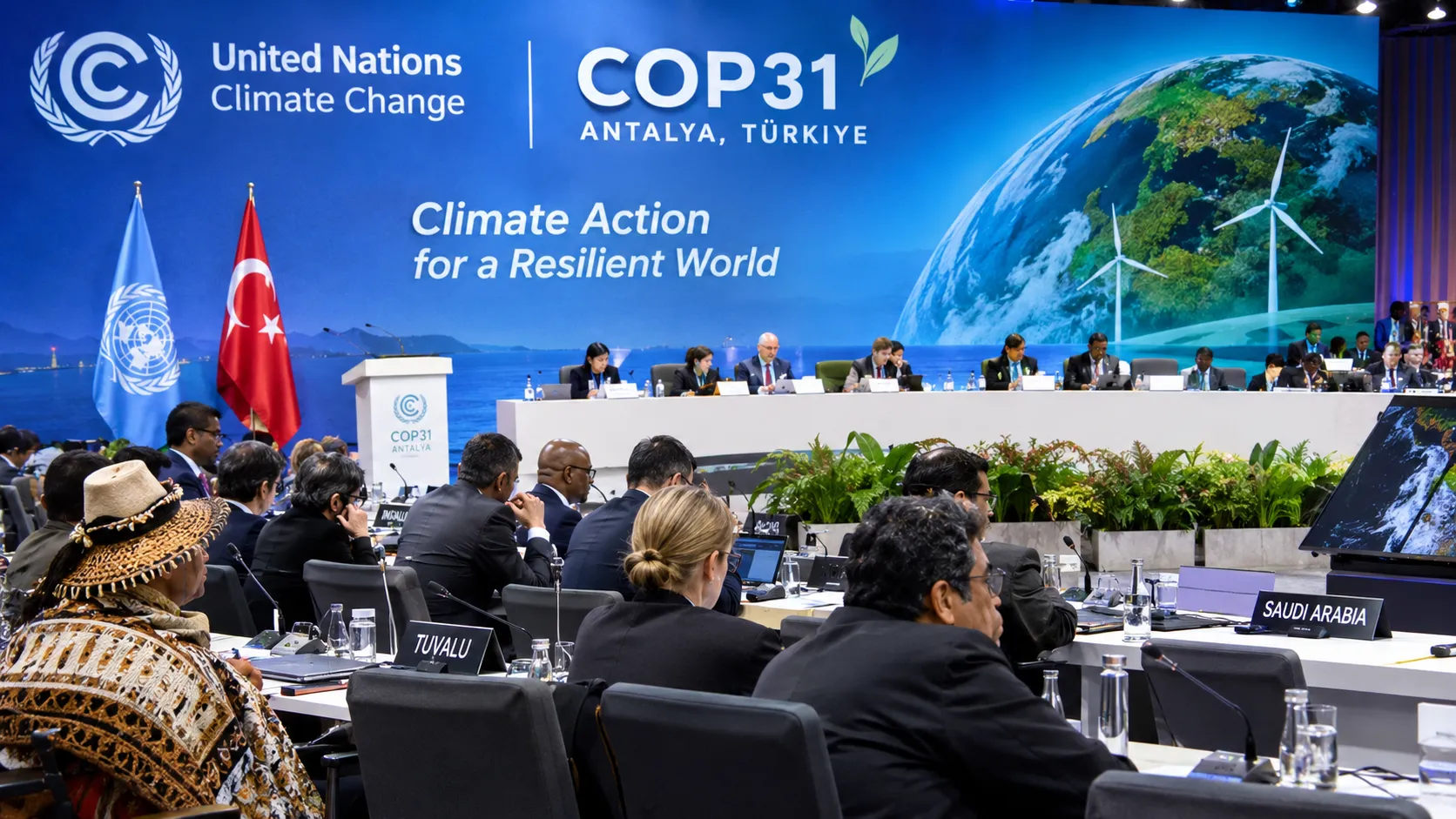
Two days before the scheduled end of the United Nations climate summit in Türkiye, negotiators remained far apart on the questions that matter most.
As of Wednesday, November 18, 21 negotiating issues remained unresolved at COP31 in Antalya, according to UN News. New draft texts were due early on Thursday, and observers expected the conference, scheduled to close on Friday, November 20, to run at least one extra night.
Ministers met behind closed doors for a "Divan," a Turkish-style open political exchange intended to narrow differences, according to UN News. The COP31 Presidency's mid-week letter to delegations signalled little room for extra time.
The new 'reality check'
Countries launched the second Global Stocktake, the Paris Agreement's five-yearly review of whether national plans add up to enough action on emissions, adaptation and support for vulnerable countries, according to UN News. The process concludes in 2028, making it the last stocktake before 2030.
The first stocktake, completed at COP28 in Dubai in 2023, helped spur pledges to triple renewable energy capacity, double the rate of energy efficiency improvements and transition away from fossil fuels in energy systems.
"We have two years," UN climate chief Simon Stiell said, calling on governments to turn the first stocktake's targets into real progress. "Yes, geopolitical headwinds are fierce, but an ambitious outcome is within reach."
Finance drifts
Finance remains the biggest sticking point. Talks on who pays for climate action were drifting towards delay, and civil society groups said one finance text remained entirely in brackets, meaning nothing had been agreed, according to UN News.
Seher Raheja of India's Centre for Science and Environment said, "It's kicking the can down the road," adding, "You cannot demand ambition from developing countries while withholding the means to deliver it."
The first draft of the summit's main political decision, published by co-host Australia on November 16, asked rich nations to provide at least $120 billion for adaptation and called for "accelerated action to phase out fossil fuels," according to AFP. Both elements are strongly contested.
Adaptation and accountability
Developing countries and civil society groups argue that promised support for adaptation has not materialised. "You made a promise, a commitment, and you are breaking that commitment," said Pooja Dave of Climate Action Network International, according to UN News. "When there is no adaptation on the ground, what are we monitoring?"
Tuvalu's Prime Minister Feleti Teo spoke for low-lying island nations facing rising seas. "They did not cause this crisis. Resilience has a limit," he said.
The science timetable
Disputes have also emerged over the role of science. Several vulnerable countries want reports from the Intergovernmental Panel on Climate Change completed in time to inform the stocktake. Russia, Saudi Arabia and China argue the schedule is too compressed and could limit participation by scientists from developing countries, according to UN News. AFP reported that Saudi Arabia and India want publication pushed back to 2029.
IPCC Chair Jim Skea said the Working Group II report "will address adaptation finance for the first time."
Electrification gains support
One area of progress is Türkiye's "35x35" goal, which aims to raise electricity's share of global final energy use to 35% by 2035. Some 75 countries now back the target, according to UN News. Supporters argue that electrifying transport, heating and industry can accelerate emissions cuts, but critics note that the goal does not require the additional electricity to come from clean sources.