ImpactSustainability5 MIN READ

COP31 Ends Without a Climate Pact as the Fossil Fuel Divide Deepens, While Nearly 100 Countries Back a 35% Electrification Target

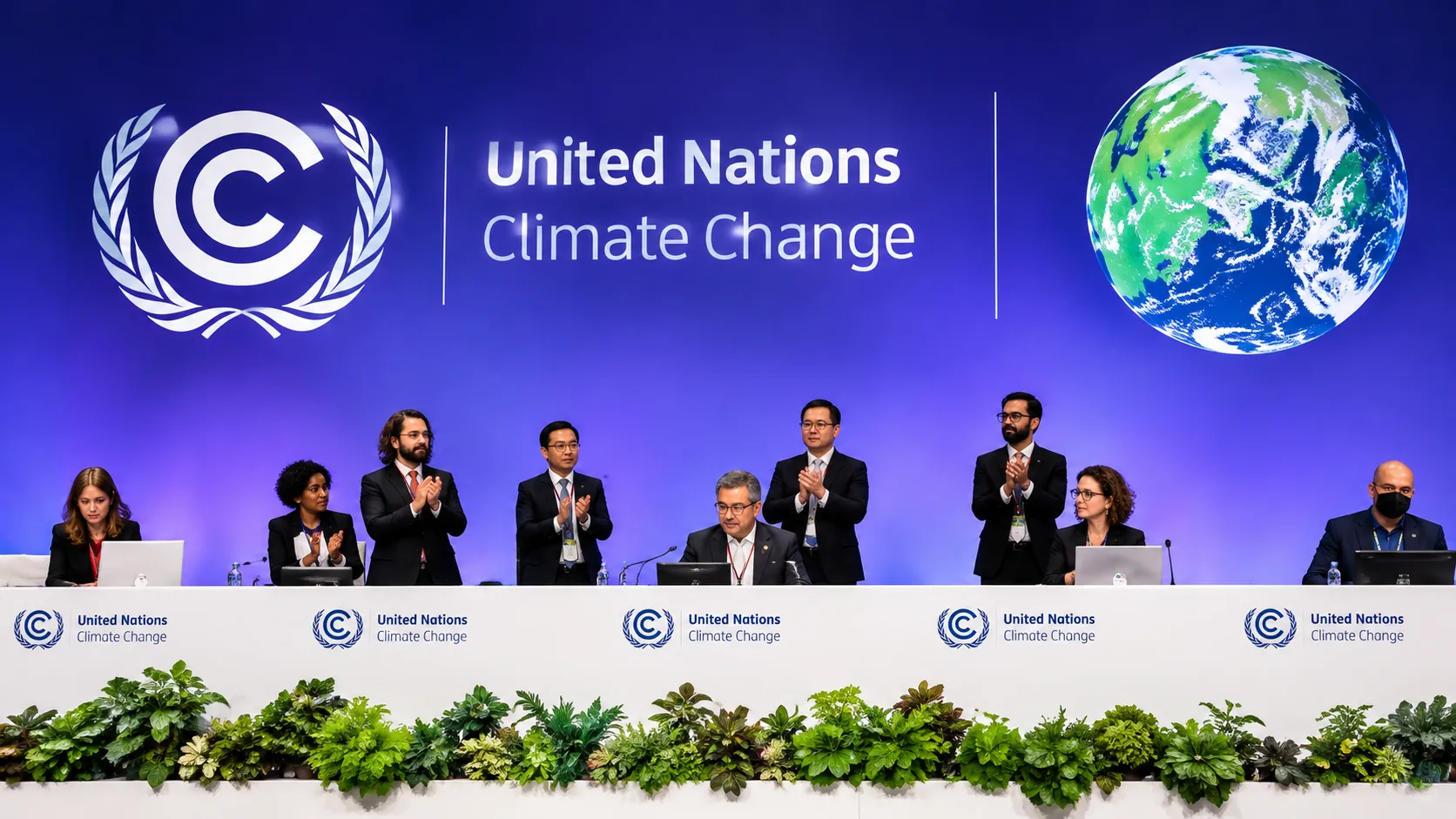
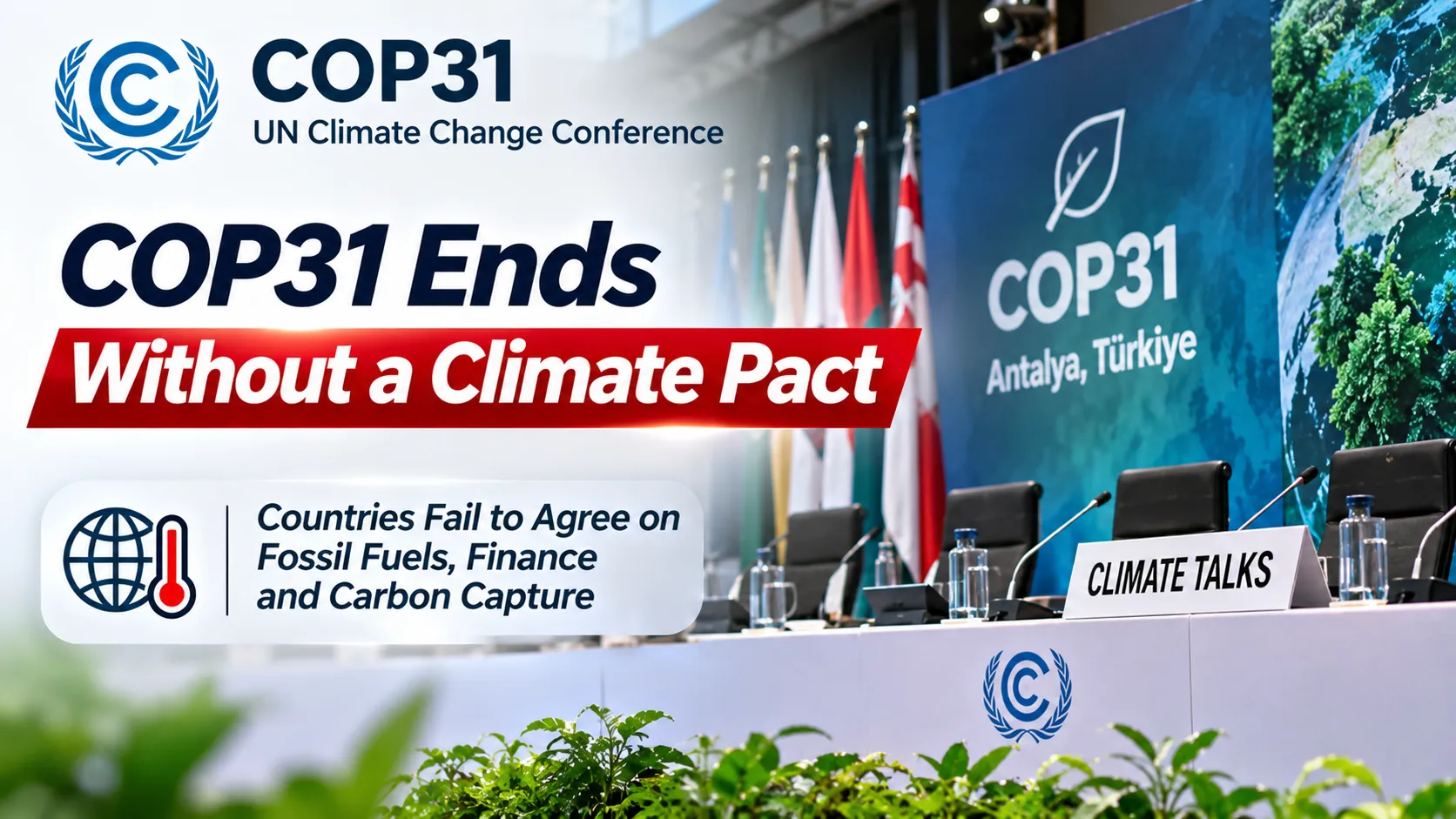
The COP31 climate talks in Antalya, Türkiye, ended late on November 22 without a final climate pact, after countries failed to resolve disputes over fossil fuel commitments, carbon capture and climate finance, GreentechLead reported on November 23. The EU, Panama and the Marshall Islands opposed the proposed text, while nearly 100 countries backed a separate target of 35% electricity in final energy use by 2035.

By Prathista Lazar · Author24 November 2026New
COP31 Ends Without a Climate Pact as the Fossil Fuel Divide Deepens, While Nearly 100 Countries Back a 35% Electrification Target

The world's annual climate summit has ended without the agreement it was convened to deliver.

The COP31 United Nations climate change conference in Antalya, Türkiye, concluded late on Saturday, November 22, without a final climate pact, after countries failed to resolve differences over fossil fuel commitments, carbon capture technologies and climate finance for developing economies, GreentechLead reported on Monday, November 23.

UN Secretary-General António Guterres described the outcome as disappointing, according to the report.

Where the talks broke down

The central dispute was over fossil fuels. The European Union, Panama and the Marshall Islands opposed the proposed agreement because it omitted commitments to transition away from fossil fuels, according to GreentechLead. More than 130 countries supported stronger language, but opposition from major fossil fuel-producing economies blocked consensus.

Earlier drafts released during the summit had removed language on phasing out fossil fuels and placed greater emphasis on carbon capture technologies, drawing sharp criticism from climate activists and vulnerable countries. Climate campaigners argued that petrostates, led by Saudi Arabia, had succeeded in weakening the text.

Negotiators also failed to establish credible mechanisms for tripling finance for adaptation, the measures countries take to cope with the effects of climate change, according to GreentechLead.

What was achieved

Despite the failure to reach a final pact, some progress was made outside the main agreement. Nearly 100 countries backed a target for electricity to account for 35% of final energy consumption by 2035, according to GreentechLead.

Electrification, replacing fossil fuels with electricity in transport, heating and industry, is considered one of the most important strategies for cutting emissions, particularly as electricity generation shifts to renewable sources.

UN Climate Change Executive Secretary Simon Stiell highlighted progress on just transition measures, electrification, resilience and investment initiatives.

A Wildlife for Climate Declaration, endorsed by 25 countries, was also launched at the summit, calling for wildlife protection and habitat restoration to be recognised as part of international climate action.
df70c28e-558f-4cdb-9d65-27e98d39380d (1).png

Reactions

Joanna MacGregor, a UN climate strategist, told CNN on November 23 that the transition to clean energy is "irreversible," despite the setback in negotiations. Sustainability professionals described the outcome as "hollow," according to Sustainability Magazine.

Climate groups expressed frustration that, three years after countries agreed at COP28 in Dubai to "transition away from fossil fuels in energy systems," that commitment has not been strengthened. Some commentators described the outcome as a victory for Gulf oil producers at the expense of the global majority.

Why consensus is so hard

UN climate agreements require consensus among nearly 200 countries, giving individual countries or groups significant power to block outcomes. Countries' interests vary widely: small island states face existential threats from rising sea levels, oil producers depend on fossil fuel revenues, large emerging economies emphasise their right to development, and developed countries face domestic political pressures over costs.

The fossil fuel question goes to the heart of these differences, because it affects national economies, government revenues and energy security.

The finance question

Climate finance remains one of the most contentious issues. Developing countries argue that wealthy nations, historically responsible for most emissions, should provide substantially more money to help them cut emissions and adapt. Developed countries, facing budget pressures, have been reluctant to make large new commitments.


“The negotiating room failed. The question now is whether the energy markets will move faster than the diplomats.”
— TIGI Sustainability Desk

A climate finance goal agreed in 2024 set a target of at least $300 billion a year by 2035, which developing countries criticised as inadequate. The failure to agree on mechanisms for tripling adaptation finance at COP31 will add to frustration among vulnerable nations.

India's position

India, the world's third-largest emitter, has emphasised equity and the principle of common but differentiated responsibilities in climate negotiations, arguing that developed countries should lead in cutting emissions and providing finance. India has resisted language singling out coal, its main source of electricity, while pursuing ambitious targets, including 500 gigawatts of non-fossil fuel capacity by 2030.

The 35% electrification target aligns with India's push to electrify transport and industry, including its programmes for electric vehicles, green hydrogen and renewable energy manufacturing.

What it means for business

For businesses and investors, the lack of a final agreement creates uncertainty about the direction of global climate policy. However, many analysts argue that the energy transition is increasingly driven by economics rather than diplomacy. Solar, wind and batteries have become the cheapest sources of new electricity in many countries, and investment in clean energy now exceeds investment in fossil fuels globally.

Companies in renewable energy, electric vehicles, grid infrastructure and energy efficiency are likely to continue growing, regardless of the outcome of climate summits.

What it means for the diaspora

For members of the Indian diaspora working in climate finance, clean energy and sustainability around the world, the outcome underlines the importance of national and corporate action alongside international negotiations. Indian clean energy companies are increasingly attracting global investment and expanding abroad.

Carbon capture controversy

The emphasis on carbon capture in draft texts was one of the most contested aspects of the summit. Oil-producing countries argued that technologies to capture and store carbon dioxide allow continued use of fossil fuels while reducing emissions.

Critics countered that carbon capture has not been proven at the scale needed, is expensive and captures only a tiny fraction of global emissions today, and that relying on it could delay the shift to renewable energy.

Voices of the vulnerable

Small island states and least developed countries were among the most disappointed by the outcome. For these nations, which contribute little to global emissions but face severe impacts from rising seas and extreme weather, the lack of stronger action and finance is a matter of survival.

The Marshall Islands' opposition to the final text reflected this frustration, as did statements from other vulnerable countries.

The road to COP32

The failure at Antalya will raise the stakes for the next climate summit. Host countries will face pressure to rebuild trust between developed and developing nations, and to find a path forward on fossil fuels and finance that can command consensus.

Some diplomats have suggested that progress may increasingly come through smaller coalitions and sector-specific agreements, such as the electrification target, rather than comprehensive deals.

What comes next

Attention will now turn to the next round of national climate plans and the next COP summit. Tuvalu and Ireland plan to host a conference on transitioning away from fossil fuels in July 2027, offering another forum for countries seeking stronger action. The question is whether coalitions of willing countries can make progress where consensus-based negotiations have stalled.

TagsCOP31climate changeAntalyaTürkiyefossil fuelsclimate financecarbon captureelectrificationSimon StiellAntonio GuterresEuropean UnionMarshall IslandsPanamaParis AgreementUNFCCCenergy transitionadaptation financeIndia climate policyrenewable energysustainability

Reader reviews

Sign in to rate and review this article.
Loading reviews…