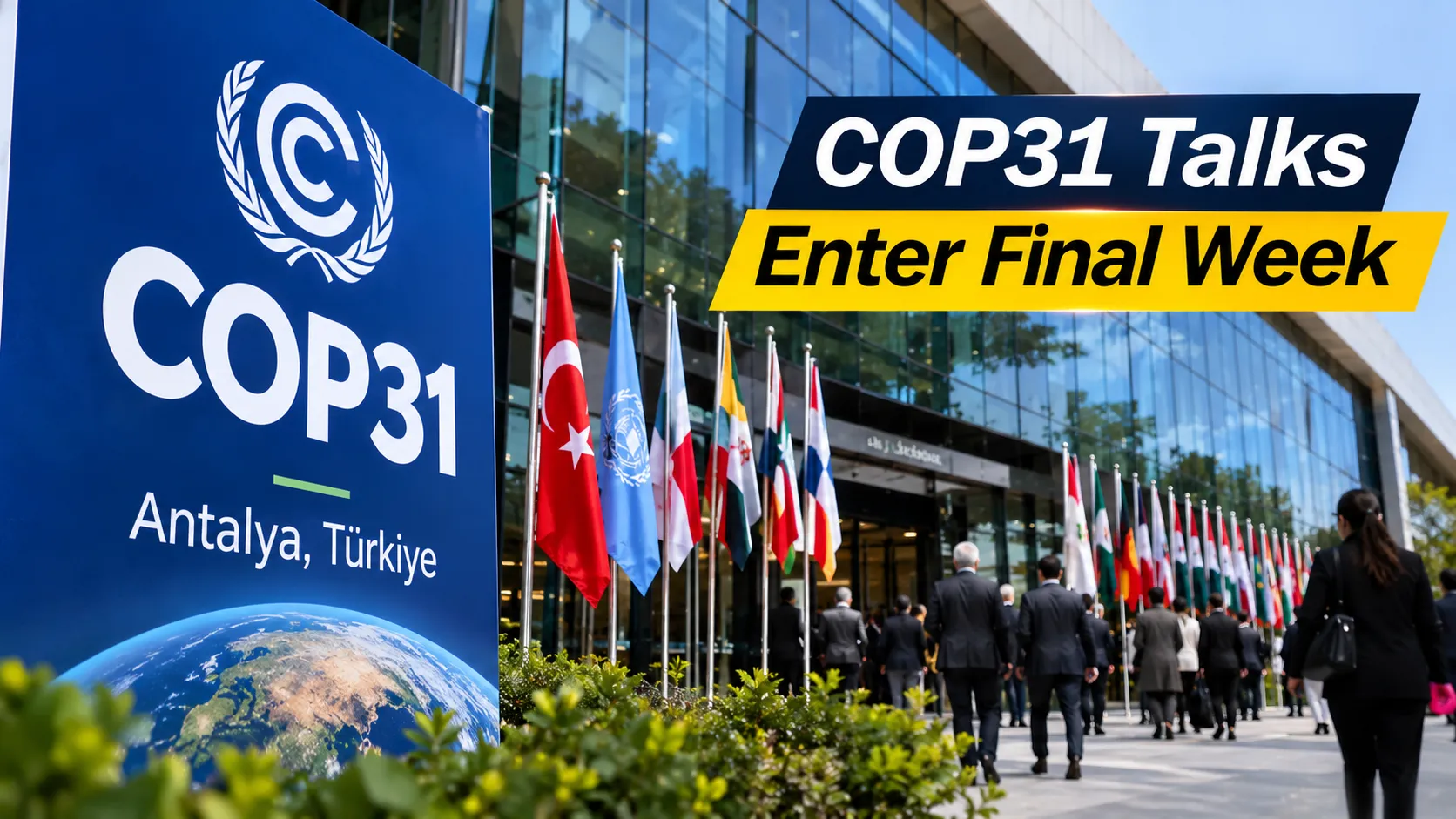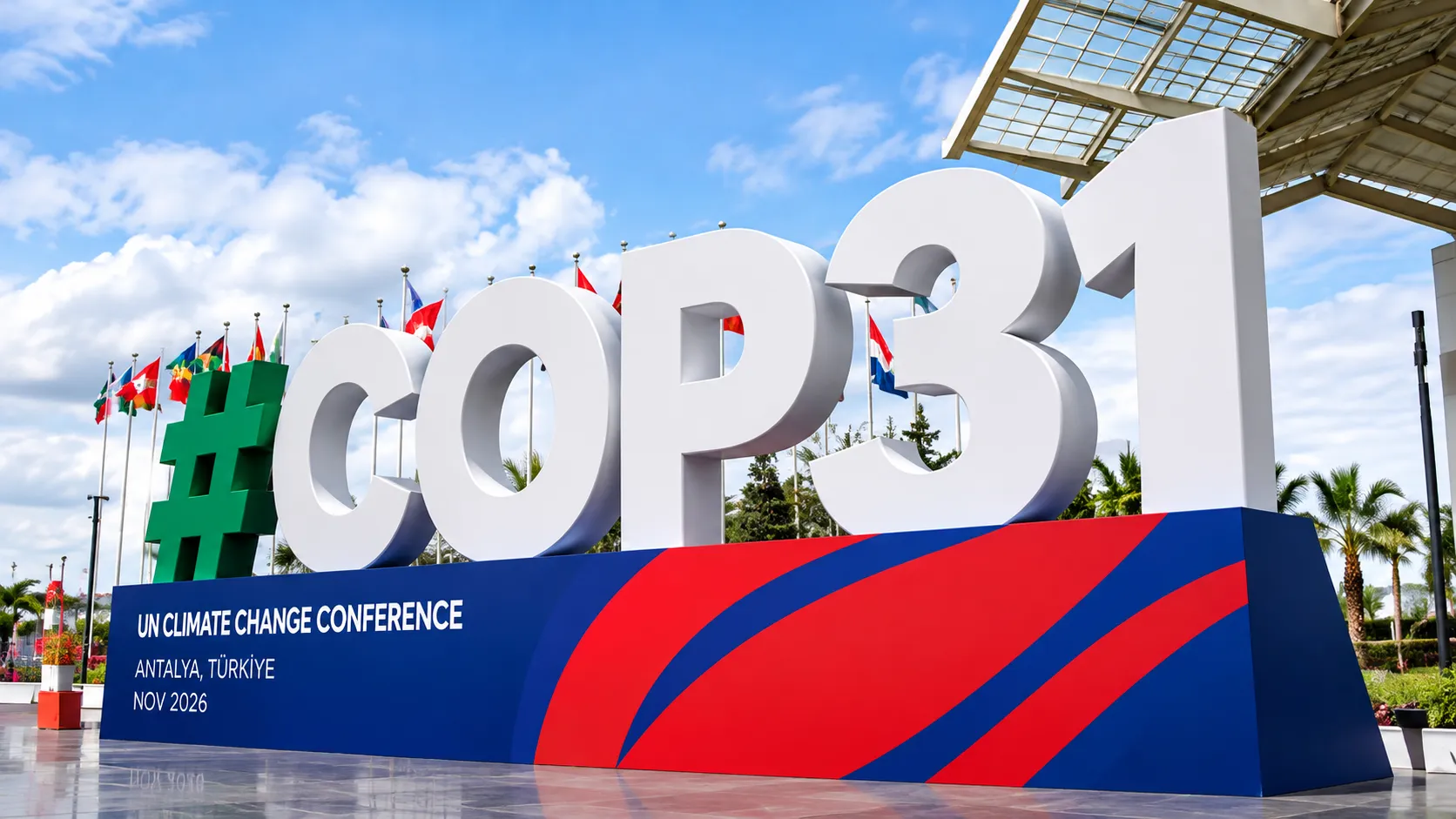
The United Nations climate summit in Türkiye has reached its decisive phase, and the man in charge of the process wants negotiators to stop circling the toughest questions.
Simon Stiell, executive secretary of UN Climate Change, urged countries at COP31 in Antalya to speed up negotiations as the talks entered their second and final week, according to the Pacific Islands News Association (PINA), which reported his remarks on November 16.
"As we head into the second week, I urge Parties to move swiftly to the hardest issues and to avoid tactical delays," Stiell said. Nearly 200 countries are working through 165 negotiating mandates, which he described as one of the largest COP meetings ever held.
The search for consensus
Stiell acknowledged the difficulty of reaching agreement among countries with very different priorities. "Getting agreement on every word, every sentence, is tough but vital work," he said, according to PINA.
Speaking as the second week began, he said, "Each country has a view. Every country has a voice," and added, "There is no collective success without compromise from every party," according to The New Arab. Asked about progress, he said only that "engagement has been constructive."
He also offered a sober assessment of what any single summit can achieve. "There's no climate quick-fix. No single COP can magic this crisis away. But each must drive progress," he said.
The fossil fuel divide
The talks are confronting deep divisions over fossil fuels. Major fossil fuel producers and consumers have reportedly resisted any deal with firm new targets or language on moving away from oil, gas and coal, according to The New Arab. Saudi Arabia and Russia have traditionally resisted language constraining fossil fuels, and India has opposed measures it says could limit its development and energy choices.
Türkiye, the host, is pushing a proposal to expand global electrification as a central part of an eventual deal, arguing that it would speed emissions cuts by replacing fossil fuel-powered cars, boilers and furnaces. But the proposal does not require the additional electricity to come from renewable sources, which has disappointed delegations and observers that want clearer plans for a transition away from fossil fuels.
The United States, the world's largest oil consumer, is skipping the talks for the second year in a row, according to The New Arab.
The record crowd
COP31 has drawn more than 90,000 participants, the highest number recorded, according to an analysis by Charles Ellinas, a fellow at the Atlantic Council, published in the Cyprus Mail on November 16. Türkiye is hosting the summit, while Australia is serving as the coordinator of negotiations.
Ellinas noted that the first week produced several initiatives, including more than $480 million in commitments for new methane-reduction efforts, the Antalya Initiative for Health Resilience and a Mediterranean investment target of up to €25 billion by 2035 for clean energy and infrastructure. He cautioned that the €25 billion figure is an investment mobilisation target rather than secured funding, and that "success cannot be measured by the number of participants, announcements or new initiatives."
Finance remains the sticking point
Finance remains one of the hardest issues. Developing countries want more grants rather than loans to help them cut emissions and adapt to climate impacts. Little of the money raised through green and sustainable bonds goes to adaptation, and only a limited share flows to developing countries, according to S&P Global research cited by Ellinas.