ImpactSustainability5 MIN READ

"It's Make or Bake Time": Guterres Calls for a Climate Justice Compact and Fossil Fuel Taxes as World Leaders Gather at COP31

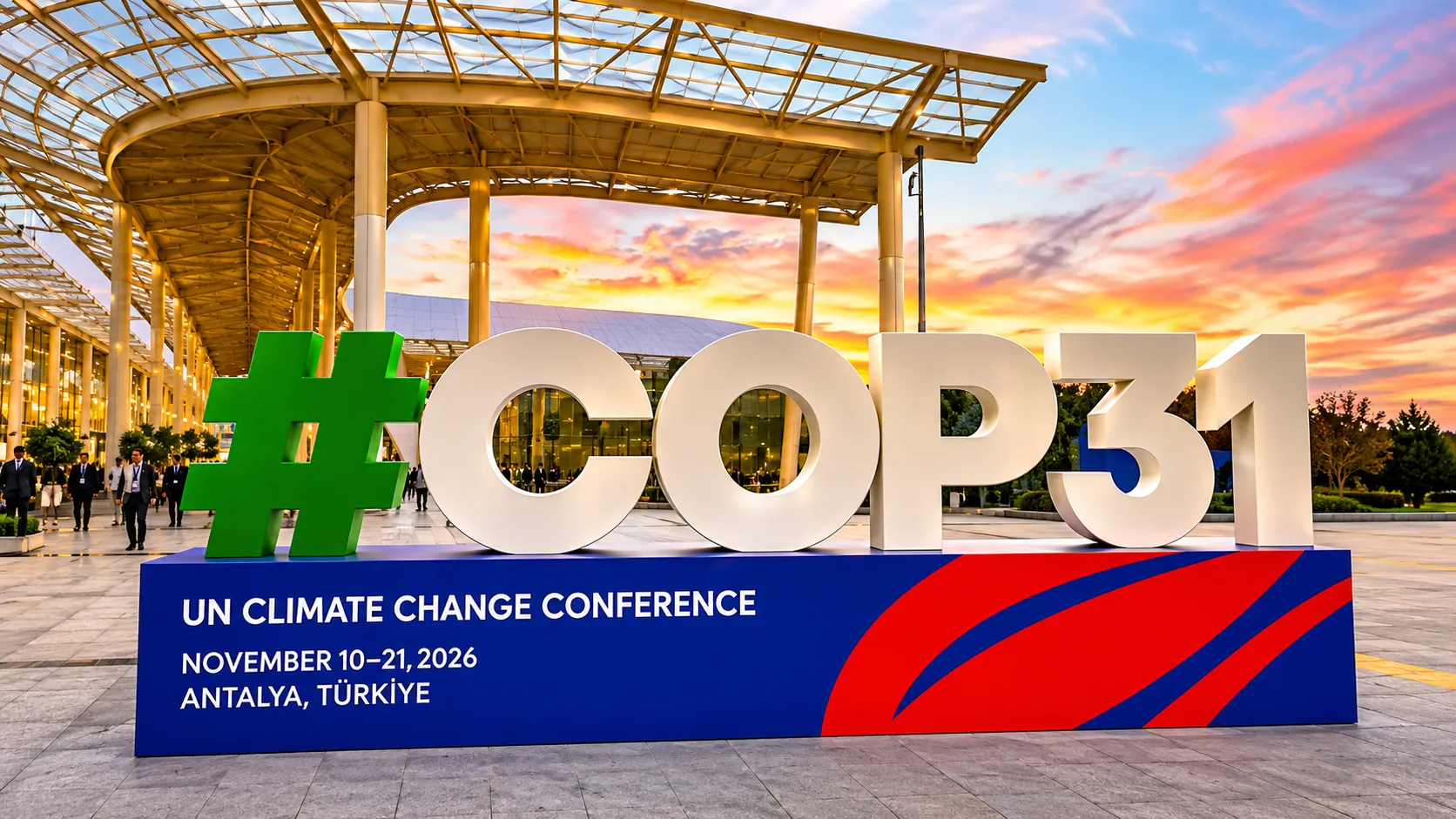
UN Secretary-General António Guterres urged world leaders at COP31 in Antalya on November 11 to agree a "climate justice compact" and to tax fossil fuel companies to fund the countries hit hardest by climate change. He warned that current national plans put the world on course for more than 2.5°C of warming, while Brazil's Lula said wars and tariffs were crowding climate action off the agenda.

By Prathista Lazar · Author12 November 2026New
"It's Make or Bake Time": Guterres Calls for a Climate Justice Compact and Fossil Fuel Taxes as World Leaders Gather at COP31

As world leaders gathered in the Turkish resort city of Antalya for the high-level segment of the United Nations climate summit, the head of the United Nations delivered a stark warning and a call to make polluters pay.

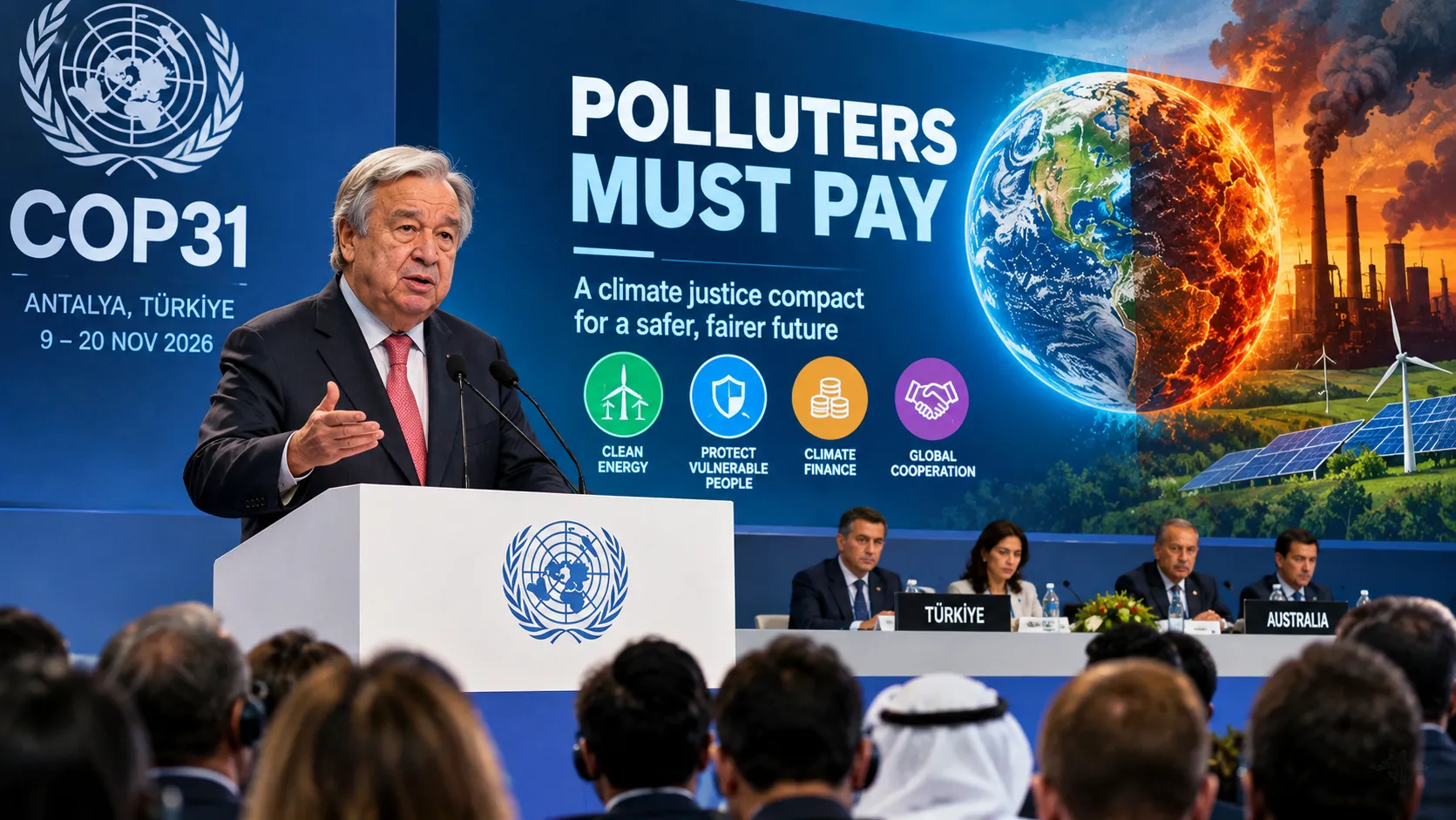
"Our planet is heating up. The clock is winding down. It's make or bake time," UN Secretary-General António Guterres told leaders at COP31 on Wednesday, November 11, according to UN News.

Guterres called for a new global climate justice agreement and urged governments to tax fossil fuel companies to fund the countries hit hardest by a crisis they did little to cause. "Polluters must pay," he said, drawing an ovation in the plenary hall.

The climate justice compact

Guterres proposed a "climate justice compact" built around four priorities, according to UN News. The first is accelerating the shift away from fossil fuels while protecting workers and communities and expanding renewable energy. The second is protecting vulnerable populations through early-warning systems, adaptation and faster support after disasters.

The third is delivering affordable climate finance, with wealthy countries meeting their commitments. The fourth is strengthening international cooperation on trade barriers, technology gaps and geopolitical rivalries.

"We cannot demand that countries transform their economies while denying them the means to do so," Guterres said.

The fossil fuel challenge

Guterres was blunt about the fossil fuel industry. "Fossil fuels must go the way of the dinosaurs," he said, adding: "The dinosaurs did not have a lobby. Fossil fuels do."

He contrasted the industry's profits with the money available to help vulnerable countries. The nine largest oil companies earned $95 billion in one quarter, while the loss and damage fund, created to help countries cope with climate disasters, has received about $600 million, an amount equal to about 14 hours of those companies' profits, he said.

The warming outlook

The Secretary-General warned that if current national climate plans are fully implemented, the world is heading for more than 2.5°C of warming by the end of the century, according to UN News, far above the Paris Agreement goal of limiting warming to 1.5°C. He said that breaching 1.5°C does not mean giving up, and that every fraction of a degree avoided matters.

"Science is not telling us to surrender. It is telling us to fight harder," he said.

Leaders' voices

COP31 runs from November 9 to 20, with Türkiye hosting the summit in partnership with Australia. Turkish President Recep Tayyip Erdoğan said three decades of climate negotiations had produced strong ideas but weak implementation. "This success at the level of ideas has not produced the same results when it comes to implementation," he said, according to UN News.

Brazilian President Luiz Inácio Lula da Silva, whose country hosted COP30 in the Amazon city of Belém last year, warned that wars and trade disputes were pushing climate action down the agenda. "We started talking more about weapons and tariffs than the survival of future generations," he said. Lula announced that Brazil will develop national roadmaps to reduce dependence on fossil fuels and end deforestation.
8bd713be-f725-4ae3-af18-8d4cc5a8194b.png

Methane: the emergency brake

The summit also highlighted methane, a potent greenhouse gas that traps more than 80 times as much heat as carbon dioxide over 20 years and is responsible for nearly a third of global warming to date, according to UN News. Guterres asked the UN Environment Programme (UNEP) to develop a global standard for near-zero methane emissions from oil and gas operations.


“Our planet is heating up. The clock is winding down. It's make or bake time.”
— António Guterres, UN Secretary-General

"Methane is our climate emergency brake," said Julia Ferini of UNEP. UNEP's International Methane Emissions Observatory uses satellites and AI to detect leaks and has helped cut emissions in 45 cases across 13 countries. In Iraq, a damaged pipeline leaked for two years, with emissions equal to those of 350,000 cars, before a pipe coating stopped it. However, of more than 5,000 alerts issued since 2023, only about one in eight has received a response.

Women leading solutions

The summit also showcased grassroots climate solutions, many led by women. In Botswana, Viva Organica, led by Makwena Moesi, uses more than half a million worms for vermicomposting and has processed more than 1,000 tonnes of organic waste, according to UN News. Moesi stressed that climate solutions must make economic sense for farmers.

"A farmer does not wake up in the morning thinking about what am I gonna do," she said, explaining that practical, profitable solutions are essential for adoption.

The negotiating battles

Behind the speeches, negotiators are grappling with difficult issues. Developing countries want more predictable funding and have warned of shortfalls in money for adaptation, according to UN News. Nepal requested help after a glacial collapse, raising questions about how quickly emergency funds can reach countries hit by disasters.

Countries also disagree on how long the UN's programme to accelerate emissions cuts should run and how it should work, and negotiators are discussing a new mechanism to support a just transition to cleaner economies. Disagreements over adaptation finance persist.

What it means for India

India, the world's most populous country and third-largest emitter of greenhouse gases, is a key player at climate summits. It has consistently argued that developed countries, which are responsible for most historical emissions, must provide finance and technology to help developing countries cut emissions and adapt. Guterres's call for climate justice and affordable finance aligns with many of India's positions.

India has set a target of reaching net-zero emissions by 2070 and is rapidly expanding renewable energy, with a goal of 500 gigawatts of non-fossil fuel capacity by 2030. But it also relies heavily on coal for electricity, and its negotiators have resisted proposals that would constrain its development. India is also highly vulnerable to climate impacts, including heatwaves, floods, cyclones and glacial melt in the Himalayas, making adaptation finance crucial.

Business implications

For businesses and investors, the summit's outcomes could shape the regulatory landscape for fossil fuels, renewable energy and carbon markets. A push for fossil fuel taxes, methane standards and greater climate finance could affect oil and gas companies, while opening opportunities for clean energy, climate adaptation and methane detection technologies.

What comes next

Negotiations will continue until November 20. Observers will watch whether countries can agree on climate finance, adaptation, methane and the just transition, and whether Guterres's call for a climate justice compact gains traction. With geopolitical tensions and trade disputes competing for attention, the summit faces a difficult test of whether multilateral climate cooperation can still deliver results.

TagsCOP31AntalyaTürkiyeAustraliaAntónio Guterresclimate justiceclimate financefossil fuelsloss and damagemethaneUNEPLula da SilvaRecep Tayyip ErdoğanParis Agreement1.5Cadaptation financejust transitionIndia climatesustainabilityinvestors

Reader reviews

Sign in to rate and review this article.
Loading reviews…