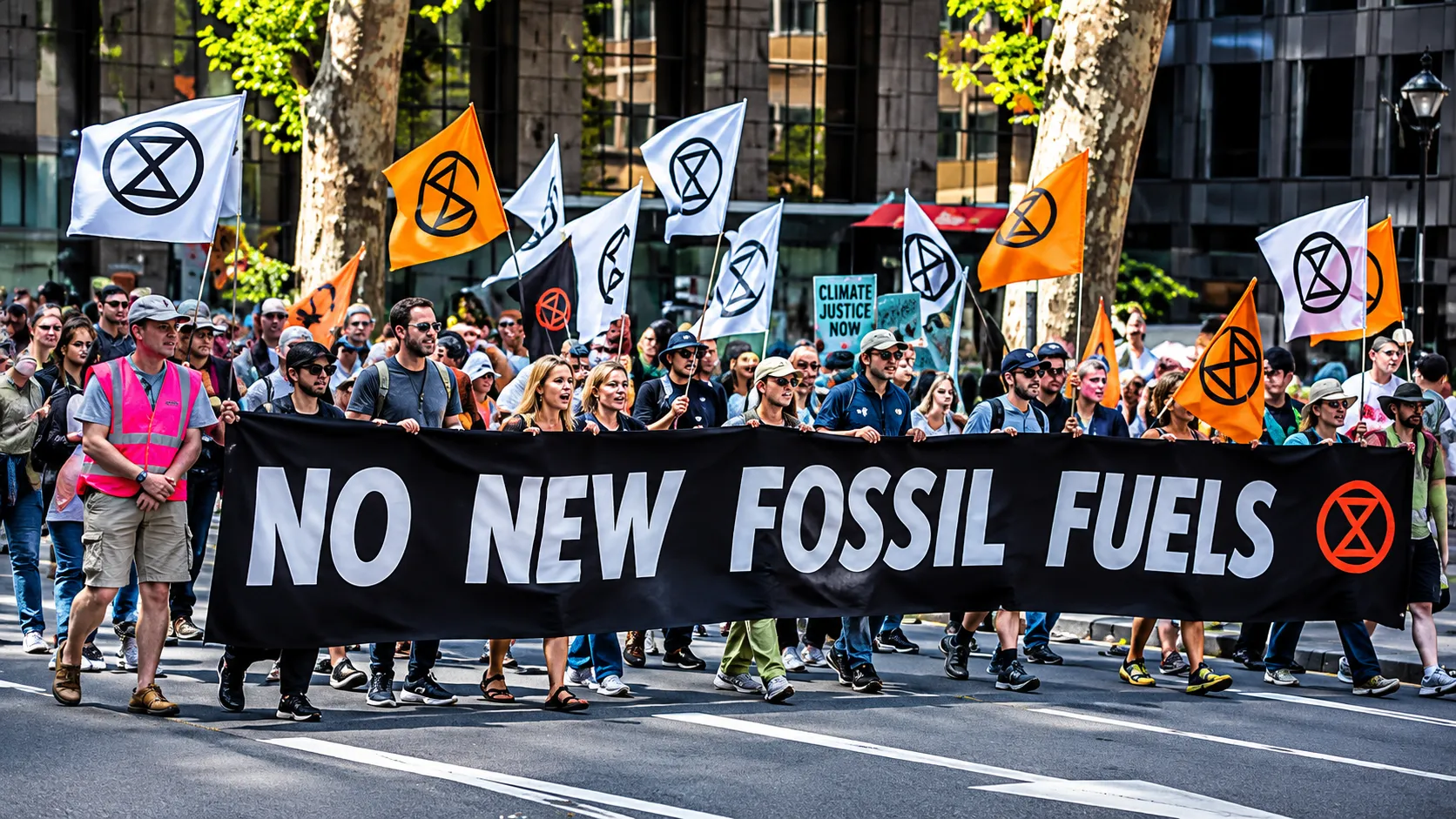
Two years after the world agreed for the first time to transition away from fossil fuels, negotiators at this year's climate summit appear to be retreating from that commitment.
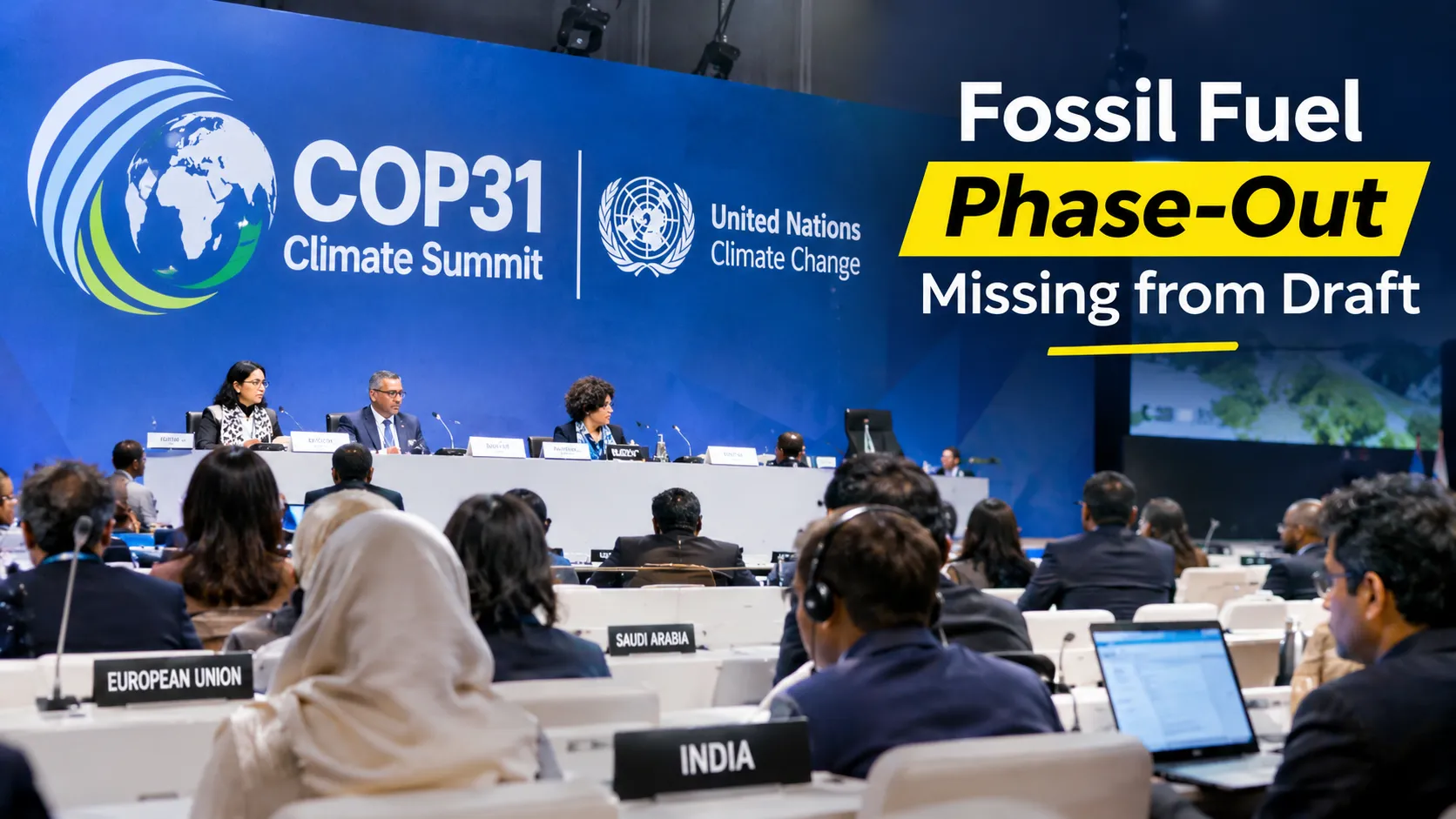
A revised draft negotiating text released at the COP31 United Nations climate summit on Thursday, November 19, removed language calling for a phase-out of fossil fuels, according to reports from the summit. Instead, the text placed greater emphasis on carbon capture technologies, which aim to capture carbon dioxide emissions from power plants and industrial facilities and store them underground.
The change drew sharp criticism from climate activists, environmental groups and representatives of vulnerable countries.
'This is not going well'
German climate activist Luisa Neubauer said: "This is not going well," according to reports. She criticised the reliance on what she called "magic technologies" and said Saudi Arabia and other petrostates had "won big time" in the negotiations.
Teresa Anderson, global lead on climate justice at ActionAid International, described the outlook as "bleak," according to reports.
Kirtana Chandrasekaran of Friends of the Earth International also criticised the draft, saying it failed to address the root causes of climate change.
Sneha Rai, a climate campaigner from Nepal, highlighted the impact on vulnerable countries in the Himalayas, which are already experiencing glacier melt, floods and other climate impacts.
Climate finance stalls
EU climate commissioner Wopke Hoekstra warned that a deal on climate finance appeared to be "dead in the water," according to reports. Climate finance refers to money provided by developed countries to help developing countries reduce emissions and adapt to climate change.
Developing countries have long argued that rich nations, which are historically responsible for most greenhouse gas emissions, should provide significantly more finance. Developed countries, facing budget pressures, have been reluctant to make large new commitments.
The fossil fuel fight
At COP28 in Dubai in 2023, countries agreed for the first time to "transition away from fossil fuels in energy systems" in a "just, orderly and equitable manner." Climate advocates had hoped to strengthen this language at subsequent summits.
However, oil-producing countries, led by Saudi Arabia, have consistently resisted strong language on fossil fuels. They argue that carbon capture and other technologies can reduce emissions without abandoning oil and gas production.
Critics argue that carbon capture technology has not been proven at the scale needed and is expensive, and that relying on it could delay the necessary shift to renewable energy.
The carbon capture debate
Carbon capture and storage (CCS) involves capturing carbon dioxide from industrial sources and storing it underground. Proponents say it is essential for decarbonising hard-to-abate industries such as cement, steel and chemicals. Many climate models include some carbon capture in pathways to limit warming.
However, CCS projects have often underperformed, and the technology currently captures only a tiny fraction of global emissions. Environmental groups worry that the fossil fuel industry uses the promise of carbon capture to justify continued production.
India's position
India, the world's third-largest emitter, has typically emphasised equity and the principle of common but differentiated responsibilities in climate negotiations. It argues that developed countries should take the lead in cutting emissions and providing finance, while developing countries need space to grow their economies.
India has resisted language that singles out coal, its main source of electricity, while setting ambitious targets for renewable energy, including 500 gigawatts of non-fossil fuel capacity by 2030. Climate finance is a key priority for India and other developing countries.
The final days
COP summits often run into overtime as negotiators work to reach consensus, and draft texts can change significantly in the final hours. A final agreement requires consensus among nearly 200 countries, giving individual countries or blocs significant influence.
Why it matters for business
The outcome of COP31 will influence government policies on energy, emissions and climate finance, which in turn affect businesses. Strong commitments on fossil fuels would accelerate investment in renewable energy, electric vehicles and clean technologies, while weak outcomes could slow the transition.
Investors in clean energy and climate technology watch climate summits for signals about the direction of global policy.
The money question
Climate finance has become one of the most contentious issues in climate talks. Developing countries estimate that they need trillions of dollars to cut emissions, adapt to climate impacts and deal with loss and damage from extreme weather, far more than developed countries have so far provided.
A new climate finance goal agreed in 2024 set a target for developed countries to mobilise at least $300 billion a year by 2035, which developing countries criticised as too low. Disagreements over how to raise and distribute the money continue to shape negotiations.
Voices from vulnerable countries
Small island states and least developed countries, which contribute little to global emissions but face some of the most severe climate impacts, have pushed hardest for strong action on fossil fuels and finance. For them, rising sea levels, stronger storms and changing rainfall patterns pose existential threats.
Campaigners from Himalayan nations such as Nepal have highlighted the risks from melting glaciers, which threaten water supplies for hundreds of millions of people in South Asia, including India.
The business response
Many companies and investors have called for clear and ambitious climate policy, arguing that certainty helps them plan long-term investments in clean energy and low-carbon technology. Weak outcomes at climate summits can create uncertainty about future regulations and carbon prices.
At the same time, the clean energy transition is increasingly driven by economics, as solar, wind and batteries have become the cheapest sources of new electricity in many countries, regardless of the outcome of negotiations.
India's clean energy push
Regardless of the outcome in the negotiating rooms, India continues to expand its renewable energy capacity rapidly, with solar and wind installations reaching record levels. The government has introduced incentives for domestic manufacturing of solar panels, batteries and electrolysers for green hydrogen, aiming to build a clean energy industry that can serve both domestic and export markets.
Indian companies such as Adani Green, Tata Power, ReNew and JSW Energy have announced large investments in renewable energy, and international investors have committed capital to Indian clean energy projects. A strong global agreement on climate finance could further accelerate this investment by lowering the cost of capital.
What comes next
Negotiators will continue talks in the final days of the summit. The key questions are whether stronger fossil fuel language can be restored and whether a deal on climate finance can be reached. The outcome will shape global climate action ahead of the next round of national climate commitments.