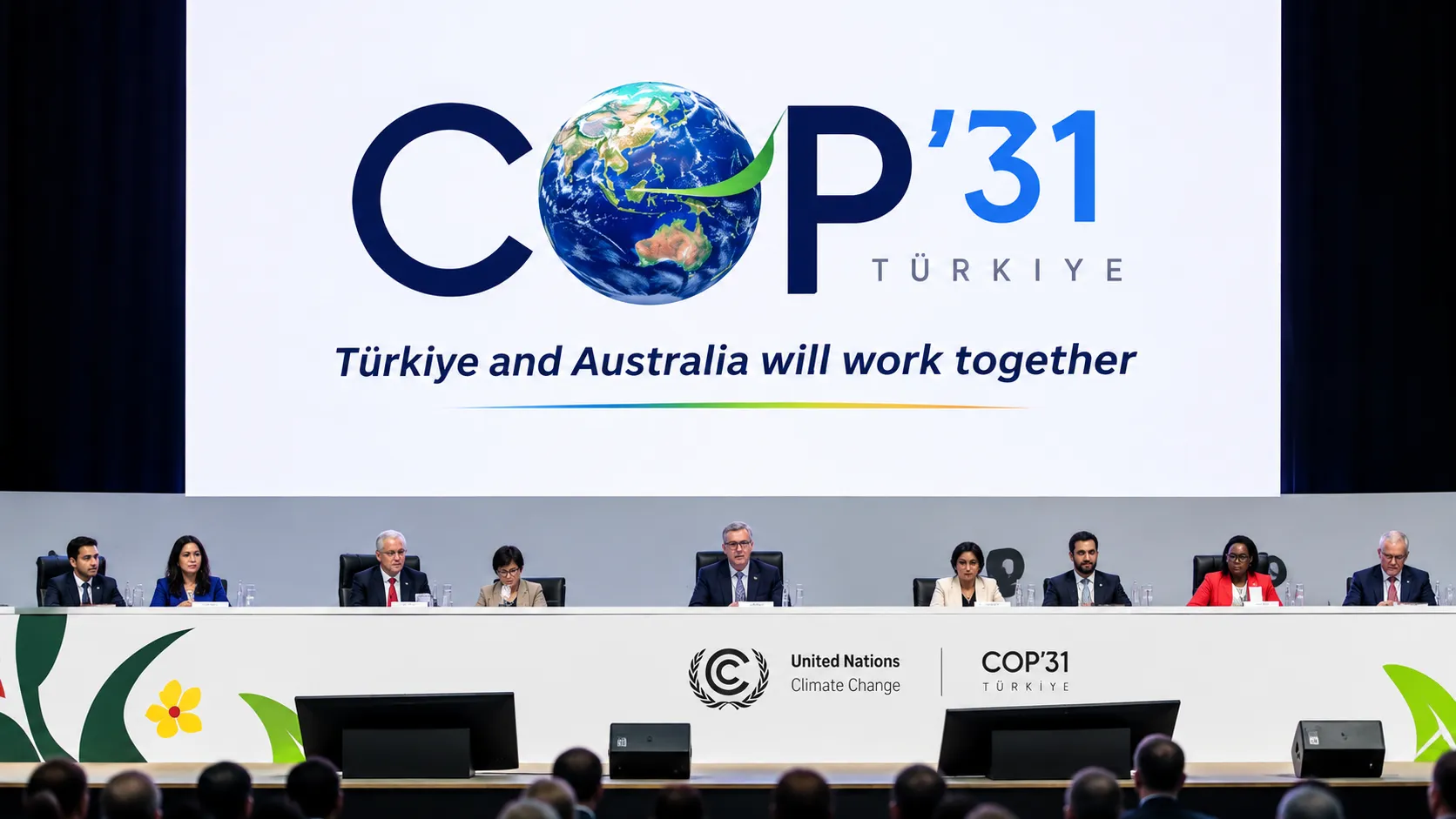
The headlines from Antalya were dominated by failure. On November 22, the COP31 climate summit ended without an overarching agreement after the European Union, the United Kingdom and several developing countries rejected the proposed Antalya Pact for failing to address the transition away from fossil fuels.
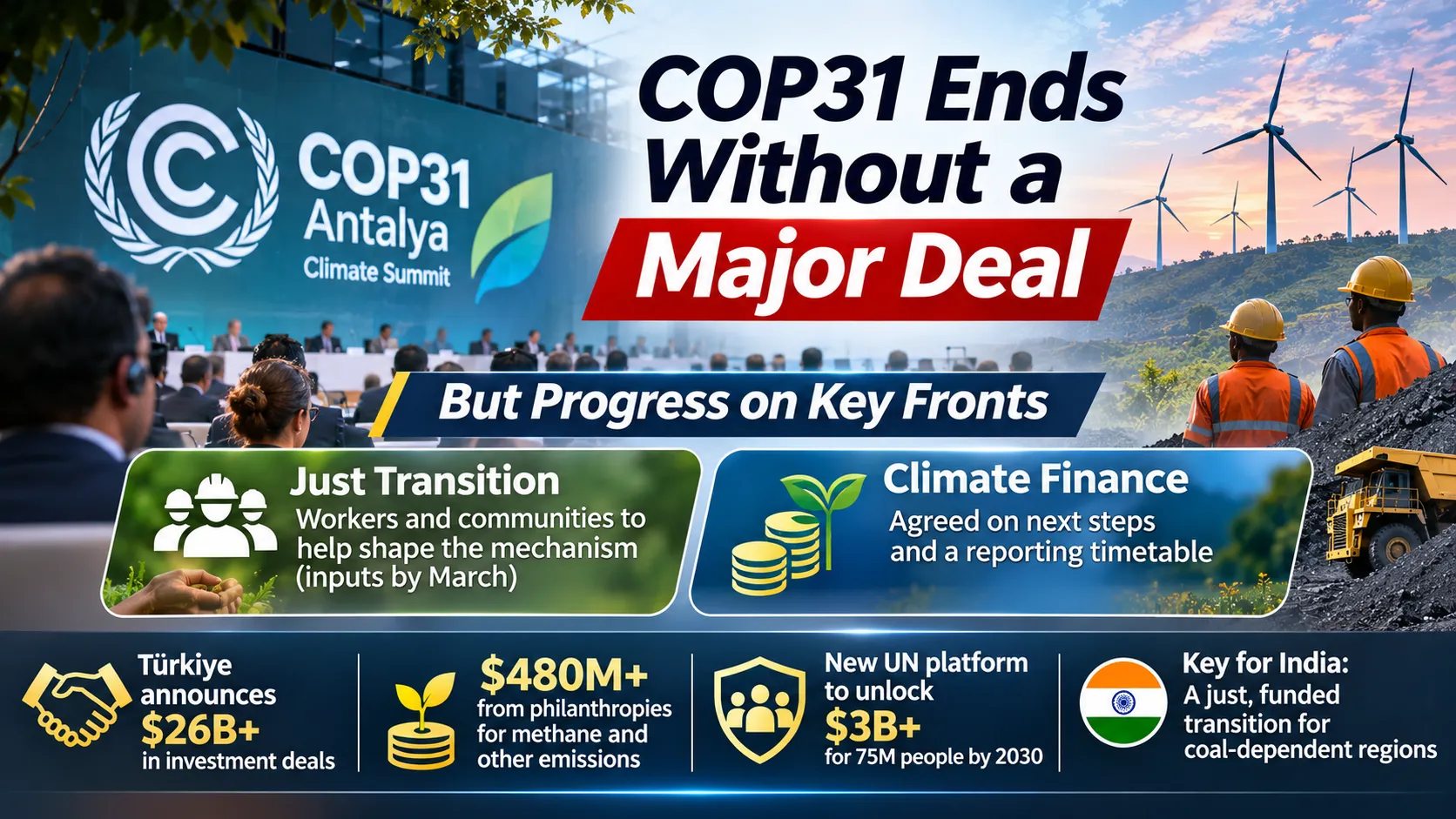
Yet the collapse of the headline deal did not mean the summit produced nothing. Governments did reach agreement on two narrower but important areas: how workers and communities can help shape a just transition mechanism, and the next steps for scrutinising climate finance.
These decisions are far less ambitious than many had hoped. But they keep important work under the Paris Agreement moving and could shape climate policy in the year ahead.
The just transition decision
A "just transition" refers to the idea that the shift away from fossil fuels should be fair to workers, communities and countries that depend on high-carbon industries. Coal miners, oil and gas workers, and regions whose economies rely on fossil fuels face significant disruption as the world decarbonises. Without support, the transition could lead to job losses, economic decline and social unrest.
Governments at COP31 agreed on how workers and communities can help shape a just transition mechanism, setting a March deadline for that input. The details of the mechanism, including its funding and functions, are still to be negotiated.
The idea of a dedicated just transition mechanism has been pushed by trade unions, civil society groups and many developing countries. They argue that the transition must address issues such as retraining, social protection and economic diversification, and that developing countries need support to manage these challenges.
The climate finance timetable
The second area of agreement concerned climate finance. Governments agreed on the next steps for scrutinising climate finance, including a reporting timetable.
Climate finance has been one of the most contentious issues in climate negotiations for years. Developed countries pledged to mobilise climate finance for developing countries, and at COP29 in Baku in 2024, countries agreed on a new collective goal. Developing countries have repeatedly criticised the amounts as insufficient and argued that much of the finance provided comes as loans rather than grants.
Better reporting and scrutiny can help hold countries accountable for their commitments and improve transparency about how much finance is actually being delivered, and in what form.
Why these decisions matter
While the failure of the Antalya Pact means there is no new high-level political signal on fossil fuels, the just transition and finance decisions address issues that are central to making climate action work in practice.
For developing countries such as India, both issues are particularly important. India's economy remains heavily dependent on coal for electricity, and coal mining supports millions of livelihoods in states such as Jharkhand, Odisha, Chhattisgarh and West Bengal. Any transition away from coal will need to protect these workers and communities.
India has consistently argued that developed countries must provide adequate finance and technology to support the transition in developing countries. Improving the scrutiny of climate finance aligns with India's long-standing push for accountability.
Deals outside the negotiating room
Beyond the formal decisions, COP31 produced a number of financial announcements and investment deals. Türkiye announced more than $26 billion in investment deals and financing plans during the summit, including renewable energy projects. Philanthropic organisations announced more than $480 million to tackle methane and other powerful greenhouse gases. A new UN platform aimed to unlock more than $3 billion to protect 75 million people from climate shocks by 2030.
Development banks also made announcements. Such commitments show that climate finance continues to flow even when negotiations stall, although critics argue that voluntary announcements are no substitute for binding commitments.
The limits of consensus
The outcome of COP31 has renewed debate about how UN climate negotiations work. Decisions require consensus among nearly 200 countries, which means that a relatively small group can block agreement. That design gives every country a voice, but it can also make ambitious outcomes difficult.
Some observers argue that progress increasingly happens outside the formal negotiations, through coalitions of willing countries, national policies, business commitments and financial markets. Others warn that without a strong multilateral framework, efforts will be fragmented and insufficient.
The business perspective
For businesses, the just transition decision could eventually influence policies on workforce training, regional development and social protection in industries affected by decarbonisation. Companies in energy, mining, heavy industry and manufacturing may face growing expectations to manage the social impacts of their transitions.
Improved transparency on climate finance could also affect investment flows to developing countries. Clearer information about public finance could help private investors identify opportunities and risks in climate-related projects.
Looking ahead to COP32
COP32 will take place in Addis Ababa, Ethiopia, in 2027. Holding the summit in Africa is likely to put adaptation, finance and the needs of vulnerable countries at the centre of the agenda. The just transition mechanism and climate finance reporting agreed at COP31 will feed into those discussions.
Before then, countries will need to submit input on the just transition mechanism by the March deadline. How seriously governments engage with that process will be an early indicator of whether the modest outcomes from Antalya can be built upon.
For The Impactful Global Indian's readers, the lesson of COP31 is that even when headline diplomacy fails, the slower, technical work of climate policy continues. For countries like India, ensuring that the transition is fair to workers and properly financed may matter as much as the language on fossil fuels that dominated the headlines.
The role of business and finance
Private finance will be essential to any just transition. Banks, investors and companies in carbon-intensive sectors will need to fund retraining, new industries and infrastructure in affected regions. Some development finance institutions have begun creating dedicated just transition financing programmes, and several countries have signed just energy transition partnerships with groups of developed nations to support coal phase-down. India has discussed but not signed such a partnership, preferring to pursue its own pace and approach to energy transition.