
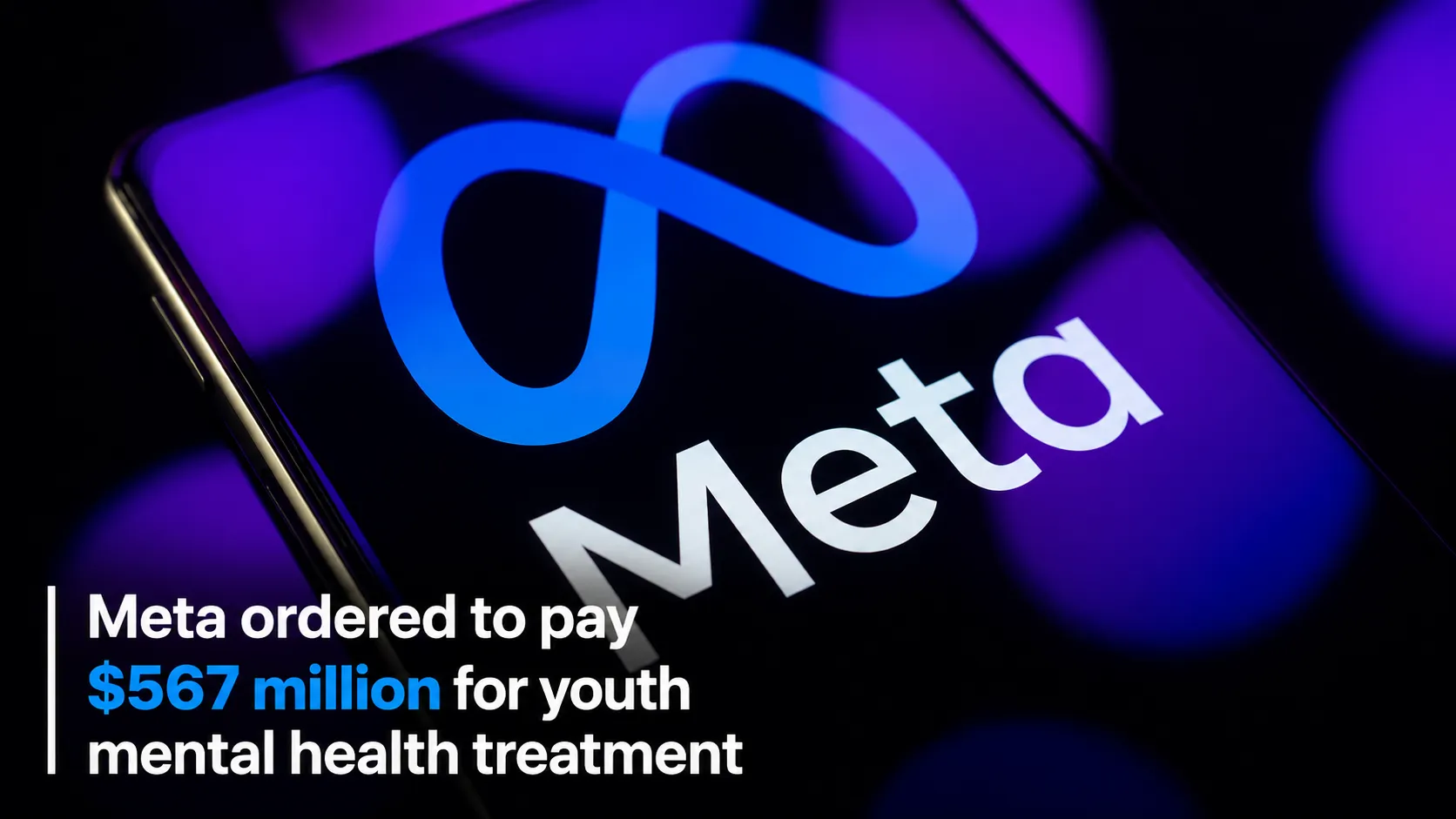
A judge has ruled that teenagers in the state were in the midst of a mental health crisis and that Meta's social media platforms were a 'significant contributing cause,' a finding that intensifies an already heated legal and regulatory reckoning over the relationship between social media use and youth mental wellbeing.
The ruling represents one of the more direct judicial findings to date on the specific question of causation between social media platform design and adolescent mental health outcomes — a question that has generated years of academic debate, congressional hearings and mounting litigation across multiple jurisdictions, but comparatively few definitive legal determinations of this nature. Courts have historically approached causation claims in this area with considerable caution, given the genuinely complex, multi-factorial nature of adolescent mental health and the methodological challenges inherent in isolating any single contributing factor, including social media use, from the broader constellation of influences on youth wellbeing. The specific legal standard applied in reaching a finding of 'significant contributing cause,' rather than sole or primary cause, reflects an approach increasingly common in complex public-health litigation, where courts acknowledge that multiple factors typically interact to produce an outcome while still assigning meaningful legal responsibility to a defendant whose conduct is found to have materially contributed to the harm in question. For Meta, the ruling adds to a mounting body of legal and regulatory pressure the company has faced regarding the design and impact of its platforms, including Instagram and Facebook, on younger users. The company has previously introduced a range of safety features and parental-control tools aimed at addressing concerns about youth mental health, alongside adjustments to content-recommendation algorithms and usage-limit features specifically targeted at teenage users — measures that plaintiffs and regulators in various proceedings have argued remain insufficient relative to the scale of documented harm. The broader legal and policy landscape surrounding social media and youth mental health has evolved rapidly over recent years, with multiple state attorneys general pursuing litigation against major social media companies, congressional proposals for enhanced platform accountability and age-verification requirements, and a parallel body of academic research examining correlations between social media usage patterns and indicators of adolescent anxiety, depression and related mental health concerns. This particular ruling, finding a 'significant contributing cause' relationship rather than a more tentative correlational finding, represents a notable escalation within that broader legal landscape.
The implications of the ruling extend beyond Meta specifically, given the broader industry-wide scrutiny facing social media and technology platforms regarding their design choices and their effects on younger users. Other major platforms have faced similar allegations and litigation in various jurisdictions, and legal observers suggest that judicial findings of this nature, once established in one proceeding, are likely to be referenced and potentially cited as persuasive precedent in parallel or subsequent litigation against Meta and other platforms facing comparable claims. For Meta's broader business and regulatory strategy, the ruling arrives amid a period of intensified public and governmental scrutiny of large technology platforms more broadly, spanning concerns about content moderation, data privacy, competitive practices and, increasingly, the psychological and developmental impact of algorithmically-driven engagement-optimised platform design on younger users specifically. The company has consistently maintained that it takes youth safety seriously and has continued to invest in platform features designed to address these concerns, even as critics and litigants argue that more fundamental changes to platform design and business incentives are required to meaningfully address the underlying concerns. The policy conversation surrounding social media and youth mental health has increasingly moved beyond individual litigation toward broader legislative proposals in multiple jurisdictions, including measures addressing algorithmic transparency, mandatory design changes for accounts belonging to minors, stricter age-verification requirements, and expanded parental-oversight tools. Proponents of such measures argue that voluntary platform safety features, however well-intentioned, have proven insufficient to address the scale of documented concerns, while technology companies and some civil-liberties advocates have raised concerns about the practical enforceability, privacy implications and potential unintended consequences of more prescriptive regulatory approaches. Academic research into the relationship between social media use and adolescent mental health has itself produced a genuinely mixed evidence base, with some studies finding meaningful associations between heavy social media use and indicators of anxiety and depression among teenagers, while other research has emphasised the importance of usage patterns, individual vulnerability factors and platform-specific design elements over blanket characterisations of social media use as uniformly harmful. This scientific complexity has made judicial findings of direct causation, such as the one at issue in this ruling, particularly consequential, since courts are effectively being asked to render legal determinations in an area where the underlying research remains an active and evolving field of study.
As the legal proceedings continue and the broader regulatory conversation around social media's impact on youth mental health intensifies, this ruling is likely to be closely studied by policymakers, litigants and technology companies alike as a potential bellwether for how courts may approach similar causation questions going forward. For families and young people navigating these platforms, the case underscores an ongoing and unresolved societal conversation about the responsibilities technology companies bear for the wellbeing of their most vulnerable users — a conversation this ruling seems likely to further amplify in the months ahead. For Meta and its industry peers, the ruling adds further urgency to an already active period of platform-safety product development, as companies across the social media sector weigh how aggressively to redesign core engagement mechanics for younger users against the commercial realities of platforms built substantially around maximising time spent and user engagement — a tension that this case, and the broader wave of litigation it belongs to, seems likely to keep firmly in the public and regulatory spotlight for the foreseeable future. For parents, educators and youth advocacy organisations, the ruling offers a measure of judicial validation for concerns many have raised for years, even as the broader questions of how platforms should be redesigned, and what role regulation versus voluntary industry action should play, remain very much unresolved. As additional litigation proceeds through courts in other jurisdictions, legal observers expect this ruling to be referenced repeatedly, whether as persuasive precedent or as a point of active legal distinction, shaping how similar causation questions are argued and decided in the months and years ahead.