
Cypress Creek Energy has announced the commercial operation of Ostrea Solar, its new $180 million, 104 MWdc renewable energy facility in Yakima County, Washington, with Microsoft confirmed as the long-term offtaker for the electricity and environmental products the project generates.
The milestone was marked at a ribbon-cutting ceremony on September 2, attended by Washington State Governor Bob Ferguson and Cypress Creek Energy CFO Mike Discenza, according to a company announcement carried via PR Newswire on September 3, 2026. The project is interconnected to the Bonneville Power Administration transmission system and adds 104 MWdc/80 MWac of clean generation capacity to the regional grid, enough to supply electricity equivalent to roughly 15,000 to 16,000 Washington homes annually.
Microsoft, headquartered nearby in Redmond, Washington, has signed a power purchase agreement covering the electricity and environmental attributes generated by Ostrea Solar, extending the technology giant's long-running push to procure clean power for its expanding data-center and AI infrastructure footprint in the Pacific Northwest.
The project arrives at a moment of unusually strong economic and electricity demand growth in Washington State, which led the United States in economic growth during the first quarter of 2026, with real GDP expanding at an annualized rate of 4.5 percent — more than twice the national rate — driven in part by the state's technology and information sector. Ostrea's roughly $180 million in private capital investment was financed with approximately $150 million arranged by MUFG alongside BNP Paribas, DNB and Santander, with U.S. Bank providing tax equity; construction began in February 2025 with PCL Solar Constructors USA serving as engineering, procurement and construction contractor.
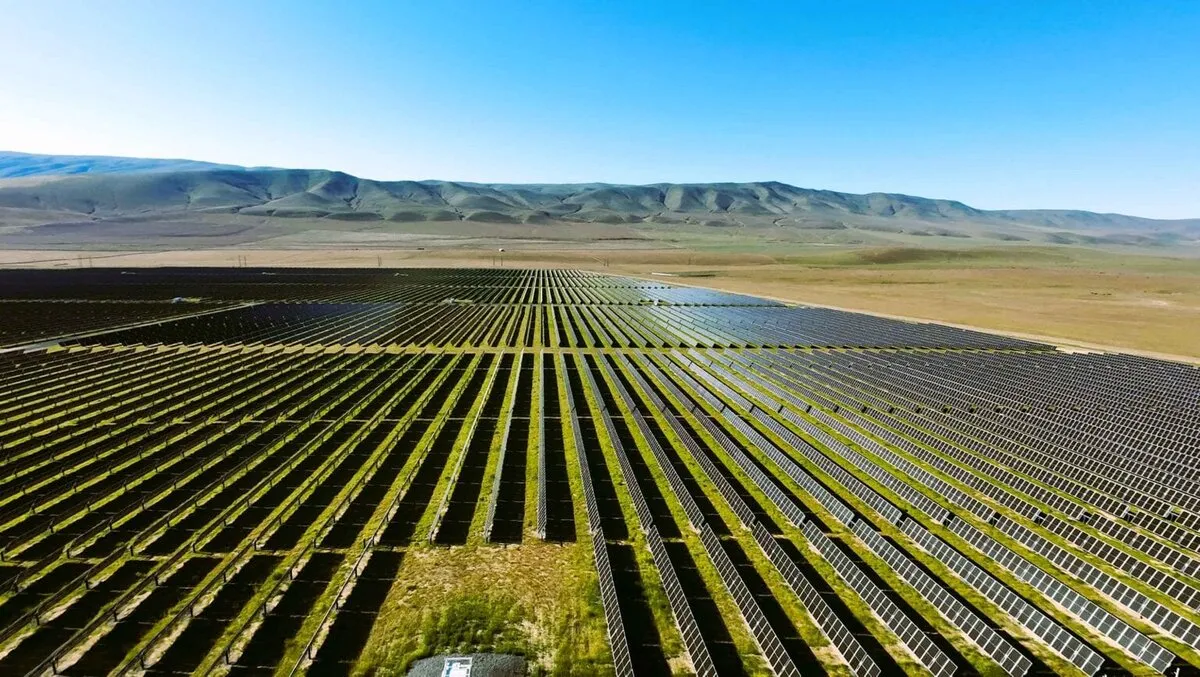
Beyond its generation capacity, Cypress Creek has emphasized the project's environmental design, including modifications made in coordination with the Washington State Energy Facility Site Evaluation Council and the Washington Department of Fish and Wildlife to conserve approximately 275 acres of shrubsteppe habitat — an ecosystem the company notes has lost an estimated 80 percent of its historic acreage in the state to development and agriculture. The site also incorporates wildlife corridors intended to preserve migratory pathways for local species, including Rocky Mountain elk, and has been revegetated with grasses and pollinator-friendly plant mixes beneath and around the solar arrays.
Construction of Ostrea created approximately 300 jobs paid at prevailing wage rates, including an apprenticeship program in which roughly 75 apprentices contributed 39,000 hours toward developing long-term construction-trade skills. Cypress Creek has said the project achieved zero recordable injuries or incidents during construction and is projected to generate an estimated $13.3 million in state and local tax revenue over its operating life, which the company expects to manage for up to 40 years.
"Washington's economy is growing, and that growth requires more electricity," said Kevin Smith, CEO of Cypress Creek Energy, at the project's commissioning. "Ostrea shows how we can responsibly bring new power online quickly and affordably, while creating lasting benefits for the communities where we operate, and caring for the land for generations to come."
The Ostrea deal follows a July agreement in which Google served as "anchor investor" for a separate Cypress Creek renewable energy transaction, reflecting a broader pattern among large technology companies of securing long-term clean power contracts directly with independent power producers to meet the substantial electricity demands of their AI and cloud computing infrastructure. Microsoft has previously disclosed that its own emissions rose 25 percent year-over-year in 2025 as it scaled AI infrastructure, a trend that has intensified the company's efforts to secure new sources of clean power globally.
For investors and policymakers tracking the intersection of AI-driven electricity demand and renewable energy development, Ostrea Solar offers a concrete example of how technology companies are increasingly underwriting new utility-scale renewable capacity through long-term offtake agreements, even as questions persist about whether clean energy build-out can keep pace with the electricity requirements of large-scale AI computing.