ImpactSustainability8 MIN READ

Dalmia Bharat Foundation Expands Rural Water Security in Andhra Pradesh's Kadapa District with New Community Infrastructure

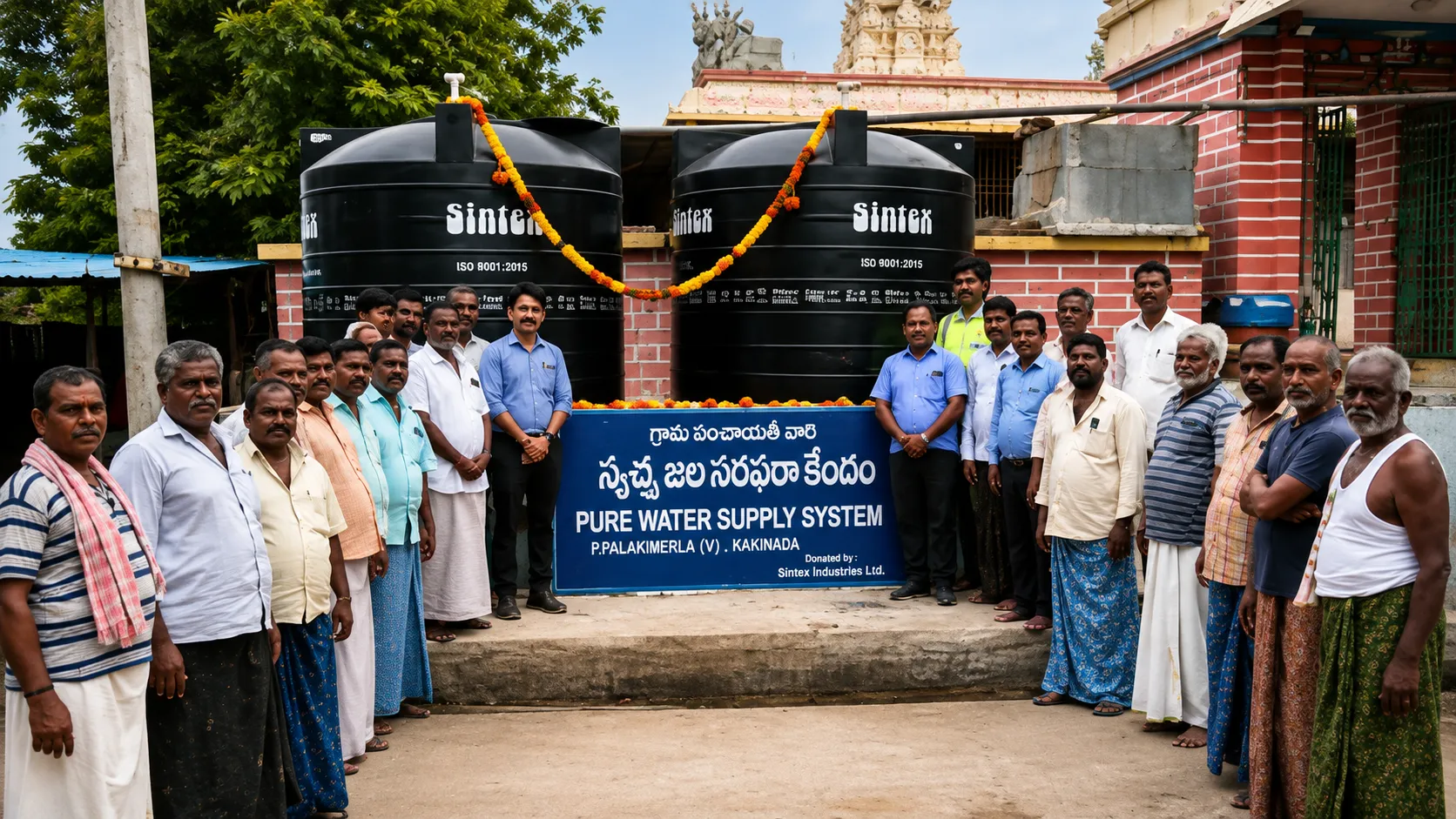
The Dalmia Bharat Foundation has launched new community water infrastructure in Kadapa district, Andhra Pradesh, reinforcing the cement major's long-running rural development programme and India's broader corporate push into decentralised water security solutions.

By Shaym Kumar · Author8 August 2026
Dalmia Bharat Foundation Expands Rural Water Security in Andhra Pradesh's Kadapa District with New Community Infrastructure

The Dalmia Bharat Foundation, the corporate social responsibility arm of one of India's leading cement manufacturers, has announced new community water infrastructure in Kadapa district, Andhra Pradesh, aimed at strengthening rural water security across villages within the company's operational footprint in the region. The initiative adds to a long-running programme of rural development work the Foundation has conducted across multiple Indian states over recent years, spanning water conservation, agricultural livelihoods, education and community health, and reflects the increasingly structured, outcomes-oriented approach that large Indian corporate foundations have adopted toward rural development spending under the country's mandatory corporate social responsibility framework.

Water security remains one of the more persistent structural challenges facing rural India, with a substantial share of the country's agricultural and drinking water needs still dependent on groundwater extraction patterns that have proven unsustainable across many regions, compounded by increasingly erratic monsoon patterns linked to broader climate variability. Andhra Pradesh's Rayalaseema region, within which Kadapa district sits, has historically faced particularly acute water stress relative to the state's coastal districts, owing to lower and more variable rainfall, limited perennial river access, and a cropping pattern that has often placed heavy demand on increasingly depleted groundwater tables.
ChatGPT Image Aug 8, 2026, 07_42_04 PM.png

Corporate involvement in rural water security initiatives of this kind has grown considerably across India since the introduction of mandatory corporate social responsibility spending requirements under the Companies Act, which requires eligible companies to direct a portion of their profits toward defined categories of social development activity. While the mandatory framework has sometimes drawn criticism for encouraging box-ticking compliance rather than genuinely transformative development work, a number of larger Indian industrial groups, cement manufacturers prominent among them given the sector's typically rural and semi-urban operational footprint, have used their CSR mandates as a foundation for building longer-term, more strategically coherent rural development programmes that extend well beyond minimum compliance requirements.

Cement manufacturers specifically have tended to develop particularly deep and sustained rural development footprints, a pattern that reflects the industry's operational geography: cement plants require proximity to limestone deposits, which are typically located in rural and often economically underdeveloped regions, giving cement companies both a practical incentive and, often, a genuine long-term stake in the wellbeing of the communities surrounding their manufacturing operations. Water security initiatives in particular have become a common area of focus for cement sector CSR programmes, given the industry's own significant water requirements for manufacturing processes, which has pushed many companies toward integrated approaches that address both their own operational water stewardship and the broader water needs of surrounding communities.

The specific infrastructure being deployed through initiatives such as this typically spans a combination of approaches tailored to local hydrological and agricultural conditions, potentially including watershed management structures designed to improve rainwater capture and groundwater recharge, drinking water supply systems serving village populations directly, and irrigation-supporting infrastructure aimed at improving agricultural water use efficiency for smallholder farmers who form the backbone of the local rural economy. Programmes of this kind frequently work in close coordination with local self-government institutions, agricultural extension services and, in many cases, specialised non-governmental development organisations that bring technical expertise in watershed management and community mobilisation that complements the financial resources corporate foundations are able to contribute.

India's broader water security challenge has drawn increasing policy attention at both the central and state government level over recent years, with initiatives such as the national Jal Jeevan Mission aimed at achieving universal rural piped water supply coverage running alongside a range of state-specific watershed development and groundwater management programmes. Corporate foundation initiatives such as the Dalmia Bharat Foundation's Kadapa infrastructure work typically operate as a complement to, rather than a substitute for, these government programmes, often filling specific local gaps or providing additional technical and financial resources that allow government schemes to achieve more comprehensive coverage or higher-quality implementation than public funding alone might support.

The measurement and evaluation of rural water security interventions has also grown considerably more sophisticated across the Indian corporate CSR sector over recent years, with leading foundations increasingly adopting structured monitoring frameworks that track not merely infrastructure output measures, such as the number of water structures built, but longer-term outcome indicators including groundwater table recovery, changes in cropping patterns enabled by improved water access, and household-level indicators such as reduced time spent by women and children fetching water from distant sources — a burden that continues to fall disproportionately on women across much of rural India and which meaningful water security improvements can directly alleviate.

For companies operating within the cement and broader heavy industrial sectors, sustained investment in rural community development has also increasingly been understood as serving a practical business function alongside its social impact objectives, helping to build and maintain the social license to operate that industrial facilities require from surrounding communities, particularly in sectors such as cement and mining that can generate legitimate community concerns around environmental impact, land use and industrial activity in agricultural regions. Foundations that have built long-term, trust-based relationships with surrounding communities through sustained development investment, rather than episodic or purely transactional CSR spending, have generally reported smoother operational relationships with local stakeholders over time, even as this relationship-building dimension of CSR investment can be harder to quantify than more direct development outcome metrics.

The Dalmia Bharat Group's broader sustainability positioning has also emphasised environmental commitments extending beyond its direct CSR spending, including publicly stated ambitions around carbon neutrality in its core cement manufacturing operations — a sector that carries a particularly significant carbon footprint globally given the chemical process involved in cement production, which inherently releases carbon dioxide independent of the fuel sources used to power manufacturing. Water security initiatives such as the Kadapa infrastructure work sit alongside these broader environmental commitments as part of a corporate sustainability narrative that Indian industrial groups have increasingly found necessary to articulate clearly, both to satisfy the expectations of increasingly sustainability-conscious institutional investors and to meet the evolving expectations of regulators and civil society around corporate environmental accountability.

The specific technical approaches typically deployed in watershed-focused rural water security programmes across India's semi-arid regions have themselves evolved considerably over recent decades, drawing on lessons learned from earlier generations of both government and civil society watershed development efforts that, in some cases, struggled to achieve lasting impact due to insufficient community ownership, inadequate long-term maintenance planning, or technical designs poorly matched to local hydrogeological conditions. Contemporary watershed programmes, including those pursued by well-resourced corporate foundations, increasingly emphasise participatory planning processes that engage local communities directly in decisions around structure siting and design, alongside dedicated maintenance funding and capacity-building components intended to ensure that infrastructure continues functioning effectively for years after the initial construction phase concludes, rather than falling into disrepair once the implementing organisation's direct involvement winds down.
A single new well or watershed structure rarely makes national headlines, but multiplied across hundreds of villages over successive years, this is precisely the kind of unglamorous infrastructure work that determines whether rural India's water security improves in practice rather than in policy documents alone.
TIGI Editorial Desk

Gender dimensions of rural water security also warrant particular attention within programmes of this kind, given the well-documented disproportionate burden that water scarcity places on women and girls across rural India, who in many communities remain primarily responsible for water collection and whose time, educational opportunities and physical safety can all be directly affected by the distance and difficulty involved in accessing adequate water supplies. Water security interventions that succeed in bringing reliable water sources closer to village communities can generate meaningful secondary benefits for women and girls specifically, including additional time available for income-generating activities or education, and reduced exposure to the safety risks that can accompany long-distance water collection journeys, particularly during early morning or evening hours when such trips are often undertaken.

As rural India continues to navigate the compounding pressures of climate variability, groundwater depletion and agricultural water demand that in many regions has grown faster than sustainable supply, initiatives such as the Dalmia Bharat Foundation's Kadapa water security programme represent one small but replicable contribution to a much larger national challenge. Their cumulative significance lies less in any single infrastructure project and more in the broader pattern they represent: a growing cohort of Indian corporate foundations treating water security not as an occasional charitable gesture, but as a sustained, technically grounded area of long-term community investment — work that, while rarely generating dramatic headlines, continues to shape whether rural water security in India improves gradually and durably, village by village, over the years ahead.

Replicability and scalability remain central concerns for development practitioners and corporate foundation programme designers evaluating the longer-term significance of interventions such as this one. A well-executed water security programme within a single district, however impactful for the specific communities involved, achieves only limited aggregate national significance unless the lessons, technical approaches and implementation models it generates can be documented and adapted for deployment across the many other water-stressed districts facing broadly similar underlying challenges across India's diverse agro-climatic zones. Leading corporate foundations, including those with sustained multi-year rural development programmes, have increasingly invested in formal knowledge documentation and cross-programme learning mechanisms specifically intended to capture and disseminate these lessons, both within their own expanding programme footprints and, in some cases, for the benefit of the broader development sector working on similar water security challenges across the country.

The Kadapa initiative also arrives at a moment when climate adaptation financing more broadly has become an increasingly prominent theme within global corporate sustainability discourse, with a growing number of international investors, development finance institutions and multilateral organisations expressing interest in supporting or co-financing corporate-led climate adaptation and water security programmes in vulnerable regions, including parts of rural India. Indian corporate foundations with demonstrated track records in this space, including through programmes such as the Dalmia Bharat Foundation's ongoing rural water security work, may find themselves increasingly well positioned to access this growing pool of blended climate adaptation finance as international capital continues seeking credible, well-governed implementation partners capable of deploying funding effectively at the community level across India's vast and diverse rural landscape.

Local government and panchayati raj institution partnerships have also become an increasingly emphasised component of how well-resourced corporate foundations structure their rural water security programming, reflecting a growing recognition within the development sector that infrastructure interventions achieve considerably greater long-term sustainability when local elected village governance bodies are engaged as genuine implementation partners rather than passive beneficiaries. This partnership model typically involves formal agreements around ongoing operations and maintenance responsibilities once initial construction is complete, alongside capacity-building support that helps local panchayat institutions develop the technical and financial management capabilities needed to sustain water infrastructure assets over the long term, a governance dimension that development practitioners increasingly regard as equally important to a programme's ultimate success as the underlying engineering quality of the infrastructure itself.

ChatGPT Image Aug 8, 2026, 07_43_41 PM.png

Agricultural livelihood impacts represent a further important dimension through which programmes such as this one are typically evaluated, given that improved water security frequently enables farmers to diversify away from a narrow reliance on rain-fed, single-season cropping patterns toward more resilient, higher-value cropping systems supported by more reliable irrigation access. This agricultural diversification potential carries meaningful implications for rural household income stability and resilience to the kind of climate variability that has increasingly affected traditional rain-fed farming patterns across water-stressed regions such as Rayalaseema, making water security interventions a foundational enabler for broader rural economic development outcomes that extend well beyond the immediate drinking water access improvements that often receive the most direct public attention.

Independent third-party evaluation has also become an increasingly standard practice among India's more rigorous corporate CSR programmes, with a growing number of leading foundations commissioning external assessments of their rural development interventions to validate reported outcomes and identify areas for programme improvement, rather than relying solely on internal monitoring and self-reported impact metrics. This trend toward independent verification reflects growing sophistication within the Indian CSR sector more broadly, as foundations increasingly recognise that credible, externally validated impact evidence carries greater weight both with sceptical stakeholders and within the foundations' own internal decision-making processes around how to allocate limited development resources most effectively across competing potential intervention areas and geographies.

The long-term institutional relationship between corporate foundations and the communities they serve also tends to evolve meaningfully over successive years of sustained engagement, with early-phase programmes typically focused primarily on establishing trust and delivering visible, tangible infrastructure improvements, while more mature programme relationships increasingly shift toward capacity-building, knowledge transfer and community-led planning processes that position local institutions to sustain and eventually expand upon the initial infrastructure investment independently. Foundations that have maintained continuous engagement in specific districts over multiple years, as the Dalmia Bharat Foundation has across various operational geographies, are often better positioned to reach this more mature, community-led phase of programme evolution than those pursuing more geographically dispersed, shorter-duration intervention models.

TagsDalmia Bharat FoundationRural DevelopmentWater SecurityCSR IndiaAndhra PradeshSustainabilityCommunity Infrastructure

Reader reviews

Sign in to rate and review this article.
Loading reviews…