Project Rise, the global philanthropic initiative of the Dawoodi Bohra community, has launched an eye-health programme in Kolkata aimed at screening and treating vision problems among 20,000 children, extending the community's long-running tradition of large-scale, coordinated humanitarian activity into a specific public health gap that continues to affect childhood development outcomes across India.
Uncorrected vision problems remain a significant but often overlooked barrier to educational attainment among children in India, particularly in lower-income communities where routine eye examinations are rarely part of standard school health screening, meaning correctable conditions frequently go undiagnosed well into a child's schooling years, with lasting effects on literacy and classroom performance.
The initiative also underscores the growing role that organised faith-based and community networks play within India's broader public health landscape, frequently able to mobilise resources, medical volunteers and logistical infrastructure at a scale and speed that smaller, independent nonprofit organisations often cannot match given more limited institutional capacity and community reach.
Public health professionals note that childhood vision screening programmes achieve their greatest impact when paired with reliable follow-up mechanisms ensuring identified cases actually receive corrective treatment rather than simply being flagged, a follow-through challenge that has historically limited the effectiveness of some community screening campaigns, making the structured referral pathway reportedly built into Project Rise's Kolkata initiative a particularly important design feature worth close observation by other organisations planning similar large-scale interventions.
The programme's scale, targeting 20,000 children through a single coordinated initiative, reflects the kind of large-scale mobilisation capacity that faith-based and community philanthropic networks have increasingly demonstrated in India over the past decade. The Dawoodi Bohra community, a Shia Muslim sect with a global presence and a well-documented history of organised humanitarian and civic initiatives, has built Project Rise as a vehicle for exactly this kind of coordinated, large-scale intervention.
Childhood vision screening programmes typically combine basic eye examinations with corrective intervention, whether through prescription eyewear, referral to specialist care for more complex conditions, or follow-up monitoring to ensure early-stage issues do not progress into more serious, harder-to-treat conditions later in a child's development.
Screening programmes of this kind typically follow a structured protocol beginning with basic visual acuity testing conducted by trained health workers, followed by referral pathways for children identified with potential vision impairments to receive further examination by qualified ophthalmologists, ensuring that more complex cases receive appropriate specialist attention rather than being addressed solely through basic corrective eyewear distribution.
West Bengal's public health infrastructure, like much of India, faces a documented shortage of qualified paediatric ophthalmologists relative to population need, particularly outside Kolkata itself, a specialist capacity constraint that makes community-organised screening and referral programmes an especially valuable complement to the formal healthcare system's more limited specialist treatment capacity.
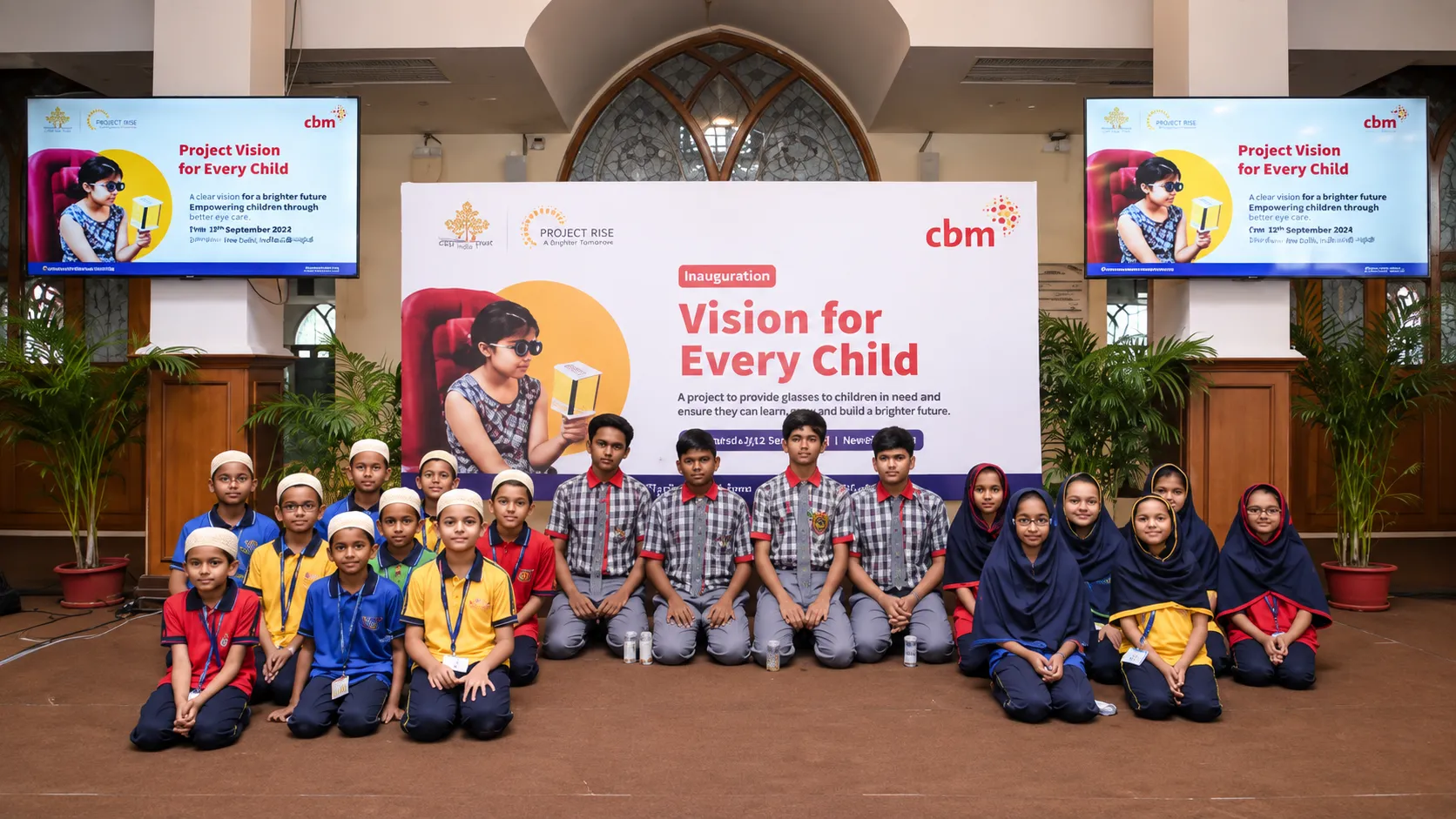
The Kolkata launch adds to a broader pattern of community and faith-based philanthropic organisations increasingly partnering with medical professionals and public health experts to design interventions with measurable clinical outcomes, rather than relying solely on general charitable donation models that lack structured follow-up or outcome tracking.
For India's public health system, which continues to grapple with capacity constraints in paediatric eye care, particularly outside major metropolitan centres, large-scale community-led screening initiatives can play a meaningful complementary role, identifying cases early and reducing the downstream burden on an already stretched specialist healthcare infrastructure that would otherwise only encounter these cases once conditions have progressed further.
Research on childhood vision impairment has consistently found strong correlations between uncorrected visual problems and reduced academic performance, since children struggling to see classroom instruction clearly often experience declining engagement and comprehension that compounds over successive academic years if the underlying vision issue remains undiagnosed and untreated throughout their early schooling.
For India's diaspora community, particularly members with ties to Kolkata and West Bengal, initiatives of this scale from a globally networked faith-based organisation offer a visible example of how diaspora philanthropic energy and international community networks can be channelled into concrete, measurable public health interventions back home, a model that other diaspora-linked community organisations may look to emulate.
The programme also illustrates a broader trend within India's philanthropic landscape in 2026: increasingly specific, outcome-focused interventions targeting narrowly defined but high-impact gaps, rather than broad, diffuse charitable activity. Childhood eye health, in particular, offers a compelling return on philanthropic investment, since correcting a vision impairment early in a child's schooling can meaningfully alter educational and, by extension, long-term economic trajectories.
As Project Rise moves through its Kolkata rollout, the initiative's ability to demonstrate measurable improvements in screened children's educational engagement and follow-up treatment completion rates will likely shape whether similar large-scale eye-health interventions are extended to additional cities across the community's broader philanthropic network.
The Dawoodi Bohra community's Project Rise initiative has built a track record of similarly structured, large-scale humanitarian interventions across multiple geographies, and the Kolkata eye health programme's design, combining broad-based screening with structured referral and treatment pathways, reflects an increasingly common pattern among sophisticated faith-based philanthropic networks: moving beyond simple charitable distribution toward interventions modelled on established public health best practice.
Public health policymakers and paediatric care specialists will likely watch the programme's outcome data closely, since a well-documented, successful large-scale screening initiative could strengthen the broader policy case for integrating routine vision screening into standard school health checkups nationally, rather than continuing to rely primarily on periodic, externally organised community health campaigns to catch cases that ideally would be identified through routine institutional screening.
The bottom line for TIGI's readers: Project Rise's Kolkata initiative is a reminder that some of India's most consequential public health interventions are increasingly being organised and delivered through globally networked community and faith-based philanthropy rather than government programmes alone.
Should the Kolkata programme demonstrate strong treatment completion rates among screened children, community health specialists expect similar faith-based philanthropic networks in other regions to study its referral and follow-up design closely before launching comparable large-scale interventions of their own. The programme's progress over the coming school year will offer the clearest early indication of whether its ambitious 20,000-child target translates into durable, measurable improvements in classroom engagement and learning outcomes among the children it reaches.