ImpactSustainability5 MIN READ

European Investment Bank Pledges at Least €30 Billion for Climate Adaptation by 2030, Doubling Its Pace of Lending

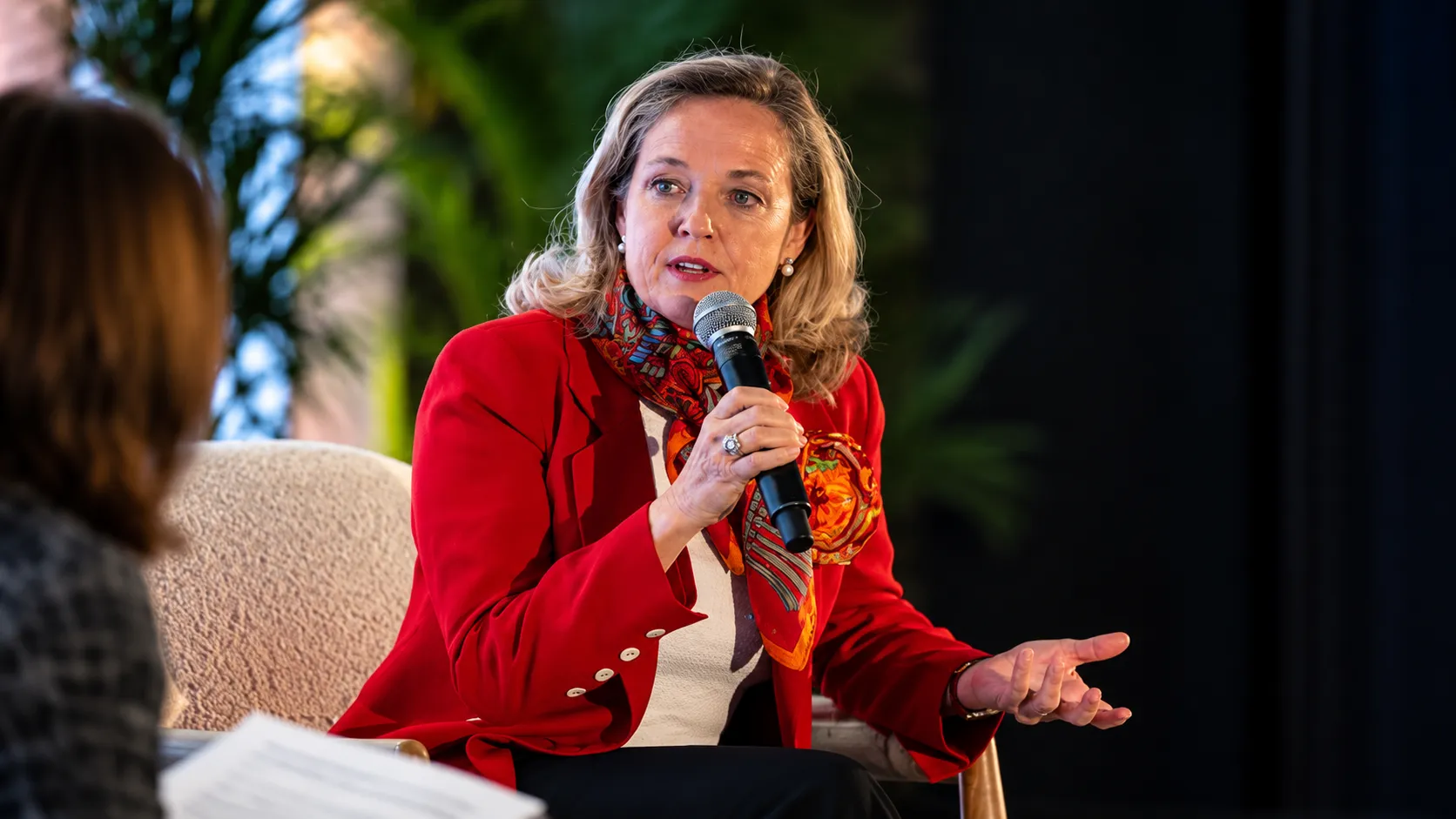
The European Investment Bank Group plans to provide at least €30 billion for climate adaptation by 2030, doubling its financing pace of the past five years, to protect energy networks, water systems, buildings and farms from heatwaves, droughts, wildfires and floods. EIB President Nadia Calviño said every euro spent on prevention saves 10 euros in damages.

By Prathista Lazar · Author23 October 2026New
European Investment Bank Pledges at Least €30 Billion for Climate Adaptation by 2030, Doubling Its Pace of Lending

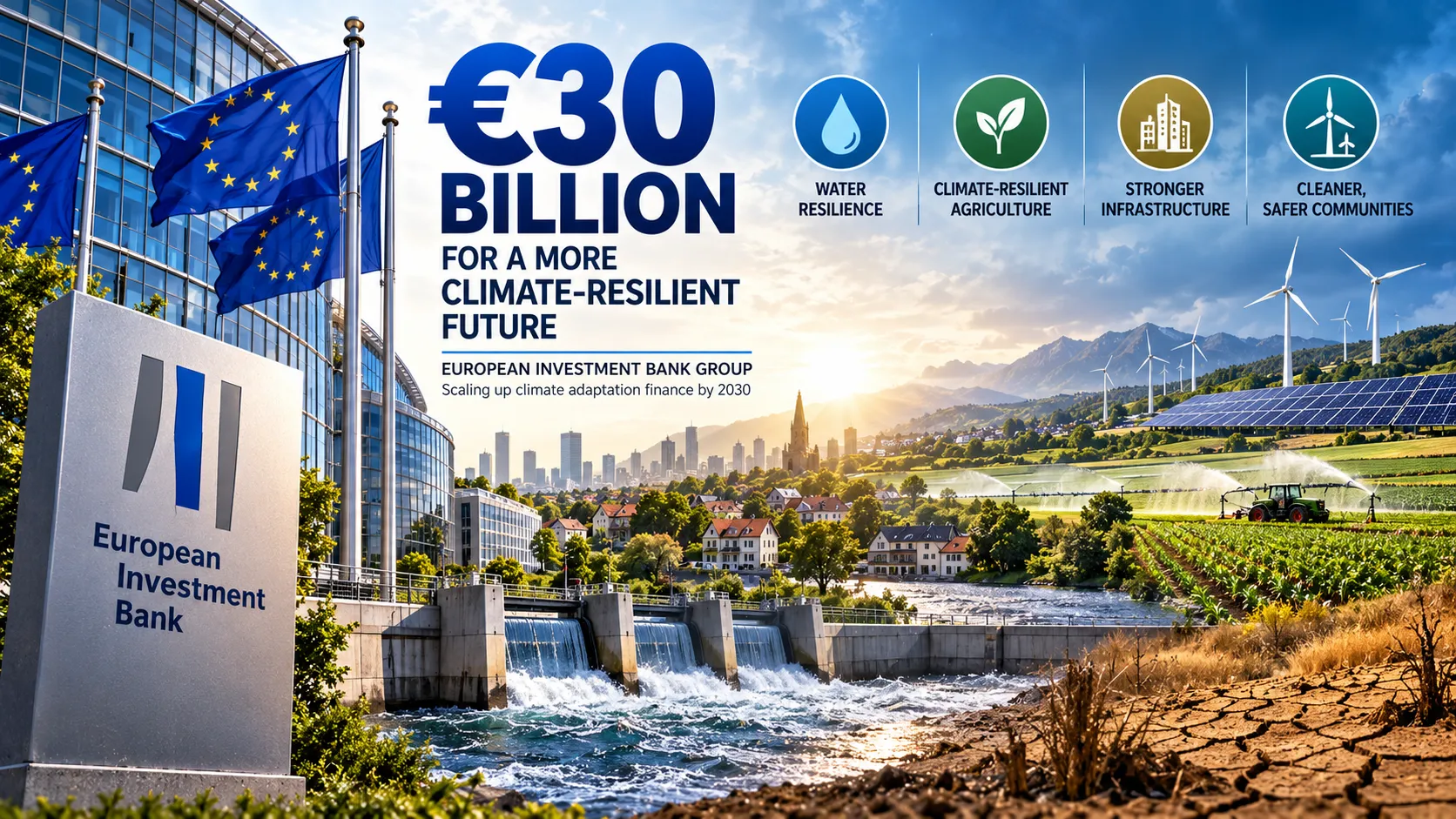
The European Investment Bank Group, the lending arm of the European Union, has committed to providing at least €30 billion ($34 billion) for climate adaptation by 2030, as the costs of extreme weather mount across Europe and beyond.

The plan, announced on Thursday, October 22, would double the bank's pace of adaptation financing compared with the past five years, ESG Today reported. The money will target projects that help communities and economies withstand heatwaves, droughts, wildfires and floods, including energy networks, public buildings, water systems and climate-resilient agriculture.

"Climate adaptation is a no-brainer," said EIB Group President Nadia Calviño. "Every euro invested in prevention and adaptation to climate change saves 10 euros in damages and repairs."

From cutting emissions to coping with impacts

For years, climate finance focused heavily on mitigation, reducing greenhouse gas emissions through renewable energy, energy efficiency and clean transport. Adaptation, preparing for the impacts of climate change that are already happening or are unavoidable, received far less funding.

That balance is shifting as the effects of warming become more visible and costly. Europe has experienced record heatwaves, devastating floods, prolonged droughts and destructive wildfires in recent years, causing deaths, damaging infrastructure and disrupting agriculture.

The United Nations Environment Programme warned this week that projected global warming has risen, with even the best-case scenario now reaching 1.7°C to 1.8°C by mid-century. Higher warming means adaptation needs will grow.

Three pillars

The EIB's plan, called Adaptation Plan Phase 2 for 2026 to 2030, rests on three pillars.

The first is scaling up investment by building stronger project pipelines and mobilising both public and private capital, using financing, advisory support, blended finance and risk-sharing instruments.

The second is targeting groups with the greatest needs, including vulnerable communities, cities and regions, small and medium-sized enterprises, farmers and climate-vulnerable partner countries outside Europe.

The third is embedding climate resilience across all EIB Group operations, improving access to adaptation finance and measuring results more effectively.

Priority areas

The bank highlighted several priority areas. These include water-efficient irrigation, water storage and reuse; climate-resilient farming practices; nature-based solutions such as restoring wetlands, forests and floodplains; and infrastructure designed to withstand droughts and floods.

Nature-based solutions are attracting growing attention because they can provide multiple benefits. Restored wetlands can absorb floodwaters, store carbon and support biodiversity, while healthy forests can reduce erosion and regulate water flows.

The EIB is also developing ClimateSET, an open-access digital tool built with the Copernicus Climate Change Service, the EU's climate monitoring programme. Due to launch later in 2026, it will help project developers assess climate risks and will be integrated into the bank's Green Checker tool.

The economic case

The EIB cited research suggesting that each euro spent on adaptation can yield up to €10 in economic benefits, by avoiding damage, protecting productivity and reducing disruption. Investments in flood defences, early warning systems and resilient infrastructure can prevent losses far exceeding their cost.

Yet adaptation remains underfunded globally. Developing countries, which are often most exposed to climate impacts, face a particularly large gap between their adaptation needs and the finance available. Mobilising private capital for adaptation is difficult because many projects, such as flood defences, generate public benefits rather than direct revenue.

“Every euro invested in prevention and adaptation to climate change saves 10 euros in damages and repairs.”
— Nadia Calviño, President, European Investment Bank Group

Blended finance, which uses public money to reduce risks for private investors, and risk-sharing instruments are among the tools the EIB plans to use to address this challenge.

33d85c48-4992-4ae6-84c4-01eac21f6ac9.png

Global reach

While most EIB lending is within the European Union, the bank also finances projects in partner countries around the world through its development arm, EIB Global. Its focus on climate-vulnerable partner countries means some of the €30 billion could support adaptation in Africa, Asia, Latin America and elsewhere.

The EIB has a history of investment in India, including financing for metro rail systems in cities such as Lucknow, Pune and Bhopal, and renewable energy projects.

What it means for India

India is among the countries most vulnerable to climate change, facing extreme heat, erratic monsoons, floods, cyclones and water stress. Its adaptation needs are vast, from heat-resilient cities and water management to climate-resilient agriculture for millions of smallholder farmers.

International development banks, including the EIB, the World Bank and the Asian Development Bank, are important sources of finance for these efforts. The EIB's renewed focus on adaptation could open opportunities for partnerships with Indian institutions, although the bulk of the new commitment will be directed within Europe.

Climate adaptation is also expected to be a major theme at COP31 in Antalya, Turkey, next month, where developing countries will push for more finance.

The cost of climate damage

Climate-related disasters are imposing growing economic costs. Floods in central Europe, wildfires in southern Europe and droughts affecting agriculture have caused billions of euros in damage in recent years. Insurance companies have warned that rising losses could make coverage unaffordable in some high-risk areas, creating a protection gap that leaves households and businesses exposed.

Adaptation investments can reduce these costs by making infrastructure more resilient, improving early warning systems and helping farmers cope with changing conditions. Yet adaptation often competes for funding with other priorities, and its benefits, avoided damage, are less visible than those of new infrastructure.

A shift in development finance

Multilateral development banks have increased their focus on climate finance, including adaptation, under pressure from shareholders and developing countries. At COP29 in Baku in 2024, countries agreed a new goal for climate finance for developing countries, and development banks are expected to play a major role in meeting it.

What comes next

The EIB will now work to build the project pipeline needed to deploy €30 billion by 2030. Its success will depend on finding viable projects, mobilising co-investors and demonstrating results.

For Europe and its partners, the plan signals that adapting to a changing climate is no longer an afterthought but a central part of economic policy. Climate-vulnerable countries such as India will be watching closely to see how much of the new commitment reaches partner countries. As extreme weather becomes more frequent and severe, the ability to finance resilient infrastructure, water systems and agriculture will increasingly determine how well economies and communities can withstand the shocks of a warming world. The EIB's plan is a significant step, but meeting global adaptation needs will require far more.

TagsEuropean Investment BankEIBclimate adaptationNadia Calviñoclimate financeheatwavesdroughtsfloodswildfiresresilient infrastructurewater managementclimate-resilient agriculturenature-based solutionsCopernicusClimateSETblended financeCOP31India adaptationdevelopment financesustainability

Reader reviews

Sign in to rate and review this article.
Loading reviews…