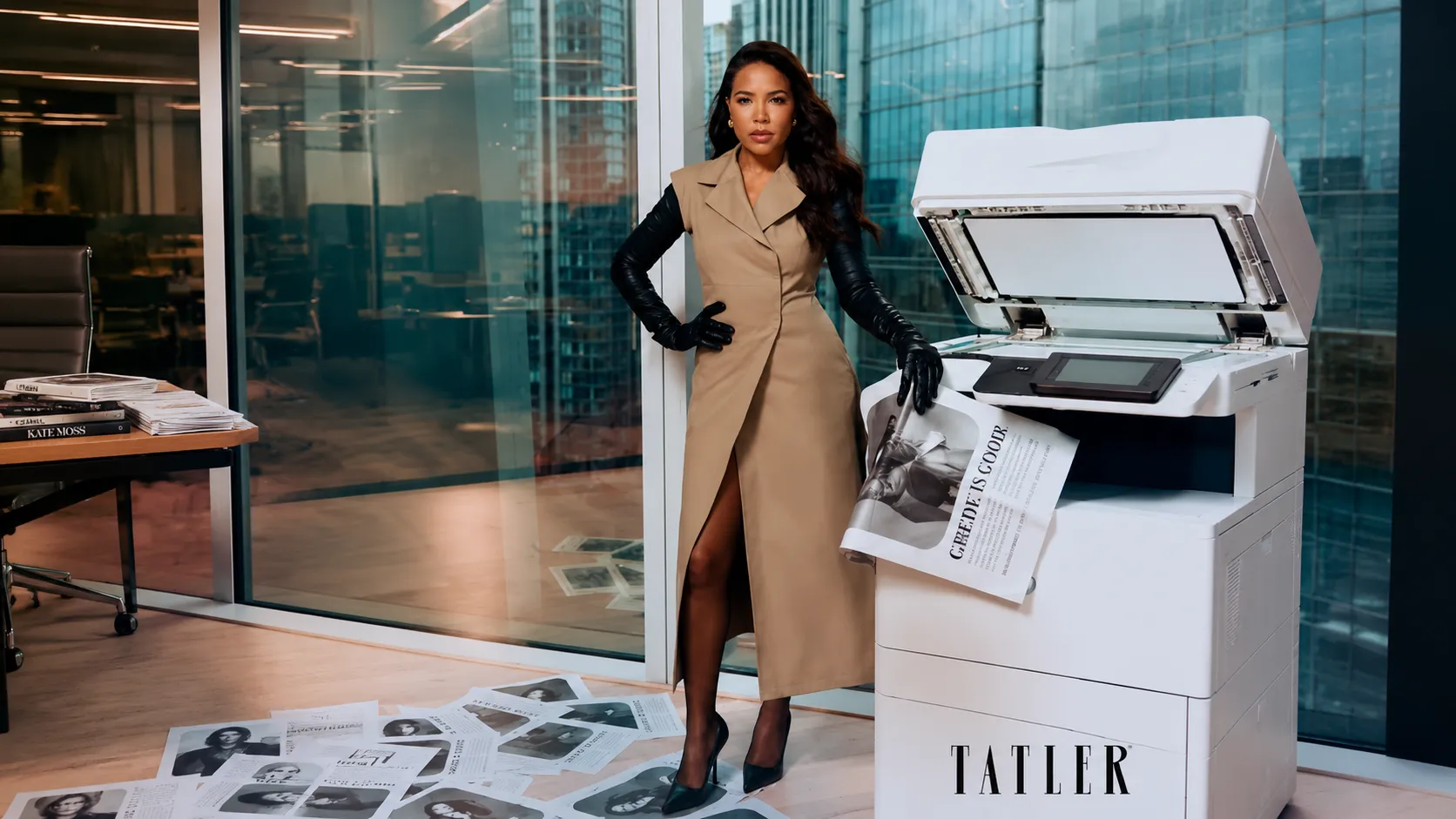
Emma Findlay Grede was born on 23 September 1982 in the Plaistow neighbourhood of East London, an area she has described candidly as working-class and financially difficult during her childhood. Raised primarily by her mother, a white British woman who worked in finance, alongside three younger sisters after her parents separated, Grede's early life offered few obvious signs of the entrepreneurial empire she would eventually build. Her father, of Jamaican and Trinidadian descent, was largely absent from her upbringing, and money, by her own account, was frequently tight. What she carried out of that childhood, however, was an unusually sharp instinct for spotting commercial opportunity and a relentless work ethic that would come to define her career.
Grede's path into business was neither conventional nor smooth. She enrolled at the London College of Fashion, drawn to the industry that had captivated her as a teenager watching the explosive rise of British supermodels during the late 1980s and early 1990s, but she did not complete a fashion design degree, instead focusing her studies on the commercial and business side of the industry. After leaving college, she worked in fashion show production and at a concierge service before identifying her first genuine entrepreneurial opening: in 2008, at just twenty-six years old, she founded ITB Worldwide, a talent management and entertainment marketing agency connecting celebrities with major consumer brands including H&M, Calvin Klein and Net-a-Porter.
ITB Worldwide proved to be Grede's first significant commercial success and, crucially, the vehicle that brought her into contact with the network of relationships that would define the next phase of her career. Running the agency from offices in London, New York and Los Angeles, she built deep expertise in brand partnerships and celebrity-driven marketing, skills that would prove directly transferable when she eventually pivoted from representing other people's brands to building her own. She met Kris Jenner at Paris Fashion Week in 2013, a connection that opened the door to the Kardashian-Jenner family's business orbit, though Grede has been consistently clear in interviews that the ventures she subsequently built were driven by her own strategic vision and operational leadership rather than borrowed celebrity, an important distinction given how frequently her achievements have been filtered through her famous business partners' public profiles.
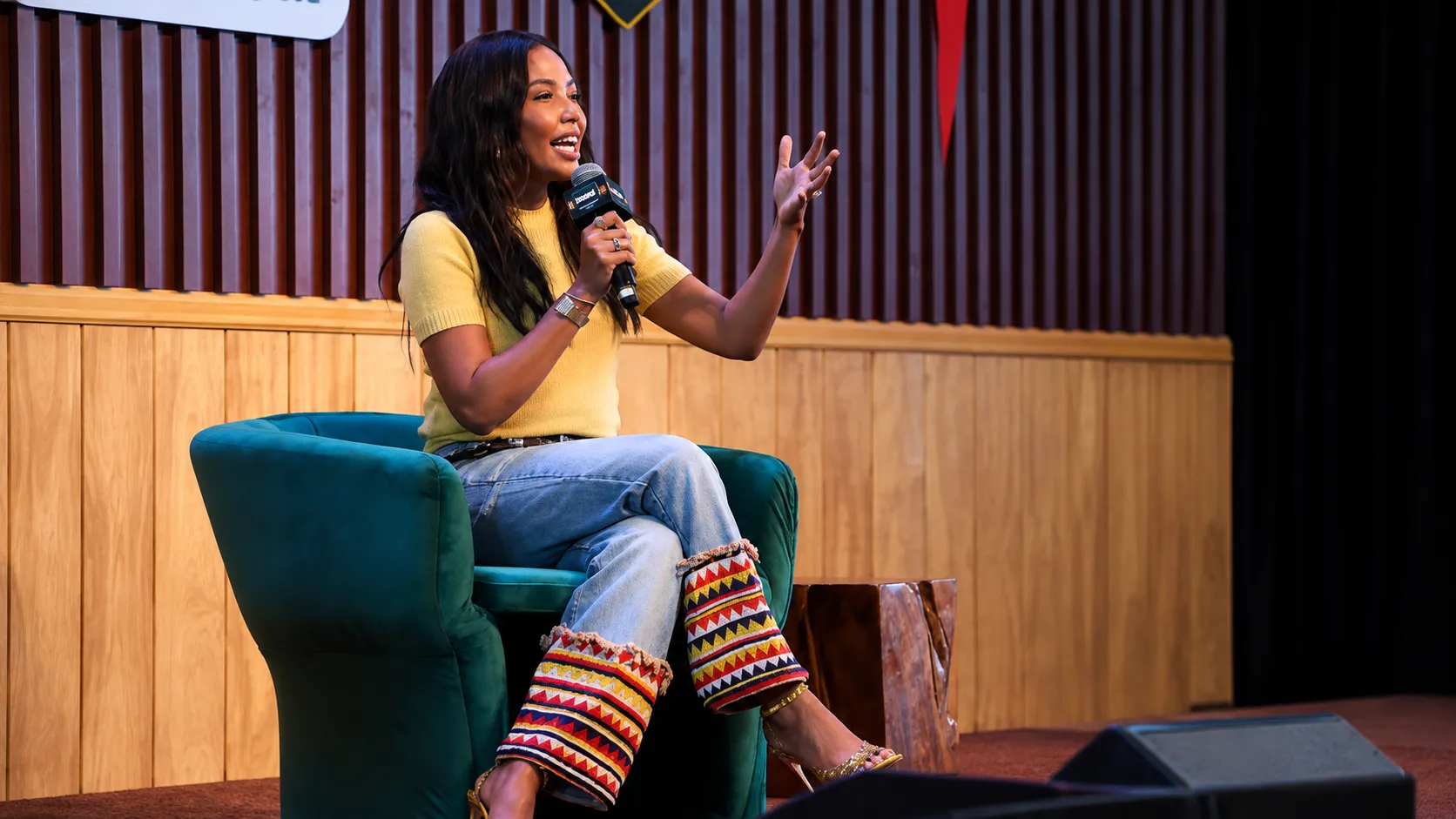
In October 2016, Grede launched Good American alongside Khloé Kardashian, a denim brand built explicitly around a gap she had identified in the market: fashion campaigns that preached body inclusivity without actually manufacturing clothing that fit the full range of women's bodies. The brand's debut, offering denim across an unusually wide size range from the outset, became, by the company's own account, the largest denim launch in history, generating roughly one million dollars in sales within its first day. Good American has since expanded well beyond denim into ready-to-wear, swimwear, footwear and activewear, earned B-Corp certification, and been recognised by Fast Company among its list of most innovative companies, credited with meaningfully shifting the broader fashion industry's conversation around size inclusivity.
Two years later, in 2018, Grede co-founded Skims alongside Kim Kardashian, a shapewear and loungewear brand that would go on to become one of the most commercially successful apparel launches of the past decade. As founding partner and, according to some accounts, an architect of the brand's product strategy, Grede helped build Skims into a company reported to be valued at roughly 1.6 billion dollars within its first several years, later climbing toward a valuation of approximately four billion dollars, according to reporting cited by the New York Times. Skims has been named among Time magazine's 100 most influential companies, and Grede's role as founding partner has placed her at the centre of two separate billion-dollar apparel businesses simultaneously, an achievement matched by remarkably few entrepreneurs in the fashion industry's history.
Grede's entrepreneurial portfolio extends further still. She co-founded Safely, a plant-based cleaning and self-care products company, alongside Kris Jenner, and became a founding investor in Kylie Jenner's clothing venture, Khy, further diversifying her holdings across the broader consumer products landscape. In 2022, she became the first Black woman to serve as a recurring investor, or shark, on the American television series Shark Tank, a platform she has used explicitly to spotlight the funding barriers facing Black women entrepreneurs, a challenge she has spoken about candidly from personal experience navigating the difficulty of raising start-up capital as a woman of colour earlier in her career.
Forbes has repeatedly named Grede among America's Richest Self-Made Women, including its under-forty list, and Business of Fashion has included her on its influential 500 list of the industry's most consequential figures. She serves on the board of directors for the Obama Foundation, chairs the Fifteen Percent Pledge, an initiative encouraging major retailers to dedicate a meaningful share of shelf space to Black-owned businesses, and sits on the board of Baby2Baby, a nonprofit organisation providing essential items to children living in poverty across the United States. Her advocacy work runs consistently alongside her commercial ventures rather than sitting apart from them, reflecting a business philosophy in which inclusivity functions as both a genuine value and a deliberate competitive strategy.
What distinguishes Grede's rise from many entrepreneurial success stories is her explicit refusal to treat her achievements as exceptional rather than replicable. She has spoken directly about the structural barriers facing women, and particularly women of colour, in raising start-up capital, noting that the challenge of securing funding and credibility as a female founder becomes markedly harder for founders from underrepresented backgrounds. Rather than treating her own success as proof the system works, she has used her platform, including her visibility on Shark Tank, to actively surface and back other overlooked entrepreneurs, framing her responsibility as a successful founder explicitly around expanding opportunity for others navigating the same obstacles she once faced.
Grede is married to Swedish entrepreneur Jens Grede, himself the co-founder of denim label FRAME and now Chief Executive Officer of Skims, and the couple have four children together, a family life she has managed alongside building and running multiple simultaneous business ventures across two continents. She has spoken about the particular difficulty of being taken seriously as a decision-maker in an industry that, despite marketing itself around diversity, has historically been slow to place actual decision-making authority in the hands of Black women, a dynamic she has directly and repeatedly challenged by ensuring Good American's own leadership and management ranks reflect the diversity its marketing promotes.