Industrial heat is one of the least visible and most stubborn sources of carbon emissions. Factories that make paper, food, drinks and chemicals need large amounts of steam, and across Europe most of it still comes from burning natural gas. Epyr, a French startup co-founded by Léa Dardenne and Bastien Oggeri, is trying to change that with a technology as old as the kiln: bricks that store heat.
The Paris-based company has raised an oversubscribed €15 million Series A round, announced on October 13. SlateVC, a pan-European investor focused on the energy transition and circular economy, led the round. Existing investors AENU and Daphni doubled down, and WEPA Ventures, OVNI Capital and Aurum Impact joined as new backers. The raise comes just 18 months after Epyr's pre-seed round.
How thermal batteries work
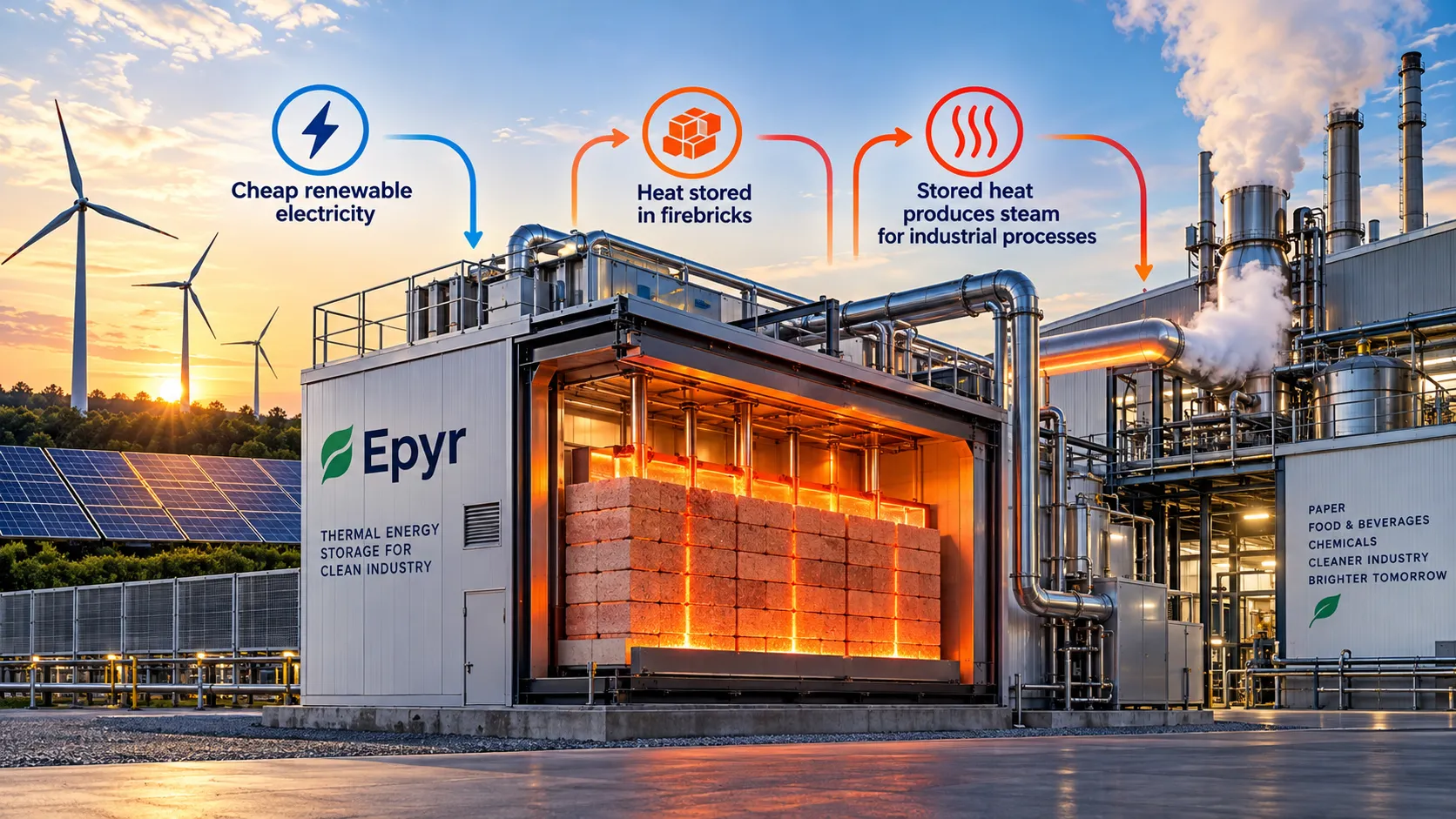
Epyr's system is a form of thermal energy storage, sometimes called a thermal battery. Electric resistors heat air, which in turn heats a mass of firebricks, storing energy at high temperatures. When a factory needs heat, the stored energy is released to produce steam for its industrial processes.
The key is timing. Smart controls charge the system when electricity is cheapest, typically when renewable generation is abundant, and discharge the stored heat whenever the process requires it. That lets manufacturers run on electricity without paying peak prices or needing a constant supply of power. It also helps balance the grid by absorbing surplus electricity that might otherwise go to waste.
Epyr's founders argue that this makes electricity, rather than gas, the logical fuel for European industry. In their view, electricity, particularly in France, is the cheapest and cleanest energy source European industry has, provided it can be stored and used at the right moments.
From pilot to France's largest project
Epyr has moved quickly from concept to commercial deployment. Its first installation, at a site operated by hygiene paper manufacturer WEPA Group in Troyes, became France's first industrial thermal energy storage unit. Built and commissioned in under six months, it has been operating since early 2026, was formally inaugurated in May, and covers up to a quarter of the site's steam needs.
"The first installation has demonstrated the value of both the technology and the partnership," said Andreas Krengel, a member of WEPA's management board. WEPA's venture arm has now invested in Epyr, a strong signal of customer confidence.
The company's next project is considerably larger. Epyr is building a 35 megawatt-hour unit for Papeco, an independent French papermaker, at Orval-sur-Sienne. The company describes it as France's largest thermal storage project, and it is designed to replace all of the site's natural gas consumption. Energy Pool, a specialist in energy flexibility, is supporting the project from early studies through to operations. Several further deployments are under study, with announcements expected in the coming months.
A business model built for industry
Epyr does not simply sell equipment. It offers an all-in-one package that includes the technology, system integration, energy management and, where needed, third-party financing, delivered as heat-as-a-service with trusted partners.
That model addresses one of the biggest barriers to industrial decarbonisation: upfront capital. Many manufacturers operate on thin margins and are reluctant to invest heavily in unfamiliar technology for their core processes. Paying for heat as a service, rather than buying the system outright, shifts that risk and lets factories switch away from gas without large capital outlays.
The company is targeting sectors that rely on industrial steam, including paper, food and beverages, and chemicals. These industries account for a large share of industrial heat demand and typically need steam at temperatures that thermal storage can supply efficiently.
The founders
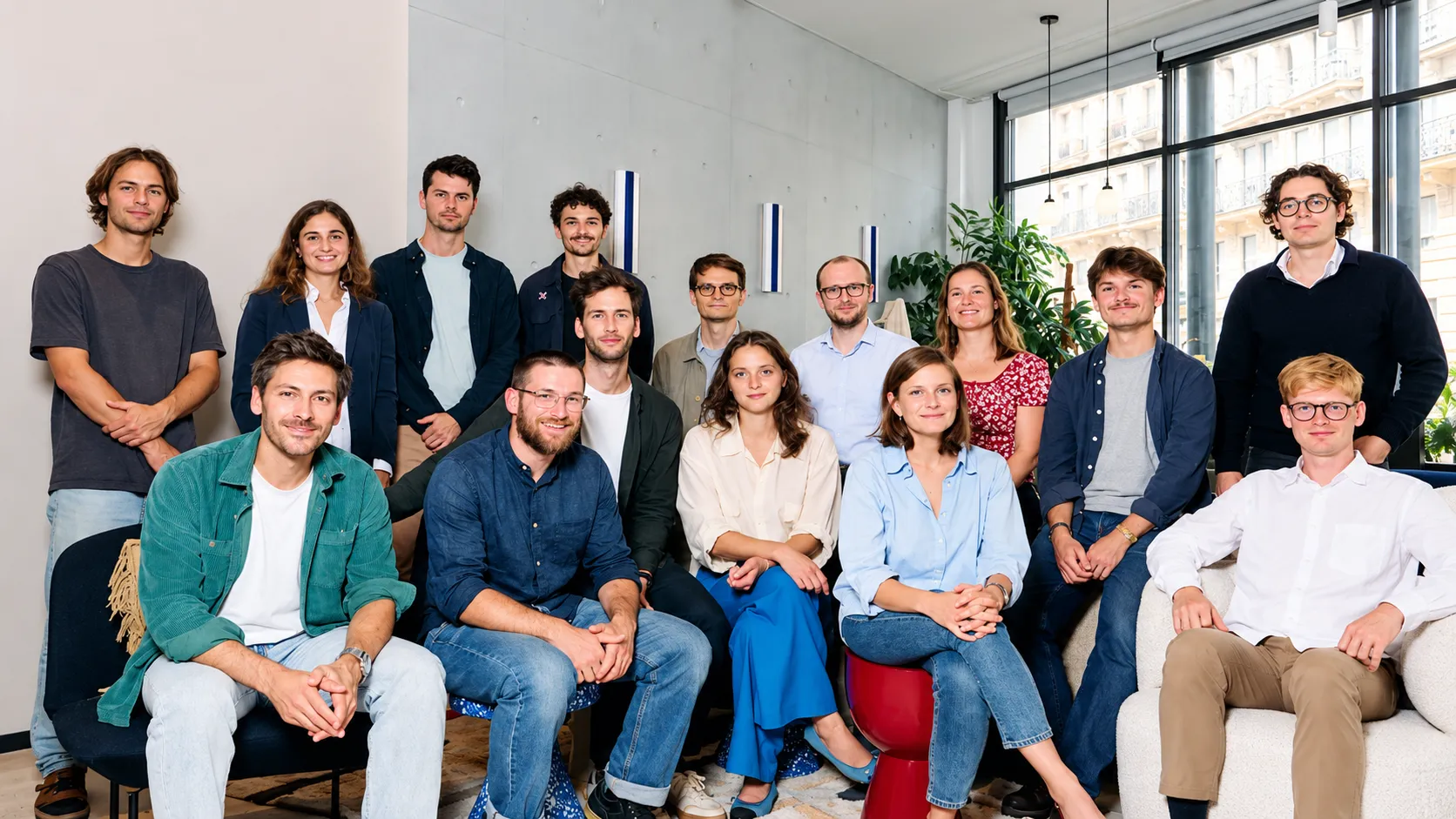
Epyr was founded in 2024 and has about 15 employees. Its leadership combines strategic and entrepreneurial experience. Léa Dardenne is a former partner at Boston Consulting Group, where senior consultants advise large industrial companies on strategy and transformation, valuable preparation for selling a new energy model to manufacturers. Bastien Oggeri previously co-founded Innovafeed, the French insect-protein company that grew into one of Europe's best-known agri-food technology startups.
Dardenne's role as co-founder adds to a still small but growing group of women leading European climate technology companies, a sector where female founders remain significantly underrepresented, particularly in hardware and heavy industry.
Why investors are backing industrial heat
Industrial heat accounts for roughly a fifth of global energy consumption, and most of it is produced by burning fossil fuels. In Europe, natural gas dominates. That makes heat a major target for climate policy, and an exposure to volatile gas prices that European manufacturers have felt acutely in recent years.
Sébastien Léger, co-founder and general partner at SlateVC, said: "Epyr has the potential to become a European leader in electrifying the €100bn industrial heat market."
The investment thesis rests on a widening gap between the cost of electricity at its cheapest moments and the cost of gas. As more solar and wind power enters European grids, prices increasingly fall to very low levels at times of high renewable output. Technologies that can capture that cheap power and store it as heat can offer manufacturers lower and more stable energy costs while cutting emissions.
Policy is pushing in the same direction. The EU Emissions Trading System puts a price on carbon emissions from large industrial sites, raising the cost of burning gas, while the European Commission's Clean Industrial Deal, unveiled in 2025, aims to support the decarbonisation of energy-intensive industries and lower their energy costs. For manufacturers facing both carbon costs and gas-price volatility, electrified heat backed by storage is becoming an increasingly practical option.
Lessons for India
The model has relevance for India, where industry is a large and growing source of emissions and many factories rely on coal, gas or biomass boilers for process heat. India's rapidly expanding solar capacity, which produces abundant midday power, creates conditions in which thermal storage could become attractive, especially as time-of-day electricity tariffs spread.
For Epyr, the immediate priority is execution: delivering the Papeco project on schedule, converting its pipeline of studies into contracts, and proving that thermal batteries can perform reliably at scale across different industrial sites. If it succeeds, it could help show that decarbonising heavy industry does not always require exotic new technology. Sometimes it requires an old material, firebrick, combined with smart software and a business model designed around industry's needs.