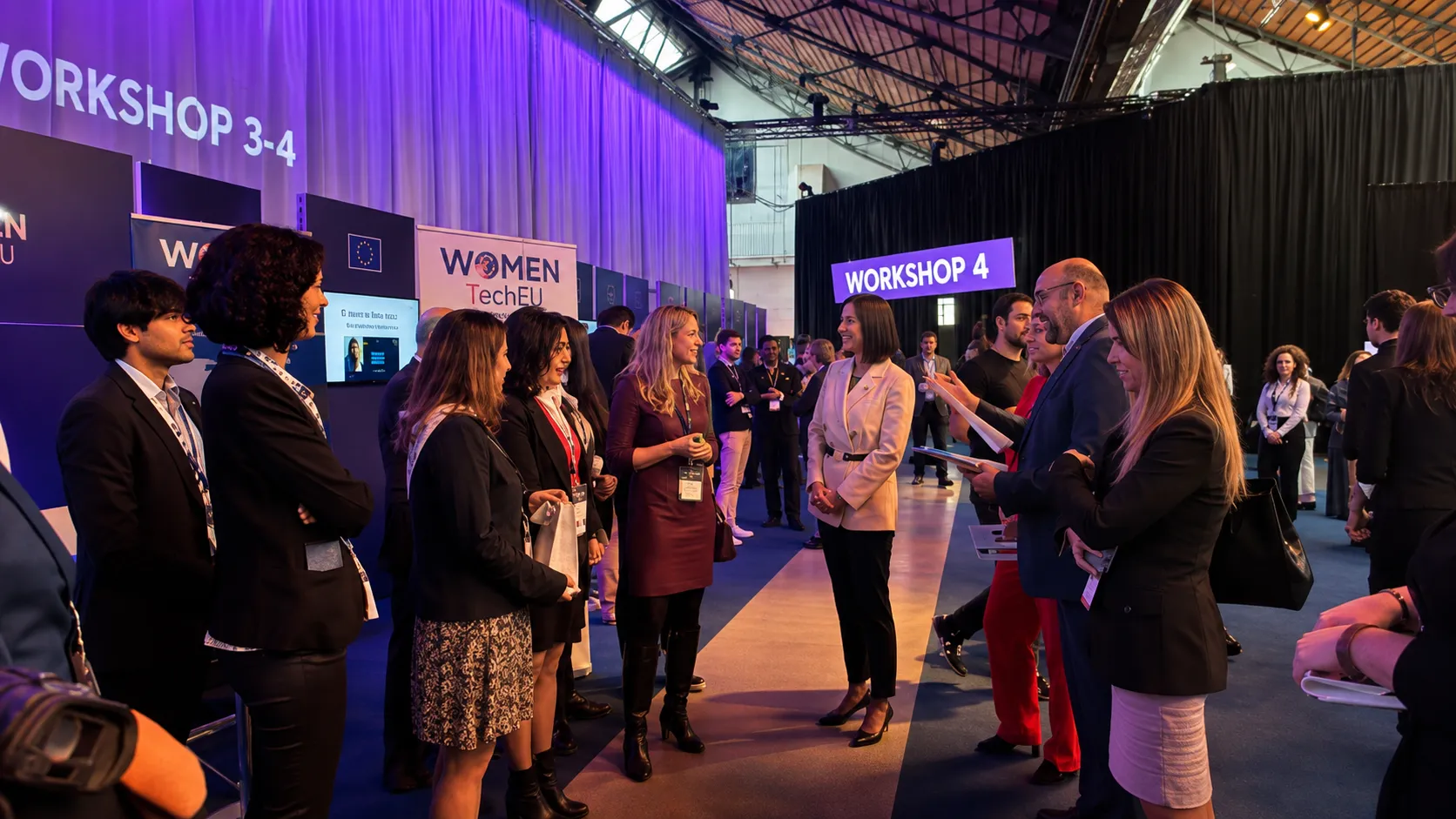
The European Union's Women TechEU programme offers up to €75,000 in equity-free grants, alongside structured mentoring, for early-stage women-led deep-tech startups, positioning itself as one of the more targeted funding routes available to European women founders working in hard science and engineering-driven ventures. The programme sits alongside broader EU funding mechanisms — including Horizon Europe, the EIC Accelerator, the LIFE programme, and Enterprise Europe Network support — that remain open to women founders more generally but do not carry the same gender-specific eligibility criteria.
Deep tech — startups built around fundamental scientific or engineering breakthroughs, spanning fields such as advanced materials, quantum computing, biotechnology and next-generation energy systems — has historically shown even lower rates of female founder representation than the broader startup population, a gap researchers attribute to compounding factors including the underrepresentation of women in the STEM academic pipelines from which many deep-tech founders emerge, and the capital-intensive, long-development-cycle nature of deep-tech ventures, which can make fundraising particularly challenging for underrepresented founders lacking established investor networks.
To qualify for Women TechEU funding, applicants must satisfy several eligibility criteria: the company must fall within a defined age range from founding, be headquartered within an eligible EU member state or associated country, have a woman in a genuine founding or leadership role, and demonstrate at least 25% female ownership of the company — a threshold designed to ensure the funding reaches companies where women hold meaningful equity and decision-making power, rather than companies that meet a narrower definition of having a woman in a titular leadership position without corresponding ownership.
Beyond eligibility, program administrators and past grant recipients generally emphasise that the strongest applications demonstrate concrete proof points beyond a compelling founding narrative: completed pilot programmes, documented customer interviews, technical validation or test results, secured intellectual property, and a clearly articulated budget for how the grant funding will be deployed. That emphasis on evidence over narrative reflects a broader pattern across EU grant programmes, which have increasingly prioritised de-risking specific, well-defined technical or commercial milestones over funding more open-ended, exploratory research.
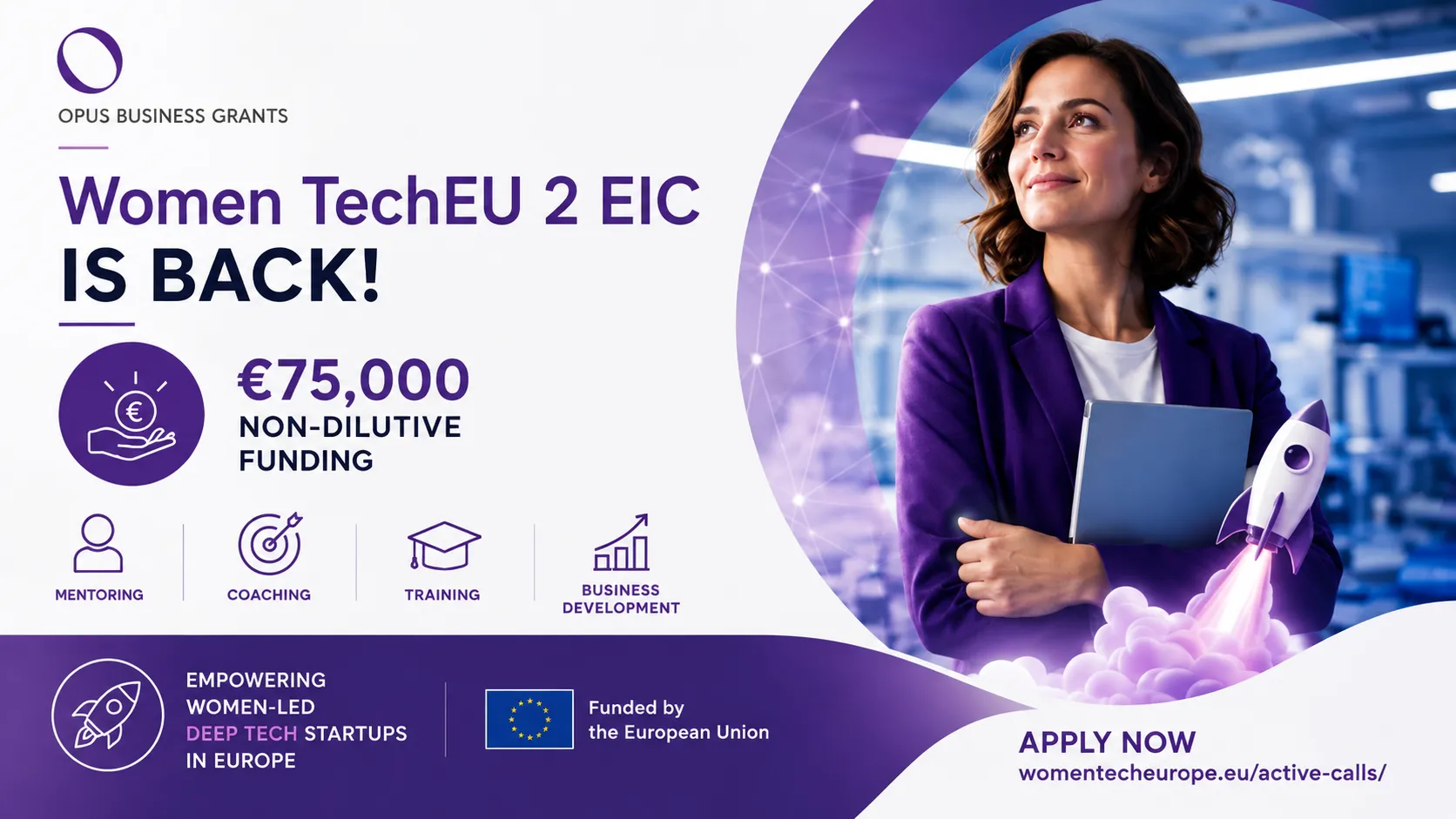
The €75,000 grant size positions Women TechEU as a pre-seed or seed-stage funding bridge, rather than a substitute for the larger institutional venture capital rounds that deep-tech companies typically require to reach commercial scale. Programme advocates argue that its primary value lies less in the absolute capital provided and more in its function as a validation signal and network-building opportunity — removing one specific early-stage blocker, such as completing a critical technical milestone or securing initial intellectual property protection, rather than attempting to fully fund a company's path to market.
The programme forms part of a broader European policy push to address gender imbalances in deep-tech and STEM entrepreneurship specifically, distinct from more general small-business support mechanisms aimed at women entrepreneurs across all sectors. Whether targeted programmes of this kind meaningfully shift the proportion of European deep-tech capital reaching women-led companies over the medium term remains a question researchers and EU policymakers continue to track closely.


