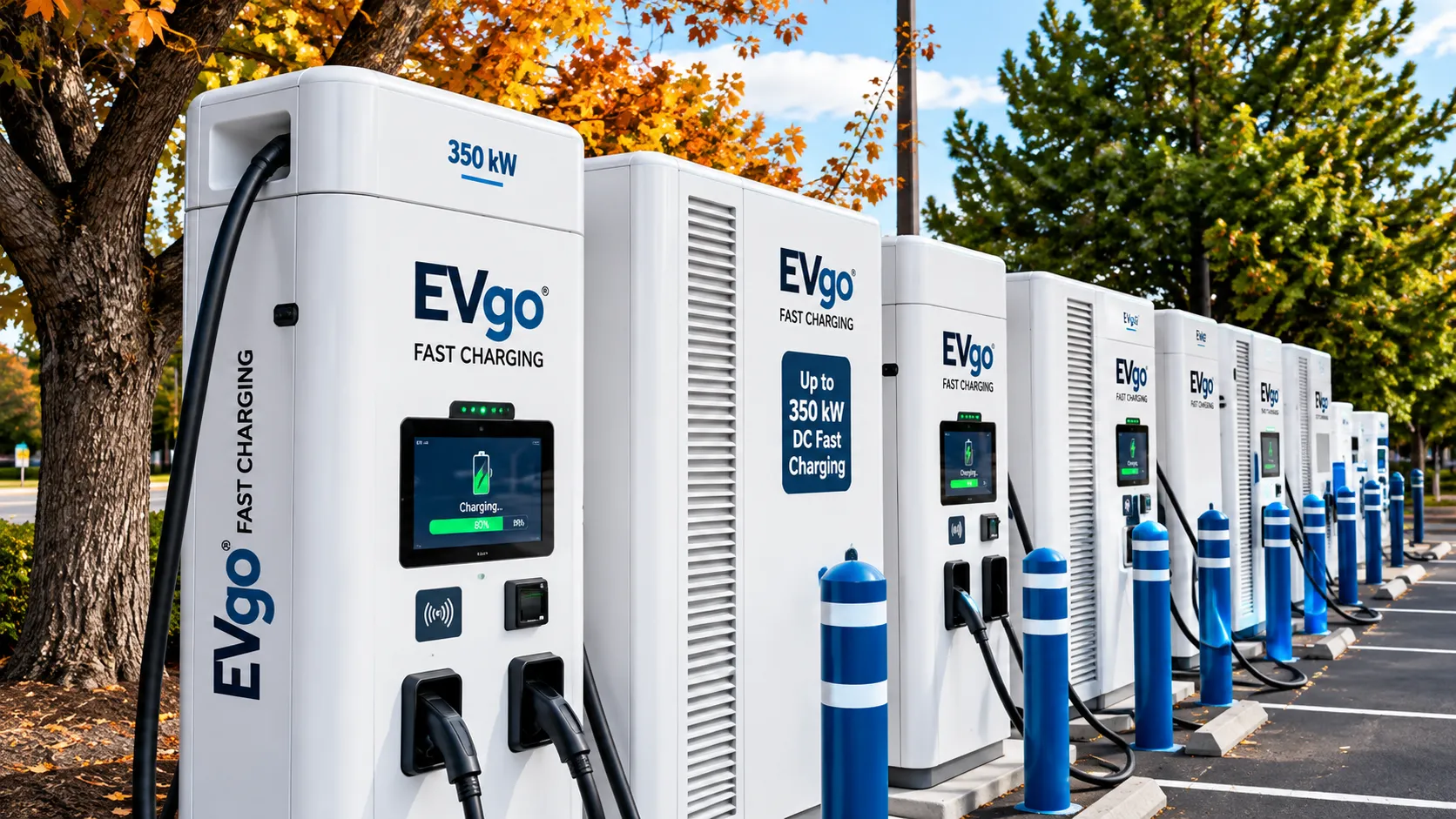
EVgo, one of the largest fast-charging networks for electric vehicles in the United States, could be taken private by its largest shareholder, in a move that underscores the financial pressures facing EV charging companies even as the number of electric cars on the road continues to grow.
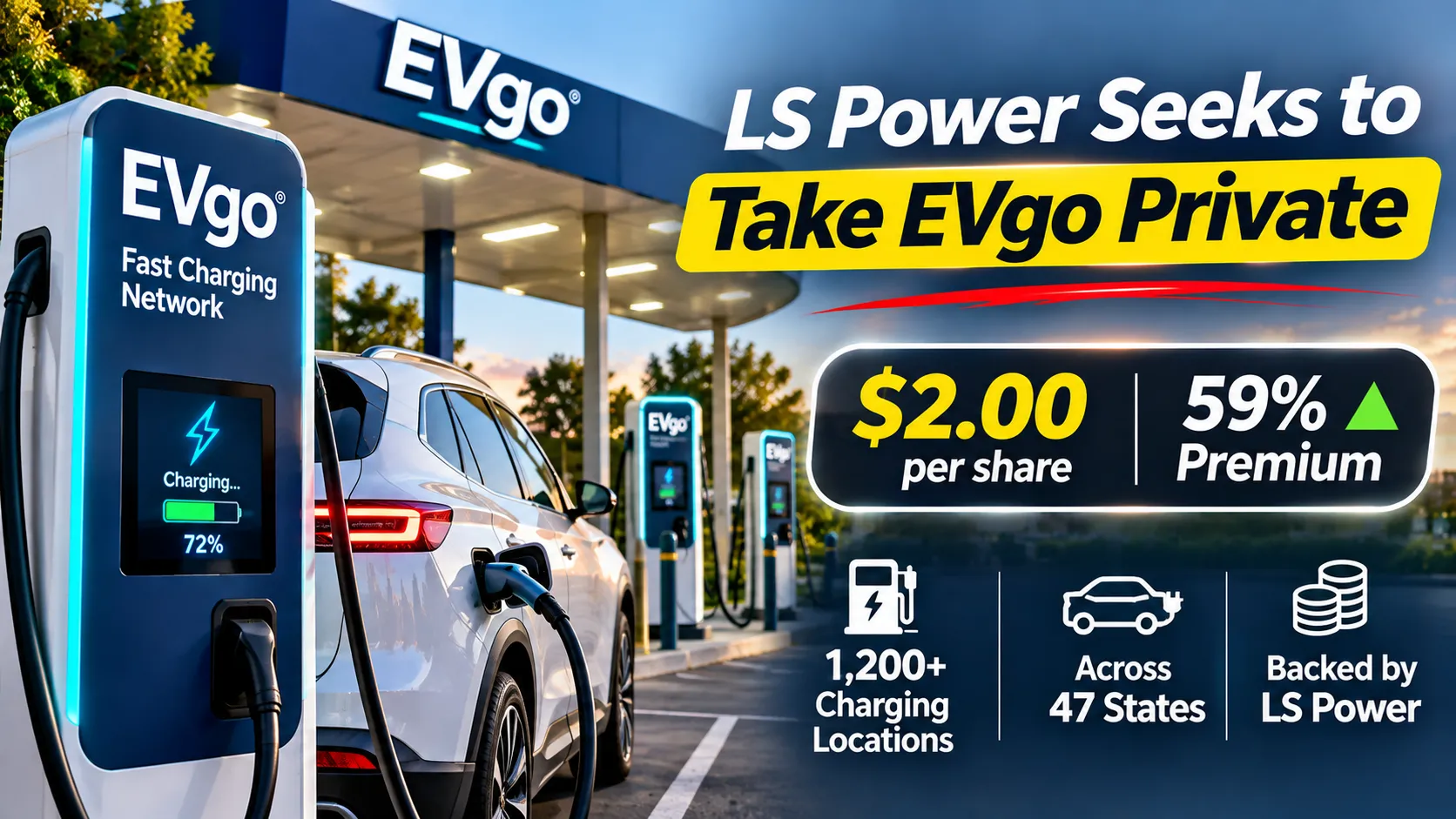
LS Power, the energy infrastructure investor that controls EVgo, made an unsolicited, non-binding proposal to acquire all of EVgo's Class A shares that it does not already own for $2.00 each in cash, according to BigGo Finance and Investing.com, citing EVgo's confirmation of the proposal. The offer represents a 59% premium to EVgo's closing price on Friday, October 30, and a 62% premium to its 30-day volume-weighted average price.
EVgo's shares jumped 47% on Monday, November 2, their biggest one-day gain since October 2024, according to BigGo Finance. Trading volume reached about 58.6 million shares, roughly 16 times the 100-day average.
A controlling shareholder
LS Power and its affiliates hold about 178 million Class A and Class B shares, representing roughly 56% of EVgo's voting power, according to BigGo Finance. LS Power has said it has no plans to sell its stake or to participate in any competing change-of-control transaction, which effectively means that no rival bidder could acquire EVgo without its support.
LS Power said it is "ready to begin negotiations immediately," but will proceed only if an "independent special committee of the board recommends a deal." It prefers to structure any transaction as a long-form merger, rather than a tender offer followed by a short-form merger.
EVgo's board has formed a committee of independent directors to review the offer. The company said "no decision has been reached on how the company will respond," according to BigGo Finance. The proposal is not a definitive agreement and can be changed or withdrawn.
A difficult run as a public company
Even after Monday's surge, EVgo's shares were still down 36% for the year, according to BigGo Finance. The company went public in 2021 through a merger with a special purpose acquisition company (SPAC), at the height of investor enthusiasm for electric vehicles and clean energy. Like many companies that listed through SPACs during that period, its shares have fallen sharply since.
EVgo operates more than 1,200 fast-charging locations across 47 states, according to BigGo Finance. It is scheduled to report third-quarter results on November 9, with analysts expecting revenue of $94.62 million and a loss of $0.12 per share, according to Fiscal AI data cited by BigGo.
The economics of EV charging
EV charging has proven to be a challenging business. Building fast-charging stations requires substantial upfront investment in equipment, grid connections and real estate, while revenue depends on how often the chargers are used. In the early years of the EV transition, low utilisation rates have made it difficult for charging companies to earn a profit.
Charging companies also face competition from Tesla, whose Supercharger network has been opened to vehicles from other manufacturers, many of which have adopted Tesla's charging connector standard. Automakers, oil companies and utilities have also invested in charging networks.
Several charging companies have struggled financially. Some have been forced to raise capital at depressed valuations, cut costs or seek buyers. Taking EVgo private would free it from the pressures of quarterly public reporting and allow LS Power to invest for the long term.
The US EV market
The US electric vehicle market has grown more slowly than many forecasters expected, as high prices, concerns about charging availability and political uncertainty have weighed on demand. The Trump administration has rolled back several federal policies supporting EVs, including consumer tax credits, and has sought to pause or restructure funding for the National Electric Vehicle Infrastructure (NEVI) programme, which was created to fund fast chargers along highways.
These policy changes have added uncertainty for charging companies that had counted on government support. However, the number of EVs on US roads continues to grow, and demand for fast charging is expected to rise over time, particularly as more drivers without home charging adopt EVs.
LS Power's strategy
LS Power is a US-based developer, owner and investor in energy infrastructure, including power generation, transmission and energy transition assets. Its investment in EVgo is part of a broader portfolio of clean energy and infrastructure businesses. By taking EVgo private, LS Power could provide patient capital and integrate the business more closely with its energy assets.
Lessons for the clean energy sector
EVgo's situation reflects a broader reckoning for clean energy companies that went public during the boom of 2020 and 2021. Many companies in EV charging, hydrogen, battery technology and electric vehicles listed through SPACs at high valuations, only to see their shares collapse as interest rates rose and growth fell short of expectations. Several have been taken private, merged or gone bankrupt.
The take-private trend suggests that some investors see long-term value in these businesses that public markets are not recognising, particularly for infrastructure assets with steady, long-term revenue potential.
The India angle
India's EV charging sector faces similar challenges. While electric two- and three-wheeler sales have grown rapidly, the market for electric cars remains small, and public charging networks are still developing. Companies such as Tata Power, Statiq, ChargeZone and others are building charging infrastructure, often with support from government schemes such as the PM E-DRIVE programme, which includes funding for public charging stations. As in the United States, utilisation rates and the cost of grid connections are key determinants of profitability.
What minority shareholders face
For EVgo's minority shareholders, the proposal offers a significant premium to the recent share price, but it is well below the levels at which the stock traded after its listing. Because LS Power already controls a majority of the voting power and has said it will not sell to anyone else, minority shareholders have limited alternatives.
The special committee's role is to protect the interests of these shareholders, and it may seek a higher price or other terms before recommending any deal. Take-private transactions led by controlling shareholders are often subject to legal scrutiny in the United States to ensure that minority investors are treated fairly.
What comes next
EVgo's special committee will evaluate LS Power's proposal and may negotiate for a higher price. Shareholders will watch whether the committee secures better terms and whether any minority shareholders challenge the deal. EVgo's third-quarter results on November 9 will provide more information about the company's financial position. The outcome will be closely watched as a bellwether for the future of independent EV charging companies.