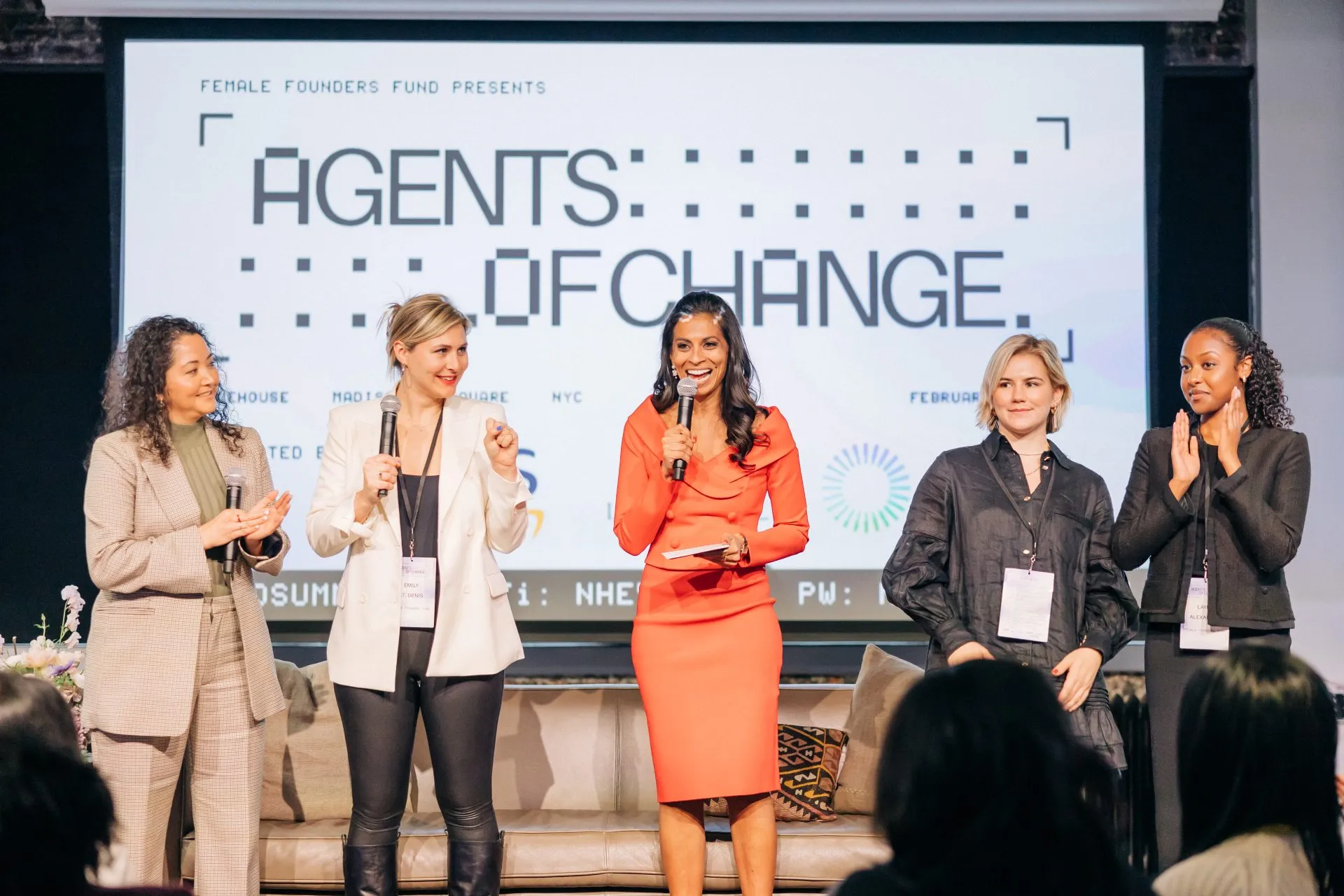
Female Founders Fund, one of the best-known venture firms dedicated to women entrepreneurs, is changing a core part of its investment strategy to win a place in the boom in artificial intelligence.
The New York firm, founded by Anu Duggal, typically invests at the seed stage and aims to own 8% to 10% of each company it backs. Fortune reported on 7 October that it will now invest in AI companies without that ownership target, allocating 10% to 20% of its $29 million fund to such deals.
Duggal told Fortune that the new approach is meant to give the firm access to “category-defining female founders” in AI. The shift is a pragmatic response to a market in which seed rounds for AI companies have reached as much as $2 billion, making a meaningful ownership stake out of reach for a fund of its size.
Why the old model stopped working
Ownership targets are central to how early-stage venture firms make money. A small fund relies on a handful of breakout companies to return its capital, and owning a significant percentage of each is what makes those outcomes large enough to matter. Giving up that discipline means accepting smaller stakes in exchange for access.
In AI, the arithmetic has changed sharply. Mira Murati's Thinking Machines Lab raised a $2 billion seed round in July 2025 at a $12 billion valuation, the largest seed round on record, according to Fortune. At that scale, even a fund many times larger than Female Founders Fund could not secure a stake close to 8%.
Female Founders Fund closed its fourth fund at $29 million in late 2025, Fortune reported at the time, after raising it between November 2023 and November 2025. The firm manages about $140 million across five funds, including a $14 million opportunity fund. Duggal's stated aim for the coming decade is to deploy $500 million into female-founded companies.
The firm has already started putting the new policy to work. Its AI portfolio includes Dollhouse, a storytelling and video platform founded by Divanny Lamas; Leela, a compliance infrastructure company founded by Preeti Krishnan; and Chronicle Bio, a health and diagnostics company founded by Fidji Simo, who recently left her role as chief executive of AGI deployment at OpenAI.
Mapping more than 100 women in AI
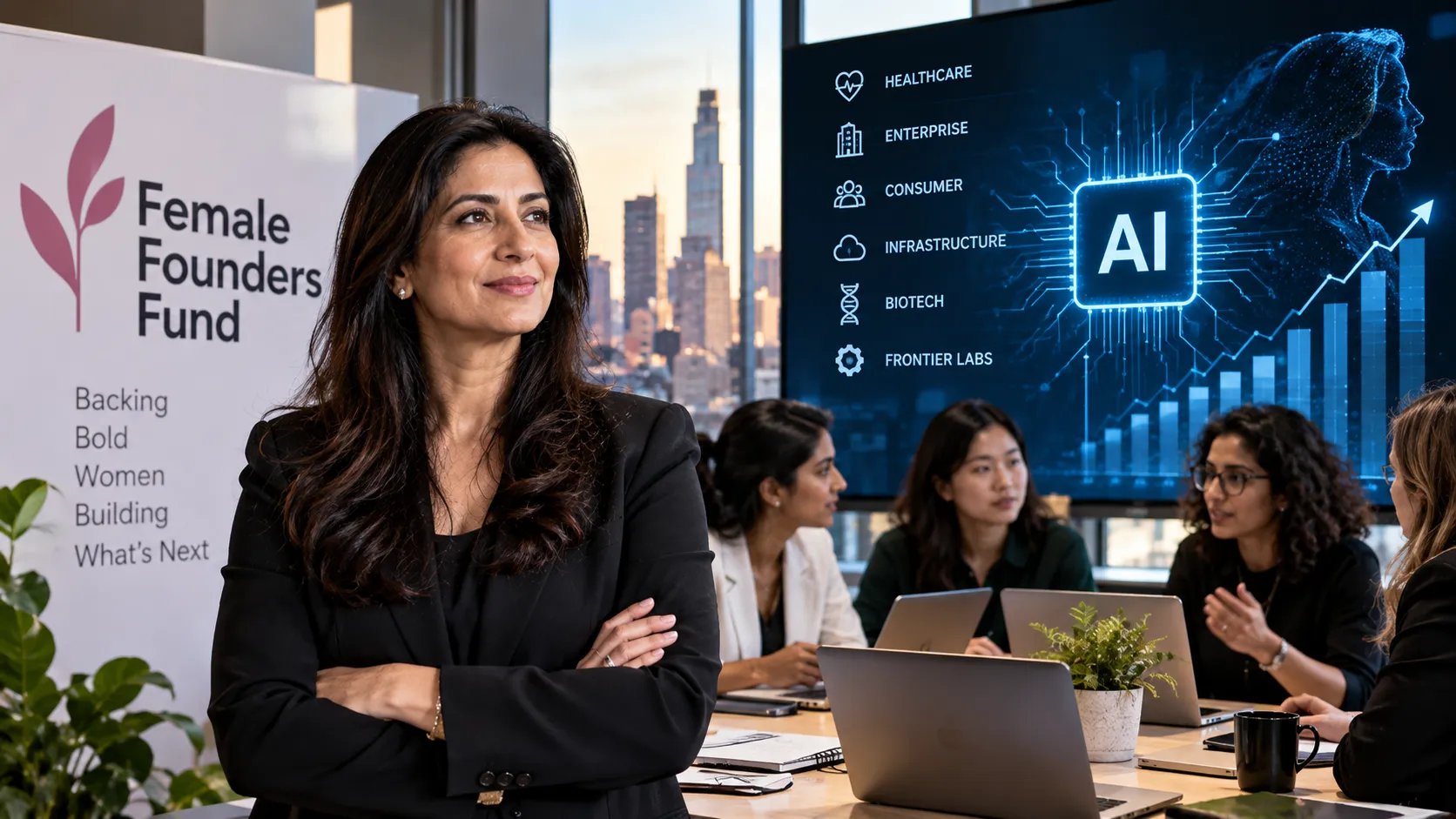
Alongside the strategy change, Female Founders Fund published a report mapping more than 100 female founders in AI across six categories: AI-native enterprise, consumer AI, AI infrastructure, physical world AI, AI health and biotech, and frontier labs and research companies.
AI-native enterprise is the largest category, and 65% of the female-founded companies in it have raised at least $25 million, according to the report as described by Fortune. The biggest funding rounds go to frontier labs and research-focused companies, while consumer AI attracts the least investment.
Founders highlighted in the report include Minna Song of EliseAI, which automates work in housing and health care; May Habib of Writer, which builds agentic AI for large enterprises; Raquel Urtasun of Waabi, which applies generative AI to autonomous driving; and Jaime Lien of Archetype, which deploys physical agents. Fortune also noted prominent women in AI such as Murati, Daniela Amodei and Fei-Fei Li.
The category breakdown matters for a seed investor. Consumer AI, the segment closest to the firm's historical roots in consumer brands, draws the least capital, while enterprise and research companies absorb the largest cheques. Fortune said the report also features Corner Health and Daydream, two start-ups its reporter had covered previously. By publishing the map, Female Founders Fund is signalling to founders in every category that it wants to see their deals, even where it cannot lead.
The broader funding data shows why the firm is moving. Start-ups with at least one female founder raised a record $73.6 billion in the US in 2025, according to PitchBook figures reported by Fortune in March, and about two-thirds of that money went into AI. But the total was heavily concentrated: Anthropic and Scale AI together raised more than $30 billion. Fortune noted that without those two companies, the record would disappear, and the number of deals involving female founders fell for a fourth straight year.
The longer trend is a slow rise in share. In 2022, companies with at least one female founder captured about 18.4% of US venture capital, and all-female teams around 2%, Fortune reported. By 2023 the share of deal value had risen to about 22.8%. In 2025, female-founded companies passed a quarter of total US deal value for the first time, although all-female founding teams saw steeper declines than mixed-gender teams.
A firm built on proving a thesis
Female Founders Fund began with a first fund of just $5.85 million, which Duggal raised after some 700 meetings. In its early years it mostly backed consumer start-ups, reflecting where women founders were most active at the time. Its exits include razor brand Billie, sold to Edgewell for $310 million, plus-size fashion label Eloquii, sold to Walmart, and BentoBox, sold to Fiserv. Its portfolio also includes women's health company Maven and fintech Tala.
The firm returned its first fund in 2024. Its limited partners for the fourth fund include Pivotal Ventures, led by Melinda French Gates, Olivia Walton's Ingeborg Investments and the Anne Wojcicki Foundation. A report commissioned by the fund found that female-founded companies generate 2.5 times more revenue per dollar invested than those founded by men, a figure Duggal has used to argue that the gap in funding is a missed opportunity for investors rather than a reflection of performance.
Duggal's own career has a strong India connection. According to Fortune, she co-founded and sold Exclusively, a luxury e-commerce platform in India, and lived in Mumbai and New Delhi, where she also opened what was reportedly Mumbai's first wine bar in collaboration with Sula. For Indian readers, her firm's pivot is a reminder that the funding concentration seen in Silicon Valley AI is a global pattern, and one that small, focused funds everywhere must work around.
The strategy carries clear trade-offs. Smaller stakes in expensive AI companies may produce lower returns per success than the firm's earlier consumer bets, and valuations in AI could correct sharply. By capping the AI allocation at a fifth of the fund, Female Founders Fund is limiting that exposure while keeping its traditional model for the rest of the portfolio.
The firm's underlying argument is that women founders need to be present in the companies shaping AI, not only in the categories where they have historically been funded. Giving up a cherished rule to get there is a test of how far a specialist investor is willing to adapt.