WomenLeadership10 MIN READ

Fidji Simo: The Product Builder Now Steering OpenAI's Path to the Real World

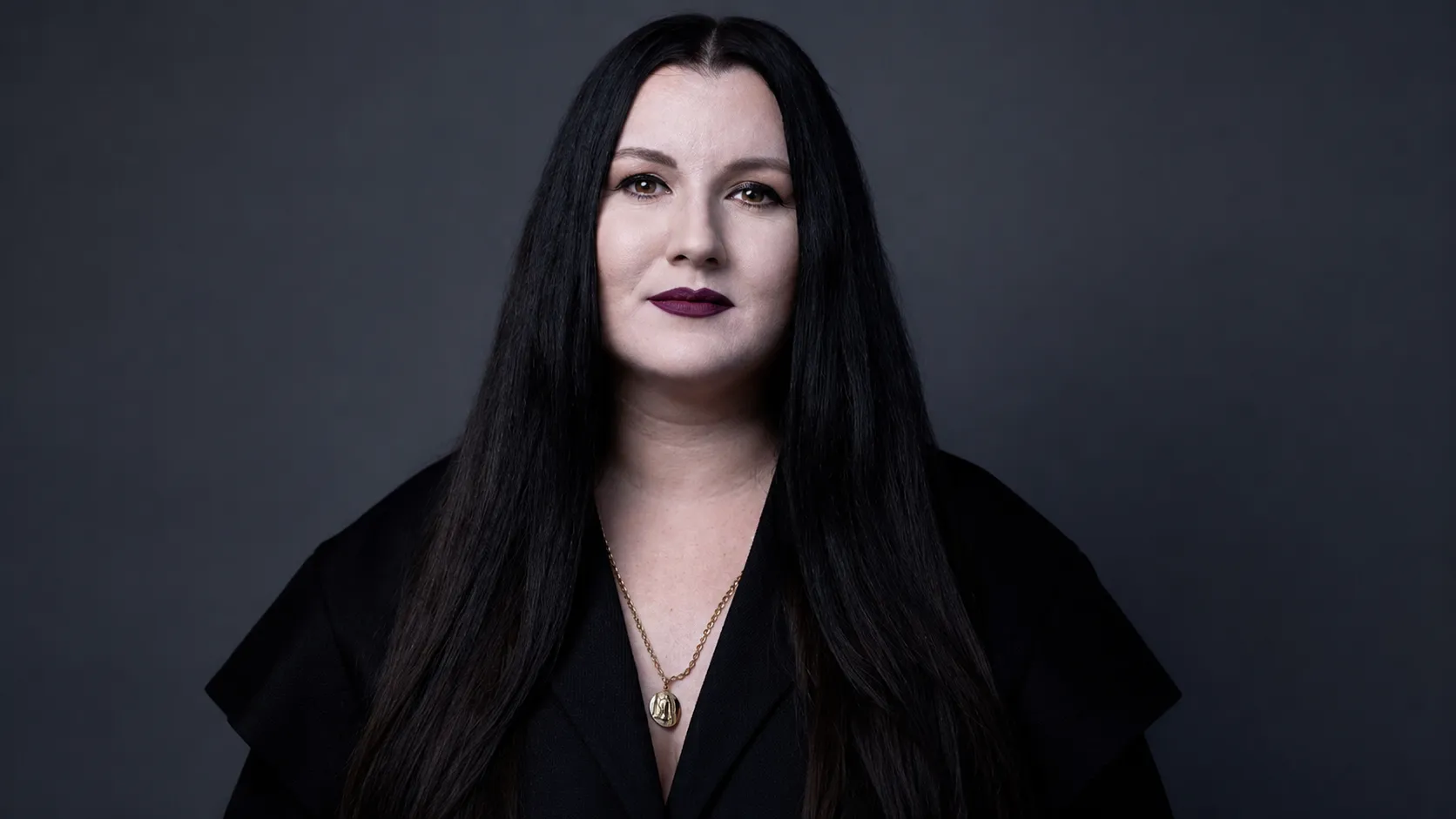
Fidji Simo built Facebook's advertising engine, took Instacart public, and now leads OpenAI's Applications division, translating the world's most closely watched AI research into products used by hundreds of millions of people.

By Aravind Kumar · Author18 August 2026AI Leadership
Fidji Simo: The Product Builder Now Steering OpenAI's Path to the Real World

Few executives in Silicon Valley have moved through as many category-defining companies at exactly the right inflection point as Fidji Simo. Born and raised in France, Simo built her career on a rare combination of technical fluency and product instinct, a combination that has repeatedly placed her at the centre of the technology industry's most consequential transitions: from the rise of mobile advertising at Facebook, to the pandemic-era transformation of grocery delivery at Instacart, and now to the challenge of turning artificial intelligence research into products that reach hundreds of millions of people through her role at OpenAI.

Simo began her career at eBay as a strategy manager before joining Facebook, where she would spend more than a decade building some of the company's most consequential products. She led the launch of advertising within Facebook's News Feed, a product decision that fundamentally reshaped the company's revenue model and became one of the most significant monetisation innovations in the history of digital media. Over the following years she took on responsibility for an expanding portfolio that included Facebook Video, Marketplace, and Groups, before being named head of the Facebook app itself in 2019, a role that made her one of the highest-ranking female executives at the company, surpassed in seniority only by then-Chief Operating Officer Sheryl Sandberg and founder Mark Zuckerberg.

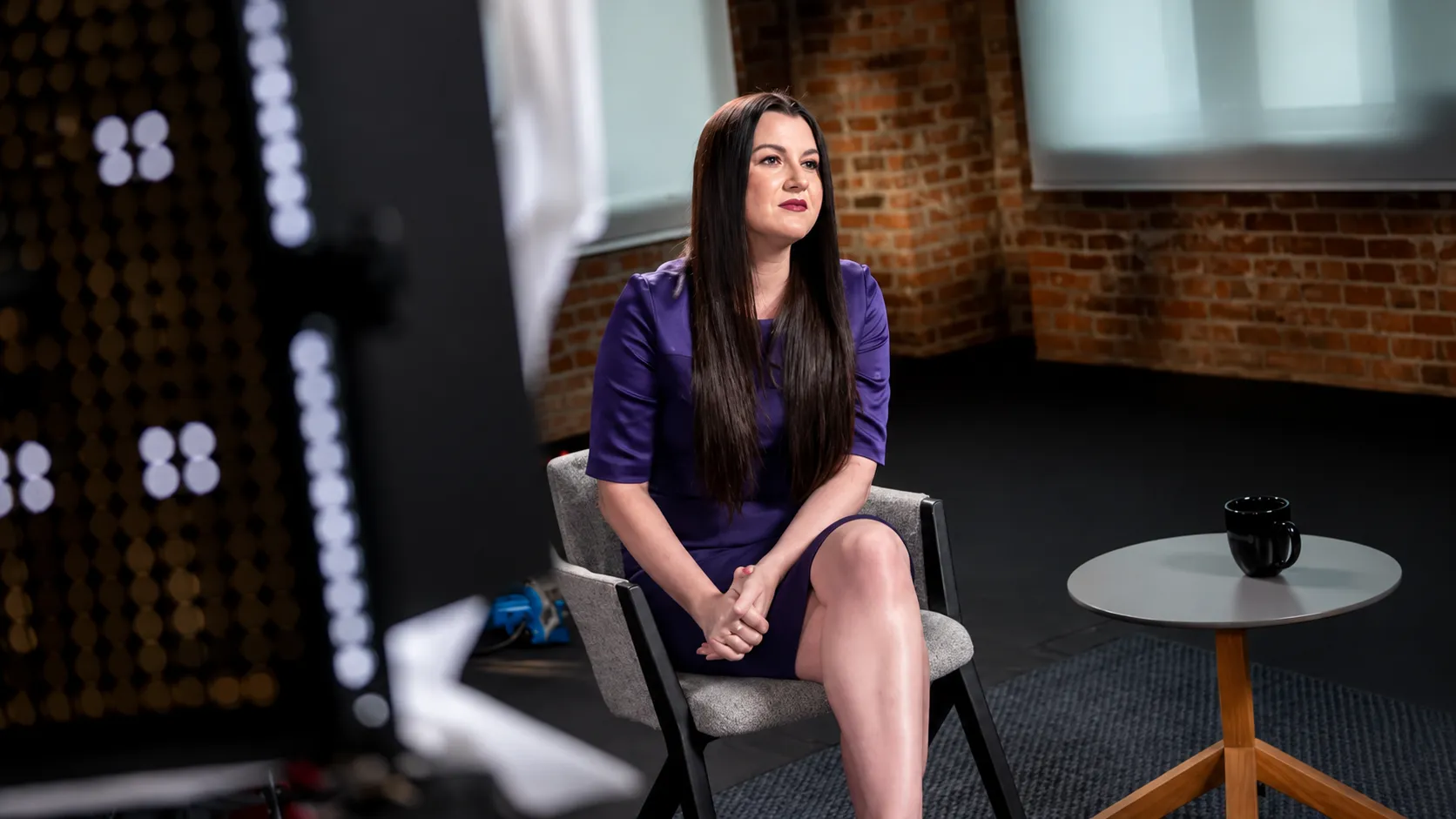
Her decade at Facebook coincided with the platform's transformation from a college social network into one of the most powerful advertising and communications businesses in the world, and Simo's fingerprints were on much of that commercial infrastructure. She left the company in 2021 to become Chief Executive Officer of Instacart, the grocery delivery company that had experienced explosive pandemic-era growth but faced serious questions about whether that growth could survive the return to normal shopping habits once lockdowns ended. Simo has since described the scepticism she encountered directly, noting publicly that many doubted whether Instacart's gains would prove durable once the pandemic receded.
ChatGPT Image Aug 18, 2026, 12_10_54 PM.png

Under her leadership, Instacart not only retained its pandemic-era customer gains but grew substantially on top of them, achieving sustained and profitable growth that culminated in the company's public listing in 2023, an offering that helped break what had been the longest drought for major technology initial public offerings in roughly three decades. Beyond the IPO itself, Simo drove meaningful product innovation at Instacart, including the introduction of AI-powered cashierless checkout technology called Caper Carts, deployed in partnership with major retailers, and the launch of a new consumer delivery application called Fizz aimed at expanding the company's reach among younger shoppers. She also oversaw a dramatic improvement in the company's financial discipline, with adjusted earnings before interest, taxes, depreciation and amortisation rising 243 percent in 2023 alone and continuing to grow substantially the following year.

In May 2025, after having served for over a year as a board member of OpenAI, Simo announced she would step away from Instacart's day-to-day leadership, remaining as Chair of its board, to join the artificial intelligence company as its first-ever CEO of Applications, a newly created executive role reporting directly to OpenAI co-founder and Chief Executive Officer Sam Altman. In a message to her Instacart team that she later shared publicly, Simo described the choice as an extraordinarily difficult one precisely because of her attachment to the company she had helped build and take public, underscoring how significant OpenAI's opportunity appeared to her despite the personal cost of leaving.

The scope of Simo's new mandate at OpenAI is substantial. According to reporting on the arrangement, senior OpenAI executives including Chief Operating Officer Brad Lightcap, Chief Financial Officer Sarah Friar, and Chief Product Officer Kevin Weil now report through her Applications division, which brings together the business and operational teams responsible for how OpenAI's research reaches and benefits the wider world, including the ChatGPT product used by hundreds of millions of people globally. Altman has framed her hiring explicitly around the recognition that successfully commercialising frontier AI research increasingly requires exactly the kind of monetisation and product-scaling expertise Simo built over more than fifteen years across eBay, Facebook and Instacart, allowing him to focus more directly on research, computing infrastructure and safety systems.

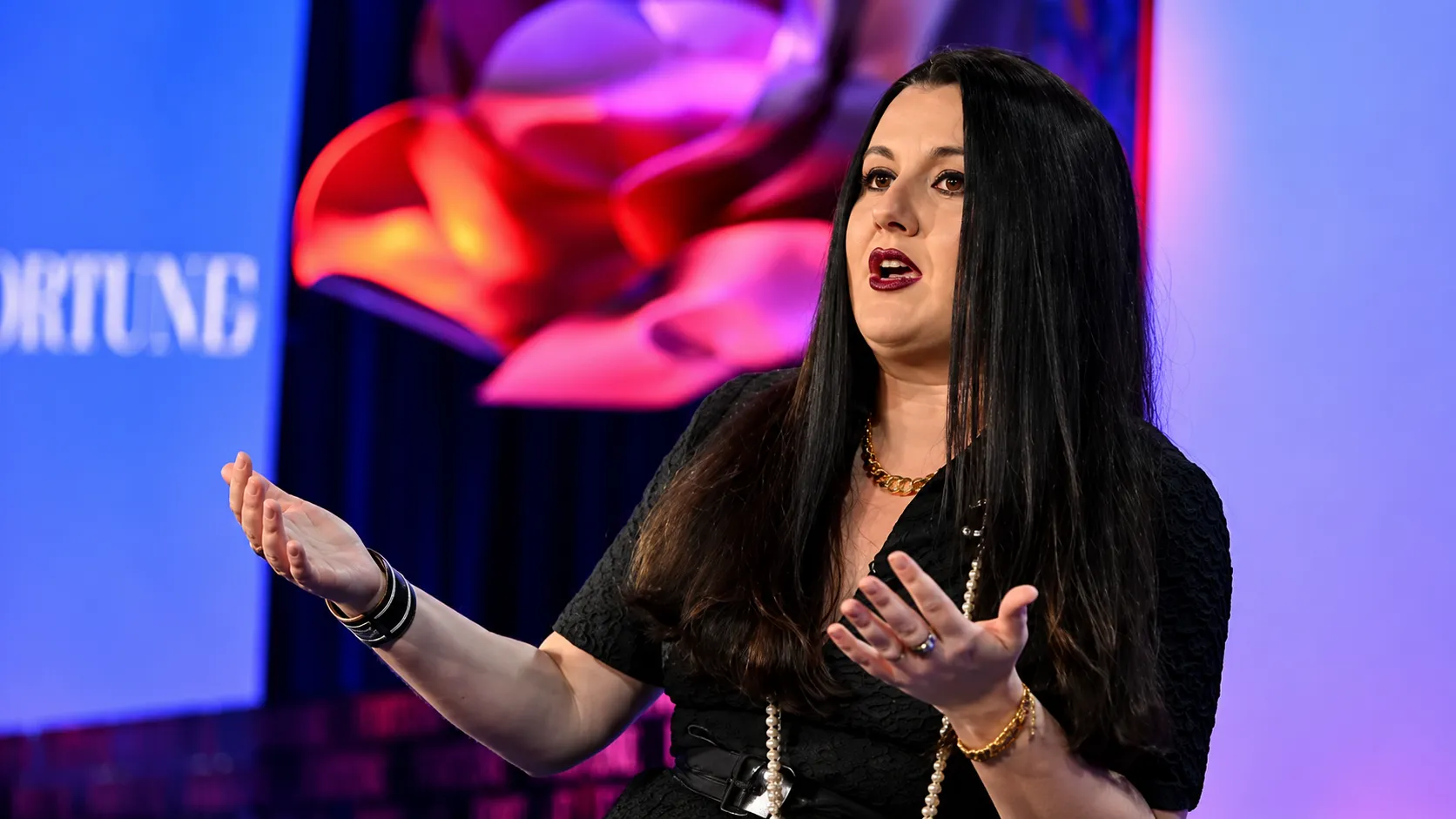
Simo has spoken candidly about her motivation for taking on the role, describing herself as a pragmatic technologist who values technology not for its own sake but for its direct impact on people's lives, and expressing conviction that artificial intelligence carries the potential to unlock more opportunity for more people than any previous technology in history. At the same time, she has been notably measured in acknowledging AI's risks, cautioning publicly that the same technology capable of expanding access and opportunity could also concentrate wealth and power further among those who already hold it if not deployed thoughtfully, a nuanced position that has been well received among both AI enthusiasts and more cautious observers of the industry's rapid growth.

Beyond her executive roles, Simo co-founded the Metrodora Institute, a clinic and research organisation, and continues to serve on the board of directors of e-commerce platform Shopify, giving her ongoing visibility into consumer technology trends beyond the AI industry itself. She was named among CNBC's Changemakers in 2024, recognition reflecting her standing as one of the most consequential product executives of her generation, spanning three of the most closely watched consumer and enterprise technology transitions of the past fifteen years: social media monetisation, on-demand grocery delivery, and now generative artificial intelligence.

For enterprise leaders and investors trying to understand how OpenAI intends to translate its research advantage into sustainable commercial products, Simo's appointment offers a clear signal. Her track record suggests a coming emphasis on verticalised offerings tailored to specific industries, more robust developer tooling, and enterprise-grade deployment capabilities designed to move OpenAI's technology beyond consumer novelty and into the operational core of businesses worldwide, a shift that mirrors the broader industry recognition that successful AI adoption depends as much on reliability and integration as on raw model capability.
ChatGPT Image Aug 18, 2026, 12_11_35 PM.png

As OpenAI navigates a critical period of scaling from research lab to full-fledged global technology company, with reported annual losses still substantial even as the company pursues profitability later in the decade, Fidji Simo's arrival represents a deliberate bet on operational and product discipline at exactly the moment the company needs it most. Her career, marked by a consistent pattern of joining ambitious organisations at precisely their most consequential inflection points and delivering durable commercial outcomes, positions her as one of the most closely watched executives in global technology as artificial intelligence moves from experimental promise toward everyday, real-world impact.

Fidji Simo has spent fifteen years turning ambitious technology promises into durable products used by hundreds of millions of people. OpenAI is betting she can do it again with AI itself.
TIGI Newsroom

The circumstances of Simo's arrival at OpenAI also reflect broader structural shifts underway across the artificial intelligence industry as it matures beyond its initial research-driven phase. For much of its history, OpenAI's public identity centred overwhelmingly around its research achievements and the technical capabilities of successive model releases, from GPT-3 through GPT-4 and beyond. Simo's elevation to a role overseeing business operations, finance, and product development signals an organisational recognition that sustainable commercial success increasingly depends on capabilities historically less central to OpenAI's culture: enterprise sales infrastructure, reliable product operations, and the kind of disciplined monetisation strategy that transformed both Facebook's advertising business and Instacart's path to profitability under Simo's earlier leadership.

Simo's specific experience building Facebook's News Feed advertising product carries particular relevance to the challenges now facing OpenAI. That earlier product required solving an extraordinarily difficult balance between user experience and commercial monetisation, embedding advertising within a core product experience without destroying the engagement that made the platform valuable in the first place. OpenAI faces an analogous challenge in figuring out how to build sustainable revenue streams around ChatGPT and its broader application ecosystem without compromising the trust and usability that have made the product one of the fastest-adopted consumer technologies in history, a tension Simo has navigated successfully at least twice before in her career.

Her tenure at Instacart also offers instructive lessons directly applicable to her new role. When Simo joined the grocery delivery company in 2021, sceptics questioned whether its pandemic-driven growth represented a durable shift in consumer behaviour or a temporary anomaly destined to reverse once lockdowns ended. Rather than simply defending the company's existing model, Simo pursued genuine product innovation, including AI-powered retail technology and new consumer-facing applications, while simultaneously imposing much greater financial discipline on the organisation, a combination that allowed Instacart to both grow and improve profitability simultaneously ahead of its 2023 public listing. That precise combination, pairing genuine technological innovation with rigorous financial and operational discipline, is widely seen as exactly what OpenAI now requires as it faces mounting pressure to demonstrate a credible path toward sustainable profitability despite continuing heavy investment in computing infrastructure and research.

Beyond the immediate operational challenges, Simo's appointment also carries symbolic significance for how the broader technology industry thinks about leadership diversity within the artificial intelligence sector specifically, a field that has drawn sustained criticism for the relative scarcity of women in its most senior technical and executive roles. As one of the highest-profile women now leading a major division within one of the world's most consequential AI companies, Simo's visibility is likely to influence how the next generation of women technologists and product leaders think about career pathways into artificial intelligence, an industry increasingly recognised as central to the future of global technology and economic competitiveness.

For enterprises and institutional partners now navigating relationships with OpenAI, Simo's operational background offers a degree of reassurance rarely available when dealing with research-driven organisations led primarily by technical founders. Her demonstrated capacity to build enterprise-grade product infrastructure, manage complex stakeholder relationships across public markets, and deliver measurable financial discipline suggests that OpenAI's next phase of growth will likely be characterised by more predictable, business-oriented execution than its earlier, more research-centric history, a shift many enterprise customers and investors have been actively seeking as they evaluate the company's long-term commercial viability.

Simo's own account of her career choices consistently emphasises a preference for organisations at genuine inflection points over more stable, established roles that might have offered greater personal comfort. She has described her decision to leave a senior, well-established position at Facebook for the considerably more uncertain challenge of leading Instacart through the pandemic era, and later her decision to leave Instacart's chief executive role for an entirely new position at a research organisation still working out its commercial model, as reflecting a consistent professional philosophy: that the most meaningful career impact comes from taking on ambiguous, high-stakes challenges rather than optimising for stability. That pattern, repeated across three distinct and increasingly consequential roles, has established her as one of the technology industry's most trusted operators precisely because of her demonstrated comfort with genuine uncertainty.

Her leadership at OpenAI is also being closely watched as an indicator of how thoughtfully the company intends to manage the tension between rapid AI capability advancement and responsible deployment practices. Simo has consistently framed her role not merely around accelerating product adoption but around ensuring that adoption happens in a manner that genuinely serves users rather than simply maximising engagement metrics, a distinction she has drawn explicitly from lessons learned during her years overseeing Facebook's advertising and engagement systems, where the tension between commercial optimisation and genuine user wellbeing became a defining challenge of the broader social media industry. That self-aware perspective, informed directly by having built one of the products most associated with those earlier tensions, positions her to bring a more considered approach to scaling OpenAI's consumer and enterprise products responsibly.

Simo's transition into artificial intelligence leadership also reflects a broader pattern among the most accomplished consumer technology executives of her generation, many of whom are increasingly gravitating toward AI companies precisely because the sector now faces the same fundamental product and monetisation challenges that defined the earlier consumer internet and mobile eras. Her specific expertise in building advertising and subscription revenue models that scale globally while remaining sensitive to user trust concerns is widely regarded within the industry as directly transferable to the challenges OpenAI faces in monetising ChatGPT and its expanding suite of enterprise tools, giving her an unusually well-matched skill set for the specific commercial inflection point at which she joined the company.

TagsFidji SimoOpenAIChatGPTInstacartMetaArtificial IntelligenceWomen in TechCEOProduct Leadership

Reader reviews

Sign in to rate and review this article.
Loading reviews…
