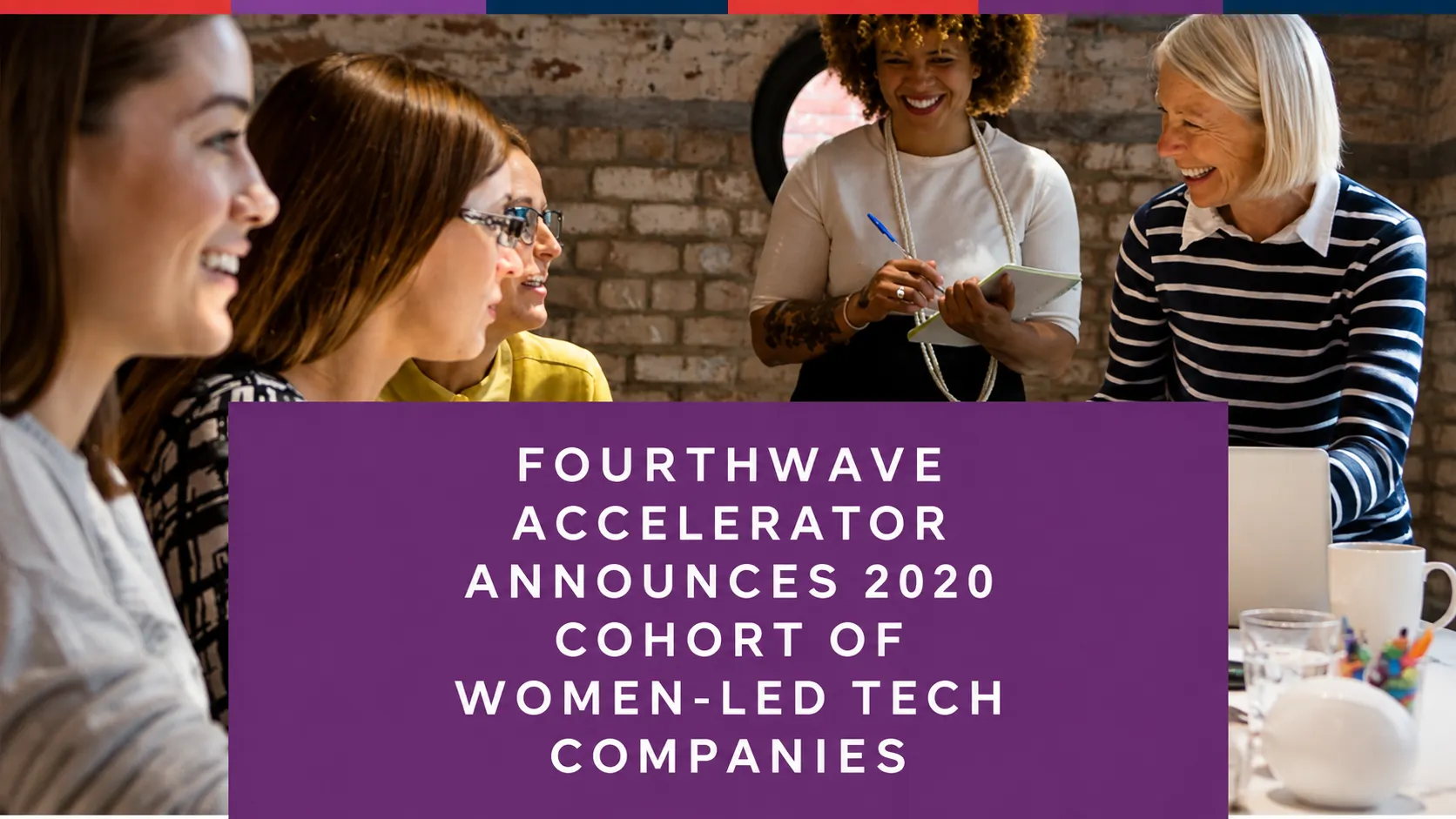
FourthWave, a non-profit accelerator dedicated to supporting women-led technology businesses, announced the selection of 14 US women founders for its 2026 accelerator programme, formally introducing the cohort at its Accelerator Launch Dinner on August 6, 2026, in Sacramento, California. Now in its eighth year, the programme has mentored 90 women founders since inception, with alumni companies collectively raising more than $180 million in venture funding — a track record that has established FourthWave as one of the more results-oriented accelerators focused specifically on closing the persistent gender gap in startup financing.
The 16-week programme provides selected founders with one-on-one mentorship, structured leadership development, and dedicated fundraising preparation, aiming to compress the typical learning curve founders face when moving from early product development into institutional fundraising rounds. The 2026 cohort draws founders from across the United States and spans a deliberately broad range of industries, including health and life sciences, AI and enterprise software tools, sustainability and agriculture technology, and new consumer-facing solutions.
Among the founders selected is Julie Case of Cadents, an AI-native Lifecycle Risk Intelligence platform for IT infrastructure based in Los Altos, California, and Yijie Li of FlashCut, a startup building an AI video editing assistant for professional video production — two examples illustrating how the cohort spans both deeply technical infrastructure plays and more consumer-adjacent creative tooling, reflecting the genuinely sector-agnostic nature of FourthWave's selection process rather than a narrow focus on any single vertical.
FourthWave co-founder Cheryl Beninga framed the programme's mission around a specific, well-documented statistic in venture capital: women founders typically receive only about a quarter of the funding amount they request from investors, compared with roughly half for male-led companies seeking comparable capital. That gap, Beninga argued, carries particular urgency in the current moment, as the rapid buildout of AI-native companies risks encoding existing structural biases into the next generation of enterprise technology if women's perspectives are not proportionally represented among the founders building it.
FourthWave's track record offers some evidence that targeted accelerator support can meaningfully improve outcomes for women founders navigating that funding gap. Alumni companies have gone on to notable recognition beyond fundraising alone: Nala Membrane, a FourthWave alumnus, was selected as a top-17 semi-finalist in the Water Desalinization category for the 2026 Global X Prize Awards, while another alumna company, ExpertIEP, won the National Black Ambition Award, illustrating how the programme's impact extends into competitive innovation recognition beyond venture capital metrics alone.
The broader funding-gap challenge FourthWave is designed to address extends well beyond any single accelerator's reach. Separate data from Village Capital's parallel US Women in Tech Accelerator programme notes that all-women founding teams have received an average of just 2.4 per cent of total venture capital funding over the past 30 years — a figure that underscores how structural the underrepresentation problem remains even as individual programmes like FourthWave demonstrate that targeted intervention can produce measurably better outcomes for the specific founders who go through them.
FourthWave's approach — combining structured mentorship with explicit fundraising preparation over a defined 16-week window — reflects a broader shift among gender-focused accelerator programmes toward more intensive, outcomes-oriented support models, rather than lighter-touch networking events or one-off pitch competitions that have historically characterised much of the women-in-tech ecosystem. Whether that intensity translates into proportionally larger funding outcomes for the 2026 cohort, following the pattern set by the programme's $180 million in cumulative alumni funding to date, will become clearer as the current cohort progresses through the programme and into their own fundraising cycles over the coming months.
For the broader venture capital ecosystem, FourthWave's continued operation — alongside parallel efforts like the EU's Women TechEU programme and Village Capital's international Women in Tech Accelerator — signals sustained institutional appetite for gender-focused startup support even as broader venture funding conditions have grown more selective. As AI reshapes which companies attract capital and at what pace, programmes like FourthWave are positioning themselves as a structural counterweight to the risk that the current AI investment wave simply reproduces the same gender funding disparities that have persisted across prior technology cycles.