Most discussions of the energy transition focus on electricity: replacing coal and gas power plants with wind, solar and batteries. But a large share of industry's energy use and emissions comes from heat, which factories use to dry, cook, distil, melt and process materials. A new analysis suggests that a clean source of heat lies directly beneath many of Europe's industrial centres.
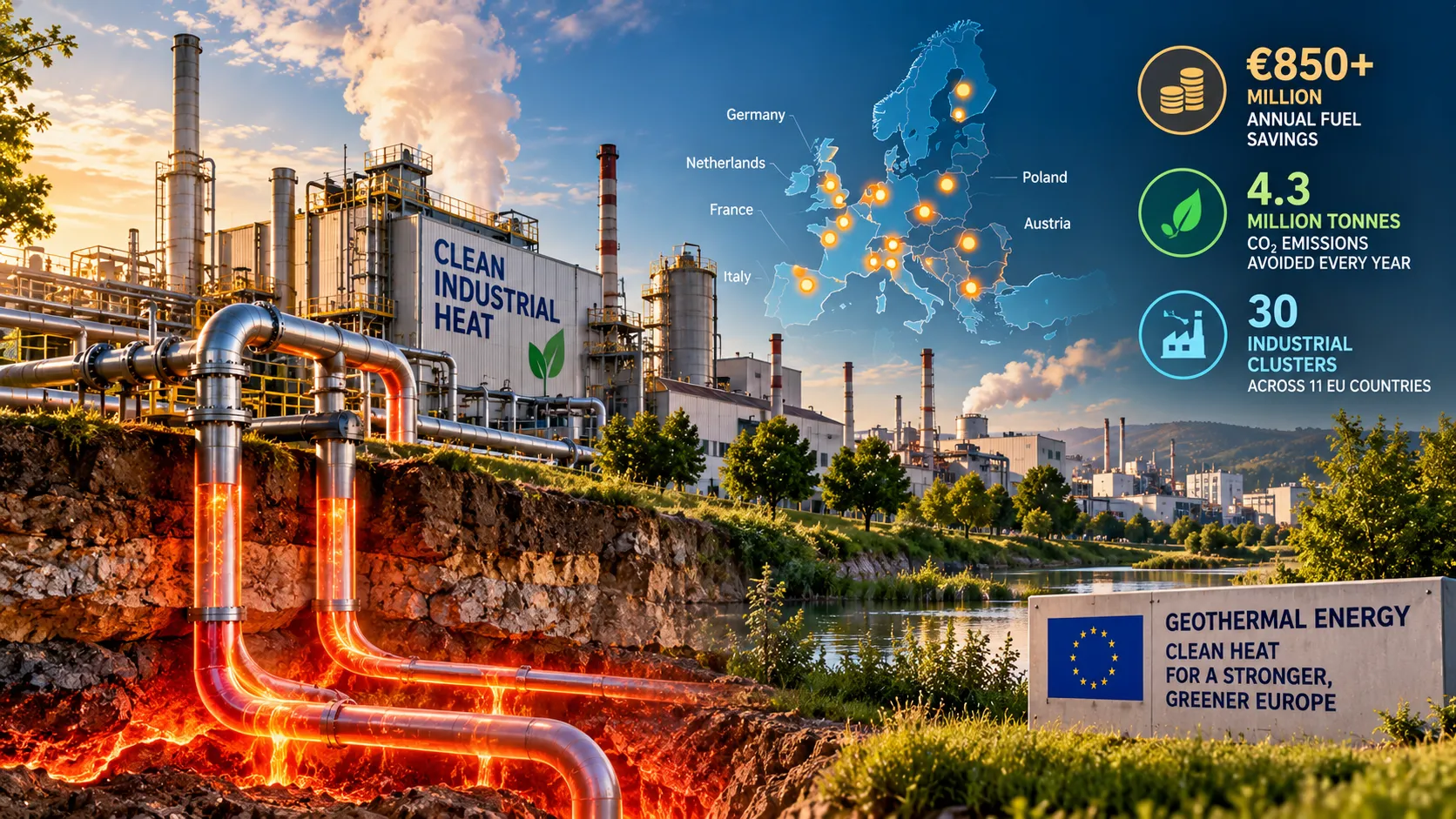
The analysis identifies 30 industrial clusters in 11 European Union countries where geothermal energy could replace fossil fuels for industrial heat, according to SustainabilityOnline on Thursday, October 29. Converting these sites could displace more than €850 million in annual fuel spending and avoid 4.3 million tonnes of carbon dioxide emissions each year.
Opportunities are flagged in Germany, France, Italy, Poland, Austria and the Netherlands, among others, and the analysis identifies a further 152 candidate clusters for potential development.
The industrial heat challenge
Heat accounts for a large share of industrial energy demand in Europe, and most of it is still produced by burning natural gas, oil or coal. Industries such as food and beverages, paper and pulp, chemicals, textiles and pharmaceuticals rely on steam and hot water for their processes, while heavy industries such as steel, cement and glass require extremely high temperatures.
Decarbonising industrial heat has proved more difficult than decarbonising electricity. Electric alternatives, such as industrial heat pumps and electric boilers, are available for some applications but can be expensive to run when electricity prices are high. Hydrogen is being explored for high-temperature processes but remains costly and in limited supply.
How geothermal heat works
Geothermal energy uses heat from beneath the earth's surface. In some regions, hot water and rock lie relatively close to the surface, making it possible to drill wells and bring heat up for direct use or electricity generation. Unlike wind and solar power, geothermal energy is available around the clock regardless of weather, making it well suited to industrial processes that run continuously.
For industrial heat, geothermal systems can supply hot water or steam at low to medium temperatures directly, or be combined with heat pumps to raise temperatures further. Geothermal heat is particularly suitable for processes requiring temperatures below about 200 degrees Celsius, which covers a significant portion of industrial heat demand in sectors such as food processing, paper and chemicals.
Why clusters matter
The focus on industrial clusters, where multiple factories are located close together, is important. Drilling geothermal wells and building heat networks requires significant upfront investment. Serving several industrial users from shared infrastructure can spread these costs and make projects more economical. Clusters also often have existing infrastructure, such as heat networks, that can be adapted for geothermal heat.
Energy security benefits
Europe's energy crisis following Russia's invasion of Ukraine in 2022 exposed the continent's dependence on imported natural gas. Prices soared, forcing some energy-intensive factories to cut production or close. Although prices have eased from their peak, Europe remains vulnerable to supply shocks, as illustrated by the current surge in oil and gas prices driven by conflict in the Middle East.
Geothermal heat offers a domestic, stable source of energy that is not exposed to international fuel markets. Replacing imported gas with local geothermal heat would improve energy security as well as reduce emissions. The estimated savings of more than €850 million a year in fuel spending reflect the value of this independence.