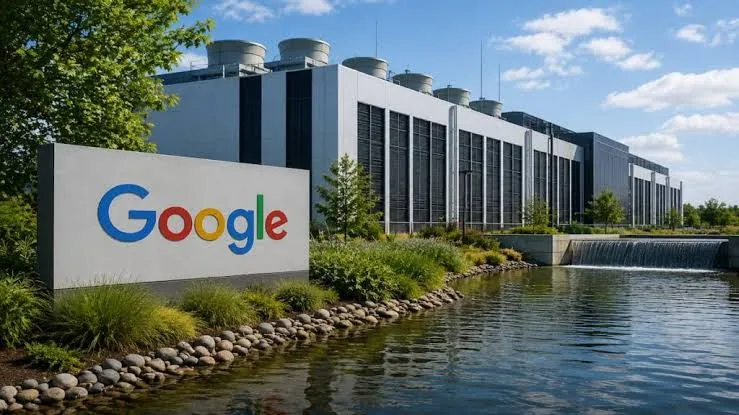
Google has invested $60 million in new global water restoration projects, according to reporting from ESG Today's weekly review published the week of August 23, 2026, an investment that arrives at a moment when the technology industry's own operations — particularly the water-intensive cooling systems required by AI data centres — have come under increasing scrutiny for their environmental footprint.
The water restoration investment reflects a broader pattern among major technology companies operating large-scale data centre infrastructure to pair their operational expansion with corresponding investments in environmental restoration and resource stewardship, a strategy companies have increasingly framed as central to maintaining a defensible sustainability profile even as their underlying computing infrastructure — driven substantially by the exponential growth in AI workloads — continues to expand its resource consumption significantly.
Data centre cooling has emerged as one of the more scrutinised aspects of the technology industry's environmental footprint, with many facilities relying on substantial volumes of water for evaporative cooling systems that help manage the heat generated by densely packed computing hardware, particularly the specialised AI accelerator chips that require significantly more power, and generate correspondingly more heat, than traditional computing infrastructure. As AI workloads have scaled dramatically across the industry, the associated water consumption of data centre operations has drawn increasing attention from environmental researchers, local communities near data centre facilities, and sustainability-focused investors.

Google's $60 million commitment to water restoration projects can be read as part of a broader corporate sustainability strategy aimed at offsetting or mitigating this growing resource footprint, though the specific scale of the investment relative to the company's overall water consumption across its global data centre operations was not detailed in initial reporting. Water restoration projects of this kind typically focus on activities such as watershed protection, wetland restoration, and improvements to water infrastructure efficiency in regions where a company's operations draw meaningfully on local water resources.
The investment arrives amid a broader wave of significant sustainability-related capital commitments reported globally this week, including Climate Investment Partners' $3 billion clean energy infrastructure fund and Canada's $50 billion commitment to clean energy project investment, together illustrating continued momentum behind environmental and sustainability-focused capital deployment across both the technology sector specifically and the broader global economy, even as formal climate policy consensus has weakened in several jurisdictions.
For Google and its technology industry peers, water stewardship investments of this kind are likely to become an increasingly important component of corporate sustainability strategy as AI infrastructure continues its rapid global expansion, with the industry facing a structural tension between the enormous computing capacity required to support continued AI development and deployment, and the environmental footprint — spanning both energy and water consumption — that this computing capacity inevitably generates.
As Google deploys its $60 million commitment across specific water restoration initiatives, the effectiveness and transparency of that deployment will likely be closely watched by environmental researchers and sustainability advocates, particularly given the technology industry's broader need to demonstrate that its sustainability commitments can meaningfully offset the resource demands of an AI infrastructure build-out that shows no signs of slowing in scale or pace.