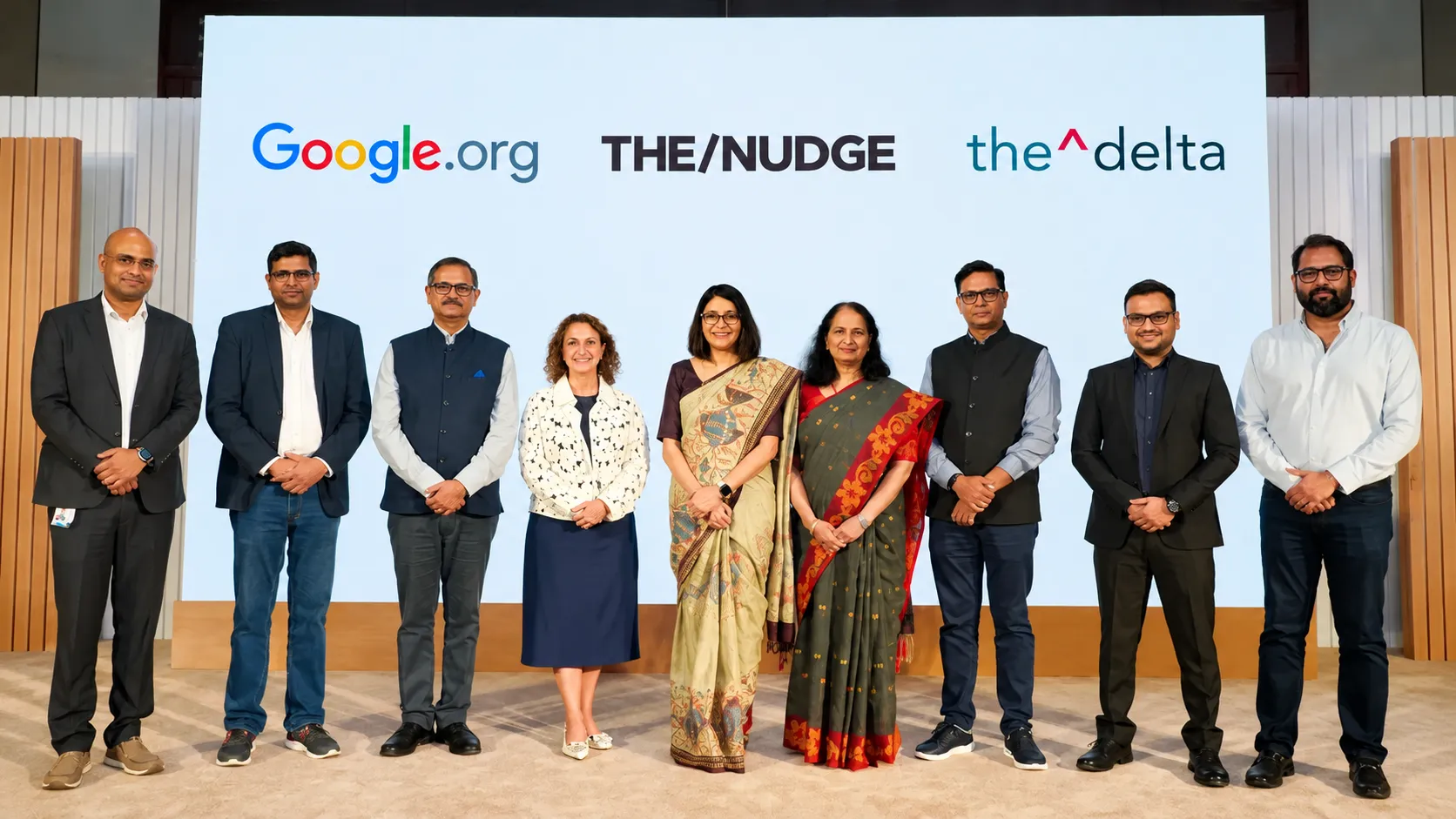
Google.org, the philanthropic arm of Google, has committed $15 million to The/Nudge Institute to develop artificial intelligence tools for India's micro, small and medium enterprises, in one of the larger single philanthropic bets yet on using AI to strengthen the country's vast small-business economy.
The grant, worth about ₹143 crore at current exchange rates, was announced on 14 October at a launch event in New Delhi. The programme will be built by the^delta, The/Nudge's social entrepreneurship arm, which operates under a new name.
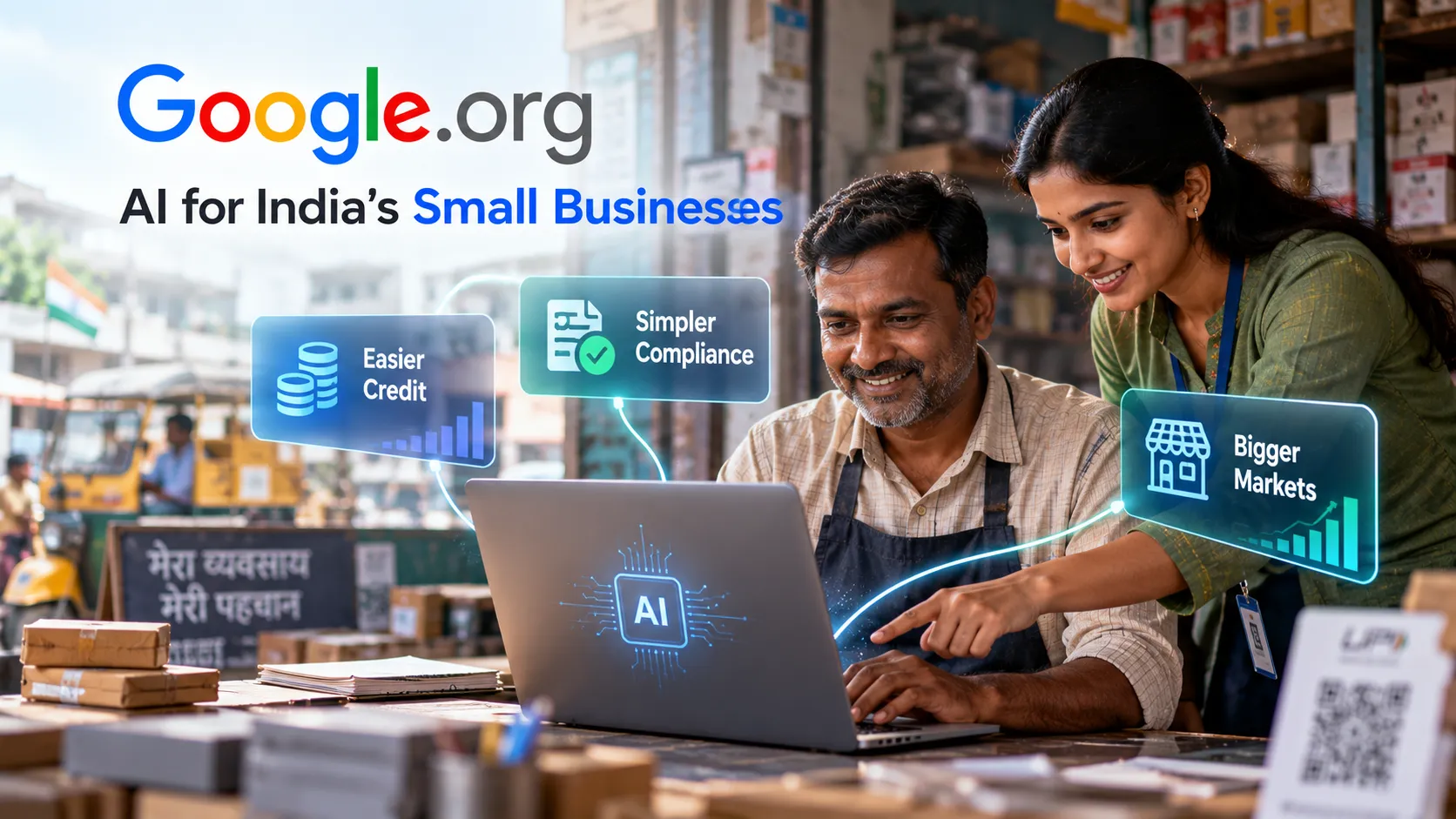
The initiative will focus on three of the most persistent problems facing Indian small businesses: getting formal credit, staying compliant with regulations, and being discovered by buyers.
A Grant Larger Than a Year of Spending
For The/Nudge, the commitment is substantial. The Bengaluru-based non-profit, founded in 2015 by Atul Satija, a former chief business officer at InMobi who earlier worked at Google, has a reported annual budget of about ₹100 crore, according to Forbes India. The Google.org grant therefore exceeds a full year of the organisation's spending.
The/Nudge has built a reputation as one of India's more entrepreneurial development organisations, working on poverty alleviation, livelihoods and social entrepreneurship. Its the^delta arm runs an incubator, an accelerator and a prize for open challenges, as well as Pragati, an AI-for-impact programme run in collaboration with Meta.
Subhashree Dutta, chief executive of the^delta, and Kanishka Chatterjee, its managing director, also appear on The/Nudge's programme leadership roster.
Two Parts to the Programme
The initiative has two main components, according to StartupTalky.
The first is an open call for proposals to source AI-driven solutions that can help small enterprises access credit, manage compliance and reach new markets. Rather than building every tool in-house, the^delta will seek out and support entrepreneurs and organisations already working on these problems, an approach consistent with its accelerator and challenge-prize models. Deadlines and eligibility criteria for the call have not yet been detailed publicly.
The second is a multilingual, voice-led training platform designed to reach people in Tier 3 and Tier 4 towns. The platform will train individuals in skills that small businesses need and connect them with enterprises looking for those capabilities. The decision to build around voice rather than text reflects a practical reality: many workers and business owners in smaller towns are more comfortable speaking in their own language than reading or typing in English.
Senior Figures at the Launch
The launch drew senior figures from government and Google. Speakers included Bharat Khera, Secretary at the Ministry of Micro, Small and Medium Enterprises; Preeti Lobana, Google's India country manager; and Lila Ibrahim of Google DeepMind, who was the AI lab's founding chief operating officer from 2018 and moved this year into a new role as its first chief AI readiness officer.
The presence of the MSME Secretary signals that the programme is likely to be aligned with government efforts to formalise and digitise small businesses, an area where public policy and private philanthropy increasingly overlap.
Why MSMEs Matter So Much
The scale of the opportunity explains why both philanthropists and policymakers are focused on small enterprises. Google.org cites more than 90 million small businesses in India employing more than 345 million people, though official counts are somewhat higher.
Registrations on the government's Udyam portal and its companion Udyam Assist platform, which brings informal micro-enterprises into the formal system, passed 8.7 crore by June 2026, according to government data. Employment reported through those registrations is close to 39 crore. The Ministry of MSME credits the sector with about 31.1 per cent of India's GDP and 48.58 per cent of its exports.
Much of the recent growth in registrations reflects existing businesses becoming visible to the formal system rather than new enterprises being created. That distinction matters. A business that is registered, has a digital footprint and generates transaction data is far easier for a bank or non-bank lender to assess. In that sense, formalisation is the first step towards credit access, and AI tools that help small firms organise their records, file returns and present their finances could accelerate the process.
The Credit Gap
Access to affordable, formal credit has long been the defining constraint for Indian small businesses. Many rely on informal lenders at high interest rates or on personal and family savings because they lack collateral, credit histories or the documentation banks require.
India's digital public infrastructure, including the Account Aggregator framework, GST data and the Open Credit Enablement Network, has created new ways to assess creditworthiness from transaction data rather than property. But many small business owners still struggle to use these systems. AI assistants that work in local languages, explain financial products and help prepare loan applications could narrow the gap between what the infrastructure makes possible and what entrepreneurs actually use.
Compliance is a related burden. For a small manufacturer or trader, keeping up with tax filings, labour rules and sector-specific regulations can consume time and money that would otherwise go into running the business. Tools that simplify these obligations could reduce costs and lower the risk of penalties.
Google's Broader India Strategy
The grant fits into a wider pattern of Google activity in India. In January 2026, Google.org gave Wadhwani AI about ₹85 crore for AI-assisted learning. Globally, its AI Opportunity Fund is a $120 million commitment spread across many countries. On the commercial side, Google announced in October 2025 a $15 billion AI and data centre hub in Visakhapatnam, its largest investment in India and its biggest AI campus outside the United States.
Taken together, these moves show Google positioning itself as both an infrastructure provider and a development partner in a market it sees as central to the next phase of AI adoption.
The Questions That Remain
As with any philanthropic AI initiative, the real measure will be adoption and outcomes. Key details, including the timeline over which the $15 million will be deployed and the number of businesses and workers the programme aims to reach, have not yet been made public.
Success will depend on whether the tools are designed around how small businesses actually operate, whether they work reliably across languages and dialects, and whether they connect to the lenders, government systems and buyers that small firms need. Earlier waves of technology aimed at MSMEs have often struggled with low usage once initial enthusiasm faded.
What sets this effort apart is its pairing of AI tools with on-the-ground training and an open innovation model that draws on existing entrepreneurs. If the^delta can show measurable improvements in credit access, compliance and sales for even a fraction of India's small businesses, the programme could become a template for how philanthropic capital and AI can work together at population scale.