The Green Climate Fund has announced its backing of a new national platform designed to scale green investment across Mongolia, extending the multilateral fund's growing portfolio of country-level climate finance mechanisms and reinforcing its regional emphasis on Central Asia, where the fund's board has separately signalled intentions to double investment activity under a regional co-financing model.
National platforms of this kind are designed to address a persistent structural challenge in climate finance: the gap between the scale of capital multilateral funds like the Green Climate Fund can mobilise and the institutional capacity within individual developing countries to effectively channel that capital into well-structured, bankable green investment projects. By backing a dedicated national platform rather than funding individual projects directly, the Green Climate Fund aims to build durable, country-owned institutional infrastructure capable of continuing to attract and deploy climate finance long after any single project-specific funding commitment concludes.
Mongolia's particular climate vulnerability profile — encompassing extreme temperature variation, desertification pressure across its vast grassland ecosystems, and a historically coal-dependent energy system inherited from its Soviet-era industrial development — makes it a distinctive candidate for dedicated climate finance infrastructure. The country's sparse population density and vast geographic scale also present unique logistical challenges for green infrastructure deployment that differ meaningfully from the more urbanised, densely populated developing economies that have historically received the bulk of global climate finance attention.
The announcement follows the Green Climate Fund's broader recent activity pattern, which has included balance-sheet efficiency measures unlocking more than $4 billion in additional investment capacity, alongside accelerated delivery timelines for previously approved climate projects across its global portfolio. That combination of expanded lending capacity and accelerated project delivery suggests an institution actively working to increase both the scale and speed of its climate finance deployment at a moment when global climate finance needs continue to vastly outstrip available concessional funding.
The broader financing gap facing developing countries' climate and sustainable development ambitions remains substantial by any measure — recent United Nations analysis places the annual financing gap for achieving global Sustainable Development Goals at more than $4 trillion, a figure that dwarfs the total capital multilateral climate funds like the Green Climate Fund can realistically mobilise even at their most ambitious operational scale, underscoring why national platform models designed to catalyse and leverage additional private capital, rather than relying solely on direct multilateral funding, have become an increasingly central strategy across the climate finance architecture.
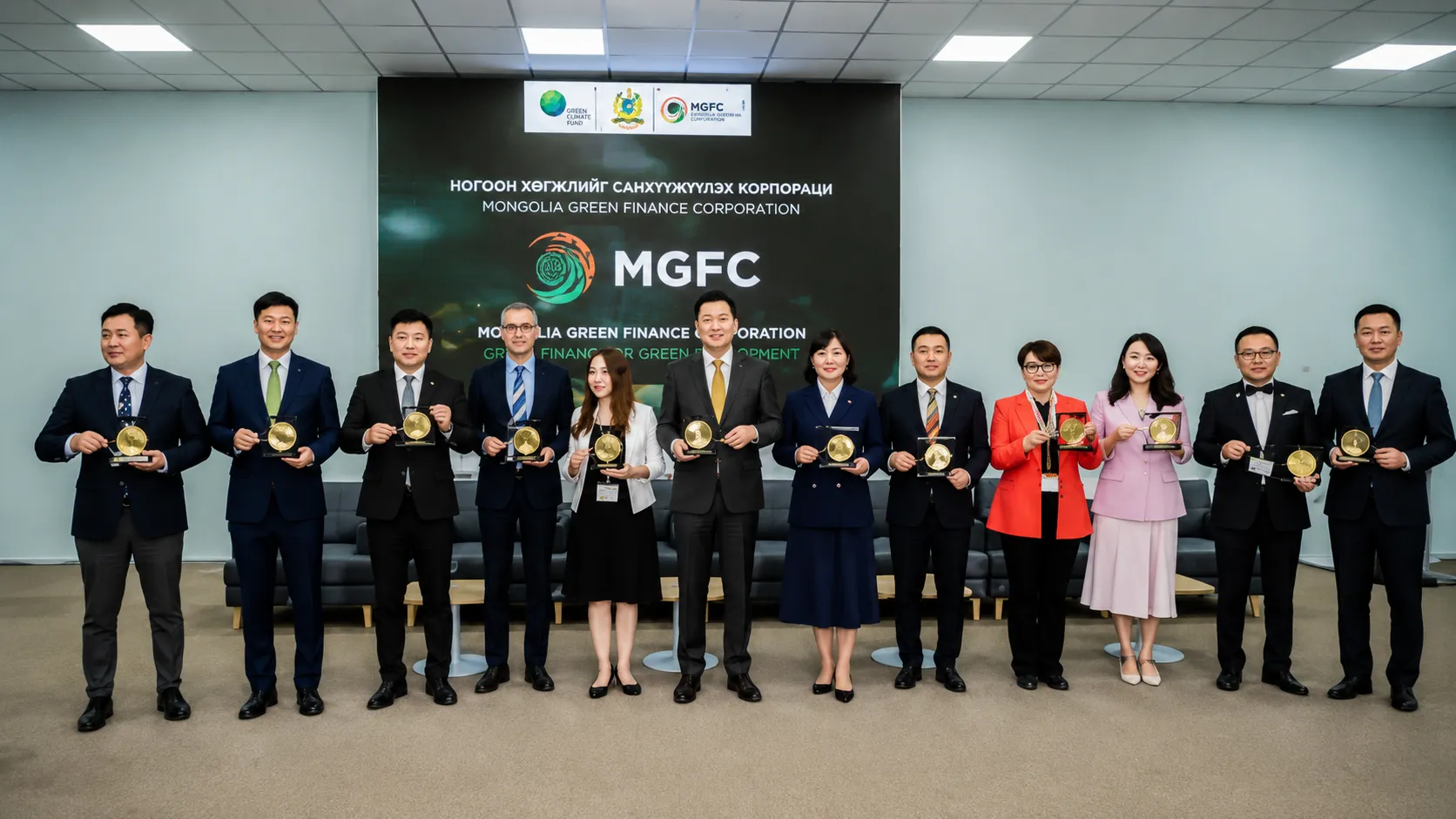
For Mongolia specifically, a dedicated national green investment platform could help address the country's need to diversify its historically resource-extraction-dependent economy while simultaneously building the renewable energy and sustainable land-management infrastructure necessary to address its acute climate vulnerability — a dual economic and environmental transition that many resource-dependent developing economies face as global climate and market pressures increasingly favour diversified, lower-carbon development pathways.
The Green Climate Fund's Central Asian regional model, under which this Mongolia platform is being established, reflects a broader multilateral shift toward regional and national-level climate finance architecture rather than the more fragmented, individual-project funding approach that characterised much of the fund's earlier operational history — a structural evolution aimed at building more durable, locally owned climate finance institutions capable of sustaining green investment momentum well beyond any single funding cycle.
As the national platform becomes operational, its effectiveness at genuinely mobilising both public and private capital toward Mongolia's green investment needs — rather than remaining a largely symbolic institutional structure with limited practical capital deployment — will offer an important test case for whether the Green Climate Fund's broader national platform strategy can be successfully replicated across other developing countries facing similarly acute climate vulnerability and constrained domestic institutional capacity.
Mongolia's position within the Green Climate Fund's Central Asian regional model also situates the country alongside neighbouring economies pursuing similar green transition ambitions, potentially creating opportunities for cross-border knowledge sharing and coordinated regional infrastructure investment that could prove more efficient than a purely country-by-country approach to climate finance deployment across a region facing broadly comparable structural development challenges.
For the international climate finance community more broadly, successful national platform models in smaller, less internationally prominent economies like Mongolia carry significance well beyond the country's own borders, offering a template that could inform how multilateral climate funds structure similar country-level institutional support across the many other developing nations facing comparable gaps between climate vulnerability and domestic institutional capacity to deploy climate finance effectively.
As the Green Climate Fund continues expanding its balance-sheet efficiency and accelerating project delivery timelines across its global portfolio, the Mongolia platform represents one of several concurrent initiatives through which the fund is attempting to demonstrate that multilateral climate finance can move with greater speed and institutional durability than its historically slower-moving reputation might suggest, at a moment when the scale of global climate financing needs leaves little room for institutional inefficiency. How quickly the platform can move from initial capitalisation to genuine project deployment on the ground in Mongolia will offer an early, closely watched indicator of whether this accelerated institutional approach is translating into faster real-world climate finance delivery, rather than simply faster fund-level announcements. Development finance observers will also be watching whether Mongolia's own government agencies can build sufficient technical capacity to co-manage the platform effectively, a factor that has determined the success or failure of comparable national climate finance vehicles in other developing economies. Multilateral development banks operating alongside the Green Climate Fund in the region will also be watching the platform's early performance closely, given the potential for coordinated co-financing arrangements that could meaningfully expand the total capital available for Mongolia's green transition beyond what the Green Climate Fund could mobilise independently, ultimately determining whether this national platform model becomes a durable feature of the country's climate finance landscape or a shorter-lived pilot without lasting institutional impact. The coming reporting cycles will offer the first concrete evidence of which outcome Mongolia's experience with this new platform ultimately delivers.