ImpactSustainability6 MIN READ

GreenCell Mobility Raises ₹330 Crore From Impact Fund Denmark to Put 4,500 More Electric Buses on India's Roads

Eversource Capital-backed GreenCell Mobility has raised ₹330 crore in equity from Impact Fund Denmark to deploy about 4,500 electric buses and take its fleet past 5,000 vehicles across 105 Indian cities.

By Shaym Kumar · Author15 October 2026New
GreenCell Mobility Raises ₹330 Crore From Impact Fund Denmark to Put 4,500 More Electric Buses on India's Roads

GreenCell Mobility, one of India's largest operators of electric buses, has raised ₹330 crore in equity from Impact Fund Denmark, adding fresh institutional capital to a business that is trying to scale clean public transport faster than almost anyone else in the country.

The Mumbai-based company said the money will support the deployment of about 4,500 electric buses, a rollout that would take its fleet past 5,000 vehicles across 105 Indian cities. The capital is earmarked for that planned expansion and for executing an order book the company has already secured.

The deal, announced on 14 October, is one of the larger single equity cheques written into India's electric mobility sector this year and a notable bet by a Danish state-backed investor on a market where the economics of zero-emission public transport are still being proved at scale.

A Fleet Built on Contracts, Not Showrooms

GreenCell does not sell buses. It runs them. The company operates on what the industry calls an Electric Mobility-as-a-Service (eMaaS) model: it finances, deploys and operates electric buses, and develops the charging infrastructure needed to keep them on the road, while transport authorities and other customers pay for the service, typically on a per-kilometre basis.

That model has made GreenCell a natural partner for Indian states and cities that want to electrify their fleets but lack the balance sheets, or the appetite, to buy and maintain expensive electric buses themselves. It also means that GreenCell's growth is tightly linked to its ability to raise capital: every new contract requires buses, batteries and chargers to be funded up front, with revenue arriving over years of operation.

The company currently runs more than 1,200 electric buses, including intercity services under its consumer-facing NueGo brand, which has become one of the more recognisable names in India's long-distance electric coach market. GreenCell is a portfolio company of Eversource Capital, the climate-focused investment platform, and has previously drawn investment from development finance institutions including the International Finance Corporation (IFC) and British International Investment (BII).

Why Impact Fund Denmark Is Writing the Cheque

Impact Fund Denmark is a Danish investment fund with a mandate to back sustainable development in emerging markets. Its chief executive, Lars Bo Bertram, said the GreenCell investment fits the fund's focus on India and on electric transportation, pointing to air pollution and the shift towards lower-emission mobility as central considerations behind the decision.

For overseas impact investors, Indian electric buses offer an unusually tangible proposition. Urban air quality in many Indian cities ranks among the worst in the world, and diesel buses are a visible contributor. Replacing them with battery-electric vehicles cuts tailpipe emissions at street level, where commuters and pedestrians breathe them in, while India's growing renewable energy capacity steadily improves the carbon profile of the electricity used to charge them.

The investment also gives GreenCell a source of equity that is patient by design. Development-oriented investors tend to hold for longer and tolerate the slower payback profile of infrastructure-heavy businesses, which matters for a company whose assets earn returns over a contract life that can stretch close to a decade.

Execution Is Now the Test

GreenCell's leadership has been explicit that the new money is about delivery as much as growth. Managing director and chief executive Devendra Chawla said the funding adds capital to accelerate deployment and strengthen service delivery, stressing that the company must scale its operational capabilities alongside its fleet.

That emphasis reflects the realities of the business. Running 1,200 buses and running more than 5,000 are very different undertakings. A fourfold increase in fleet size means more depots, more charging stations, more trained drivers and technicians, more spare parts and more complex scheduling across dozens of additional cities, each with its own road conditions, labour markets and municipal counterparties.
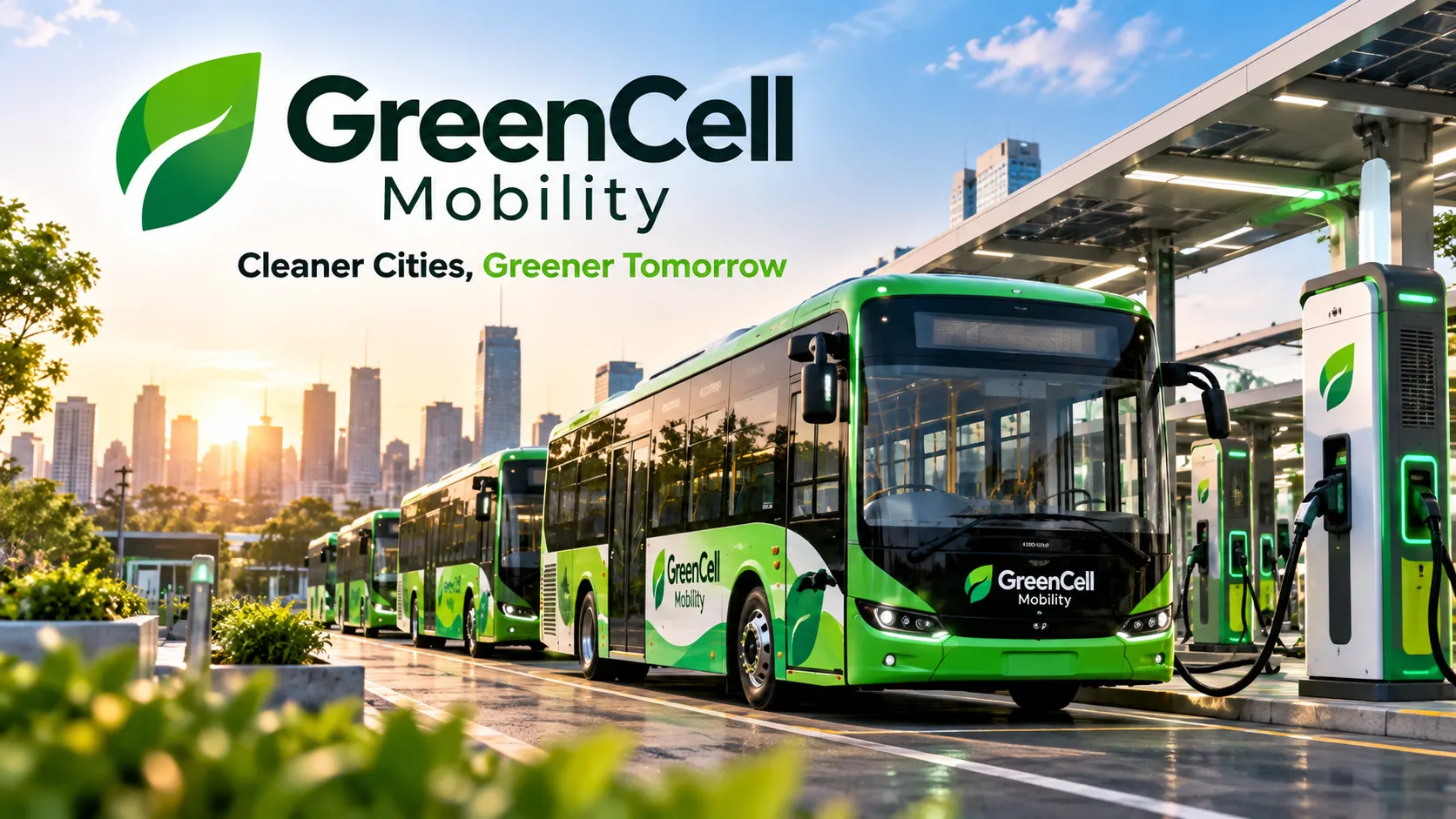

“Running 1,200 buses and running more than 5,000 are very different undertakings.”
— TIGI Analysis

Dhanpal Jhaveri, chief executive of Eversource Capital, framed the deal as evidence of growing interest from institutional investors in electric public transport in India, adding that GreenCell's next phase would focus on expanding both its business and its operational capabilities.

bb53acbe-4420-4a43-a24c-e16540c01879.png

The Policy Tailwind Behind India's E-Bus Market

GreenCell's expansion is unfolding against an unusually supportive policy backdrop. The central government has made bus electrification a priority, most visibly through the PM e-Bus Sewa scheme, which aims to support the deployment of 10,000 electric buses in cities that have historically lacked organised city bus services. Several states have run large tenders under the gross cost contract model, in which an operator such as GreenCell supplies and runs the buses while the transport authority pays a fixed fee per kilometre.

The model has helped unlock private capital, but it has also exposed a structural weakness: operators are only as strong as the payment record of the public bodies they serve. State transport undertakings are often financially stretched, and delayed payments can quickly strain the balance sheet of a capital-intensive operator. Payment security mechanisms introduced in recent years were designed in part to reassure investors on precisely this point.

For lenders and equity investors alike, the size of GreenCell's order book is therefore only half the story. The other half is the quality of the counterparties behind it, and the company's ability to keep buses running reliably enough to collect the full value of its contracts.

Intercity Travel Is the Consumer-Facing Bet

While most of GreenCell's fleet serves city routes under government contracts, its NueGo brand gives it a direct relationship with paying passengers on intercity routes. That segment is competitive, with long-established private coach operators and an expanding rail network vying for the same travellers, but it allows GreenCell to build a brand, set its own fares and capture data on demand.

Intercity electric coaches face tougher technical constraints than city buses, including longer distances between charges and the need for fast-charging infrastructure along highways. Success on these routes could strengthen the case that electric buses are not merely a subsidised urban solution but a commercially viable alternative to diesel across India's broader transport network.

Capital Is Flowing, but Selectively

The GreenCell deal arrives as India's startup and growth funding market continues to reward businesses with clear revenue visibility. Electric mobility has attracted both strategic and financial investors, but capital has increasingly concentrated in companies that can show contracted cash flows, operational track records and credible paths to profitability.

Bus operators sit at an interesting point on that spectrum. Their revenues are contracted and, in principle, predictable. Their margins depend heavily on operational discipline, battery performance and the cost of financing. As interest rates and lender appetite shift, the ability to raise equity from long-term investors such as Impact Fund Denmark becomes a competitive advantage in its own right.

What to Watch Next

The coming 18 to 24 months will show whether GreenCell can turn a large order book into a reliably operating fleet. Key indicators will include the pace at which new buses enter service, fleet availability and uptime, the company's ability to secure charging capacity in new cities, and the payment discipline of the transport authorities it serves.

For India, the stakes extend beyond one company. Public transport electrification is one of the most direct levers available to policymakers seeking to cut urban air pollution, reduce oil imports and lower transport emissions at the same time. Every operator that proves it can deploy, run and finance thousands of electric buses at scale makes the next wave of tenders easier to fund.

With ₹330 crore of fresh equity, GreenCell now has more firepower to make that case. The harder task, as its own leadership acknowledges, will be to ensure that the buses arrive, run on time and keep running.

TagsGreenCell MobilityImpact Fund DenmarkEversource CapitalElectric BusesEVPublic TransportNueGoClean MobilityClimate FinanceIndiaSustainabilityFunding

Reader reviews

Sign in to rate and review this article.
Loading reviews…