ImpactHealthcare5 MIN READ

Healthleap Raises $38 Million for AI That Flags Hospital Patients at Risk of Missed Conditions

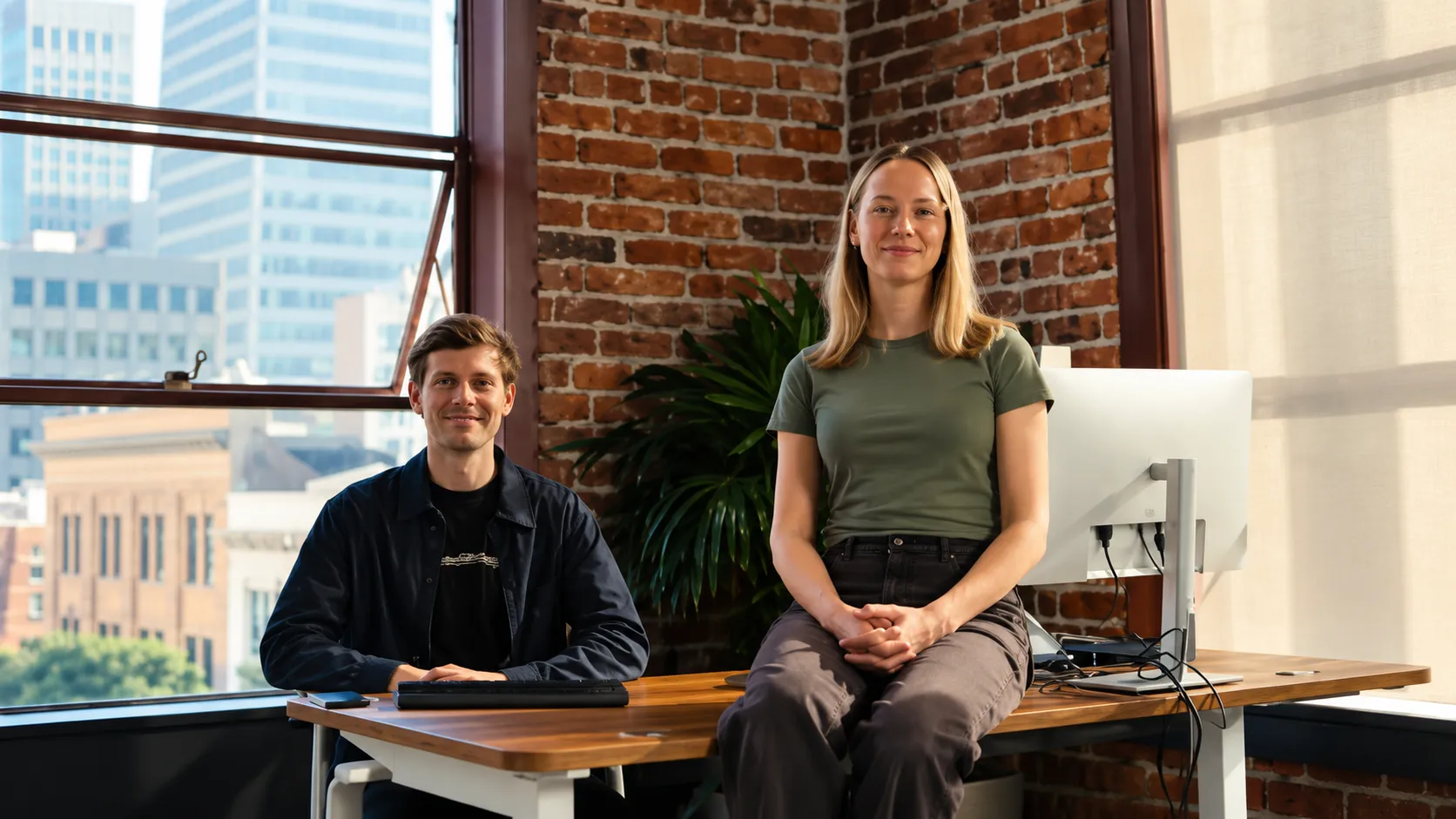
Healthleap, founded by siblings Josiah and Jemima Meyer, has raised $38 million across seed and Series A rounds backed by Sequoia, First Round and Hummingbird for AI that screens every hospital inpatient for conditions such as malnutrition and delirium.

By Prathista Lazar · Author8 October 2026New
Healthleap Raises $38 Million for AI That Flags Hospital Patients at Risk of Missed Conditions

Healthleap, a clinical AI company that scans hospital records each night to find patients whose conditions may be going unnoticed, has raised $38 million in combined seed and Series A funding.

The $8 million seed round was co-led by Sequoia Capital and First Round Capital, and the $30 million Series A was led by Hummingbird Ventures, TechCrunch reported on 7 October. The company did not disclose its valuation.

Healthleap's software is now used in more than 50 hospitals, up from three hospital partners a year ago, with customers including Penn Medicine, Cedars-Sinai, Intermountain, Houston Methodist and Emory Healthcare. The company said its revenue grew more than tenfold over the same period, though it did not share figures.

Reading the parts of the chart that structured data misses

The product targets conditions that clinicians often catch late, starting with malnutrition and delirium. Research cited by TechCrunch suggests that between 20% and 50% of hospital inpatients are malnourished, and studies link the condition to longer stays, slower wound healing, infections and higher rates of illness and death. On its website, Healthleap says fewer than 9% of at-risk patients are diagnosed.

“A patient's chart holds two kinds of data,” Josiah Meyer, the company's co-founder and chief executive, told TechCrunch. One is structured information such as lab results and vital signs. The other is the free text of clinical notes, where a nurse might record that a patient has lost weight or is struggling to swallow.

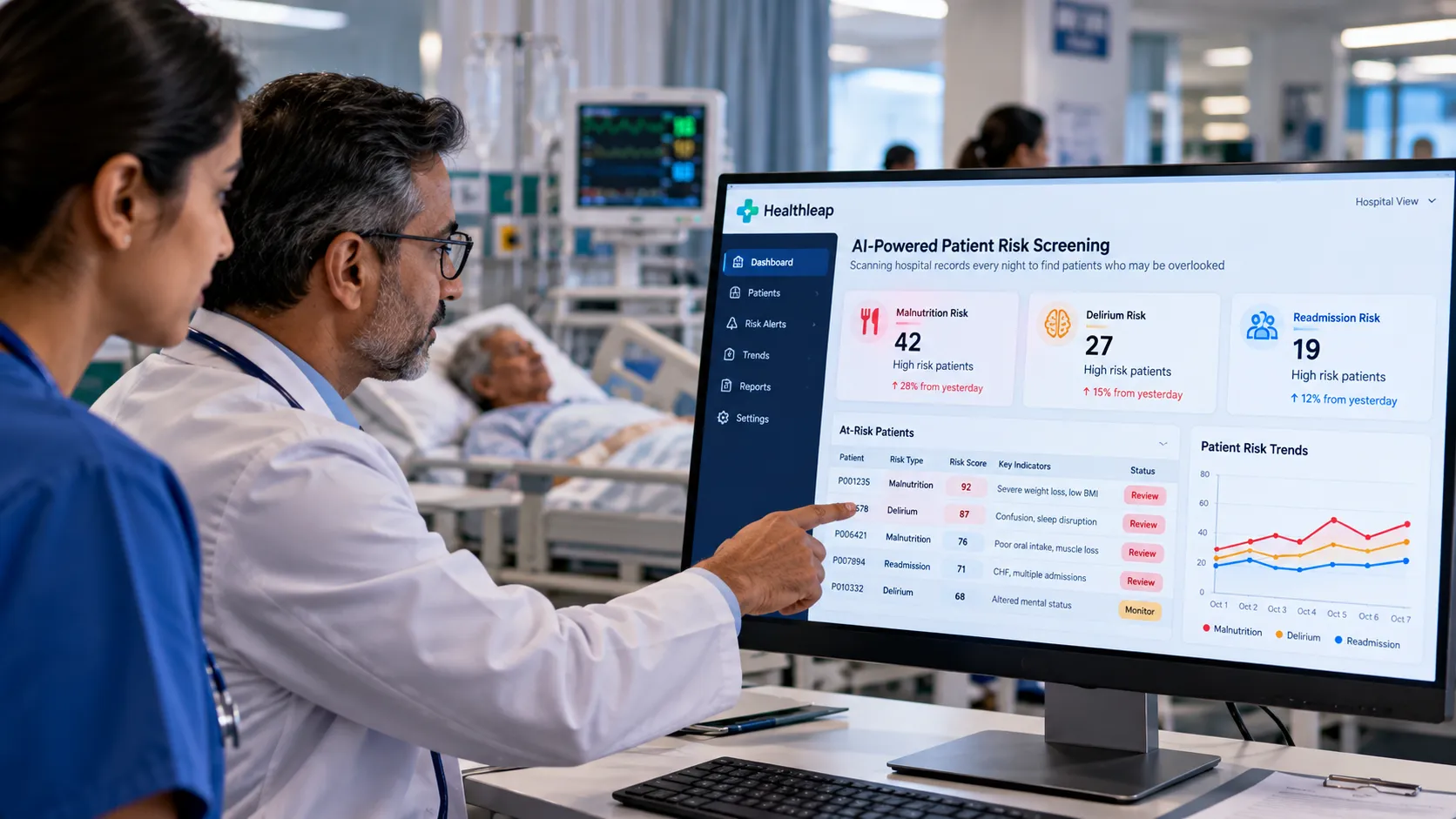
Healthleap connects to a hospital's electronic health record system and uses language models to pull those symptom mentions out of the notes. The extracted findings are then combined with structured data in risk models. “Each night, we analyze every adult inpatient's record,” Meyer said. By morning, a risk score is written into the care team's existing workflow, alongside a dashboard that tracks trends.

The company stresses that its software does not diagnose anyone. It flags patients so that clinicians can review them, and sorts them by severity so that dietitians, for example, can start their rounds with the highest-risk cases rather than relying on manual screening alone.

The company says the scale of the problem is easy to underestimate. On its website, Healthleap estimates that a typical 1,000-bed hospital misses roughly 5,500 malnourished patients a year. Because the software runs on every adult inpatient automatically, it is designed to close the gap left by screening that depends on busy staff completing questionnaires at admission.

Healthleap's programmes for malnutrition and delirium are live. Screening for aspiration pneumonia, pressure ulcers and the risk of readmission for congestive heart failure is going through clinical validation.
f916f5fc-af1e-47a8-b556-44886b090185.png

Selling on return on investment

Hospitals are under persistent financial pressure, and Healthleap has built its sales pitch around money as much as medicine. Contracts run for three years and are priced according to a hospital's licensed bed count. The company also offers outcome-based pricing tied to a return on investment that the hospital's own finance team validates.

“To date, every customer has seen a 5x hard ROI or more,” Meyer told TechCrunch, adding that some have seen annual total returns of more than 20 times. At the Hospital of the University of Pennsylvania, the malnutrition programme produced $23.8 million in annualised financial impact: $6.3 million from additional reimbursement and $17.5 million from shorter hospital stays.


“To date, every customer has seen a 5x hard ROI or more.”
— Josiah Meyer, Co-founder and CEO, Healthleap

The reimbursement element matters because malnutrition that is properly identified and documented can change how a hospital is paid for a patient's care. Healthleap says on its website that its tool sits ahead of clinical documentation and coding teams, feeding them an earlier signal rather than replacing them. It also cites $11 million in annual impact and 39% more diagnoses with the same staffing at Cedars-Sinai.

The company points to peer-reviewed evidence for its malnutrition model. According to its website, a study co-authored with clinicians from Cedars-Sinai, Johns Hopkins and Stanford and published in Applied Clinical Informatics covered more than 166,000 admissions over 3.75 years, and found the tool had 88% higher sensitivity than nurse-administered screening and identified malnourished patients four days earlier. These figures are the company's summary of the research.

Healthleap also describes its product as, to its knowledge, the only commercially available AI malnutrition screening tool backed by peer-reviewed research. That claim could not be independently checked, but it shows how the company is positioning itself: as clinical infrastructure validated in the literature rather than as a general-purpose AI assistant. It exhibited at the HIMSS 2026 conference, one of the largest gatherings for health technology buyers in the US.

From a dietitian's app in South Africa to US health systems

Healthleap was founded in South Africa in 2022 by siblings Jemima and Josiah Meyer. Its first product was a clinical nutrition tool that Jemima, a clinical dietitian, built to help dietitians with their calculations. When the company raised a $1.1 million pre-seed round led by Fifty Years in January 2022, TechCrunch described that app, NutriLeap, as being in private beta with 50 dietitians and said the start-up planned to focus on the US market. Ray Botha was then its chief technology officer.

Even at that stage the demand signal was visible. TechCrunch reported in 2022 that nearly 1,000 dietitians, pharmacists and physicians had joined a waitlist for the app. The shift from a tool that helps one professional with calculations to a system that screens an entire hospital population every night is what has allowed the company to sell to large health systems rather than to individual clinicians.

The company later widened its ambitions into a broader screening platform. It now plans to use the new funding for engineering, product, sales and customer success, with a goal of covering more than 40 major health conditions. Meyer also said Healthleap wants to expand into outpatient and home care.

The path is not without risk. Hospital software sales cycles are long, integration with electronic health records can be complex, and clinicians are wary of alert fatigue from tools that generate too many false flags. Healthleap will also face competition as electronic health record vendors and other AI companies build their own predictive tools into hospital systems.

Its early results, named customers and backing from Sequoia, First Round and Hummingbird give it a strong position to make the case. The broader significance is that conditions such as malnutrition and delirium, which are common and costly yet often overlooked, may be among the first places where AI earns a routine role at the hospital bedside.

TagsHealthleapJosiah MeyerJemima MeyerHummingbird VenturesSequoia CapitalFirst Round CapitalHealthcare AIMalnutritionDeliriumHospitalsCedars-SinaiPenn MedicineSeries ASouth AfricaFunding

Reader reviews

Sign in to rate and review this article.
Loading reviews…