ImpactSustainability5 MIN READ

Hindustan Copper's Q2 Profit Soars 182% to ₹518 Crore as Copper Prices Above $14,000 a Tonne Reward India's Only Vertically Integrated Producer

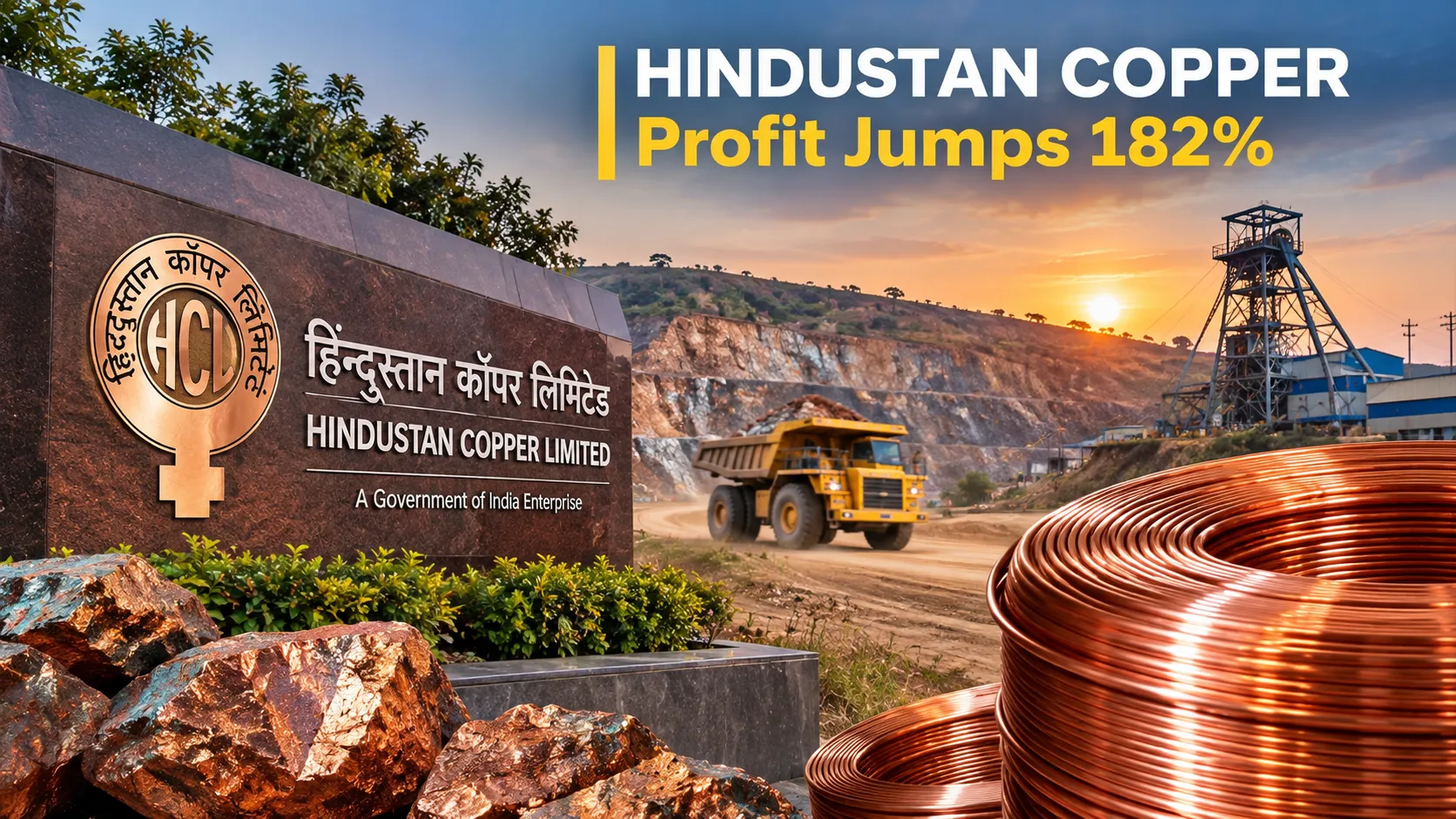
Hindustan Copper, India's only vertically integrated copper producer, reported a 181.9% jump in September-quarter net profit to ₹518.13 crore on November 12, according to Upstox, extending a run of strong results driven by record copper prices. The state-owned miner's first-quarter profit had risen 163% to ₹353 crore as global copper prices climbed above $14,000 a tonne on tight supply.

By Prathista Lazar · Author13 November 2026New
Hindustan Copper's Q2 Profit Soars 182% to ₹518 Crore as Copper Prices Above $14,000 a Tonne Reward India's Only Vertically Integrated Producer

The global scramble for copper, the metal at the heart of electrification, is delivering record profits for India's only vertically integrated copper producer.

Hindustan Copper, a state-owned company, reported a net profit of ₹518.13 crore for the July-September quarter, the second quarter of the 2026-27 financial year, up 181.9% from a year earlier, according to Upstox, citing results announced on Thursday, November 12. In the same quarter of the previous year, the company had reported a consolidated net profit of about ₹186 crore.

The result extends a remarkable run. In the April-June quarter, Hindustan Copper's profit attributable to owners rose about 163% to ₹353 crore, and its revenue from operations jumped 81.4% to ₹936.5 crore, according to Kotak Neo. EBITDA more than doubled to ₹507.5 crore, with the margin rising to 54% from 41%.

The copper price surge

The main driver of Hindustan Copper's profit growth has been the sharp rise in global copper prices. Copper prices crossed $14,000 a tonne this year, after six straight weeks of gains supported by tight supply, reaching their highest intraday level since late January, according to Kotak Neo.

Hindustan Copper's revenue and profits are closely linked to copper prices on the London Metal Exchange, since it sells copper concentrate and refined copper at prices based on international benchmarks. Because its mining costs are largely fixed, higher prices flow largely to the bottom line.

Why copper is in demand

Copper is essential to the global energy transition. It is used in electrical wiring, power grids, electric motors, wind turbines, solar installations and batteries. An electric vehicle uses significantly more copper than a petrol or diesel car, and expanding power grids to connect renewable energy requires vast amounts of copper.

The artificial intelligence boom has added to demand. Data centres require large amounts of copper for power distribution and cooling systems, and the construction of new power infrastructure to supply them requires even more.

On the supply side, developing new copper mines takes many years, and existing mines face declining ore grades, operational disruptions and political challenges in major producing countries such as Chile, Peru and the Democratic Republic of Congo.

India's copper gap

India produces only a small fraction of the copper it needs and relies heavily on imports of copper concentrate and refined copper. Hindustan Copper operates mines in Rajasthan, Madhya Pradesh and Jharkhand, including the Khetri complex and the Malanjkhand mine, but its production is modest by global standards.

Private companies such as Hindalco and Vedanta operate copper smelters in India, but they rely largely on imported concentrate. Vedanta's Sterlite copper smelter in Tamil Nadu, once one of the country's largest, has been shut since 2018, increasing India's dependence on imports.

As demand grows with the expansion of power grids, electric vehicles, renewable energy and manufacturing, India's copper deficit is expected to widen.

Expansion plans

Hindustan Copper has announced plans to significantly increase its mining capacity. The company has outlined capital expenditure of more than ₹7,000 crore over five to six years to revive and expand its mines, according to SAHI.

In June 2026, the Rajasthan Forest Department granted forest clearance for the Chandmari copper mine in Jhunjhunu district, valid for the life of the mining lease, according to Kotak Neo. The clearance allows the company to proceed with operations at the mine.

“Copper is the metal of electrification, and India produces far too little of it.”
— TIGI Sustainability Desk

Critical minerals strategy

The Indian government has identified copper as a critical mineral and has launched the National Critical Mineral Mission to secure supplies of minerals essential for the energy transition and strategic industries. The mission supports exploration, mining, processing and overseas acquisitions of critical mineral assets.

India has also sought partnerships with mineral-rich countries, including in Africa, Latin America and Australia, to secure supplies. Hindustan Copper, as the country's only integrated copper miner, plays a central role in these efforts.

651a0d74-d76d-4c49-bb3b-27aedf004b67.png

The sustainability dimension

Mining has significant environmental and social impacts, including land use, water consumption, waste generation and effects on local communities. Expanding copper mining in India will require careful management of these impacts and compliance with environmental regulations.

Recycling copper is another important source of supply. Copper can be recycled repeatedly without losing its properties, and India has a large informal recycling sector. Formalising and expanding copper recycling could help reduce the country's dependence on imports and the environmental impact of mining.

Investor enthusiasm

Hindustan Copper's shares have been strong performers as investors bet on rising copper prices and the company's expansion plans. The stock is often seen as a proxy for copper prices in the Indian market. However, its valuation depends heavily on the outlook for copper prices, which can be volatile, and on the company's ability to deliver its expansion plans on time.

The price cycle

Copper prices are notoriously cyclical. Periods of tight supply and strong demand have historically been followed by new mine investment and slower demand growth, leading to price declines. Investors in copper producers must therefore weigh the long-term structural demand from electrification against the risk of shorter-term price corrections.

Economic conditions in China, which consumes about half of the world's copper, are a key driver of prices. A slowdown in Chinese construction or manufacturing can weigh on demand, while stimulus measures can boost it.

India's demand outlook

India's copper demand is growing rapidly as the country expands power transmission networks, builds renewable energy capacity, electrifies railways and increases manufacturing of electrical equipment, appliances and vehicles. The government's investment in infrastructure, including housing and urban development, adds to demand for copper in wiring and plumbing.

Meeting this demand will require a combination of domestic mining, imports of concentrate for smelting, refined copper imports and recycling.

The company's shares are also sensitive to the rupee, since a weaker rupee raises the domestic value of copper priced in dollars. With the rupee trading near record lows against the dollar, that has provided an additional tailwind for Hindustan Copper's earnings in rupee terms.

What comes next

Investors will watch global copper prices, Hindustan Copper's production volumes and progress on its mine expansion projects. With demand for copper expected to grow for decades, driven by electrification and the energy transition, the company is well positioned to benefit, provided it can scale up production in a timely and sustainable way.

TagsHindustan Coppercoppercopper pricescritical mineralsenergy transitionelectric vehiclespower gridsdata centresminingKhetriMalanjkhandChandmari mineRajasthanMadhya PradeshPSU stocksQ2 FY27 resultsmetalscommoditiesIndia manufacturinginvestors

Reader reviews

Sign in to rate and review this article.
Loading reviews…

