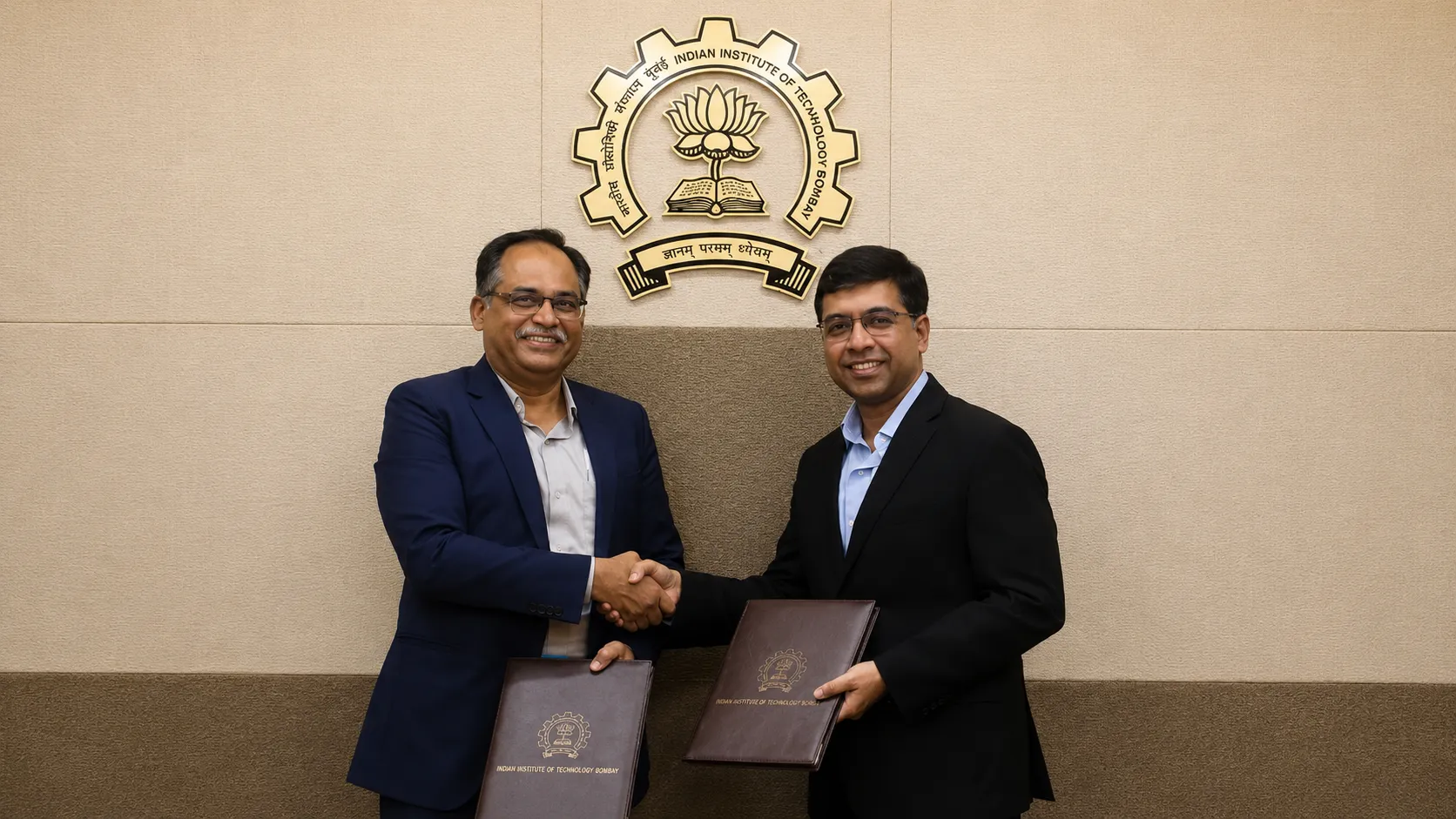
Honeywell Technologies has expanded its education and workforce-skilling footprint in India through a new set of partnerships with the Indian Institute of Technology (IIT) Bombay, the non-profit BharatCares, the Ladli Foundation, and an affiliate of the Indian Institute of Science (IISc) Bengaluru. The expanded programme builds on a decade of Honeywell's education and skilling investment in India, an effort the company says has already reached 1.3 million beneficiaries across the country.
The partnerships span a deliberately wide spectrum of India's education and workforce-development landscape, pairing an elite technical research institution in IIT Bombay with grassroots-focused organisations in BharatCares and the Ladli Foundation — a structure that reflects a strategy of simultaneously investing in high-end research and innovation capacity while extending basic skilling and educational access to more vulnerable and underserved populations who might otherwise have no pathway into the formal technology or industrial workforce.
The IIT Bombay collaboration centres on advanced technology education and applied research, an area where Honeywell — a global industrial and aerospace conglomerate with deep expertise in automation, building technologies, and advanced materials — has increasingly sought to embed itself within India's premier engineering research ecosystem. Such partnerships typically combine funding for laboratories and research chairs with structured student engagement programmes, internships and joint research initiatives that give Honeywell early visibility into emerging talent while giving IIT Bombay researchers access to industry-scale problems and, in many cases, industry funding for applied research that might not otherwise attract government grant support.
BharatCares and the Ladli Foundation, by contrast, operate at a very different point in India's education ecosystem, focused on delivering foundational skilling, vocational training and educational access to communities with limited existing pathways into formal employment. The involvement of an IISc-Bengaluru affiliate adds a further dimension focused on scientific and technical capacity-building, rounding out a partnership portfolio that spans from elite research collaboration through to grassroots community skilling.

Honeywell's decade-long investment in Indian education and skilling reflects a broader pattern among multinational technology and industrial companies operating in India, where corporate social responsibility obligations under India's Companies Act have increasingly been directed toward education and skilling initiatives that also serve companies' longer-term talent pipeline interests. Unlike purely philanthropic giving disconnected from business strategy, these hybrid education partnerships typically serve a dual purpose: fulfilling statutory CSR spending requirements while simultaneously building relationships with the research institutions and talent pools that companies like Honeywell will eventually recruit from for their engineering, manufacturing and R&D operations in India.
The scale claim of 1.3 million beneficiaries over a decade — while difficult to independently verify in granular detail — is consistent with the kind of reach multinational corporate education programmes in India typically claim when their initiatives combine direct beneficiaries (students and trainees who go through formal programmes) with broader community-level educational infrastructure investments, such as school equipment, digital learning tools, or teacher training programmes that indirectly benefit larger student populations beyond those directly enrolled in Honeywell-branded initiatives.
For India's higher education and skilling ecosystem, partnerships of this kind — spanning from IIT-level research collaboration to grassroots vocational training — represent an increasingly common model for how multinational corporations structure their India engagement beyond pure commercial operations. As India continues to position itself as a global hub for advanced manufacturing, semiconductor design and AI infrastructure, the talent pipeline questions underlying these kinds of education partnerships are likely to become only more consequential for companies like Honeywell that need a steady supply of trained engineers, technicians and researchers to support their expanding Indian operations.
The practical test of Honeywell's expanded partnership portfolio will lie less in the initial announcement and more in execution over the coming years: whether the IIT Bombay collaboration produces genuine applied research output and student placement outcomes, and whether the BharatCares and Ladli Foundation partnerships translate into measurable employment or income improvements for the communities they are designed to serve, rather than remaining primarily reputational commitments disclosed in annual CSR reporting.