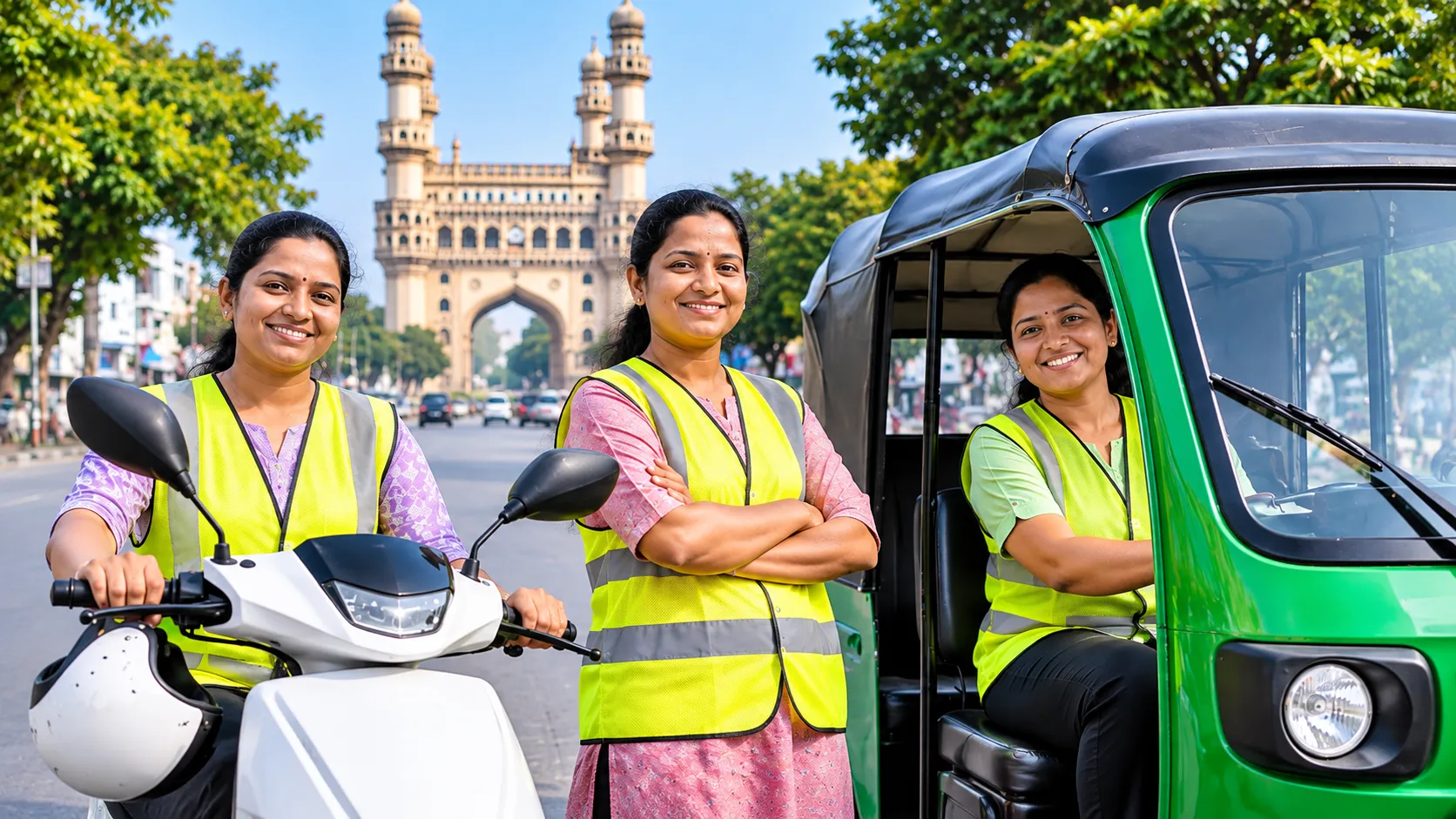
On Hyderabad's crowded roads, the sight of a woman driving an auto-rickshaw is still rare. A new programme aims to change that while putting clean vehicles at the centre of women's livelihoods.
Electric mobility company Bijliride and MOWO Social Initiatives have launched a programme in partnership with the Telangana Police to train women in Hyderabad as commercial drivers, according to YourStory, which reported the initiative on Tuesday, November 17.
The programme requires no prior driving experience, according to YourStory. It covers training on electric scooters and electric auto-rickshaws, road safety, guidance on obtaining driving licences, job placement support, help with vehicle rentals and three months of mentorship after training.
Why it matters
The initiative addresses two challenges at once: the low participation of women in India's workforce, and the need to accelerate the shift to electric vehicles.
India's female labour force participation rate, though it has risen in recent years according to official surveys, remains well below that of many other major economies. Barriers include social norms, safety concerns, lack of skills training and limited access to transport. Driving offers a pathway to earning that requires relatively short training and can be combined with flexible hours.
Transport and delivery jobs have traditionally been dominated by men in India. Programmes that train women drivers seek to open up these occupations, which have grown rapidly with the expansion of ride-hailing, food delivery and e-commerce.
The role of the police
The involvement of the Telangana Police is significant. Safety is one of the main concerns for women considering driving jobs, particularly those that involve working late hours or carrying passengers. Police support can help with training on road safety, provide reassurance to participants and their families, and build public acceptance of women drivers.
Police departments in several Indian cities have supported initiatives to train women as drivers, including for women-only taxi and auto services designed to offer safer transport options for female passengers.
Electric vehicles as an opportunity
Electric scooters and auto-rickshaws offer advantages for new drivers. They are generally easier to operate than vehicles with manual gears, quieter and cheaper to run because electricity costs less than petrol or diesel per kilometre. Lower running costs can significantly increase drivers' take-home earnings.
Electric three-wheelers have become one of the fastest-growing segments of India's EV market, accounting for a large share of new three-wheeler sales. Government incentives, lower operating costs and the availability of battery-swapping networks have encouraged adoption among commercial drivers.
Vehicle rental support is important because many women cannot afford to buy a vehicle outright and may lack the credit history to obtain loans. Rental and subscription models allow drivers to start earning without large upfront costs.
From training to jobs
The inclusion of job placement and mentorship addresses a common weakness of skilling programmes: training that does not lead to employment. By connecting trainees with jobs, such as last-mile delivery, ride-hailing and fleet operations, the programme aims to ensure participants can earn an income after completing training.
Mentorship over three months can help new drivers handle early challenges, from navigating traffic and dealing with customers to managing finances and vehicle maintenance.
Telangana's mobility push
Telangana has sought to position itself as a hub for electric mobility, with policies to encourage EV adoption and manufacturing. Hyderabad, a major technology and services centre, has seen rapid growth in demand for delivery and ride-hailing services, creating jobs for drivers.
Bijliride, an electric mobility company, offers EV services and has been building its presence in the city. MOWO Social Initiatives focuses on mobility for women, promoting women's participation in transport and driving.
The broader movement
Across India, several organisations have worked to train women as drivers, mechanics and transport entrepreneurs. Some have created women-only cab services, while others have helped women become auto-rickshaw drivers or delivery partners. Companies in the delivery and ride-hailing sector have also launched initiatives to recruit more women, including by providing safety features and flexible shifts.
These efforts have shown that with the right support, women can succeed in transport jobs, earn independent incomes and challenge gender stereotypes.
The challenges
Women drivers still face significant hurdles, including harassment, lack of safe public toilets and rest areas, family resistance and limited access to finance. Sustaining participation requires ongoing support, safe working conditions and a culture of respect on the roads.
The success of programmes like this will depend on whether participants find stable work with adequate earnings and whether the support continues beyond the initial training period.
Impact beyond individuals
When women earn independent incomes, the benefits often extend to their families, with research showing that women tend to spend a larger share of their earnings on children's education, health and nutrition. Women drivers also serve as role models, encouraging other women to consider non-traditional jobs.
The shift to electric vehicles adds an environmental dimension, reducing air pollution and greenhouse gas emissions in a fast-growing city.
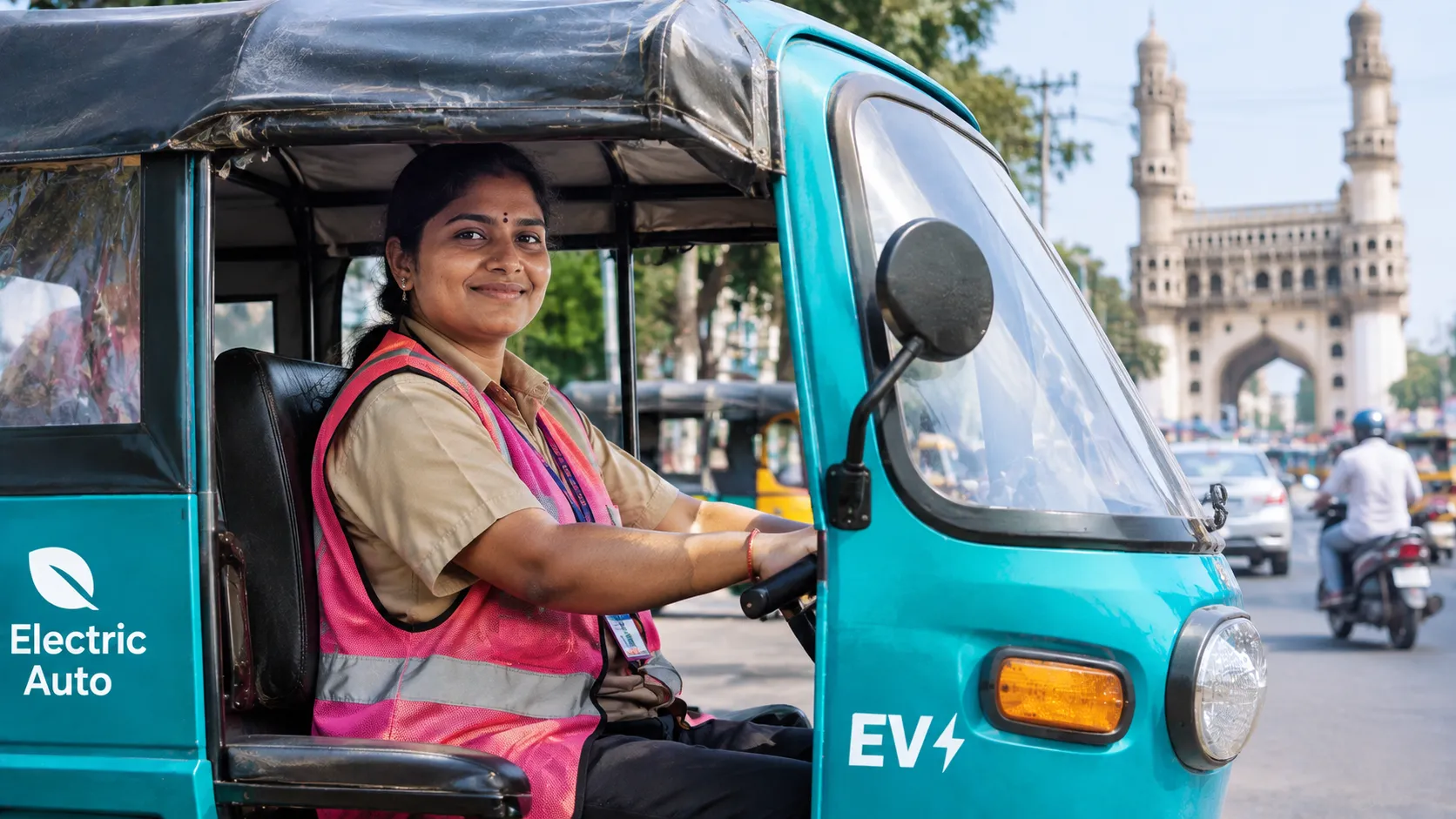
The growth of delivery and ride work
India's gig economy has expanded rapidly with the growth of food delivery, quick commerce, e-commerce logistics and ride-hailing. Government estimates suggest the number of gig and platform workers could grow substantially by 2030. These jobs offer flexible work and relatively low barriers to entry, but also raise concerns about income stability and social protection.
Women make up a small share of this workforce, particularly in driving and delivery roles, leaving significant room for growth if barriers can be addressed.
Financing the first vehicle
Access to finance is one of the biggest obstacles for women seeking to become drivers. Many lack collateral or formal credit histories, making it difficult to obtain vehicle loans. Rental and lease-to-own models, sometimes supported by non-profits or government schemes, can help bridge this gap and allow women to eventually own their vehicles.
Advocates say programmes that combine skills training with job placement and ongoing mentorship tend to produce better outcomes than training alone, because they help participants overcome early obstacles and build confidence in a new occupation.
Organisers of similar programmes elsewhere in India have reported that peer networks, where women drivers support each other and share experiences, play an important role in helping participants stay in the profession over the long term.
What comes next
The programme's organisers will aim to train and place women drivers in the coming months. Its progress could offer a model for other cities seeking to combine the EV transition with greater economic opportunities for women.