
ImpactEducation5 MIN READ

US Edtech Firm Imagine Learning Opens Bengaluru Centre to Build AI and Product Capabilities for 18 Million Students

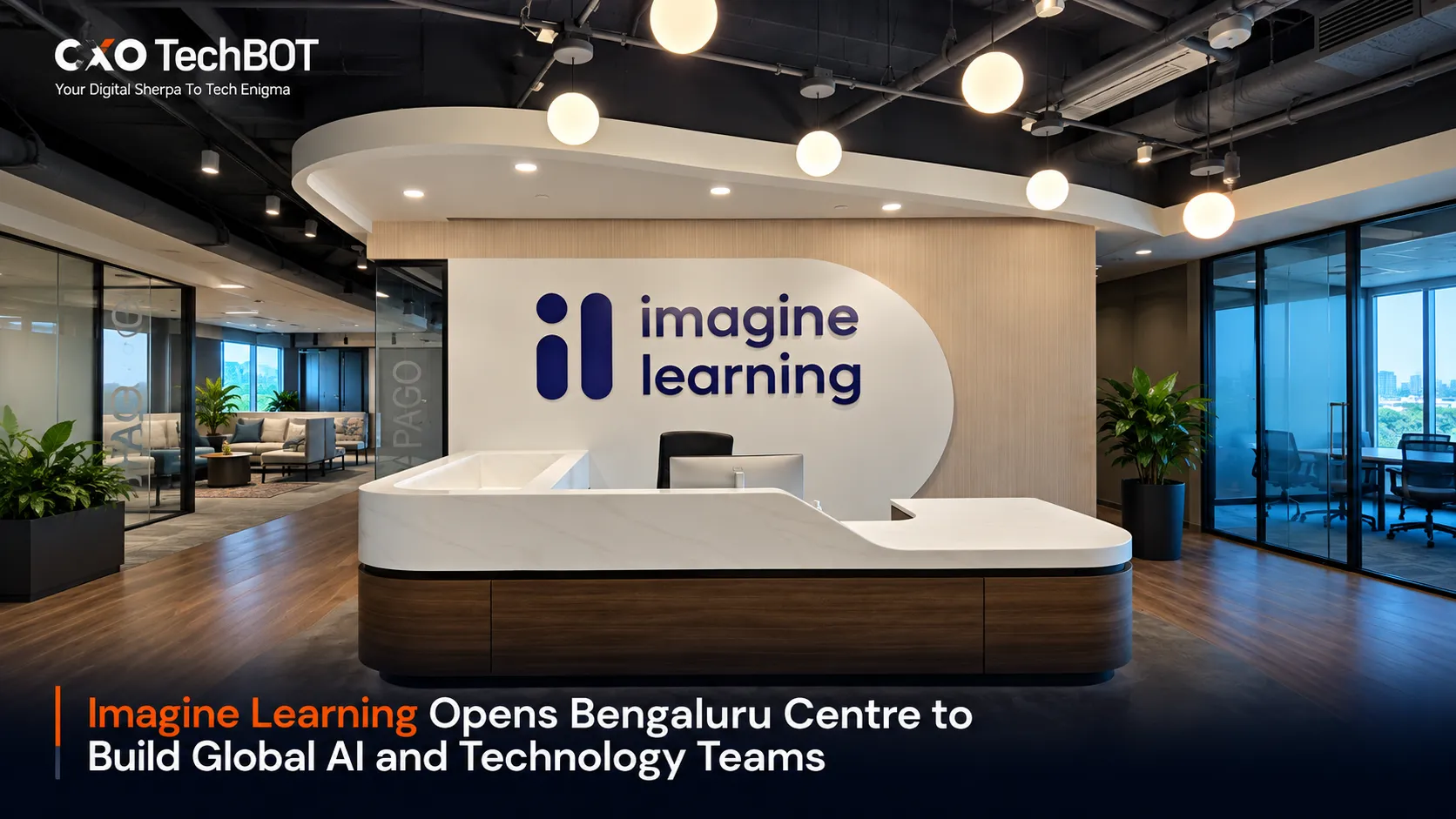
Imagine Learning, a US K-12 curriculum and learning technology company serving more than 18 million students, has opened a Bengaluru centre to build AI, engineering and product capabilities. It has already hired about 85 people in the city and expects to reach around 100 by the end of 2026.

By Shaym Kumar · Author26 September 2026New
US Edtech Firm Imagine Learning Opens Bengaluru Centre to Build AI and Product Capabilities for 18 Million Students

Some of the digital lessons that American schoolchildren use every day will soon be built, in part, in Bengaluru. Imagine Learning, a US education company whose curriculum and learning products reach more than 18 million students, has opened a centre in the city as part of an expansion of its global product and technology capabilities.

The company, headquartered in Tempe, Arizona, announced the Bengaluru centre on September 25. It already has operations in the United States, the United Kingdom and Ireland. The India team will take responsibility for work across product, engineering, AI and data, supporting products used by educators around the world.

According to Dataquest, Imagine Learning has already hired about 85 people in Bengaluru, with recruitment beginning around May and June this year. It expects to reach roughly 100 employees by the end of 2026, and has not set a fixed long-term headcount target.

Who Imagine Learning is

Imagine Learning develops K-12 curriculum and learning solutions that combine instructional content with technology. Its portfolio spans core curriculum, courseware, supplemental and intervention programmes, assessment and school services.

The company says it serves more than 18 million students and 2 million teachers across the United States and operates in 60 countries. According to Dataquest, its products are used in around 38,000 US schools and about half of all US school districts.

Imagine Learning describes its approach to artificial intelligence as "Curriculum-Informed AI", which it says emphasises academic integrity, equity and student privacy. That framing reflects the particular sensitivities of AI in education, where concerns about accuracy, bias and data protection are especially acute because the users are children.

The company is led by founder and chief executive Jonathan Grayer. "The best ideas come from bringing exceptional people together around a shared ambition," he said in announcing the Bengaluru centre.

The roles being hired

The Bengaluru centre is hiring across a broad range of technical functions: software engineering, product management, AI and data science, cloud and platform engineering, quality engineering and cybersecurity. Dataquest reported that the company is also recruiting in curriculum development, business transformation, IT, product design and Salesforce-related roles.

The India operation is led by Priya Subramani, vice president and managing director for India operations. "Bengaluru is an extraordinary place to build a technology organization with global ambition," she said.

Subramani told Dataquest that further hiring would continue based on business requirements and the specific expertise needed by the organisation.

Shalin Pandey, senior director of engineering, said the company is looking for engineering talent with strong technology capabilities, particularly in AI, and is not restricting hiring to people who have previously worked in education technology.

That last point is significant. By recruiting from the wider technology talent pool rather than only from edtech, Imagine Learning can draw on Bengaluru's large base of engineers with experience in cloud platforms, data systems and machine learning.

Global products, Indian engineering

The Bengaluru centre is not building products for the Indian market. Imagine Learning's focus remains the US K-12 education system. The India team's work will support products and platforms used by educators and students in the company's existing markets.

This model, in which a foreign company sets up its own technology centre in India to build global products, is often described as a Global Capability Centre (GCC). India is the world's leading destination for GCCs, with centres that increasingly own core product and engineering work rather than support functions.

“Bengaluru is an extraordinary place to build a technology organization with global ambition.”
— Priya Subramani, Vice President and Managing Director, India Operations, Imagine Learning

Education technology companies have been part of that trend. As digital learning has become more central to classrooms, US education companies have needed larger engineering teams to build and maintain platforms, integrate AI features and meet growing expectations around security and accessibility.

AI and the future of the classroom

AI is reshaping education technology rapidly. Companies are using it to personalise learning pathways, generate practice exercises, provide feedback on student work, support teachers with lesson planning and analyse assessment data.

At the same time, schools and parents are wary. Questions about the accuracy of AI-generated content, the potential for bias, academic integrity and the protection of student data are central to procurement decisions. Education companies that want to use AI at scale must show that their systems are safe, aligned with curriculum standards and respectful of privacy.

Building strong AI and data teams is therefore a priority for companies such as Imagine Learning. The Bengaluru centre's emphasis on AI, data science and cybersecurity reflects that need.

ChatGPT Image Sep 26, 2026, 12_50_35 PM.png

Why Bengaluru

Bengaluru's appeal for technology centres is well established. The city has one of the world's largest concentrations of software engineers and a mature ecosystem of global technology companies, start-ups and research institutions.

For a company building AI capabilities, the depth of Bengaluru's AI and data science talent pool is particularly valuable. Many engineers in the city have experience building large-scale consumer and enterprise platforms, skills that transfer well to education technology products used by millions of students.

Impact beyond the company

The opening of the Imagine Learning centre adds to the steady flow of high-skilled technology jobs being created in India by global companies. It also provides an avenue for Indian engineers to work on products with direct social impact, helping shape how millions of children learn.

For India's own education sector, the presence of global edtech engineering teams can have indirect benefits. Engineers who gain experience building curriculum-aligned, privacy-conscious AI products may go on to apply those skills to Indian education challenges, whether in start-ups, government programmes or other organisations.

What to watch

The immediate question is how quickly the Bengaluru team scales and how much responsibility it takes on. Imagine Learning has said its India-based teams will take ownership of work across product, engineering, AI and data, which suggests a significant role rather than a support function.

Over time, the centre's success will be measured by the products it helps deliver and the extent to which it becomes a hub for innovation within the company.

Classrooms shaped in Bengaluru

Imagine Learning's Bengaluru centre is another example of how global companies are turning to India not only for scale but for capability. With about 85 people already hired and a target of around 100 by year-end, the company is building a meaningful presence quickly.

For the millions of American students who use its products, and for the teachers who rely on them, some of the next generation of learning tools will be designed and engineered by teams in Bengaluru. That is a powerful illustration of India's growing place in the global knowledge economy, and of the country's potential to shape how the world learns.

TagsImagine LearningEdtechBengaluruK-12 EducationAI in EducationGlobal Capability CentreEngineering JobsHiringPriya SubramaniJonathan GrayerCurriculumEducation Technology

Reader reviews

Sign in to rate and review this article.
Loading reviews…