ImpactSustainability5 MIN READ

India Needs $220 Billion of Clean Energy Investment by 2030, Government Says, as PM Modi Prepares to Open the Bharat Renewable Energy Summit

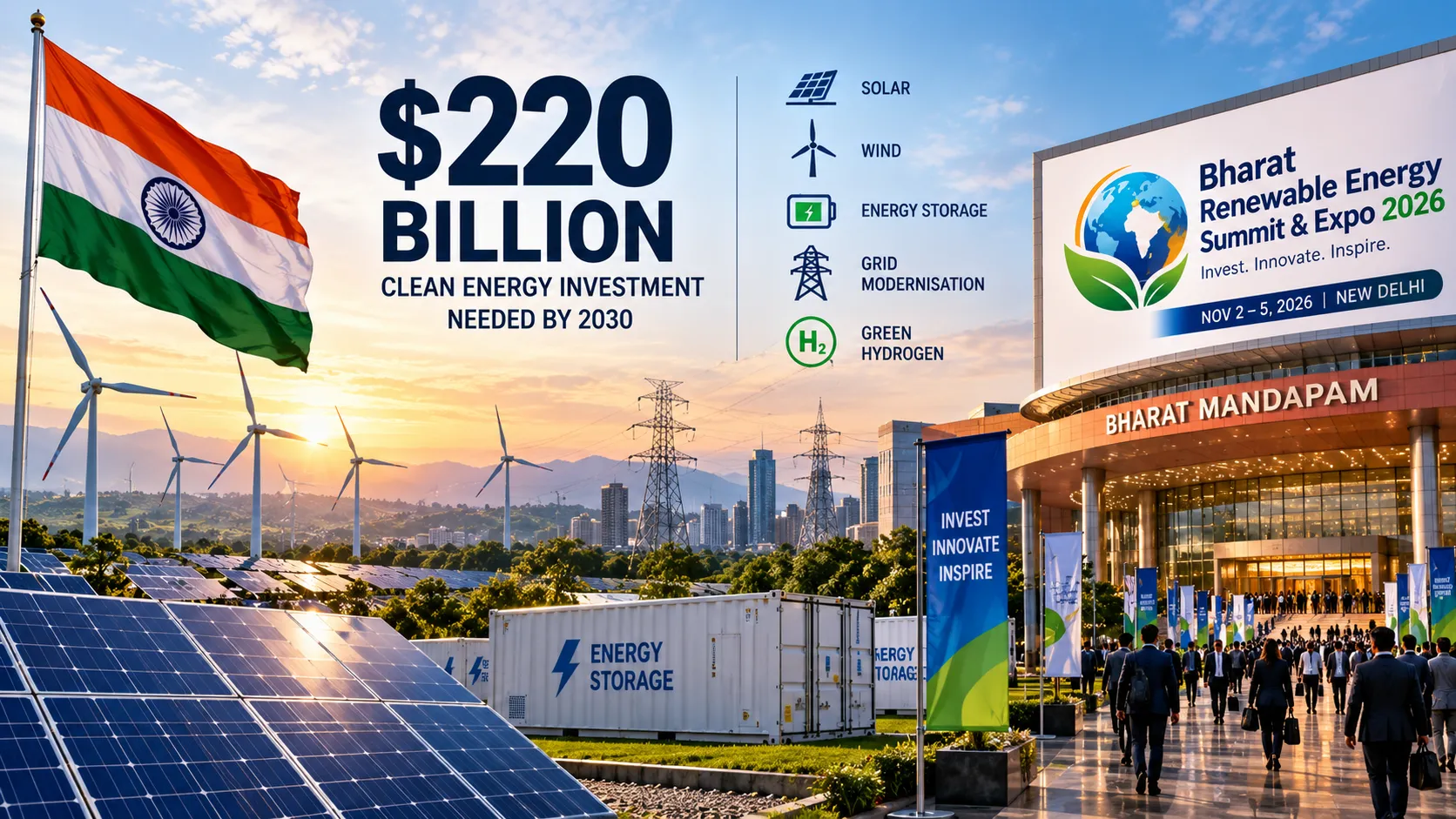
India needs about $220 billion of clean energy investment between 2027 and 2030, according to government estimates cited ahead of the Bharat Renewable Energy Summit & Expo, which Prime Minister Narendra Modi will inaugurate at Bharat Mandapam on November 2. India has 308 GW of non-fossil capacity against a 500 GW target for 2030 and drew $63.7 billion of renewable investment in two years.

By Prathista Lazar · Author29 October 2026New
India Needs $220 Billion of Clean Energy Investment by 2030, Government Says, as PM Modi Prepares to Open the Bharat Renewable Energy Summit

India will need to mobilise about $220 billion of investment in clean energy over the four years from 2027 to 2030 to meet its renewable energy targets, according to government estimates cited ahead of a major international summit in New Delhi.

Prime Minister Narendra Modi will inaugurate the Bharat Renewable Energy Summit & Expo (BRESE) 2026 on November 2 at Bharat Mandapam in New Delhi, Republic World reported on Wednesday, October 28. The four-day event, organised by the Ministry of New and Renewable Energy (MNRE), runs from November 2 to 5 and is expected to draw participants from more than 130 countries.

The investment estimate was attributed by MNRE Secretary Santosh Sarangi to the government.

Where India stands

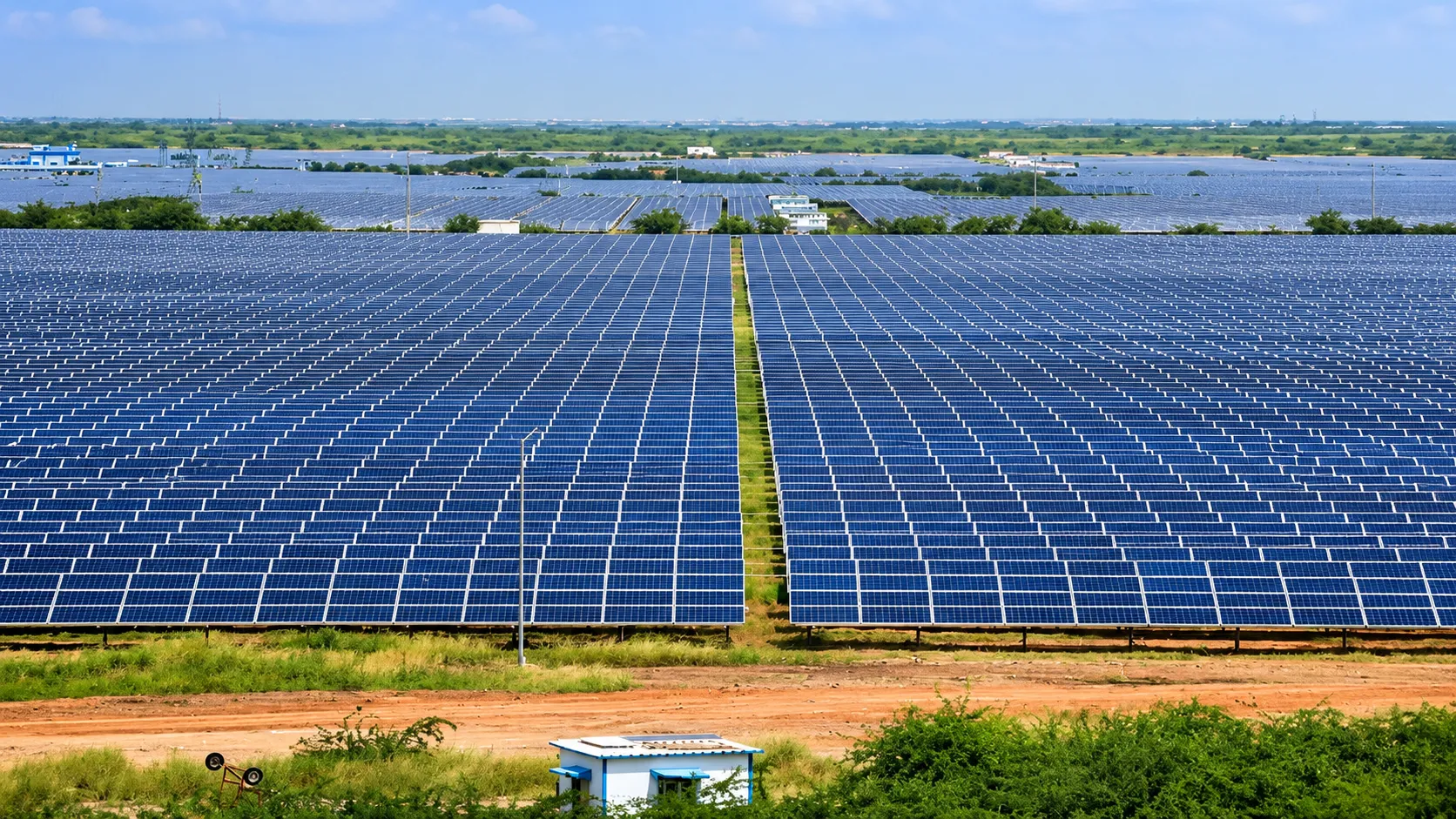
India has 308 gigawatts of installed non-fossil fuel power capacity and has set a target of 500 gigawatts by 2030, according to MNRE. The country ranks third in the world for renewable and solar capacity and fourth for wind.

India invested $63.7 billion in its renewable energy sector between July 2024 and June 2026, according to BloombergNEF. Meeting the 2030 target will require a significant acceleration in both investment and capacity additions.

The summit

The summit's theme is "Invest. Innovate. Inspire." It will be held alongside the ninth session of the International Solar Alliance Assembly, the India-led intergovernmental organisation promoting solar energy, and the fourth International Conference on Green Hydrogen.

Australia, Denmark, the European Union, France, Germany, the Netherlands, Norway, Sweden and the United Kingdom are country partners. Thirteen Indian states and Union Territories will showcase investment opportunities, and more than 400 exhibitors will take part.
44aa2e01-8b2f-41ff-8811-33ca01195992.png

Why the investment matters

The scale of required investment reflects the enormity of India's energy transition. India is one of the world's fastest-growing energy consumers, and electricity demand is rising rapidly with economic growth, urbanisation, the spread of air conditioning, electric vehicles and data centres.

Meeting that demand while reducing reliance on imported fossil fuels requires massive investment in solar and wind generation, energy storage, transmission lines and grid modernisation. Storage in particular has become a priority, as India seeks to manage the variability of renewable power.

Energy security in a time of crisis

The summit comes as the conflict in West Asia has highlighted the risks of dependence on imported oil and gas. On the same day the investment estimate was reported, Brent crude rose above $115 a barrel after Yemen's Houthi rebels said they had struck Saudi Arabia's largest refinery. India imports most of its crude oil and a significant share of its natural gas.

Expanding domestic renewable energy, while also building out electric mobility, can reduce India's exposure to volatile global energy markets. The current crisis has strengthened the economic as well as environmental case for the transition.

Mobilising capital

Raising $220 billion will require contributions from domestic and foreign investors, including private developers, banks, bond markets, pension funds, sovereign wealth funds and development finance institutions. Indian companies such as JSW Energy, which this week approved raising up to ₹5,000 crore through bonds, are tapping capital markets to fund expansion.

Foreign investors have shown strong interest in Indian renewable energy, attracted by the scale of the market and government support. However, they also cite challenges, including delays in land acquisition and transmission, payment delays from state electricity distribution companies and regulatory uncertainty.


“Every attack on Gulf oil infrastructure strengthens the economic case for India's home-grown power.”
— TIGI Impact Desk

Manufacturing ambitions

India is also seeking to build a domestic manufacturing base for clean energy equipment, including solar modules and cells, wind turbines, batteries and electrolysers for green hydrogen. Production-linked incentive schemes and rules requiring the use of domestically made solar cells in certain projects aim to reduce dependence on imports, particularly from China.

Building domestic manufacturing could create jobs and strengthen supply chains, but may raise costs in the short term if domestic products are more expensive than imports.

Green hydrogen

The International Conference on Green Hydrogen reflects India's ambition to become a major producer and exporter of green hydrogen, produced using renewable electricity. The National Green Hydrogen Mission aims to develop production capacity and attract investment, positioning India as a supplier to global markets seeking to decarbonise industries such as steel, fertilisers and shipping.

Financing costs

One of the biggest challenges for clean energy in India is the cost of capital. Renewable projects require large upfront investment, and the interest rate on loans has a significant effect on the cost of electricity they produce. Indian developers typically pay higher interest rates than those in developed markets, reflecting currency risk, the financial health of state electricity distribution companies and other factors.

Lowering the cost of capital, through mechanisms such as blended finance, credit guarantees, green bonds and currency hedging, is seen as crucial to mobilising the scale of investment India needs. International institutions, including development banks and climate funds, have offered support, but private capital will need to provide most of the funding.

Grid and transmission

India's renewable expansion also depends on building enough transmission lines to carry power from solar and wind farms, often located in remote areas of Rajasthan, Gujarat and the southern states, to cities and industrial centres. Delays in transmission have at times left renewable projects unable to deliver their full output. The government has launched plans to expand the national grid and add green energy corridors, and battery storage will be increasingly important to manage the variability of renewable power.

What comes next

The summit will be an opportunity for India to showcase investment opportunities and secure commitments from domestic and international investors. Announcements of new projects, partnerships and financing will be closely watched as indicators of whether India is on track to meet its 2030 targets. The government's ability to address investor concerns about execution risks will be central to mobilising the capital required. Investors, developers and policymakers will also look to the summit for concrete announcements on financing mechanisms, manufacturing investments and storage tenders, which would show whether the government's investment estimate can translate into actual capital flows. India's ability to attract this investment will shape not only its climate goals but also its energy security for decades to come.

Global investors, including sovereign wealth funds, pension funds and infrastructure investors, have shown growing interest in Indian renewable energy, attracted by the scale of the opportunity and the government's long-term commitment. Converting that interest into committed capital at the scale India requires will be the central challenge of the coming years.

TagsIndia renewable energyclean energy investmentBharat Renewable Energy SummitNarendra ModiMNREsolar energywind energygreen hydrogenInternational Solar Allianceenergy transition500 GW targetnon-fossil capacityBloombergNEFBharat Mandapamenergy storageclimate financeforeign investmentenergy securitysustainabilityinvestors

Reader reviews

Sign in to rate and review this article.
Loading reviews…