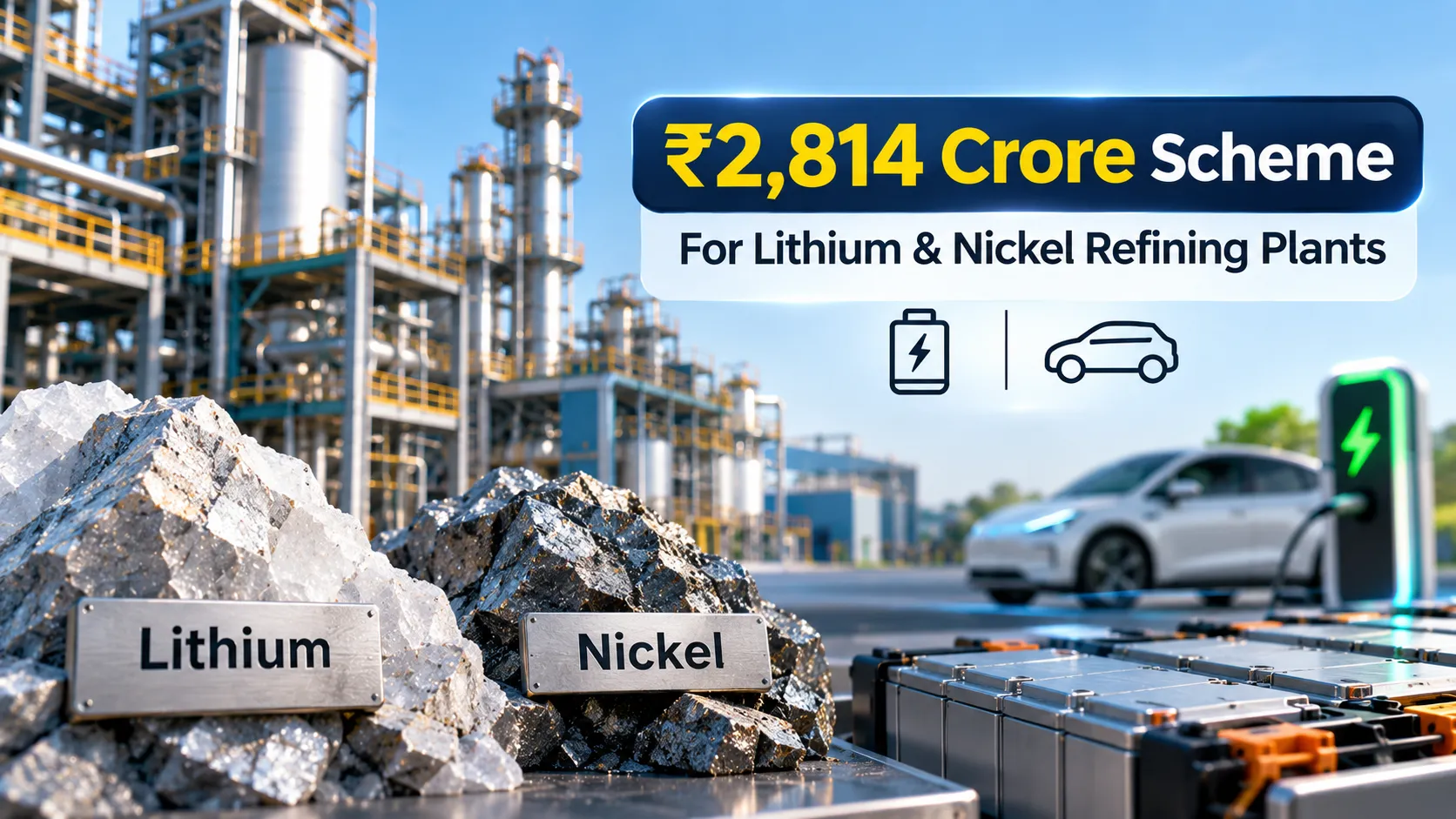
India's Union Cabinet has approved a ₹2,814 crore scheme to support the construction of large-scale lithium and nickel refining plants. It is one of the government's most direct steps so far to build a domestic supply chain for the materials that power electric vehicles, batteries and electronics.
Information and Broadcasting Minister Ashwini Vaishnaw announced the decision after a Cabinet meeting on Wednesday, November 4. The scheme, worth about $297 million, will run from FY2026-27 to FY2030-31.
It will offer a 30% capital subsidy to companies that set up four processing plants: two for lithium and two for nickel. These plants will convert ores and intermediate materials into the high-purity compounds required by battery manufacturers.
How the scheme works
Under the scheme, each of the two lithium plants must have a minimum capacity of 30,000 tonnes a year. The subsidy for each lithium beneficiary is capped at ₹500 crore.
Each of the two nickel plants must have a minimum capacity of 50,000 tonnes a year, and the subsidy for each nickel beneficiary is capped at ₹900 crore.
Beneficiaries will be chosen through a two-stage selection process. The government has set minimum capacity thresholds to ensure that the plants operate at commercial scale, rather than as small pilot facilities.
The focus on refining is deliberate. India has been working to secure access to raw lithium and nickel through overseas mining partnerships and domestic exploration. Without processing capacity, however, any ore India mines or buys would still have to be sent abroad for refining, leaving the country dependent on foreign processors.
Closing a gap in the supply chain
Refining is the stage of the critical minerals supply chain where global capacity is most concentrated. A large share of the world's lithium and nickel processing takes place in a small number of countries, with China dominant across most battery materials.
For India, this creates a vulnerability. Even if Indian companies build battery cell factories, which the government is supporting through separate production-linked incentive schemes, they would still need to import refined materials. Disruptions to that supply, whether from trade restrictions, geopolitical tensions or price spikes, could hold back India's electric vehicle and energy storage ambitions.
The new scheme aims to create domestic capacity at this critical point in the chain. By subsidising 30% of capital costs, the government hopes to make large refining projects commercially viable for Indian companies, which might otherwise struggle to compete with established foreign processors on cost.
Part of a larger national mission
The refining scheme is part of the National Critical Mineral Mission, which the government approved in January 2025 with a total outlay of ₹34,300 crore. The mission covers exploration, mining, processing, recycling and the acquisition of mineral assets abroad.
In September 2025, the government approved a separate ₹1,500 crore scheme to support the recycling of critical minerals from used batteries and electronic waste. Together with the new refining scheme, these programmes form a policy framework intended to cover the full lifecycle of critical minerals, from extraction to reuse.
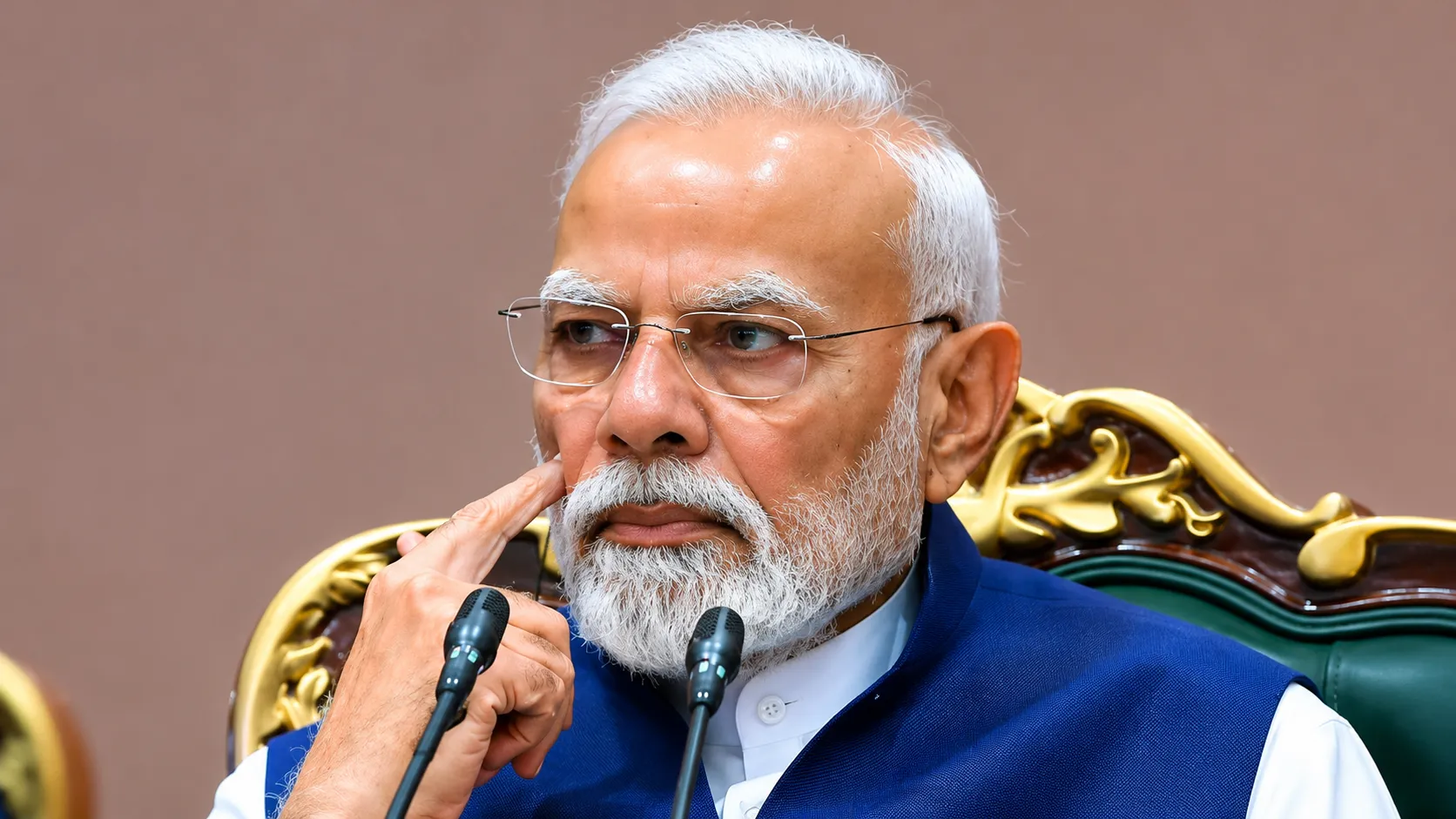
Prime Minister Narendra Modi has repeatedly stressed the strategic importance of these materials. "Lithium, nickel, cobalt…these are essential for EVs, batteries, electronics and defence," he has said, framing access to critical minerals as a matter of economic and national security as well as industrial policy.
Why lithium and nickel
Lithium and nickel are two of the most important materials in modern batteries. Lithium is the core element in lithium-ion batteries, which power electric vehicles, smartphones, laptops and grid-scale energy storage systems. Nickel is a key component of the cathodes used in many high-performance battery chemistries, particularly those used in long-range electric vehicles.